
The West Enders Who’d Rather Not Be Here: The Past and Present of Jails in the West End
Join the WEM volunteer Brendan Kent on a guided tour of the jails of the West End through the past four centuries. From the original Boston Gaol to the modern Nashua Street Jail, the West End has long been the temporary home of those accused of crimes both big and small. See how each generation of Bostonians attempted to bring about justice and maintain order in the “City on a Hill.”
“I’m going to jail” is a realization I had not yet confronted. My love of The West End Museum has taken me many places, but I never thought it would land me in the clink. Was I pinched for breaking into the Boston Hall of Records to find out how the Last Tenement survived? Or was I caught trying to bribe officials into providing blanket immunity for The WEM’s events, thus eliminating the need for the cortisol-inducing permit process? Before I divulge the series of events that led to my confinement in the Nashua Street Jail, let’s delve into the history of incarceration in Boston.
West End Incarceration Through The 20th Century
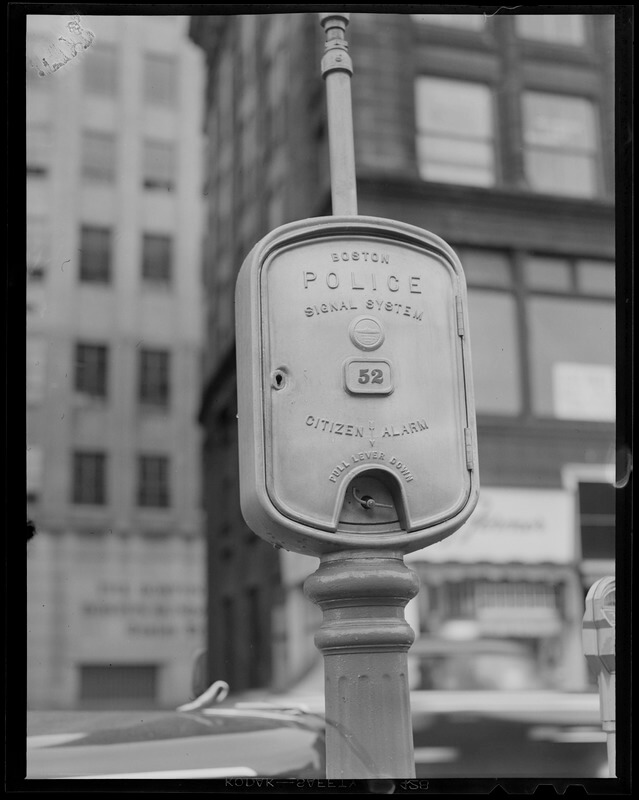
The West End and neighboring Downtown have been home to Boston’s jails for almost four hundred years. Since the Boston Gaol opened in 1635, people accused of crimes ranging from shoplifting, piracy, witchcraft, and murder have been held in the West End . The city’s jails have housed a wide variety. Con artist of Catch Me if You Can fame Frank Abignale Jr., actor Mark Wahlberg, and infamous pirate Billy the Kid all had their stint in a Boston jail. In modern Boston, the Nashua Street Jail and South Bay House of Correction remain vital organs of the law. They still operate nonstop as pivotal pieces of the justice system.
Long before the arrival of Europeans to the Shawmut peninsula, law and justice still needed administering. However, the indigenous community operated in a very different manner from the modern United States’ system derived from British Common Law. The Massachusett tribe did not utilize incarceration as a punishment for misdeeds. For property crimes, tribal leaders typically ordered restitution. Those who breached the peace were met with social ostracism and public condemnation. These were powerful tools in maintaining social harmony. For the more serious offenses, the Massachusett condemned offenders to banishment, which was a virtual death sentence. In exceedingly rare cases, they inflicted capital punishment for the most heinous crimes.
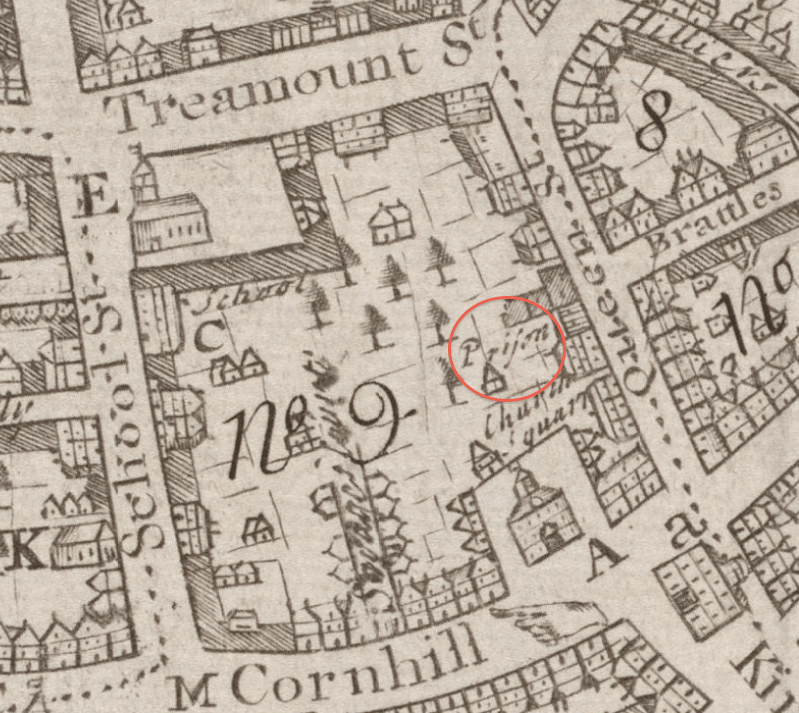
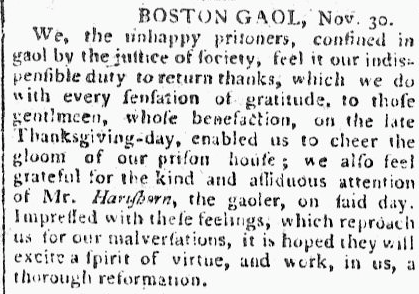
With the incorporation of the colonial town of Boston in 1630 came the establishment of European-style jails. The Boston Gaol was erected in 1635 on Prison Lane (modern day Court Street). The gaol was first constructed with wood that proved inviting to escapists. It was later fortified with stone. In Samuel Gardner Drake’s 1856 work The History and Antiquities of Boston, a prisoner named Fowle recounted his stay at the gaol: “If there is any such thing as hell upon earth, I think this is the nearest resemblance of any I can conceive of.” There was no glass in the windows. This allowed in sun, but also let rain, snow, and cold New England winds blow in. Inmates recalled a shortage of food, blankets, and dignity.
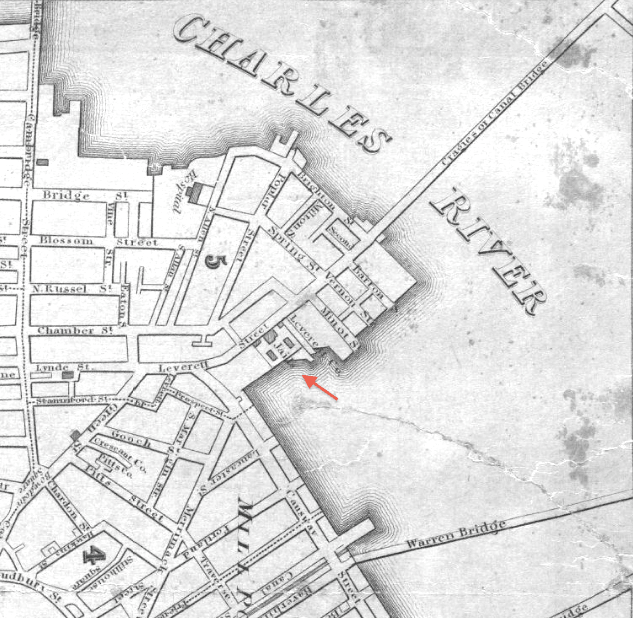
After nearly two hundred years, the City of Boston recognized the gaol was inadequate. Its replacement, the Leverett Street Jail, opened in 1822. The Leverett Street Jail played a role in some of the most contentious moral battles of its day, including slavery, blasphemy, and equality under the law. The jail was quite secure, but it made no distinction between the alleged crimes of inmates. An inmate charged with owing money could share a cell with a man sentenced to the gallows for murder. The jail was approximately in the same location as The West End Museum today. According to Executive Director Sebastian Belfanti, his office now stands on the site of the gallows.
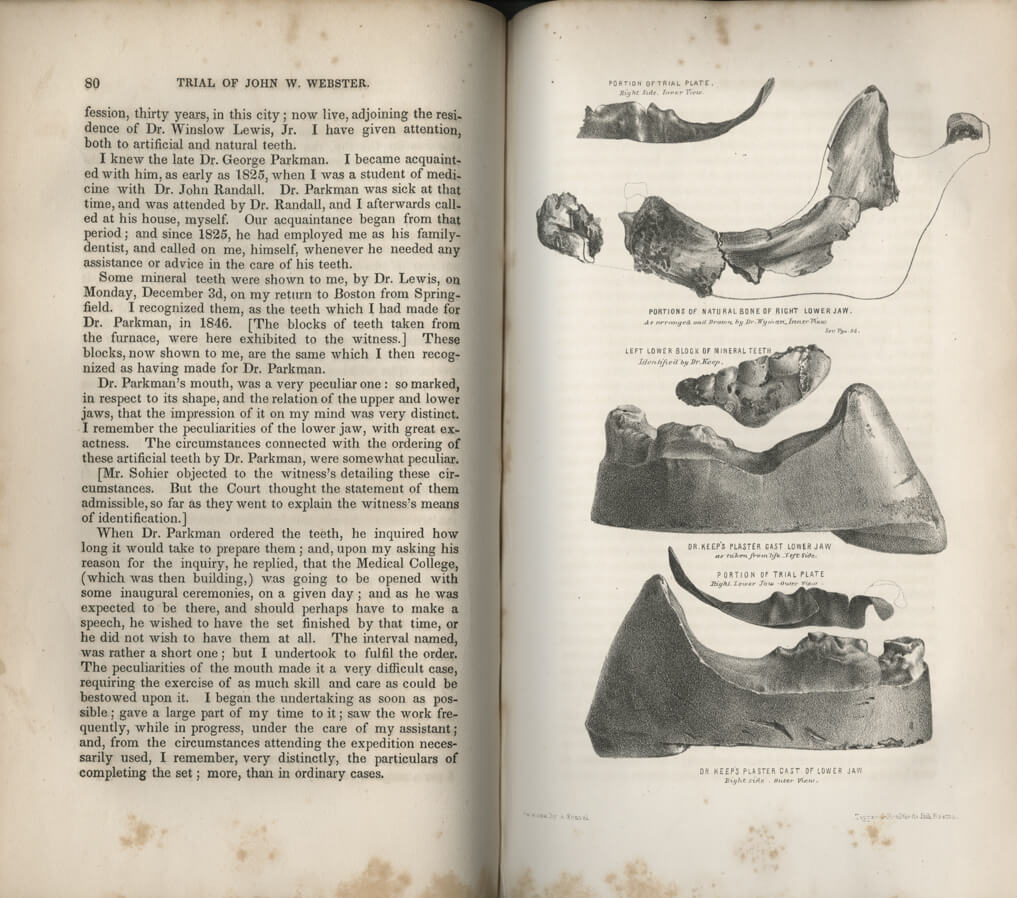
The Leverett Street Jail confined all sorts. These include the final pirate executed in Boston, Don Pedro Gilbert, freedom seekers fleeing enslavement, Eliza Small, Polly Ann Bates, and George Latimer, and Dr. John Webster who had murdered his Harvard Medical School colleague Dr. George Parkman.
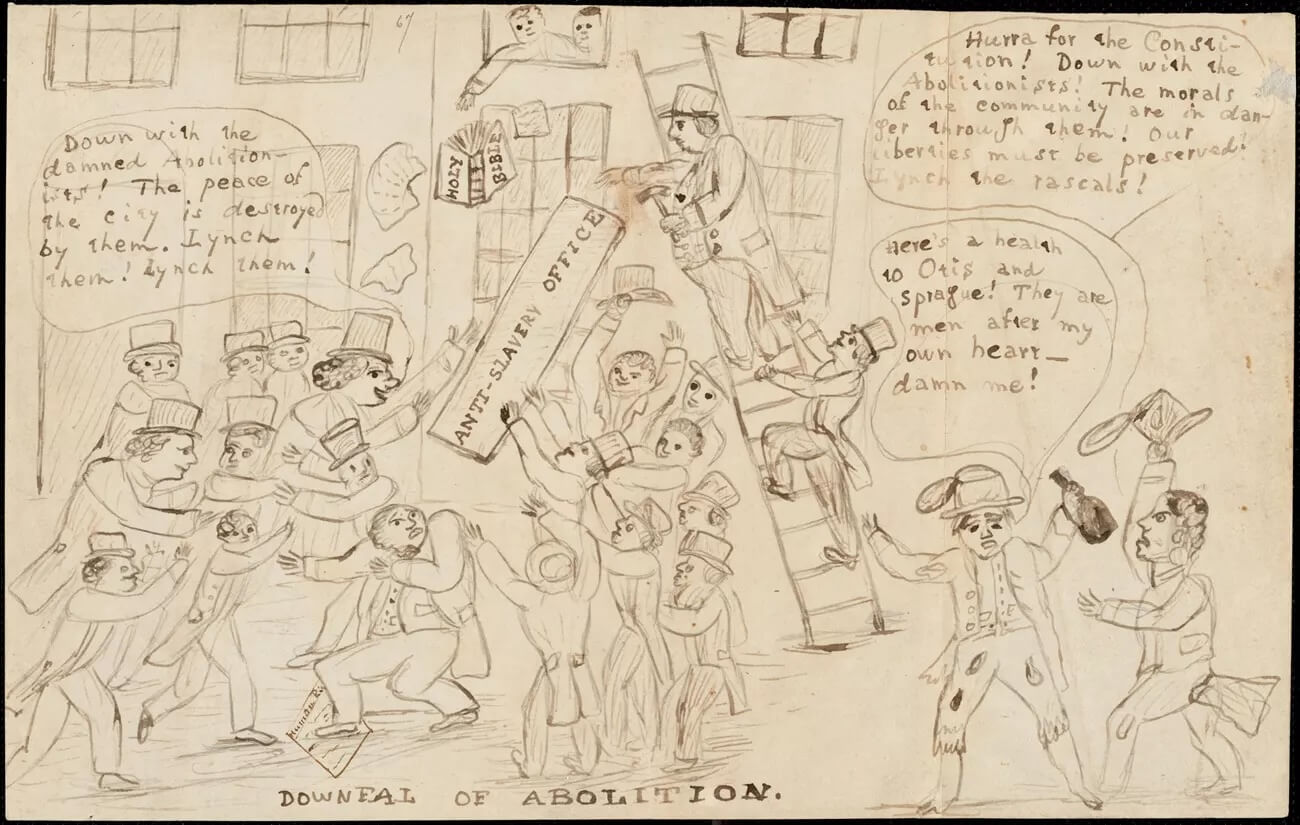
Most people doing time at the Leverett Street Jail wanted to be somewhere else. There is one exception: abolitionist William Lloyd Garrison. In October 1835, pro-slavery Bostonians descended on a meeting of the Boston Female Anti-Slavery Society led by Maria Weston Chapman. They intended to disrupt the meeting and attack British abolitionist George Thompson. When Thompson and Garrison arrived, the pro-slavery mob had grown and tried to force entry. To keep the peace, Garrison fled to the office of the Liberator. Unfortunately for him, the mob broke in. They stripped him of his clothes and began dragging him towards Boston Common, likely with the intention of lynching him. Although pro-slavery, Mayor Lyman wanted to avoid bloodshed in his city. He decided to arrest Garrison on a fraudulent charge of disturbing the peace and sent him to the Leverett Street Jail for the night for his own protection.
The Leverett Street Jail was relatively short lived. Its replacement, the Charles Street Jail, opened in 1851. The Charles Street Jail was designed by Gridley J.F. Bryant. Its austere monolithic stonework was among the best examples of Boston Granite architecture. Upon taking a tour of the jail in 1926, former Red Sox slugger Babe Ruth told the New York Times, “This isn’t a jail, it’s like a hotel.” It was not likely prescience that led the Bambino to the conclusion that the Charles Street Jail was hotel-like. Instead, it was the input of prison reform advocate Reverend Louis Dwight who worked with Bryant to build a humane jail. The goal of the new jail was to rehabilitate inmates and release them as industrious and law-abiding citizens. This contributed to much-improved conditions and architectural grandeur. Among the inmates at the Charles Street Jail were Malcolm Little (who later adopted the name Malcom X), Italian anarchists Nicola Sacco and Bartolomeo Vanzetti, Boston Mayor James Michael Curley, and birth control activist William R. Baird Jr.
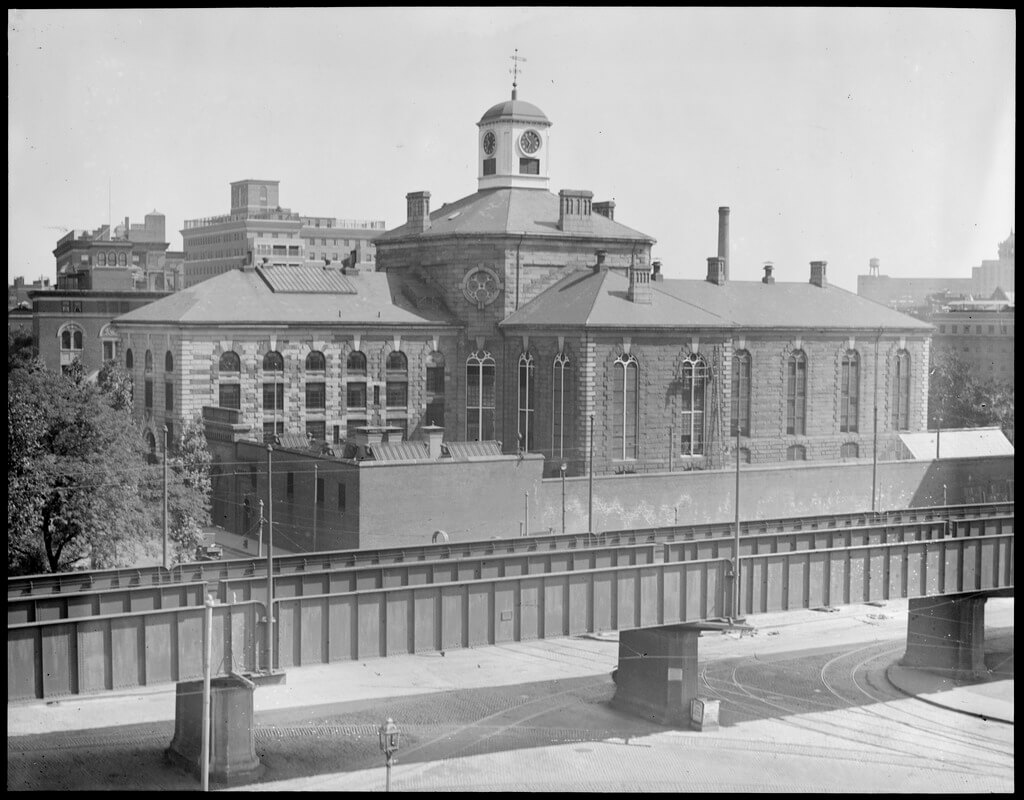
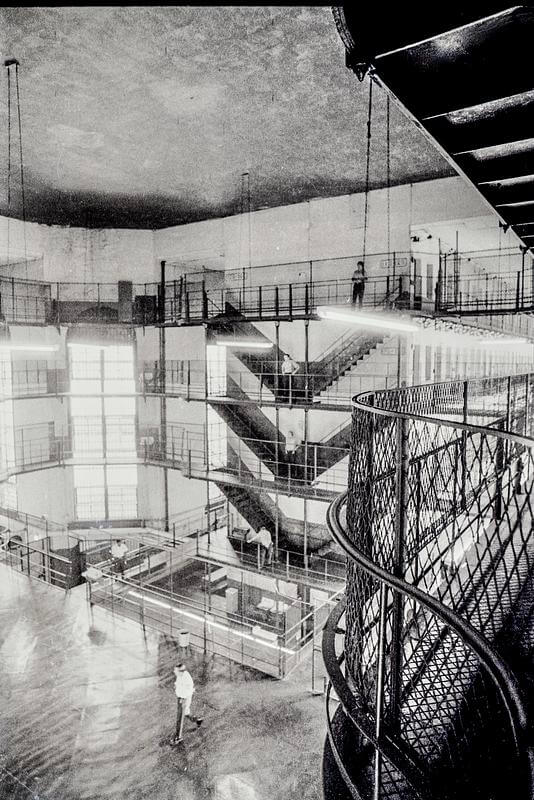
The Charles Street Jail, currently hosting the five-star Liberty Hotel, maintains the magnificence of the original design. The jail came adorned with atriums on either side of the housing blocks. This allowed prisoners to look out of the three-story windows that let in light and fresh air. The hotel’s lobby was once the central housing block in the jail’s cross-shaped design.
While it was humane for its day, by the 1950’s, the jail’s age started to show. The plumbing was antiquated. The heating and cooling were uneven. Overcrowding meant that conditions for prisoners were poor. These mounting issues culminated in a 1973 US District Court decision to close the jail. Seventeen years later, the jail would house its last inmate.
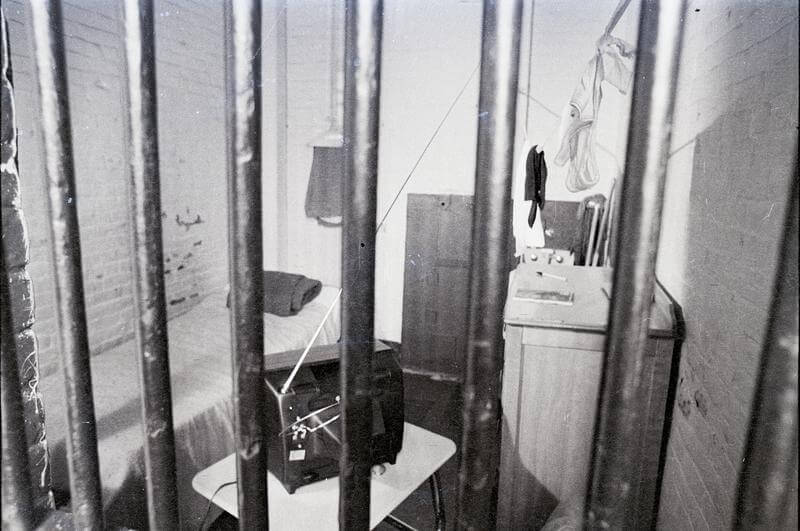
Mass General Hospital acquired the building in 1991 and in 2001 a project began to turn it into a hotel. Relying on the designs of the original architect, the project restored and preserved aspects of the building while making it usable in a new form. The hotel opened in 2007 and underwent renovation in 2016. Today, it is hard to tell that the ironically named Liberty Hotel used to be a jail, unless diners sit in the preserved cells in their restaurant: The Clink.
A Tour of the Nashua Street Jail
And finally, it’s time to confess why I had to go to jail. Volunteering at the West End Museum is my crime. Mercifully, the penalties for volunteering at the WEM are lenient, and my stay at the jail was limited to the duration of a short tour.
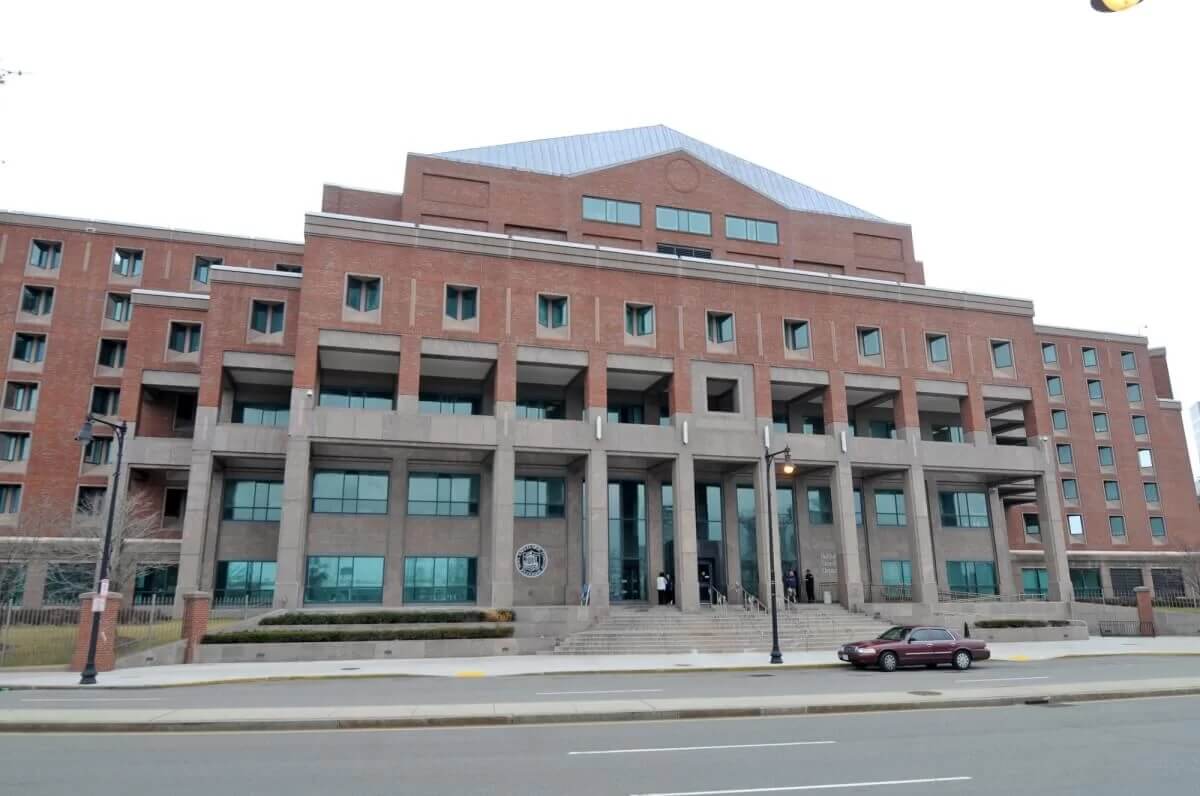
The Nashua Street Jail is located within Boston’s West End. Opened in 1990, the facility is the temporary home of around 700 pre-trial, male detainees. The two acre campus has splendid views of the Charles River, Leonard P. Zakim Bunker Hill Memorial Bridge, and the Richard McKinnon and North Point Island parks. Taking in the view I can’t help but think it must be frustrating to be confined to a cell with such a view without being able to visit. And how is it that so many Boston jails are located on prime real estate? The views of the Esplanade from both the current and former jails are beautiful.
The Nashua Street Jail (right) as seen from across the Charles River. (Image Credit: Dennis Tangney Jr. Getty Images)
I’m greeted at the jail by Sergeant Stacey Wood and a group of high school students who have signed up to tour the facility. During the orientation, Sergeant Wood informed us that in the event of an all-alarm emergency, we should seek a Corrections Officer and head for the nearest guard station. “Doesn’t happen very often,” Wood said “There was one tour group where we had an emergency, but it was on a different floor and resolved quickly.” Feeling assured, I surrendered my belongings to a locker and, following a brief frisk down, was admitted into the jail.
Despite my short stay, the fortified steel door slamming shut behind me triggered a dose of anxiety. “And now I’m in jail,” I thought to myself as I proceeded to the first stop of the tour, which fittingly was an introduction to the booking procedure.
Several detainees seated in the booking area looked at our group with curiosity before returning their attention to being booked. “All arriving detainees must be strip searched and body scanned prior to admission,” Wood informed us. The detainees seemed slightly disheartened by the assertion. The booking process was relatively quick. From there detainees were assigned to a temporary housing unit until they were given a permanent cell assignment.
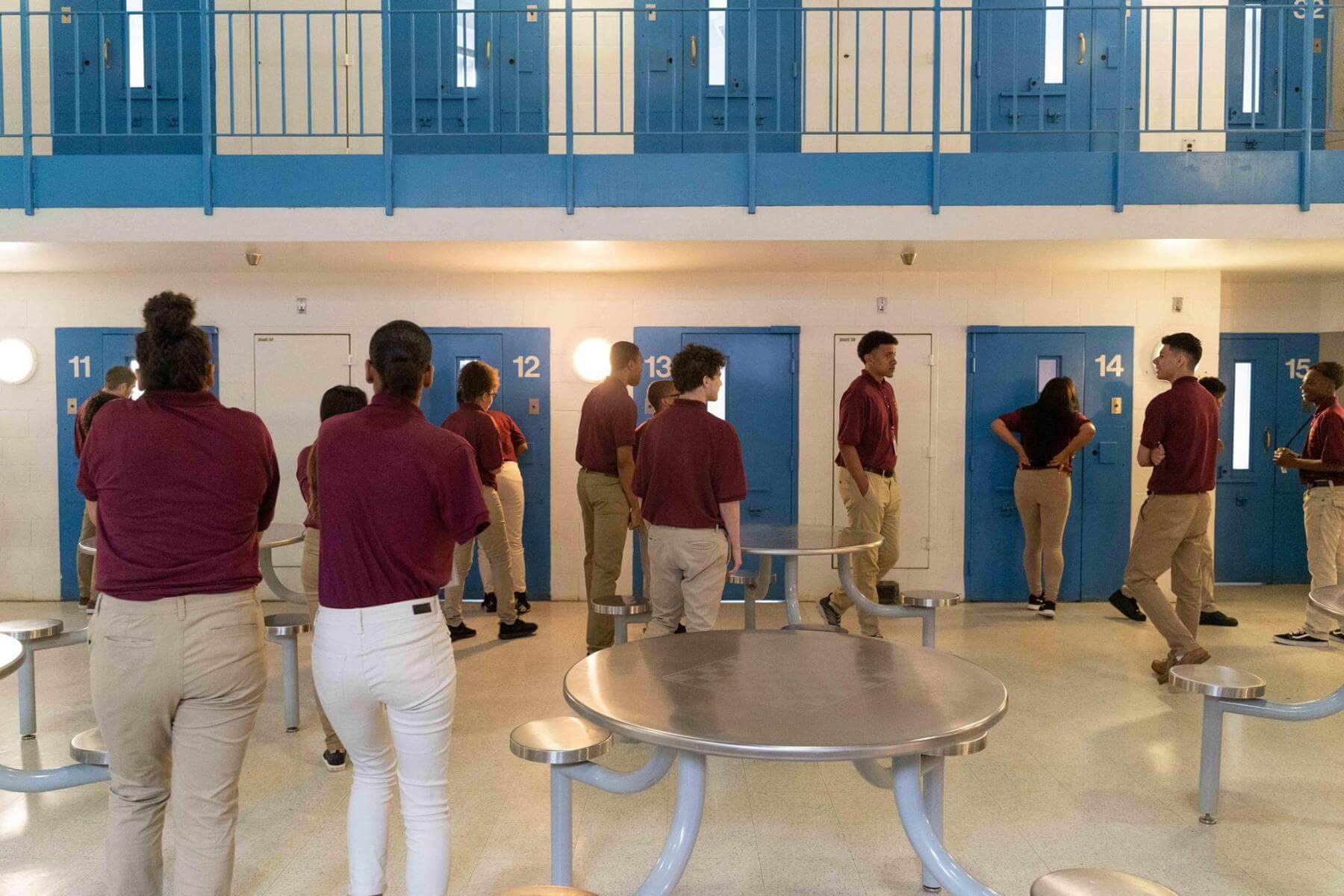
Following the booking area, we headed to the laundry room and had a discussion with two inmates who worked there. They told us that the work helps pass the time, and there are perks to working in the laundry room including having first pick of linens and free coffee. The Corrections Officer supervising the work area asked me if I’m one of the students. Simultaneously flattered and flattened to be assumed to be a high schooler, I replied that I’m writing for The West End Museum. “I walk past there all the time; I should stop by! I hope to see you there and never in here,” said the CO.
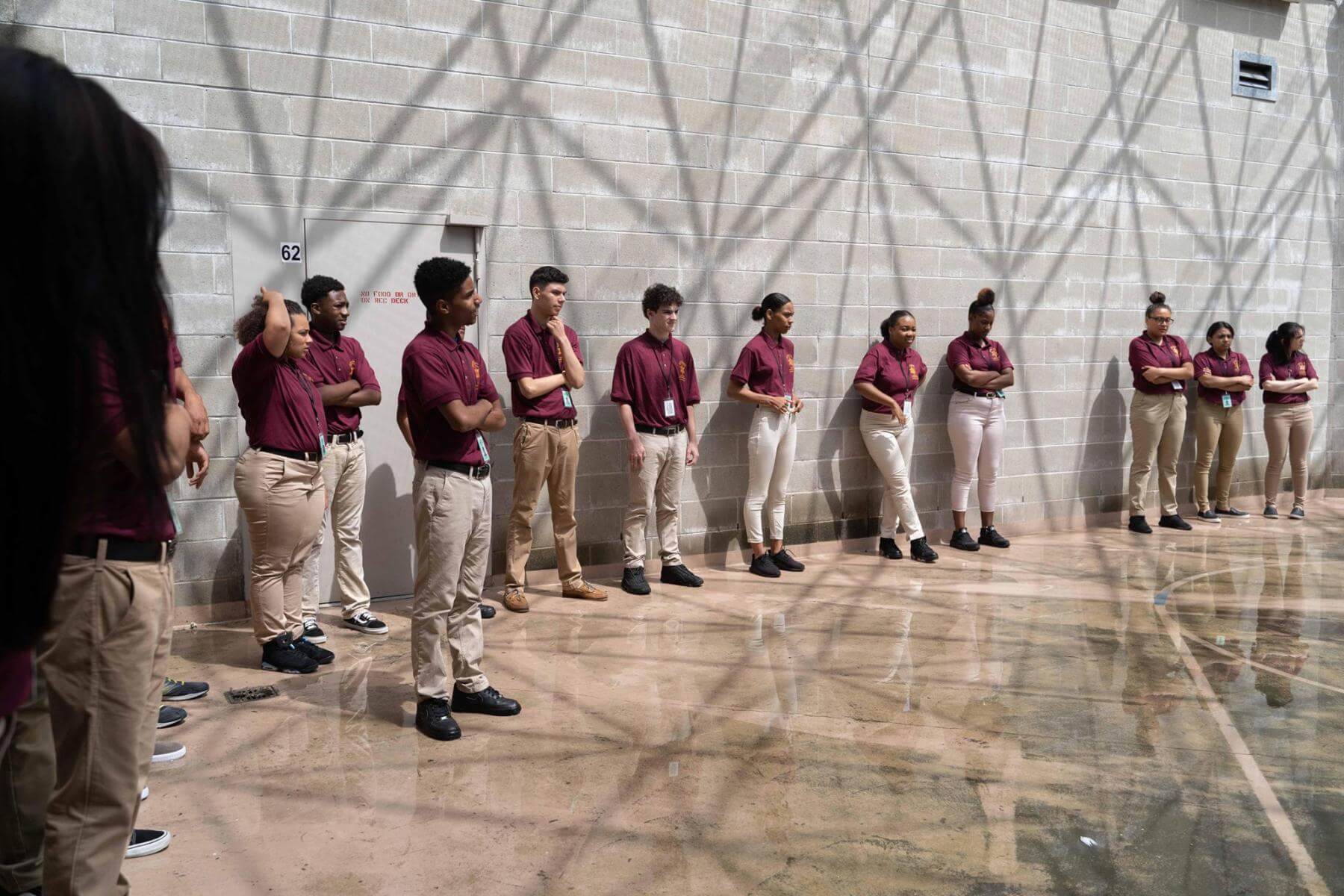
After the laundry, we headed to the kitchen which is staffed by inmates and saw a prisoner’s meal. The inmates and staff eat the same meals. The food looked incredibly familiar to anyone who has been subjected to high school cafeteria food. After touring the kitchen, we were brought to a housing block. Architectural opportunities in modern jail construction were rather limited compared to the 19th century Charles Street Jail. I felt as though I was transported into an episode of MSNBC’s LockUp. The cells were tidy, although the lack of privacy to use the toilet was immediately clear. I ponder the total loss of individuality behind prison walls. “Inmates are permitted to have a tablet that doesn’t access the internet,” Wood said. “Unfortunately, the bigger and stronger inmates tend to prey on the smaller, weaker inmates and take their tablets. There’s very little we can do to stop it.”
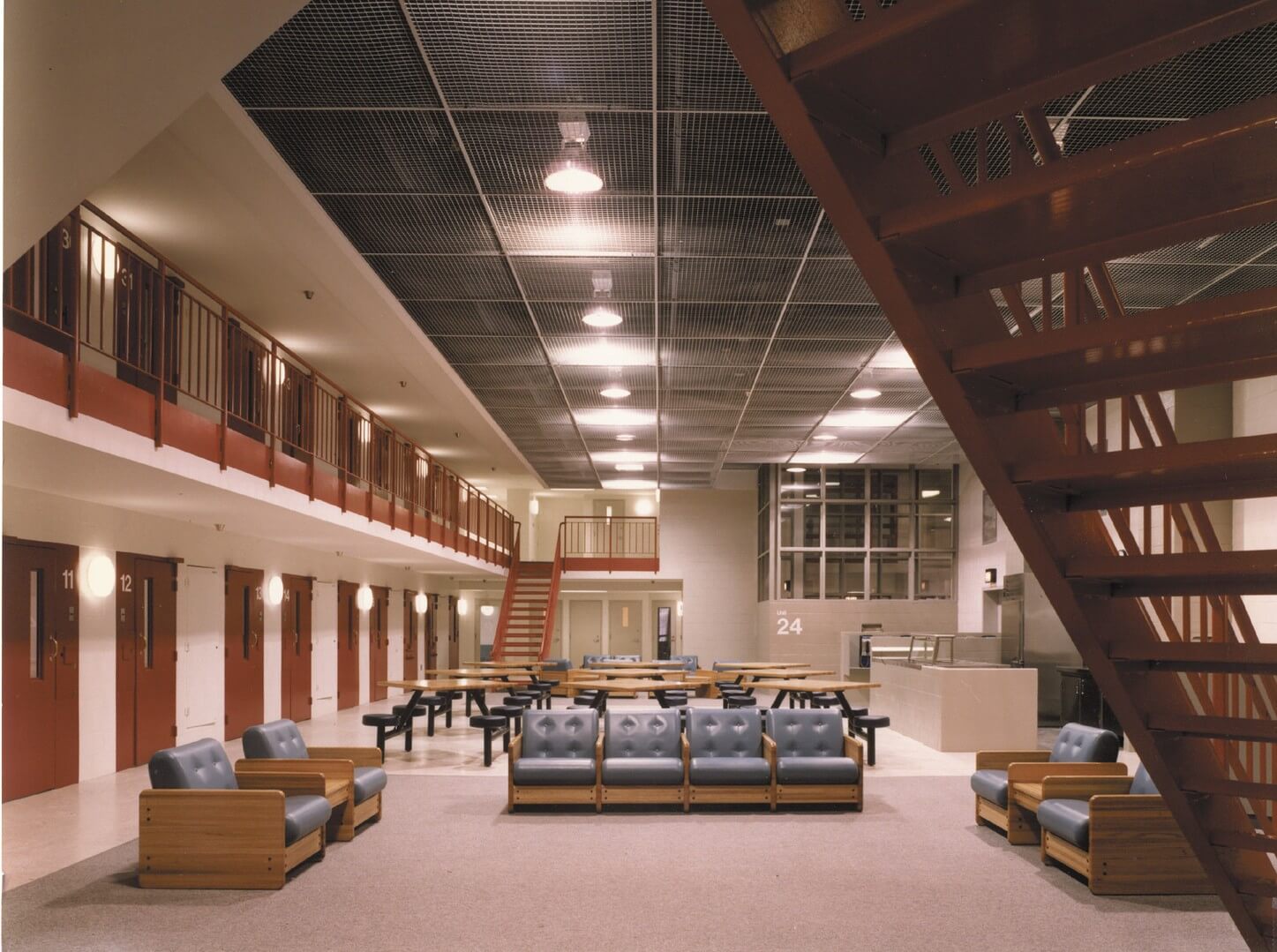
I noticed the Green Line slowly moving towards Lechmere. As frustrating as Green Line speeds are for many Bostonians, I imagined passing time in Nashua Street Jail after having a tablet stolen while in jail must be even more frustrating than waiting for the train to get up to Union Square. The inmates were allowed outside into the yard once a day for recreation before being brought back into the housing pods. There is usually one television per pod, and those who were not sports fans were out of luck when it came to what was on.
To finish the tour, we head to the non-denominational chapel that houses religious services. It also hosts an array of educational opportunities for inmates. Two inmates described the lows of jail: the pain of the absence of freedom, the hurt of missing loved ones, and the stress their incarceration caused their families. But they also spoke of the opportunity of jail. It was a place where they could escape the demons that landed them there if they were willing to put in the work to be the best version of themselves. One student asked the inmate if that means he’s happy to be in jail. “Happy to be in jail? God no. The only silver lining is being able to escape the streets.” William Lloyd Garrison would have very much agreed.
Article by Brendan Kent, edited by Jaydie Halperin
Want to learn more about historic crime in the West End? Visit our special mini-exhibit “Wild Times in the West End: Secret Speakeasies, Liquor Raids, and Gangland Warfare” curated by Emily Sweeney of the Boston Globe. But don’t wait! It is only on display June 3 – June 14, 2026.
Sources: Patrick Browne, “The Garrison Mob of 1835, Boston” (Historical Digression, March 1, 2016); Culture Now, “Boston Gaol”; Neil Iyer, “The Charles Street Jail,” (The West End Museum, March 20 2025); David Rosner, “The incarcerated in pursuit of reform: Inmates of the Charles Street Jail” (Very Local, January 31, 2022);Suffolk County Sheriff’s Department, “Tour of the Nashua Street Jail” | “Facilities: Suffolk County Jail”;The Salem Witch Museum, “Boston Jail in 1692, Site of”; The West End Museum, “Walls of Stone: The Leverett Street Jail” (Exhibits, 2015); Adam Tomasi, “Don Pedro Gilbert” (The West End Museum, November 21, 2021).