
123 Causeway Street and the Waldorf Cafeteria Craze
On the odd-numbered side of Causeway Street, between the Santander Bank and Halftime King of Pizza, sits a building that looks out of place. Its street level is adorned with an unmarked door flanked by McDonald’s ads. The second story is dominated by a large, uniquely framed window that suggests that the structure at one time was more interesting than it seems today. This is the story of how the cafeteria craze came to the West End.
It is likely that most pedestrians pass by 123 Causeway Street without taking any notice of the building. A few might see the advertising for McDonald’s restaurant and become confused that there does not seem to be one nearby. (For those in the area in need of a quick Big Mac, the local McDonald’s is inside the North Station terminal). Those looking at the address from across the street will notice the large second-story window framed by a unique border. Today, the structure sits quiet and empty. Yet, it was once home to a restaurant chain that helped pave the way for the fast food titans of today.
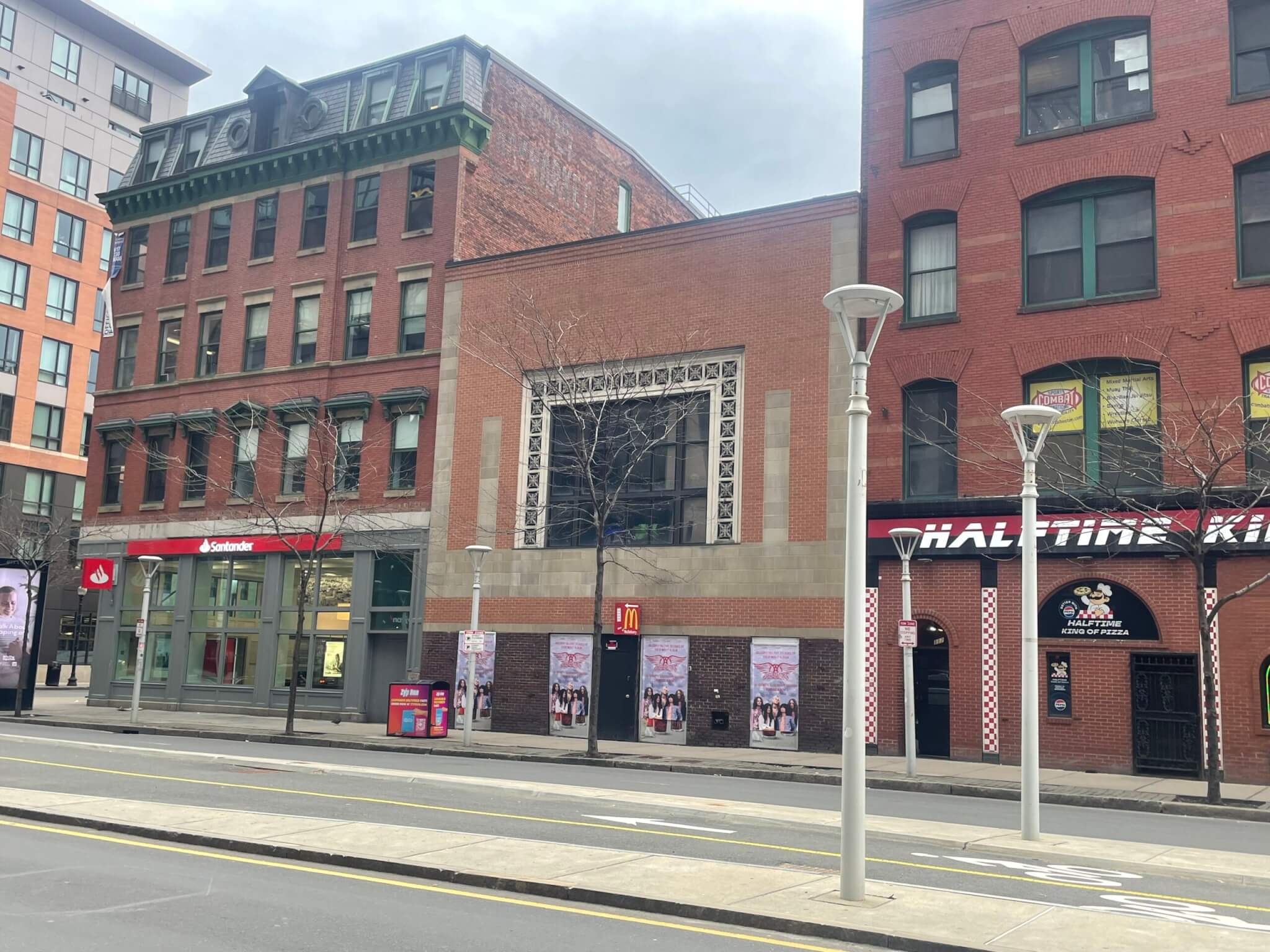
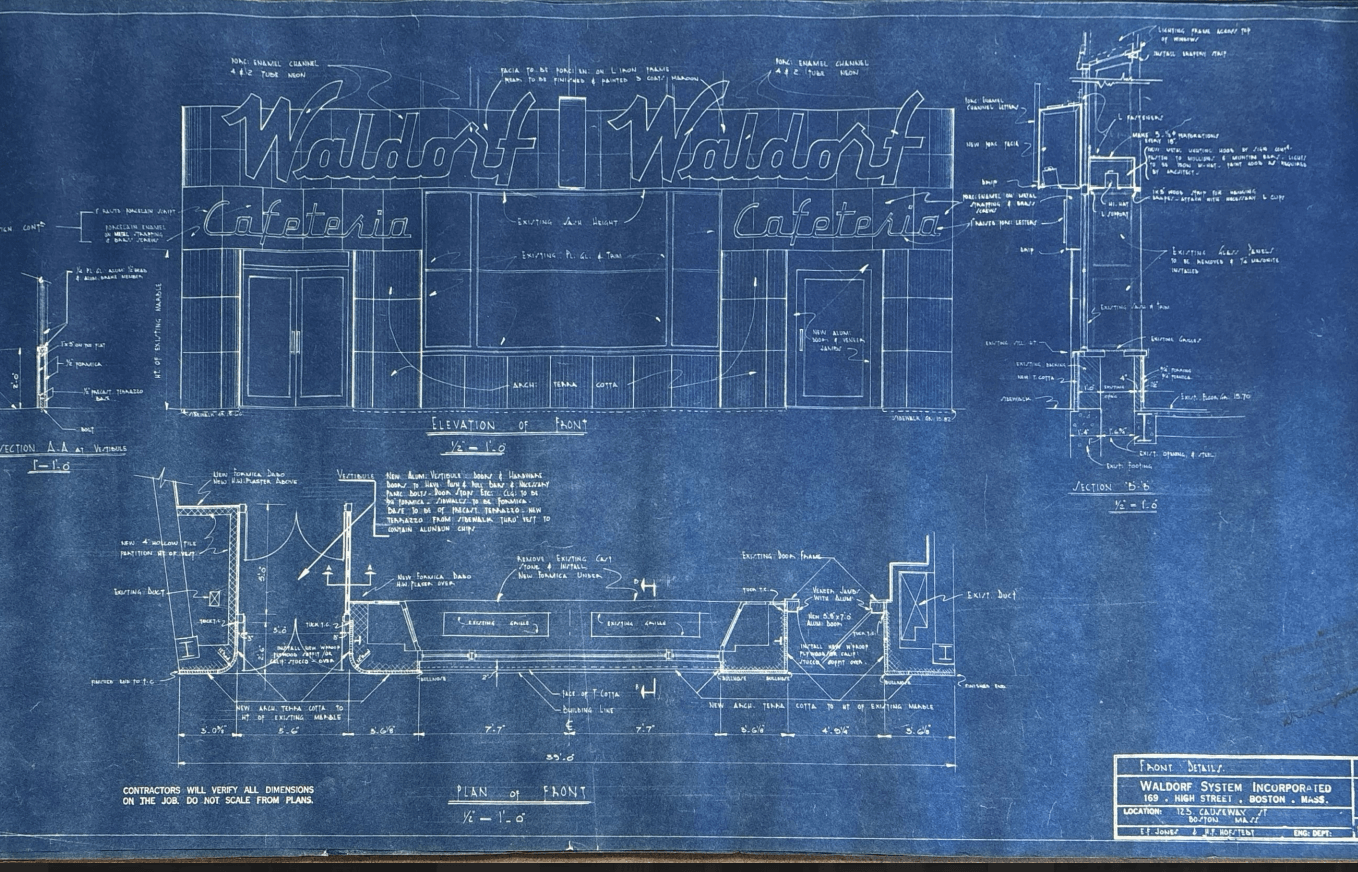
James H. Ritchie designed the building for the Waldorf Lunch System in 1932. Originally from Scotland, Ritchie started practicing architecture in Boston in 1908. From then until his death in 1964, his firm designed several schools and public buildings around Boston. His works included the Boston Police headquarters at 154 Berkeley Street (1925), the Boston Architectural Club at 16 Somerset Street (1910), and extensive work at the University of Massachusetts (Amherst) Campus. He used terracotta trim on the Causeway Street building’s second story (since removed). This is a late example of an architectural trend dating back to the 1890s that valued the use of terracotta for its “fireproof nature, durability and aesthetic potential.”
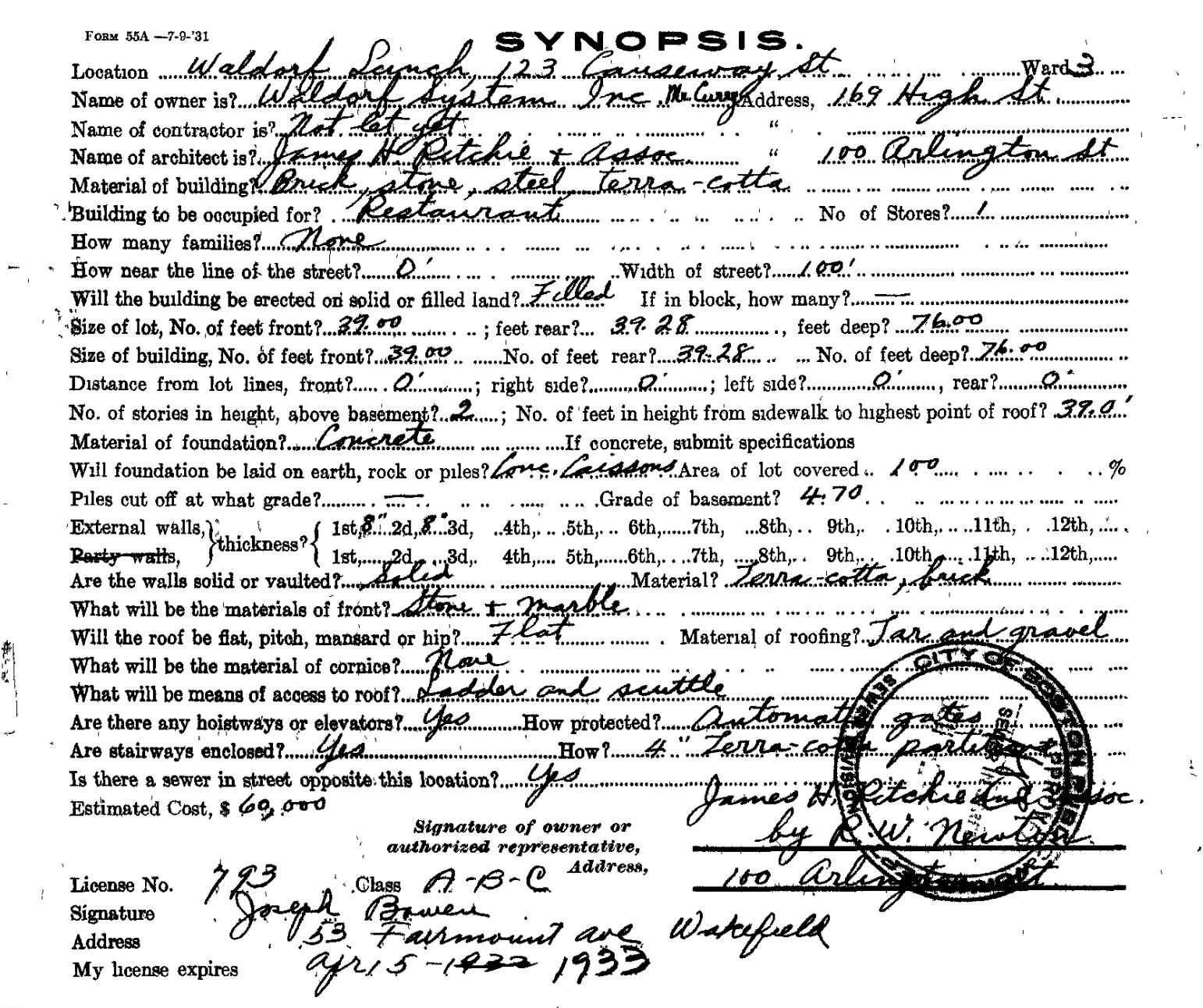
The Waldorf Lunch System was once one of the largest restaurant chains of its kind in the country. Founded by Harry Seymour Kelsey in Springfield, MA in 1904, the lunch rooms became widely popular in New England and beyond. The Waldorf mission was “to maintain worthy dining-places where they will perform real public service, the purpose to serve tasteful food of unquestionable quality.” By the 1920s, Waldorf operated “ninety-four lunch rooms in twenty-nine cities, mostly in New England.” At its zenith, the company, after merging with two other similar cafeteria systems, had 200 locations, primarily on the east coast. Waldorf strategically placed many of its cafeterias in areas of high foot traffic, such as near train stations. To give an indication of its scale, the Waldorf cafeterias “served more than 37,000,000 meals at an average of less than twenty-eight cents each” in 1921 alone.
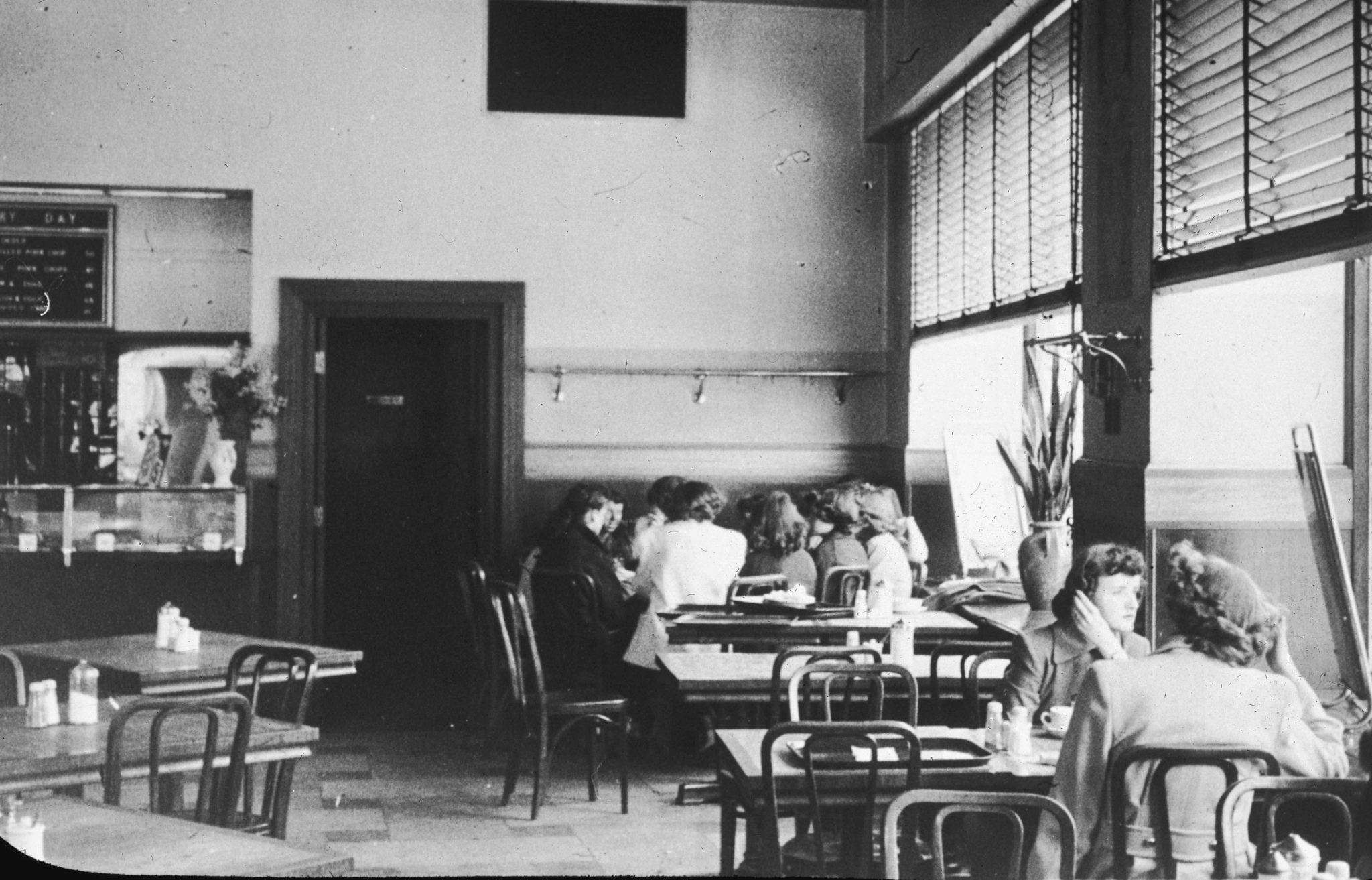
The company accomplished this success through an innovative system. They would prepare foods in central commissaries that delivered to the retail outlets daily. Most food arrived in the cafeterias in prepackaged individual portions. These could easily be heated and served to high volumes of customers. Like the massive food chains of today, Waldorf desired consistency no matter which of their cafeterias one frequented. One of their ads claimed, “there’ll be good, fresh coffee at the Waldorf Lunch today. It’s always the same.” Waldorf customers used trays to pick up their food from self-serve counters at the back of the restaurant. Then they carried their meals to seating areas in the front.
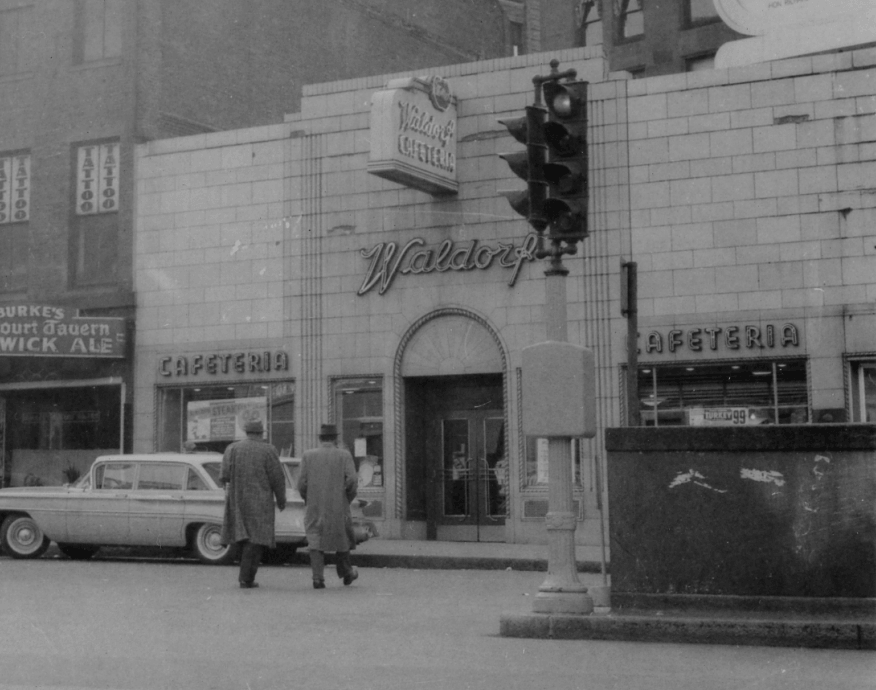
The Waldorfs were especially popular in Boston, a city once known for its lunch counter culture. The location at Causeway Street operated from 1933 through 1952. The Waldorf also had locations at nearby Bowdoin and Scollay Squares, Tremont Street, and Charlestown. After decades of success and a slow decline, the last Waldorf Cafeteria closed in Springfield MA in 1974.
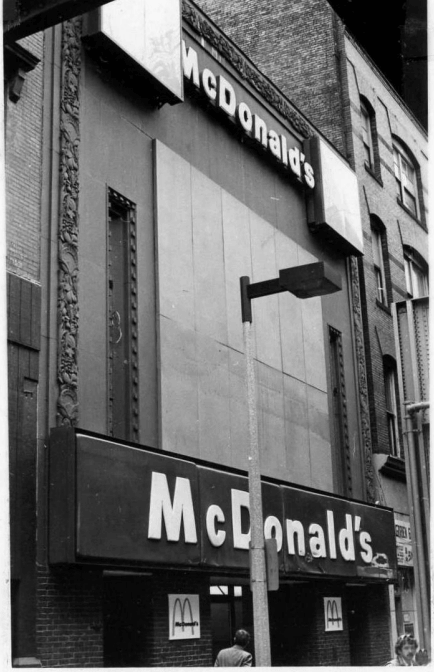
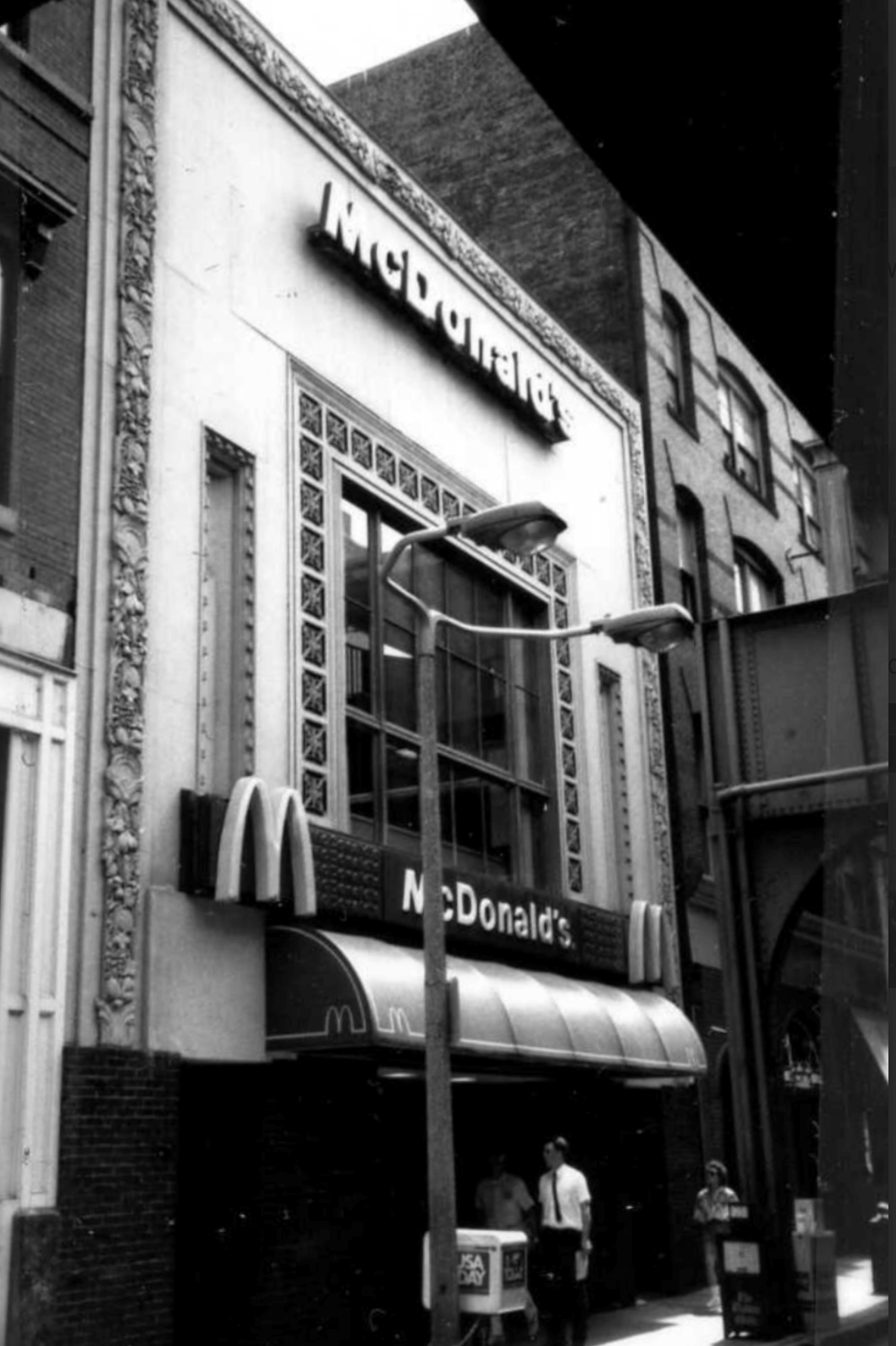
After the Waldorf left 123 Causeway, subsequent owners modified the structure’s facade, and installed office spaces in 1952. The McDonald’s restaurant chain purchased the building and opened a restaurant there in 1969. It remained in operation until 2003. At one point the company installed panels over the second-story window and painted the terra cotta border black. The panels and paint were then removed in the 1990s. The beautiful terracotta trim was ultimately removed altogether and replaced with stone panels. McDonald’s maintains ownership of the 8000 square foot, $2 million property today, keeping it inexplicably vacant. The ads on the building’s front are the only indication of its place in fast food history.
Article by Bob Potenza, edited by Jaydie Halperin
Sources: Boston Globe, “Obituary for Harry Seymour Kelsey (Aged 78)” , December 1, 1957; City of Boston Archives; Boston Landmarks Commission, “Report of the Boston Landmarks Commission on the potential designation of THE SECOND BRAZER BUILDING as a LANDMARK under Chapter 772, Acts of 1975, as amended, 1985”; Boston Tax Parcel Record: 123 Causeway st; Buildings of New England, “James H. Ritchie Architect” ; The Cambridge Tribune: June 8, 1918, p. 10; Charles Frani Collection, The West End Museum; Mike Elfland “Then & Now: Waldorf Cafeteria, 404 Main St., Worcester.” Telegram & Gazette, 7 Feb. 2022; Massachusetts Historical Commission (MHC): Inventory Number BOS.1641; New England Historical Society, “Before Dunkin’, New England Had the Waldorf Lunch System,” 2024; City of Newton, “Newton Public Buildings Survey Phase II – Analysis of Historical Significance: Building Analysis Education Center” February 24, 2012; James C. O’Connell, Dining Out in Boston: A Culinary History, (Hanover: University Press of New England, 2017); R.M. Rhodes “Effectively Advertising a Public Cafeteria”, Cafeteria Management: A National Magazine for Self-service …, Volumes 1-3, July 1922; United States Investor “Waldorf System Incorporated: Feature of Company Whose Stock Has Made a Good Impression in Boston,” 31 no. 1, (January 3, 1920) 29-30; Wikipedia, “Waldorf System”; John Willy, “Waldorf Systems,” The Hotel Monthly Vol. 28, December 1920.