
Soothing the City with Soul: How James Brown Saved Boston
While the rest of the country erupted in grief fueled riots in the days after the death of Martin Luther King Jr., Boston was quiet. The “Number One Soul Brother” James Brown had an almost sold out performance scheduled in the Boston Garden. Should it go forward? And would a concert broadcast for free on television be enough to keep a grieving city calm and cool?
In the week following the assassination of Martin Luther King Jr., the United States was awash with violence. Fires burned in almost 200 cities, 54 of which saw upwards of $100,000 in property damage. Overall, 27,000 people were arrested, 3,500 people were injured, and 43 died. The National Guard deployed 58,000 troops across the nation. Amongst the major cities, Boston claimed the unique distinction of emerging relatively unscathed. This was thanks, in small part, to the efforts of the city government to make sure soul singer James Brown’s concert at the West End’s Boston Garden went forward. The performance and the hastily connected broadcast of the concert across the airwaves helped keep the city calm on a night when the rest of the nation was full of rage.
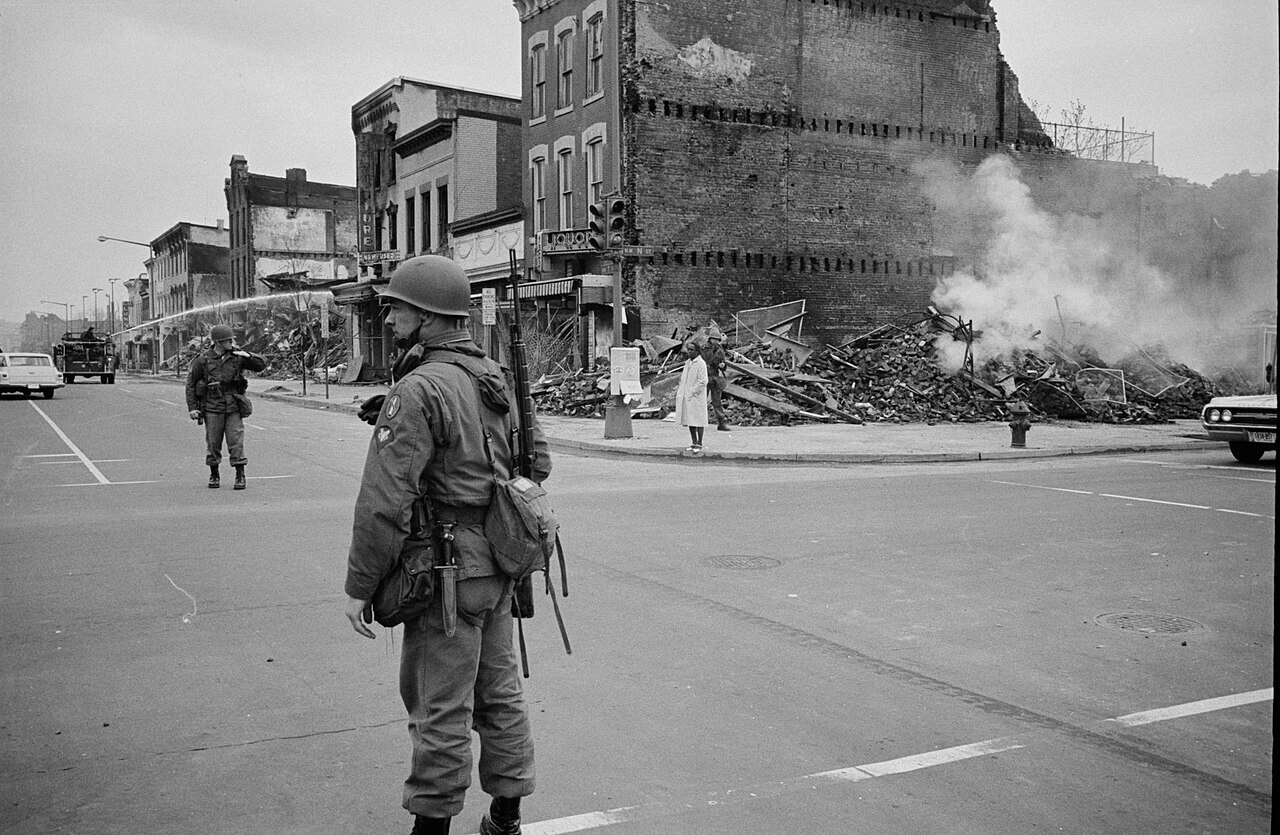
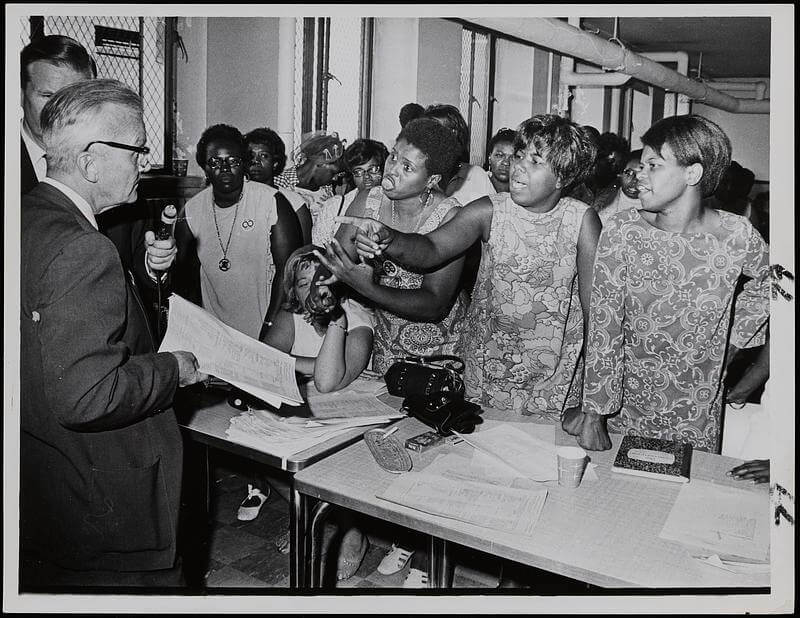
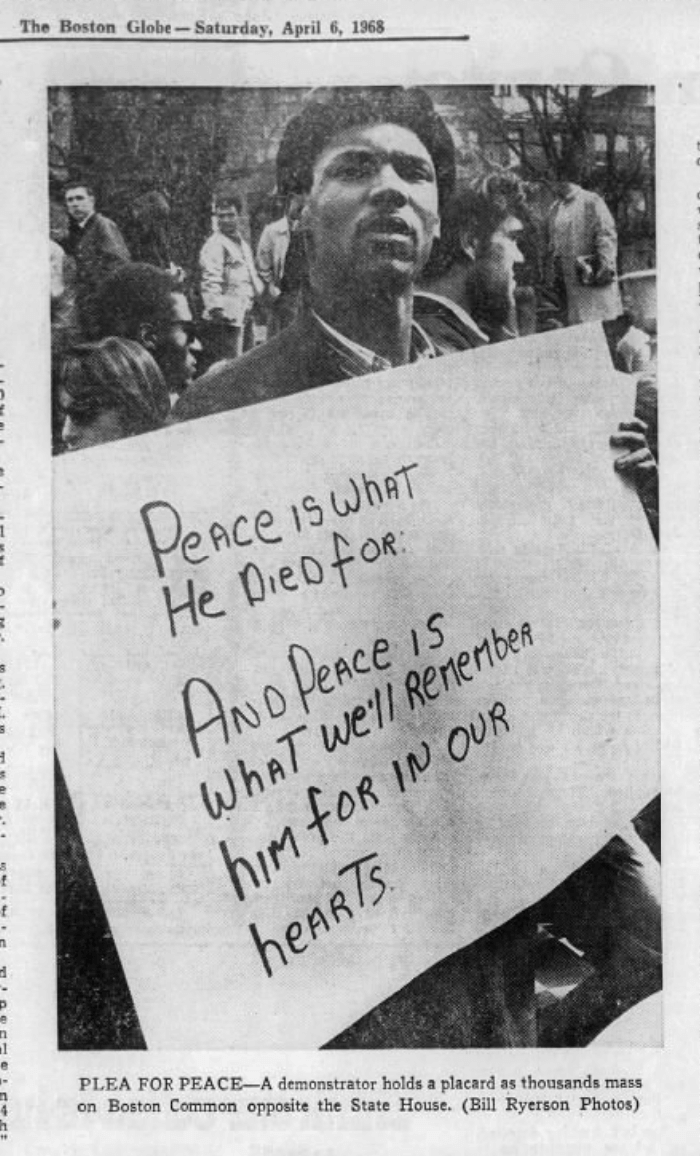
On April 4th, 1968, King was shot and killed in Memphis while supporting a sanitation workers strike. His death sent shockwaves of grief across the nation, especially in the Black community. Almost instantly, the grief spilled into fury and riots erupted. At first, it seemed like Boston would be no exception. After all, as part of the 1967 Long, Hot Summer, sections of Roxbury experienced rioting. Police sparked the riot when they violently arrested a group of mothers protesting at the welfare office. Following four days of violence, the neighborhood had over $2 million in damage (in 1967 dollars) and many were injured. The murder of King hit especially close to home in Boston. Locals considered King, who had earned his PhD at Boston University and preached at the historic Twelfth Baptist Church, an honorary Bostonian. He had even met his wife Coretta Scott King in Roxbury. It was possible that connection would have spilled over into the streets.
Moreover, one of the major issues in the previous year’s mayoral election had been school integration and racial politics in Boston. Mayor Kevin White (1929-2012), who had taken his oath of office only 100 days before, feared violence could erupt at any time and he was taking no chances. It made sense to him to try to cancel the next night’s almost sold out James Brown concert at the Garden which would have seen over 14,000 mostly Black young people come downtown in the middle of a national emergency.
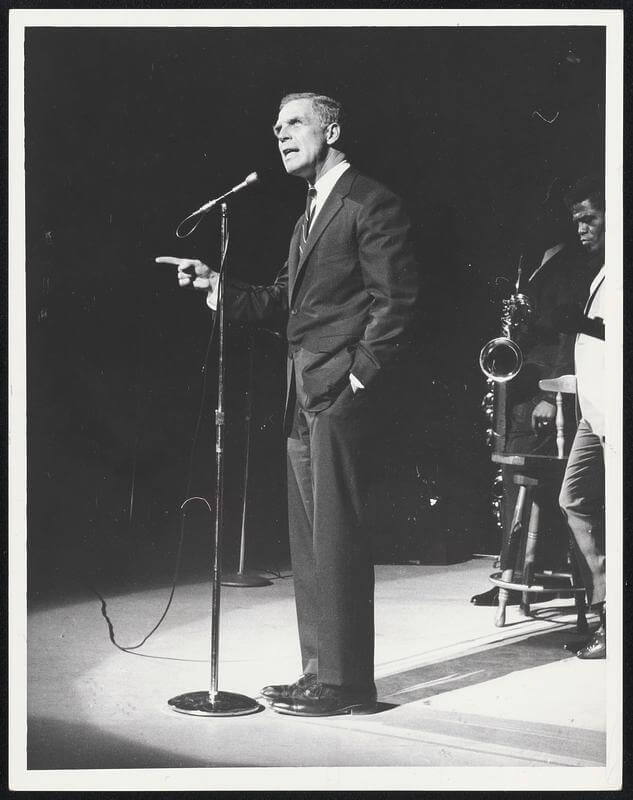
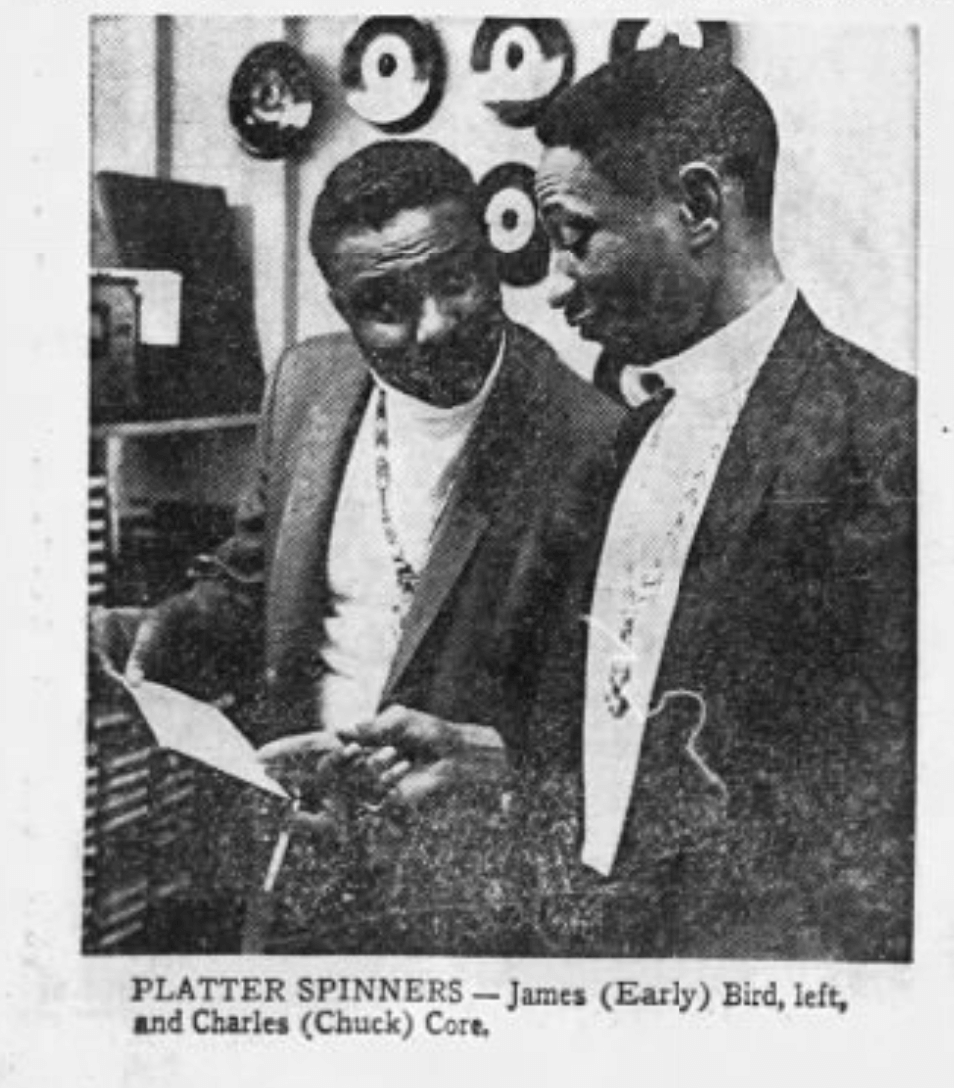
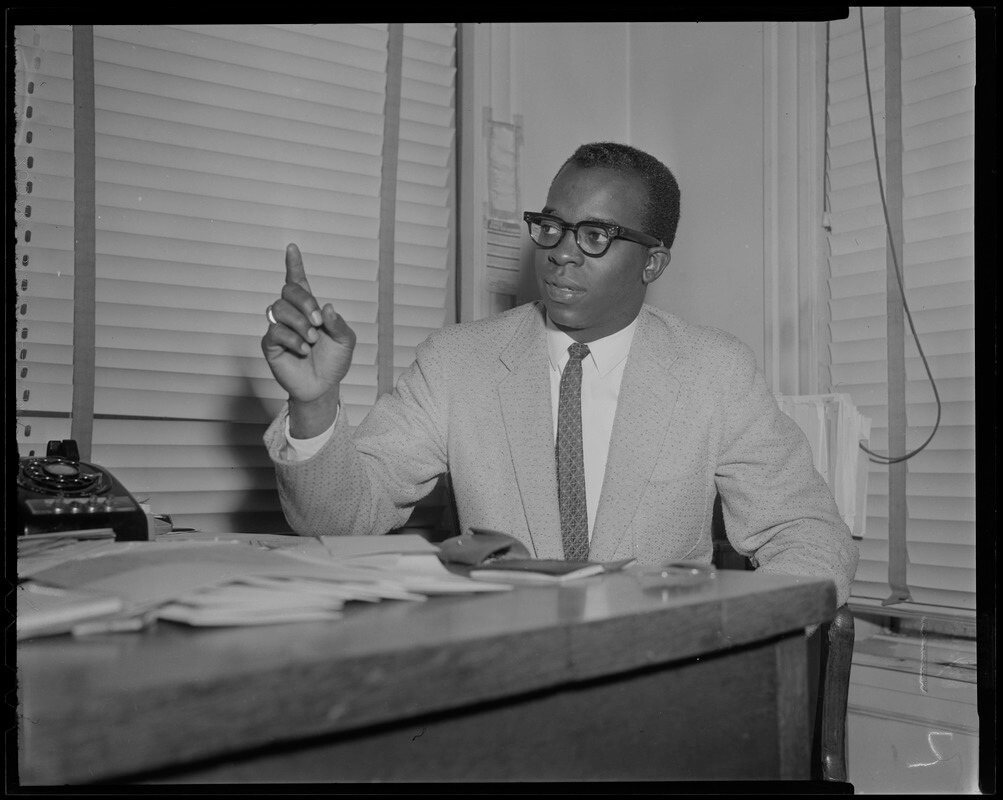
The only Black City Councilor at the time, Tom Atkins (1939 – 2008), as well as local soul and gospel music DJ, James “Early” Byrd, persuaded White that this was a bad idea. Atkins said, if the concert goers showed up at the Garden and found out “by a piece of paper stuck on the door that the show has been canceled and, if they’re not already angry and distraught over the murder of Dr. King, now they’re really going to be mad.” White agreed to let the concert go on and someone in the mayor’s office suggested going further. Why not broadcast the concert live? The hope was people would stay inside to watch it and stay off the streets where they might get violent. It was a great idea. The only problem was the headliner.
James Brown (1933-2006) was among the most successful and popular Black musicians in the country. Nicknamed “Soul Brother Number One,” “the Godfather of Soul” and “Mr. Dynamite,” Brown had risen from an impoverished childhood in Georgia to the top of the billboard charts. As Brown described his life, he had started shining shoes outside a radio station and now owned that station. The singer was behind such hits as “It’s A Man’s Man’s Man’s World,” “I Got You (I Feel Good),” and later “Say It Loud – I’m Black and I’m Proud.”
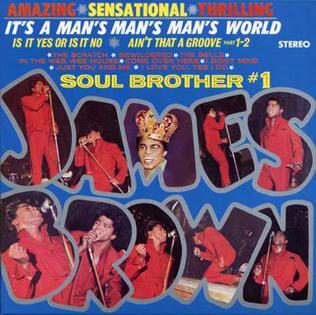
Brown was an influential figure in Black American culture. While he greatly respected King and his work, he did not follow the same non-violent principles. Nevertheless, he understood the gravity of King’s death. Brown went on television while in still in New York to call for peace to preserve King’s legacy of non-violence. Soon after, riots began to break out in Harlem. Brown was scheduled to perform in Boston the following night, but due to the chaos, nothing was for sure. Still Brown and his team flew up to Boston on April 5th.
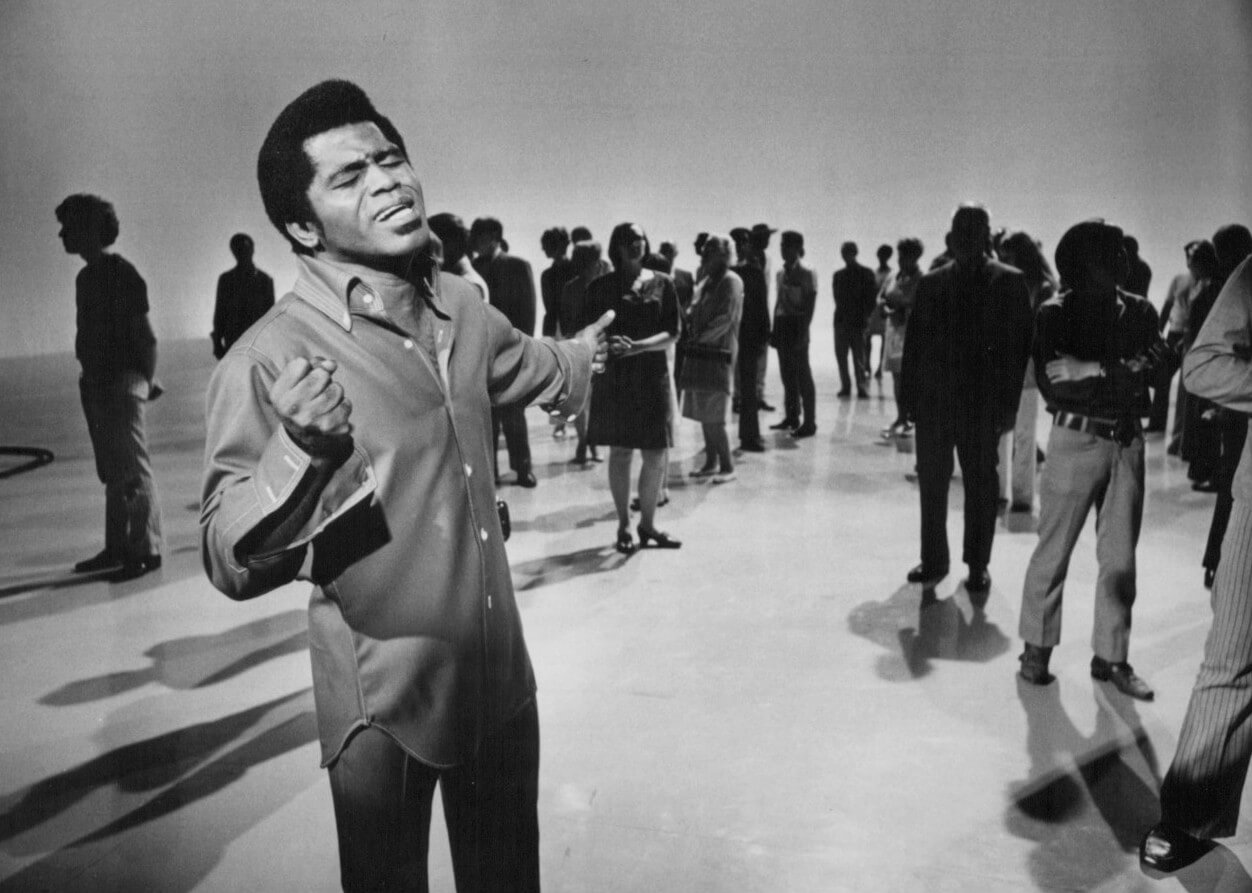
Mayor White and Councillor Atkins wanted to put the concert on TV, but weren’t able to ask Brown for permission. Still, they went ahead and asked WGBH’s mobile unit to prepare to broadcast the performance with less than a day’s notice. So far the station had mostly broadcast the Boston Symphony Orchestra. They did have the experience or equipment for a soul concert with James Brown’s signature shouts. But by showtime, they had everything set up.
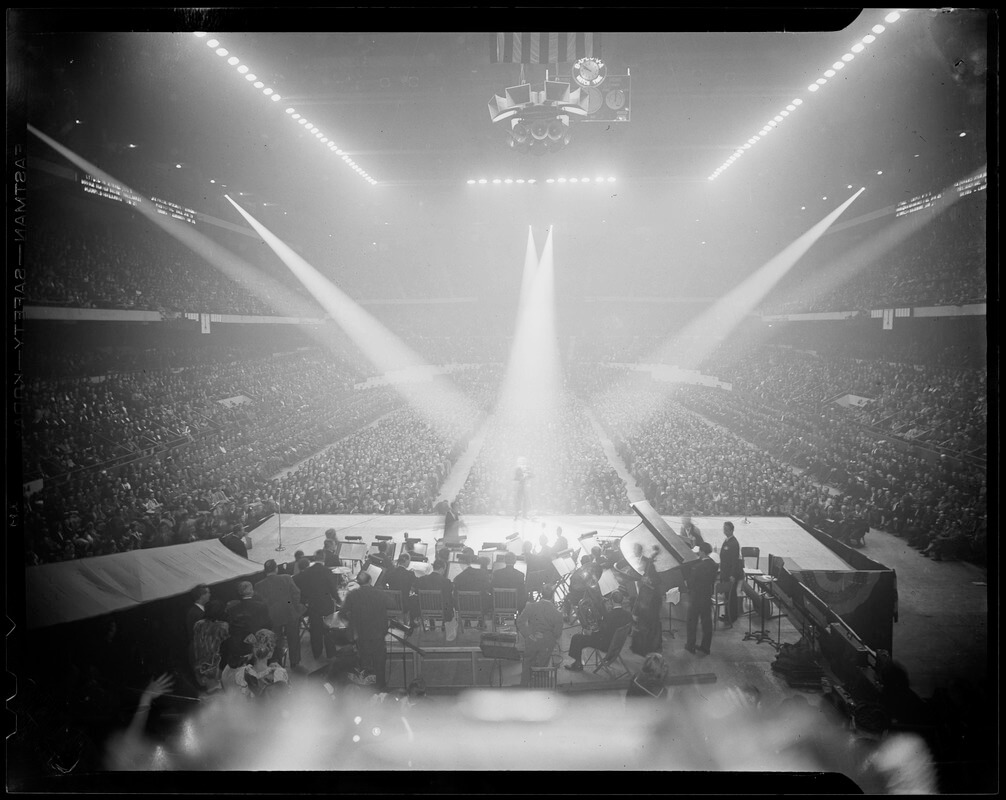
When Atkins met Brown at the airport, Brown asked him if the mayor really wanted to put the concert on TV for free. If it was on TV, who would come? Plus, due to a non-compete clause for an upcoming concert, Brown would lose $60,000 if the performance was televised. He’d do the concert, but only if the city agreed to pay him. White, knowing that widespread riots would be worse for the budget than a single payout, agreed. However, it is unclear how much, if any of the promised funds reached Brown.
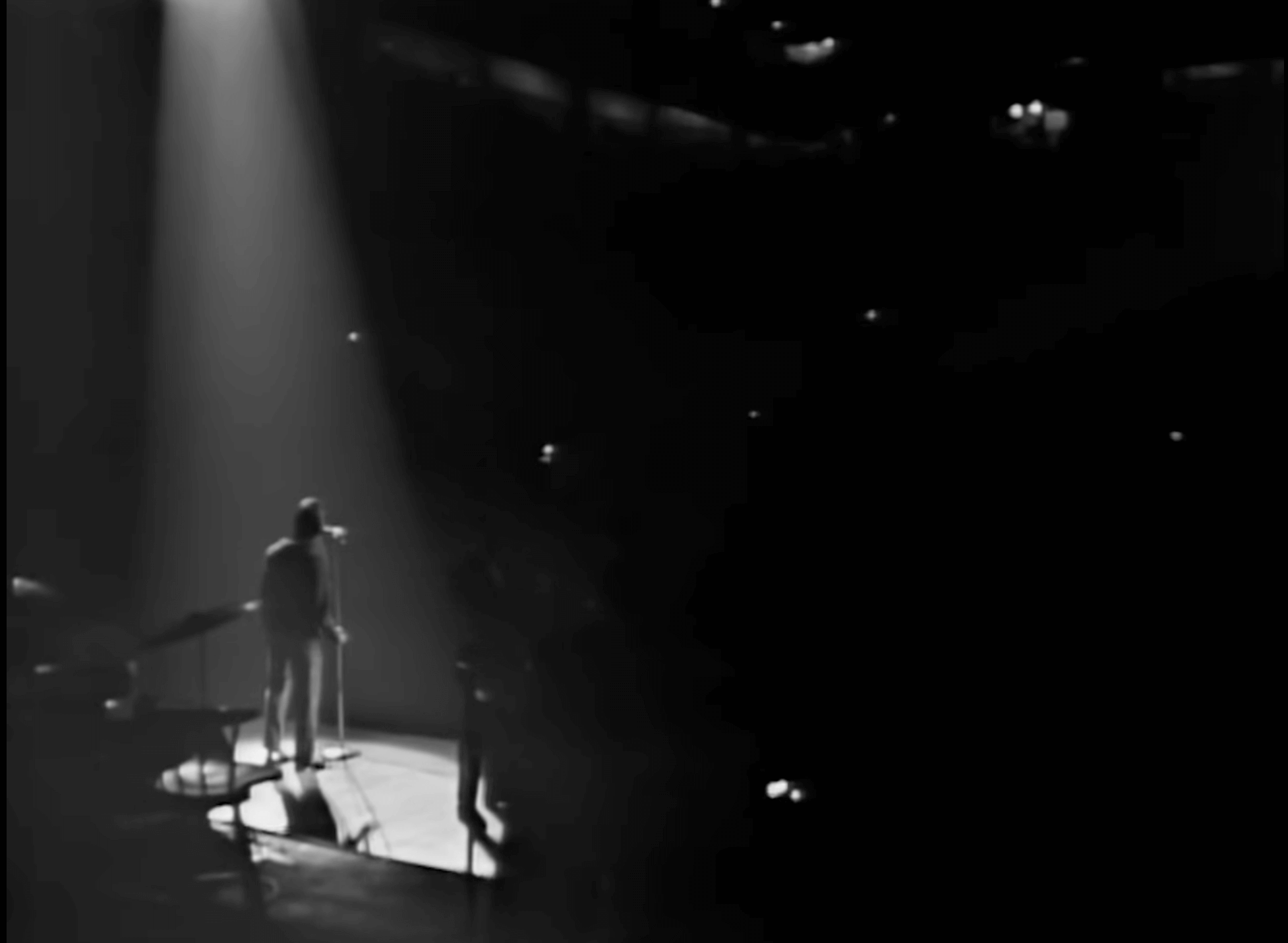
Of the 14,000 tickets sold, only 2,000 attendees showed up for the show at the Garden. Before the concert, both White and Brown spoke, thanking people for remaining calm and peaceful and honoring King’s legacy. Brown even said White was a “swinging cat” for providing the concert that night. The performance began and the city sat transfixed. Across the city, thousands of households tuned in to watch Brown perform for over two hours. He ran through his hits and kept the in person audience engaged. Atkins told the crowd that the streets were quiet. According to police reports, there was less going on out in the city than on an ordinary Friday evening. As Atkins recalled years later, “this concert was like magic.”
One moment of tension arose when several young fans climbed on stage to get closer to Brown. The police on the security team started pushing them back into the crowd with billy clubs. This could have gotten out of hand, but Brown stepped in, calmed the crowd and the police and told the concert goers, “we’re Black don’t make us all look bad”. He encouraged his fans to behave like young ladies and gentlemen. Though the venue could have gone up like a powder keg, but Brown kept it under control and went on with the show.
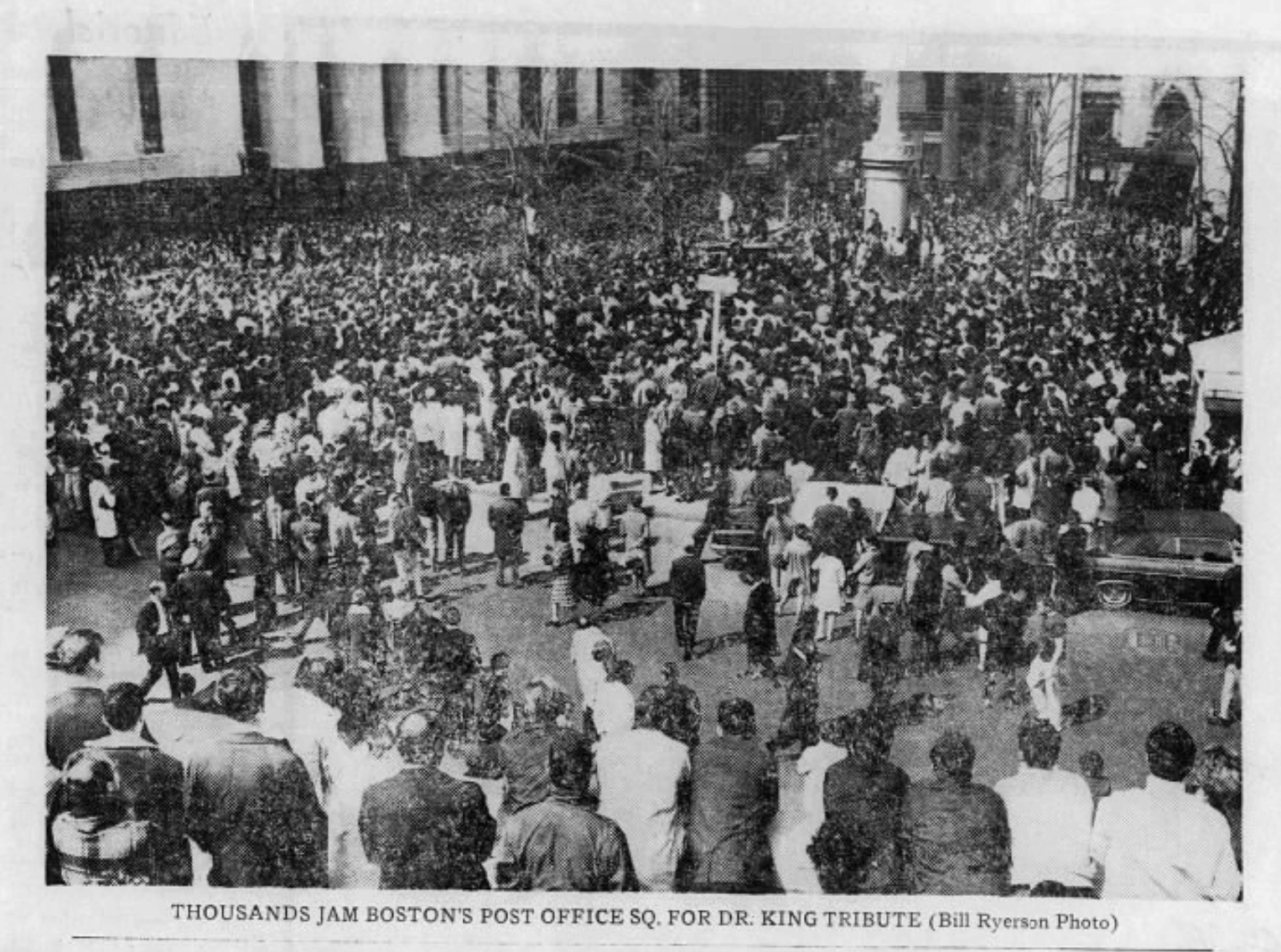
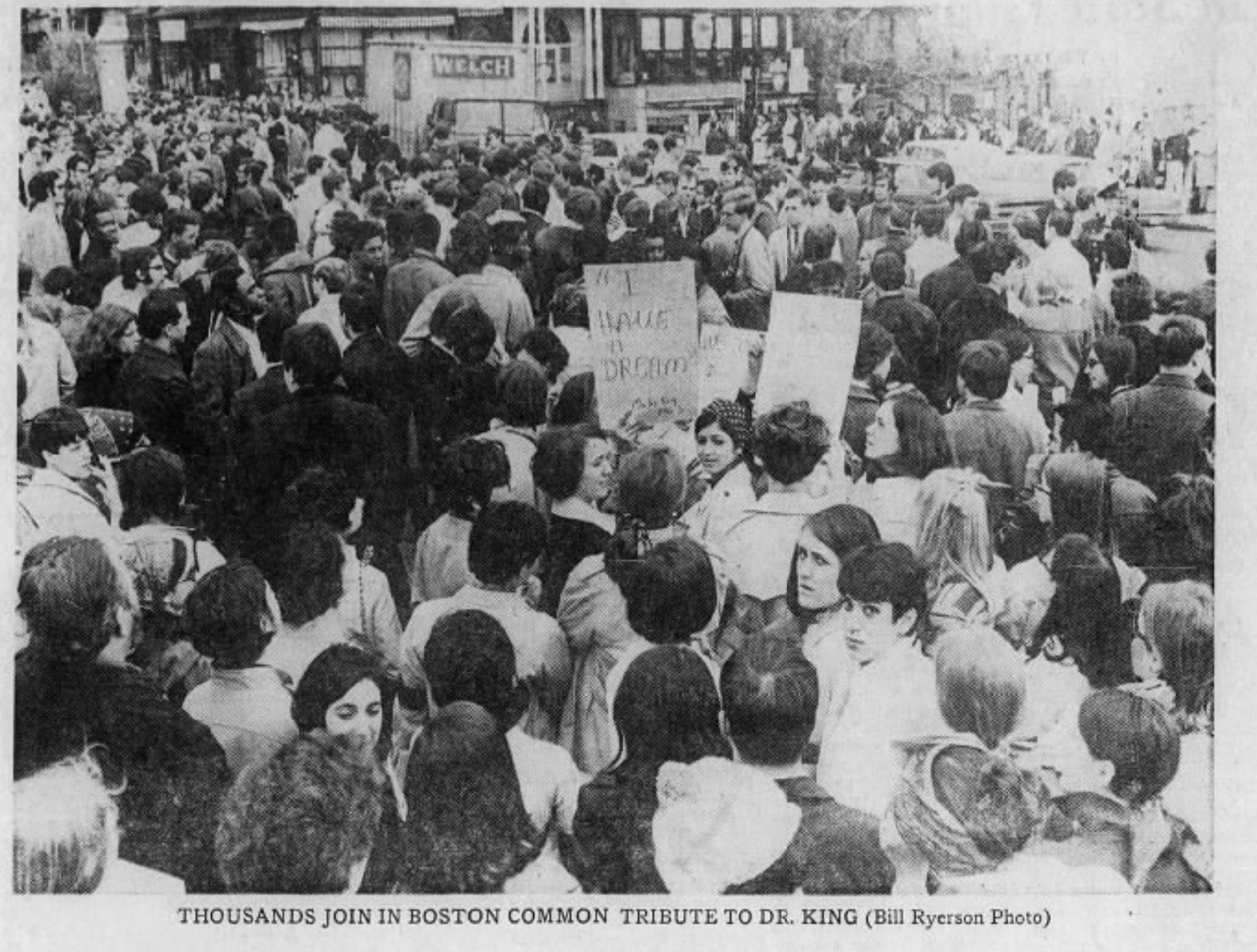
When the concert finally finished at 11pm, WGBH rebroadcast the concert on TV and radio with the hope of keeping the rest of the night quiet. James Brown had done it. Thanks to his sheer musical charisma, the scene in Boston was different from almost any other major city across the country. While there was scattered violence and several suspicious fires, the city emerged mostly intact. In the days that followed, volunteer Black patrols, organized after the Blue Hill Ave riots in 1967, were given due praise and credit for keeping the city calm. Still, there is no doubt that Brown’s performance made an impact on keeping people at home. People spent that quiet Friday evening distracted from their grief with music rather than rioting on the streets.
This clip from the original broadcast shows Councilor Atkins, James Brown, and Kevin White addressing the crowd before the performance began. (WGBH, American Archives of Public Broadcasting).
The full recording broadcast of the James Brown concert at the Boston Garden in 1968 is available on YouTube on the James Brown channel.
Article by Jaydie Halperin, edited by Bob Potenza
Sources: Dart Adams, “The Night James Brown Saved Boston: A 55th Anniversary Retrospective,” (Medium, April 5, 2023); Lorraine Boissoneault, “Martin Luther King Jr.’s Assassination Sparked Uprisings in Cities Across America,” (Smithsonian Magazine, April 4, 2018); Boston Globe, April 6, 1968, April 7, 1968; Jonathan Fuerbringer and Marvin E. Milbauer, “Roxbury, Quiet in Past, Finally Breaks into Riot; Why Did Violence Occur?,” (The Harvard Crimson, June 15, 1967); History.com Editors “James Brown calms Boston following the King assassination,” (History.com November 16, 2009, updated February 18 2025); “James Brown Biography,” (Rock and Roll Hall of Fame); Akilah Johnson, “The forgotten riot that sparked Boston’s racial unrest,” (The Boston Globe, June 1, 2017); David Leaf, dir., “The Night James Brown Saved Boston,” (Shout! Factory, 2008); Bob Seay, “Remembering The James Brown Concert That Calmed Boston,” (WGBH, April 5, 2018, updated June 22, 2018); WGBH, “James Brown at the Boston Garden; James Brown Speaks to the Crowd at the Boston Garden,” (American Archive of Public Broadcasting, original broadcast April 5, 1968).