
Urban Renewal, Highways, and the West End: The Federal-Aid Highway Act at 70
The 1956 federal act which created the modern Interstate Highway System turns 70 this year. Highway construction, like urban renewal, disproportionately affected low income and minority communities. However, highways have not always seen the same criticism as urban renewal. This article considers the connections between the two federal modernization projects and how the interstate was pitched as the path to the future.
On the 40th anniversary of the 1956 Federal-Aid Highway Act, urban policy expert Wendell Cox called the legislation “the best investment in the nation’s history.” Interstate highways were certainly transformative. These roadways are still used by millions of Americans daily. However, federal highway construction had similar problems to urban renewal. Working class neighborhoods were often razed under these programs in the name of civic progress. As the interstate highway system turns 70, this article considers its wide ranging effects on communities in Boston and beyond.
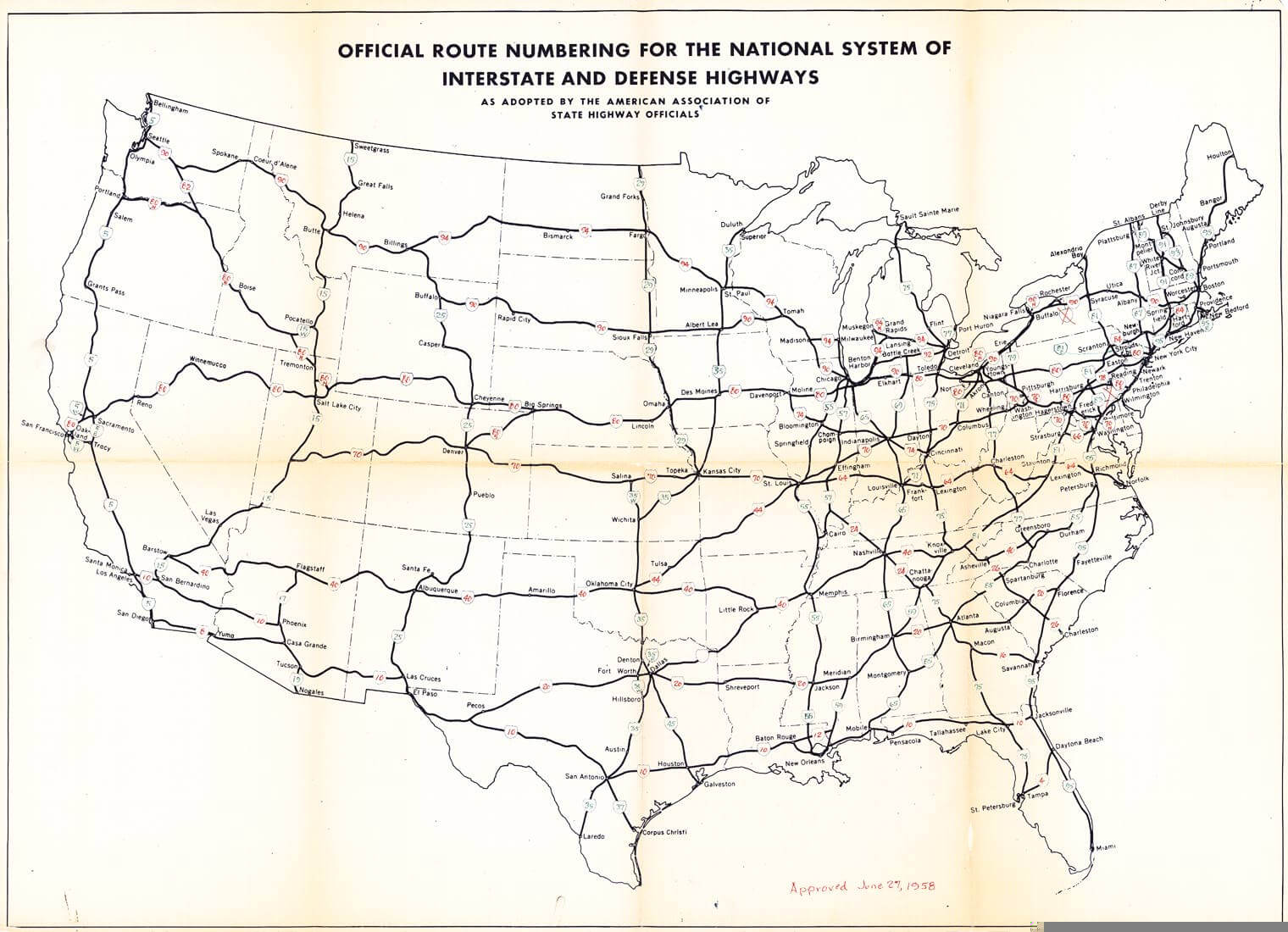
Even before President Eisenhower signed the bill into law on June 29, 1956, Boston had a complicated relationship with highways. Civil Engineer Bill Reynolds once claimed that Boston hated highways because of the Central Artery. This controversial elevated highway predated the Federal Highway Act and thus Massachusetts was responsible for planning, building, and paying for it. The Artery connected Boston’s downtown businesses to the rest of the region. It attempted to simplify midcentury automotive travel for a city that wasn’t designed for car transport. The Artery carved a path through the downtown neighborhoods. Overall, 20,000 residents in the Artery’s path lost their homes and commercial buildings in the West End were razed.
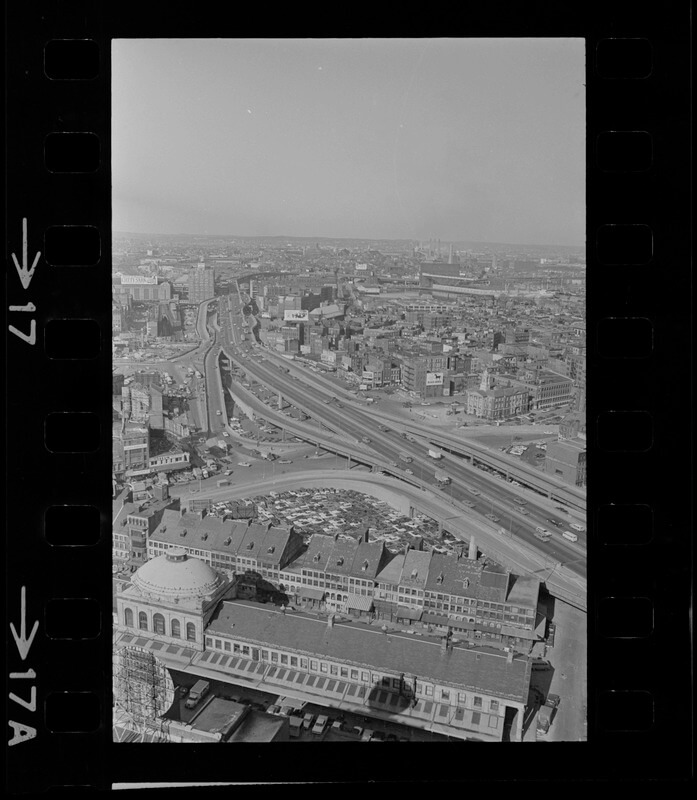
The standardization of the federal highway system allowed for easier long-distance travel. However, interstate driving is sometimes described as a soulless experience. This can be felt when comparing modern interstates to pre-1956 highways such as Route 66. The latter has tremendous cultural capital across literature, music, and film.
The reason behind the expanded federal highway system was the lack of interconnectivity between states. Before the Highway Act, driving long distances often required the use of small backroads. For a country in the throes of the Cold War, the difficulty of cross-country travel became a defense concern. America’s largest car manufacturer, General Motors, made an effort to convince the public that highways were worth their tax dollars.
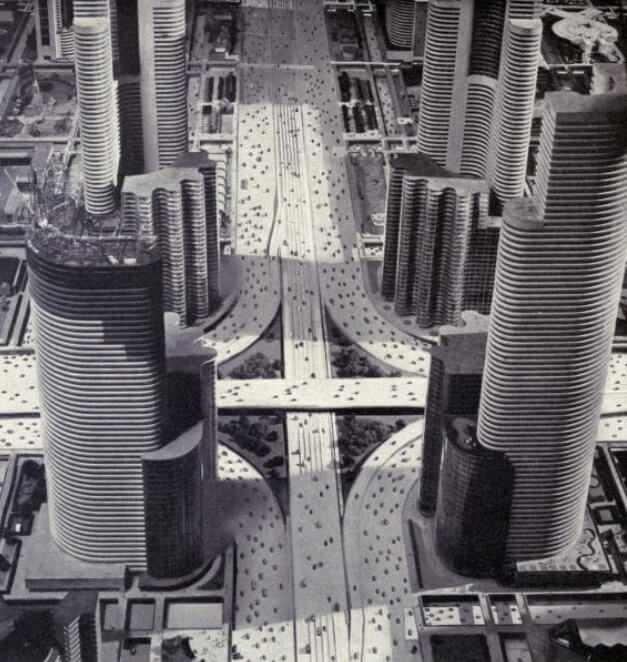
The company sponsored the “Futurama” exhibit at the 1939 World’s Fair in New York City. General Motors imagined the world of 1960 as a transportation utopia, anchored by the interstate highway. In an accompanying short film, they portrayed highways as elegant architectural feats, built in concert with the natural backdrop of rivers, forests, and mountains. There drivers could safely travel at high speeds. In 1939, the highway staples such as multiple lanes, elevated overpasses, circular interchanges, and sloped ramps were futuristic and exciting. Tens of thousands of people lined up to see this exhibit, laying the foundations for highway enthusiasm.
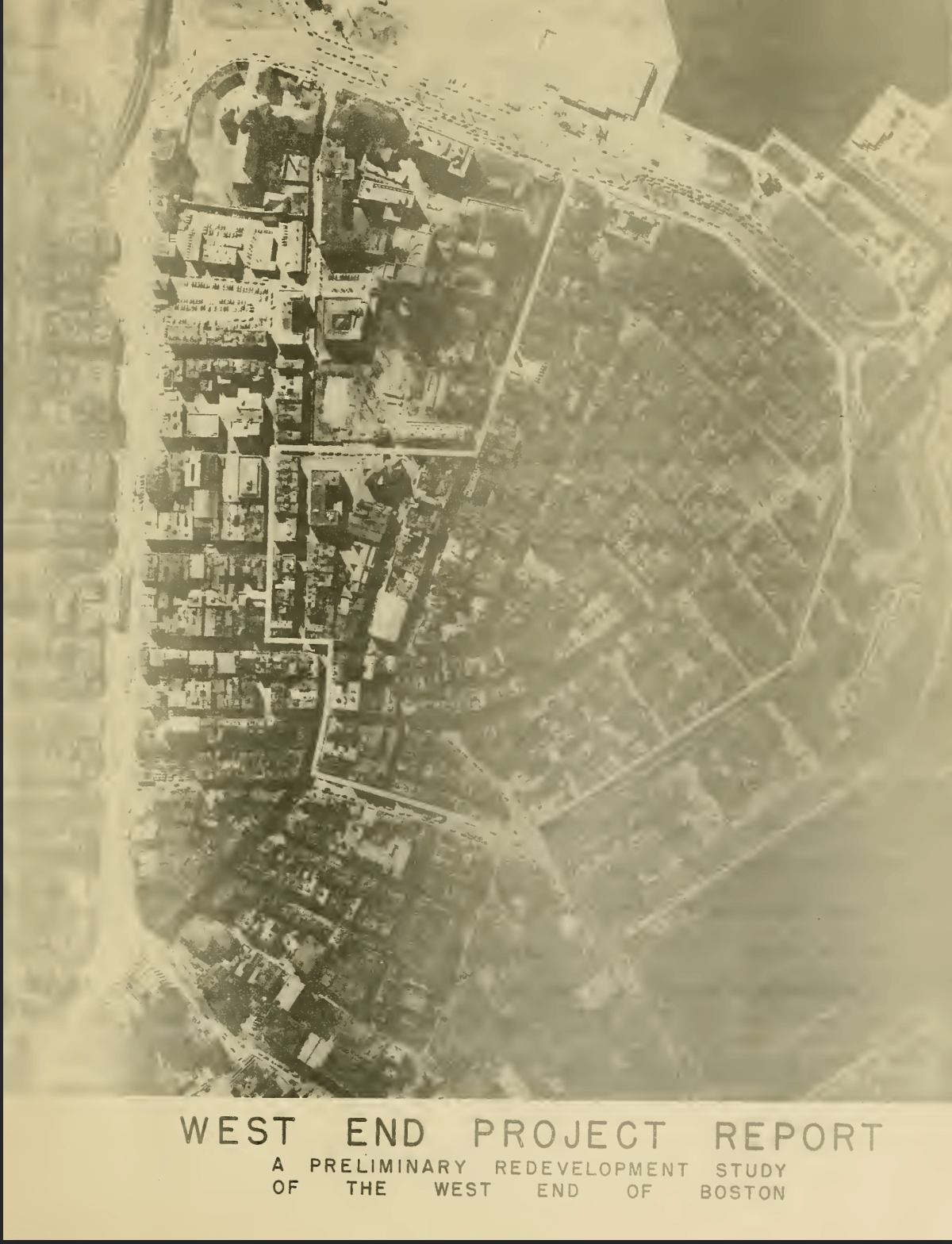
For government and business leaders, the future was defined by the accessibility of car transport. Cities across the country were totally unfit for cars. The West End neighborhood, for example, had narrow streets and alleyways characteristic of the 19th century city. Before urban renewal, the authors of the 1953 West End Project Report highlighted the nonexistent parking. Firetrucks couldn’t even fit within its streets. In many ways, the West End embodied the portrait of a post-war American city stuck in the past. Although West Enders in particular suffered displacement from urban renewal and not the interstate, there were connections between the programs nationwide. As architect and urban designer M. David Lee described, “the interstate highway system and the urban renewal program went together hand in glove.”
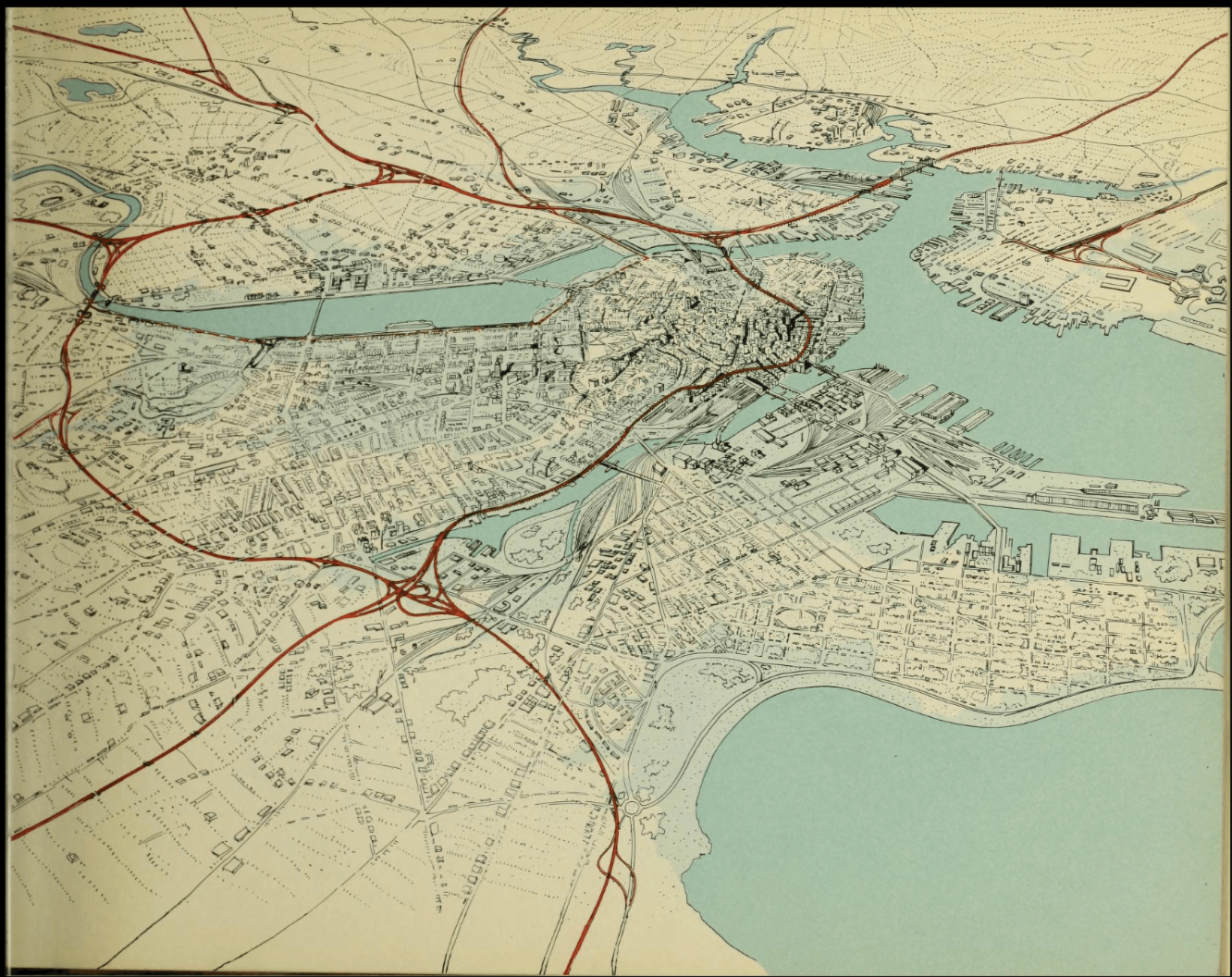
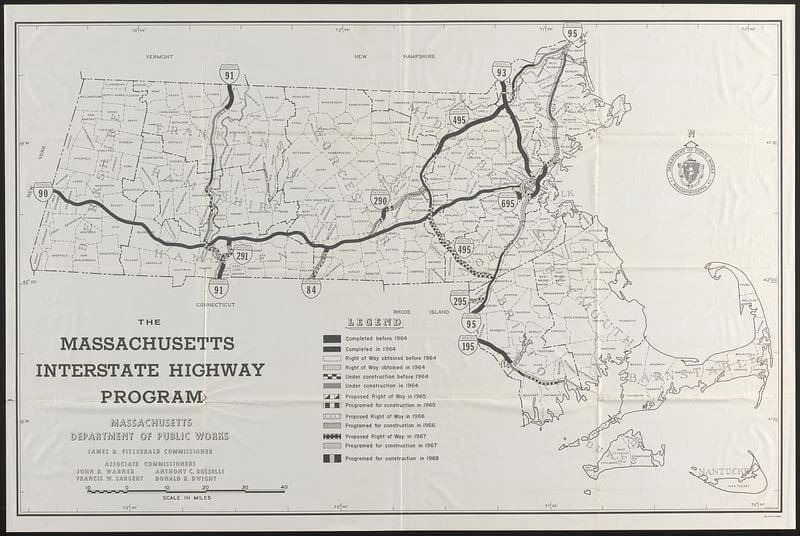
The 1948 Massachusetts Master Highway Plan offered detailed proposals for building a series of highways in the Boston area. This included the Central Artery, Southeast Expressway, Storrow Drive, Mass Pike Extension, and Route 128. The state had an ardent supporter for Boston-based highways when Mayor John Hynes assumed office in 1950. Hynes campaigned on the promise of building a “New Boston.” Transportation officials prioritized concentrating the highway routes on land with low property values. This would in effect target working class and immigrant neighborhoods. The Master Highway Plan outright stated that “relocation of tenants is an integral part of a highway project.” The “Slum Clearance” provision of the 1949 Housing Act provided the green light for destruction of blighted neighborhoods. Between the highway and urban renewal programs, lower-class neighborhoods faced compounding threats. Federal money poured into cities who promised to redevelop neighborhoods. By the time of the 1956 highway legislation—which promised municipalities 90 percent federal reimbursement for any highway projects connected to the interstate system—there was no turning back.
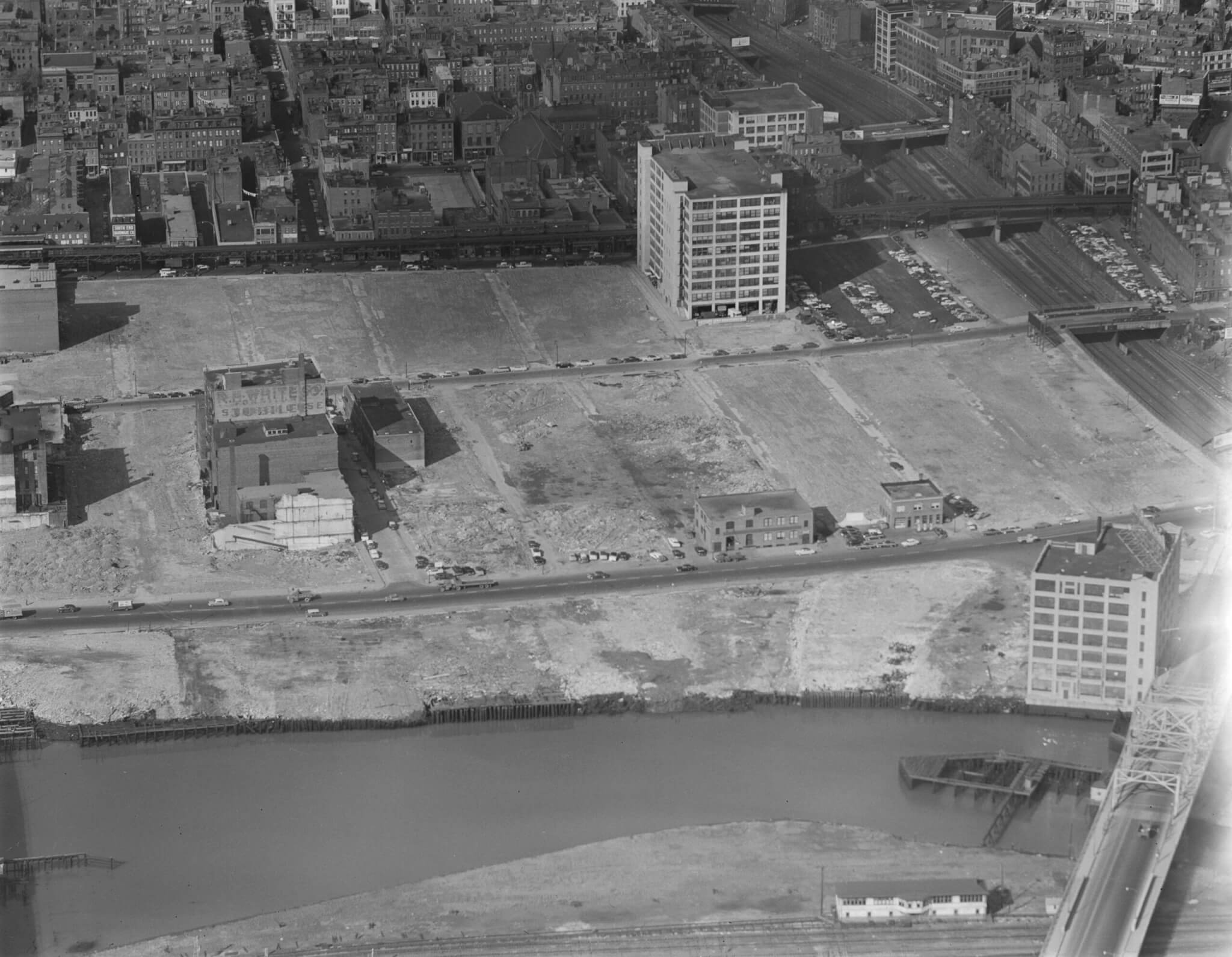
Greater Boston had fallen into post-industrial disrepair by the early-20th century. The construction of interstate highways offered an economic stimulant for Greater Boston. It was a rare policy initiative that won support of business, labor, and politicians. The major car manufacturers would have better transportation infrastructure for drivers. Trucking and construction unions could count on scores of new jobs for their members. Ambitious politicians like John Hynes could take credit for civic investment. But highways alone weren’t going to raise Boston’s property values and expand its tax base. The city needed to lure high income residents back to live in the city. The West End happened to sit on valuable waterfront property with easy access to the newly built Mass Pike and I-93. It carried immense appeal for luxury development.
Highways promised accessibility, urban renewal promised modernity. The West End existed at the intersection of both. The Boston Redevelopment Authority began handing out eviction notices in 1957 and demolished the neighborhood. Low income residents in other Boston neighborhoods were also removed for highway construction. Former Massachusetts Secretary of Transportation Fred Salvucci recalled his grandmother’s displacement. She was forced to leave her North Brighton house during construction of the Mass Pike Boston extension. According to Salvucci, she received one dollar as compensation.
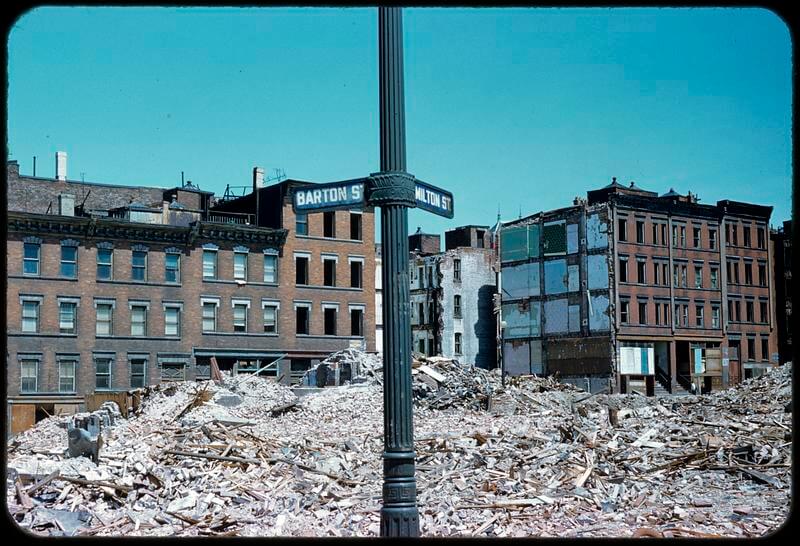
It didn’t take long for critics to deride the West End project. In his report for the Joint Center for Urban Studies, Martin Anderson found that urban renewal had no discernible economic benefits. Marc Fried published a study of the psychological trauma of West Enders seeing their homes and community demolished. The high rises built in the West End’s wake were supposed to be sleek and futuristic, like the highways. Nonetheless, modernist architecture had vocal critics. For example, Norman Mailer wrote in 1966 that individuals who inhabited luxury modernist dwellings were “isolated in the empty landscapes of psychosis.”


The urban renewal program ended in 1972 when President Nixon cut funding. The interstate highway program never received the same criticism as urban renewal did. Still, neighborhoods from Oak Street in New Haven, to the South Bronx in New York City, to Overtown in Miami were razed to accommodate I-95. While nationwide urban renewal displaced 300,000 people, the construction of new roads displaced over 1,000,000. Like urban renewal, highways disproportionately affected Black, Brown, and low-income neighborhoods. M. David Lee found that “The combination of clearance for highway construction and urban renewal tore down more housing in the cities than they ever built through any of the public housing programs.”
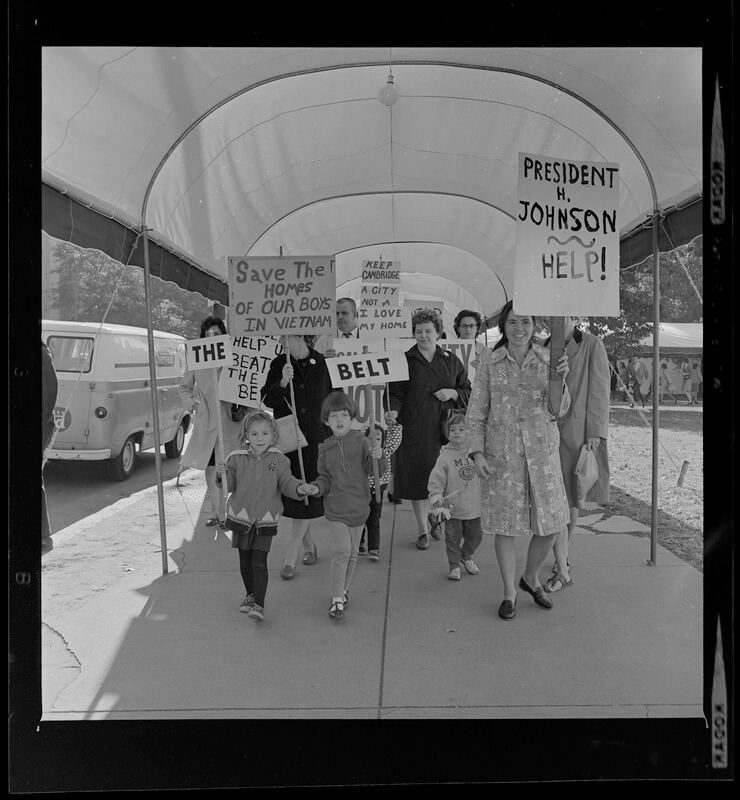
The love affair with highways couldn’t last forever. Many cities in the 1960s and 1970s saw “Highway Revolts” in which communities fought back against the “concrete monsters.” People from all walks of life were fed up with undemocratic urban development. In Greater Boston, a diverse coalition of activists banded together to protest and defeat the planned circular Inner Belt loop. The Central Artery, the “green monster” of downtown Boston, ultimately had to come down. The project, already facing a large price of nearly $25 billion, needed the political support from the people. The Big Dig, which ultimately demolished the Artery, wouldn’t have been feasible without assurances that neighborhoods wouldn’t be razed and residents wouldn’t be displaced. This was a direct reaction to the failures of urban renewal.
For all of the upheavals associated with highway construction in Boston, these roads are a mere sliver of the 45,000 federal highway miles built since the Federal-Aid Highway Act. As government officials and journalists commemorate the 70th anniversary of the Act’s passage, they must consider both the transportation innovation of interstate highways, and the social costs that came along with it.
Article by Neil Iyer, edited by Jaydie Halperin
Sources:
Audrain Automobile Museum, “The Negative Impact of the Interstate Highway Act”; Boston Housing Authority, “The West End Project Report: A Redevelopment Study,” (Boston: Boston Housing Authority, 1953); Christopher Brown, “Taken Away – Urban Renewal and Boston’s West End,” Following Footprints Media, 2023; Karilyn Crockett, People Before Highways: Boston Activists, Urban Planners, and a New Movement for City Making (Amherst and Boston: University of Massachusetts Press, 2018); Eastern Roads, “John F. FitzGerald Expressway (Central Artery): Historic Overview,” Boston Roads; GBH, “The Big Dig – Podcast” Episode 1: We Were Wrong, Episode 9: Hearts and Minds; Herbert J. Gans, “The Failure of Urban Renewal,” Commentary Magazine, 1965; Lawrence R. Hott and Tom Lewis, directors, “Divided Highways,” PBS, 1997; Library of Congress, “National System of Interstate and Defense Highways Act Signed into Law”; Charles A. McGuire & Associates,“The Master Highway Plan for the Boston Metropolitan Area”, (Massachusetts Department of Transportation, 1948); Greg Miller “Maps Show How Tearing Down City Slums Displaced Thousands,” (National Geographic, December 15, 2017); Raymond A. Mohl, “Stop the Road: Freeway Revolts in American Cities,” Journal of Urban History 30, no 5, (July 2004): 674-706, DOI: 10.1177/0096144204265180; “National Interstate and Defense Highways Act (1956)”, (National Archives); Thomas O’Connor, The Hub: Boston Past and Present (Boston: Northeastern University Press, 2001); Pete Stidman, “Casey and a brief history of Highways in Boston,” (Boston Cyclists Union, 2012); Yanni Tsipis, Building the Mass Pike (Portsmouth, NH: Arcadia Publishing, 2002).