
The Columbia Rediviva: The Boston Ship that Sailed the Globe, Twice
The ship known as the Columbia Rediviva was among the maritime pioneers that can trace their origins to Boston. Having sailed around the world, not once but twice, to participate in the fur and China trades, the ship accomplished several firsts. The ship’s adventures include escape from the Spanish Empire, hurricanes, and new discoveries which bear the name Columbia to this day .
In 1773, shipbuilder James Brigg built the Columbia at Hobart’s Landing in Norwell, Massachusetts (or possibly Plymouth). Fourteen years later in 1787, this ship would be rebuilt and renamed Columbia Rediviva (Latin for Columbia Revived). The ship was an 83 foot long three-masted sailing ship. It was manned by 16-31 crew members and could carry over 200 tons of cargo. The Columbia Rediviva would make history as the first American vessel to circumnavigate the globe.
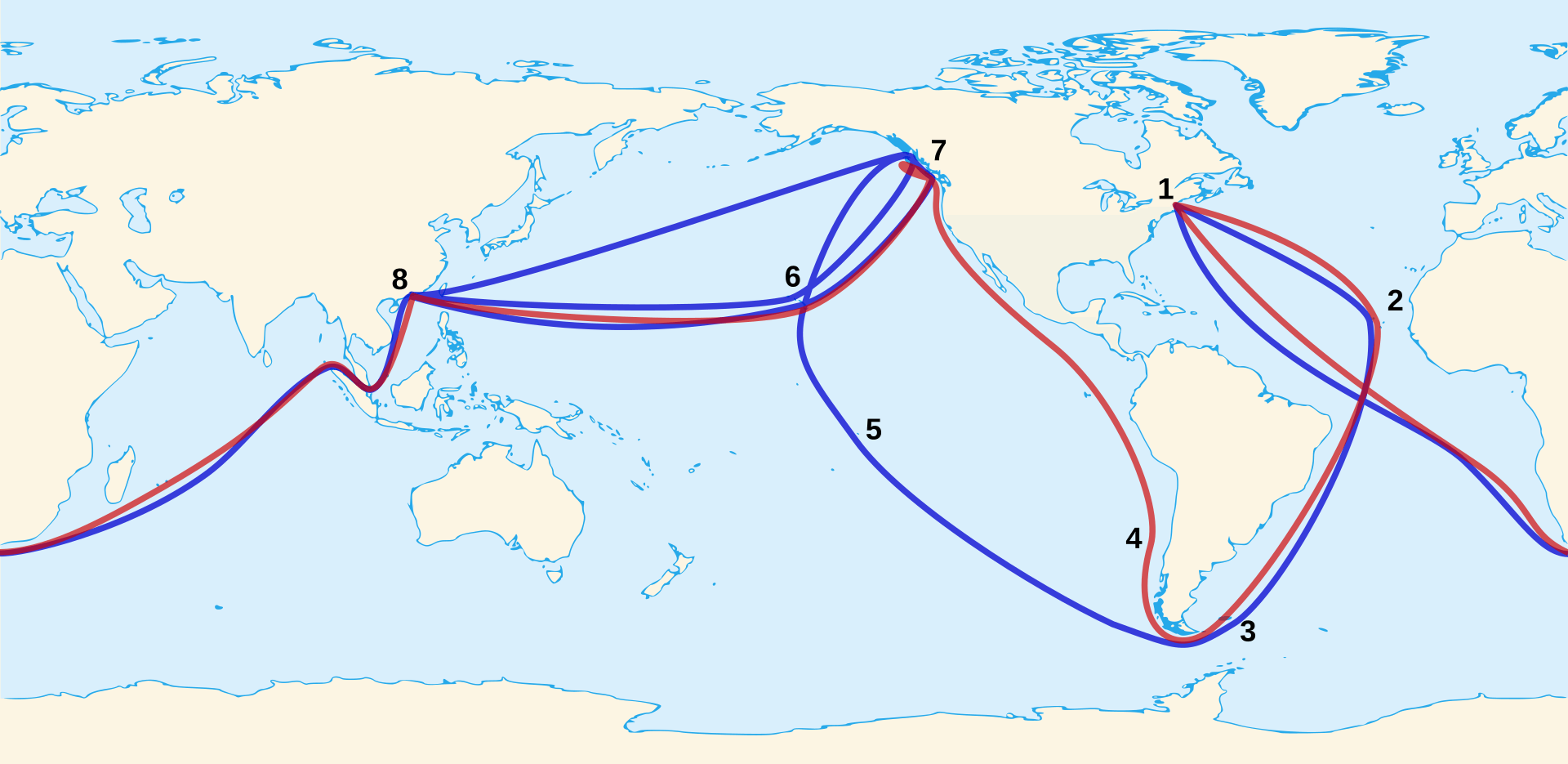
When the Columbia set sail from Boston on September 30th 1787, its mission was ambitious. Boston merchants, under the leadership of architect Charles Bulfinch, had funded an expedition to trade furs for Chinese goods. The plan was for the Columbia to sail around Cape Horn, South America to Nootka Sound on the Pacific Northwest coast. There, the crew would trade manufactured goods for furs and pelts, especially sea otter furs, harvested by Native Americans. With a cargo of furs, the Columbia would proceed to Canton in southern China (today the province of Guangdong, north of Hong Kong), where sea otter fur was in high-demand. The Americans would trade the furs for silk, tea, and other valuable Chinese goods, and then sail west back to Boston.
Captain John Kendrick led the Columbia. A companion vessel, the smaller and nimbler Lady Washington was captained by Robert Gray. A hurricane separated the two ships on April 1st 1788. The Lady Washington proceeded on to Nootka Sound. Meanwhile, the Columbia sailed to the Spanish Juan Fernandez Islands, off the coast of Chile, to repair the vessel. The Spanish commandant generously furnished the Columbia. This displeased senior Spanish colonial officials. Spain claimed control of the entire Pacific Ocean and disapproved of foreign vessels sailing the Pacific without a license from the Spanish Royal Court. The Spanish Viceroy of Peru thus dispatched a vessel to capture the Columbia.
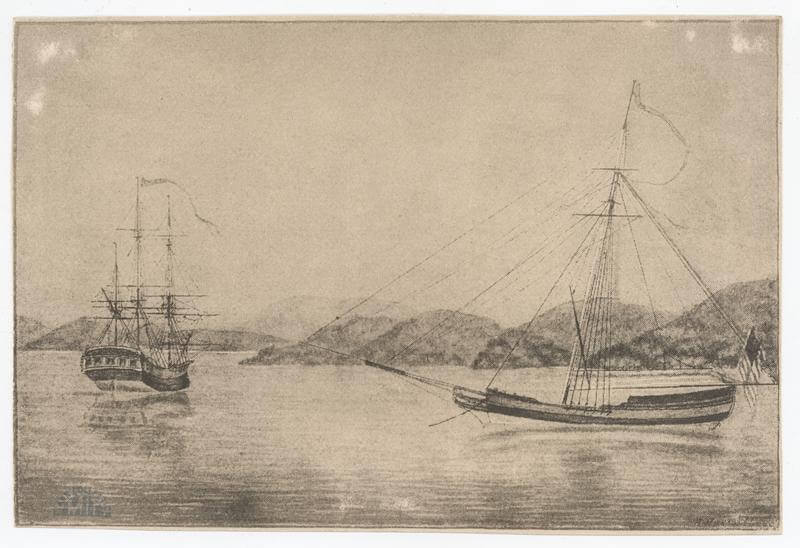
Luckily, the Columbia reached Nootka Sound on September 23rd unscathed. This was just six days after the Lady Washington had arrived. Eventually a Spanish ship did reach the Columbia in Nootka Sound. However, the Spanish left the ships in peace after Captain Kendrick agreed to fire a salute to the Spanish flag in recognition of Spain’s claim to the Pacific.
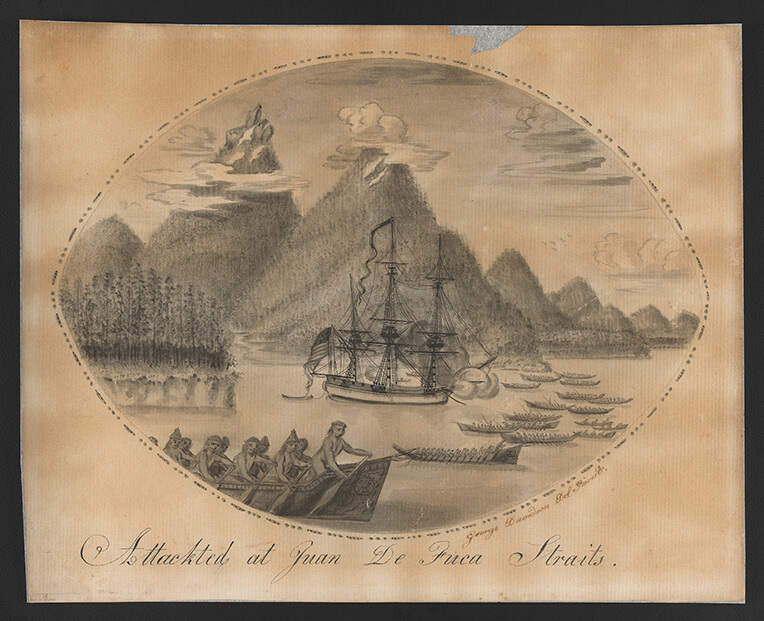
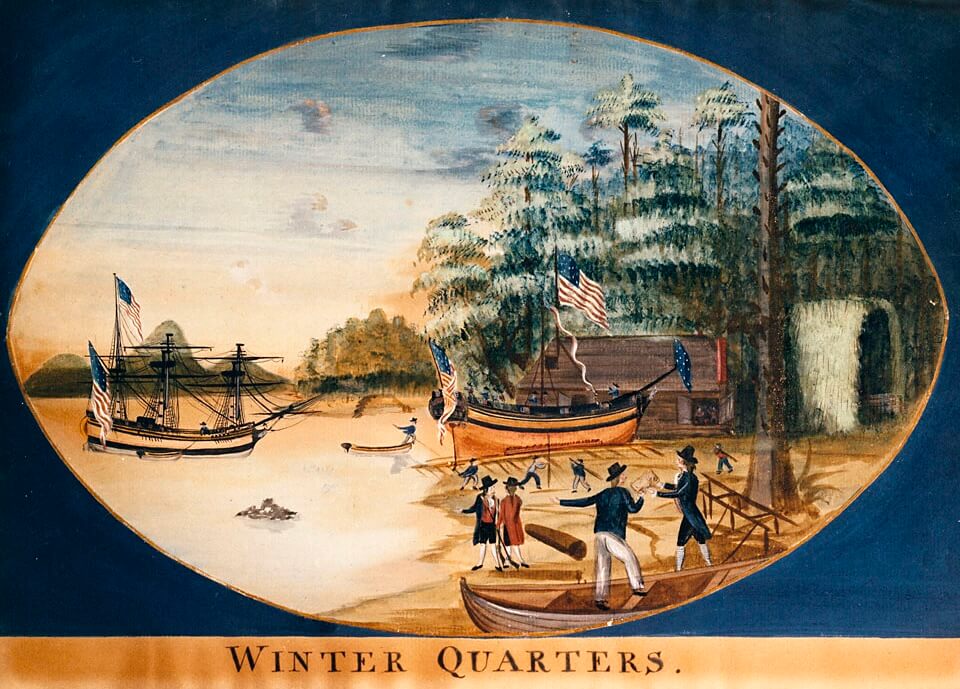
The two ships spent the winter and spring in Nootka Sound trading for furs. On July 30th 1789, with a cargo full of valuable furs and pelts, the Columbia set sail to China. This time Robert Gray captained the Columbia, as John Kendrick had ordered Gray to switch ships with him. Kendrick, aboard the Lady Washington, would continue trading for furs in the Northwest while the Columbia continued the expedition.
The Columbia sailed across the Pacific to China, stopping in Hawaii along the way to resupply. This gave them the distinction of becoming the first American vessel to land in Hawaii. On arrival in Canton, the Columbia traded its cargo of furs on February 3rd, 1790. With a cargo full of tea, the Columbia then sailed west. It rounded the Cape of Good Hope at the southern tip of Africa and crossed the Atlantic. It arrived in Boston on August 10th, 1790, to much celebration.
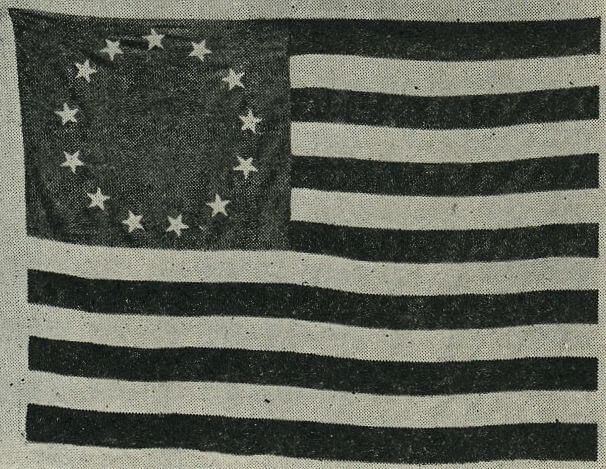
Unfortunately for the investors, the expedition was not profitable. The Columbia’s cargo of tea suffered water damage during the voyage home. Undeterred, the Boston merchant community sent the Columbia on a second voyage almost immediately. Robert Gray set sail again a month later on September 28th, 1790. The Columbia returned to Boston just under three years later in July 1793, having successfully circumnavigated the globe twice. This time, they succeeded in bringing back a cargo of valuable Chinese goods.

Columbia’s success marked the beginning of Boston’s dominance in the fur trade of the Pacific Northwest for over twenty years. Americans supplanted the British and Russians as the preeminent traders in the region. Native Americans in the Pacific Northwest came to refer to white traders as “Boston Men” in reference to how many came from there.
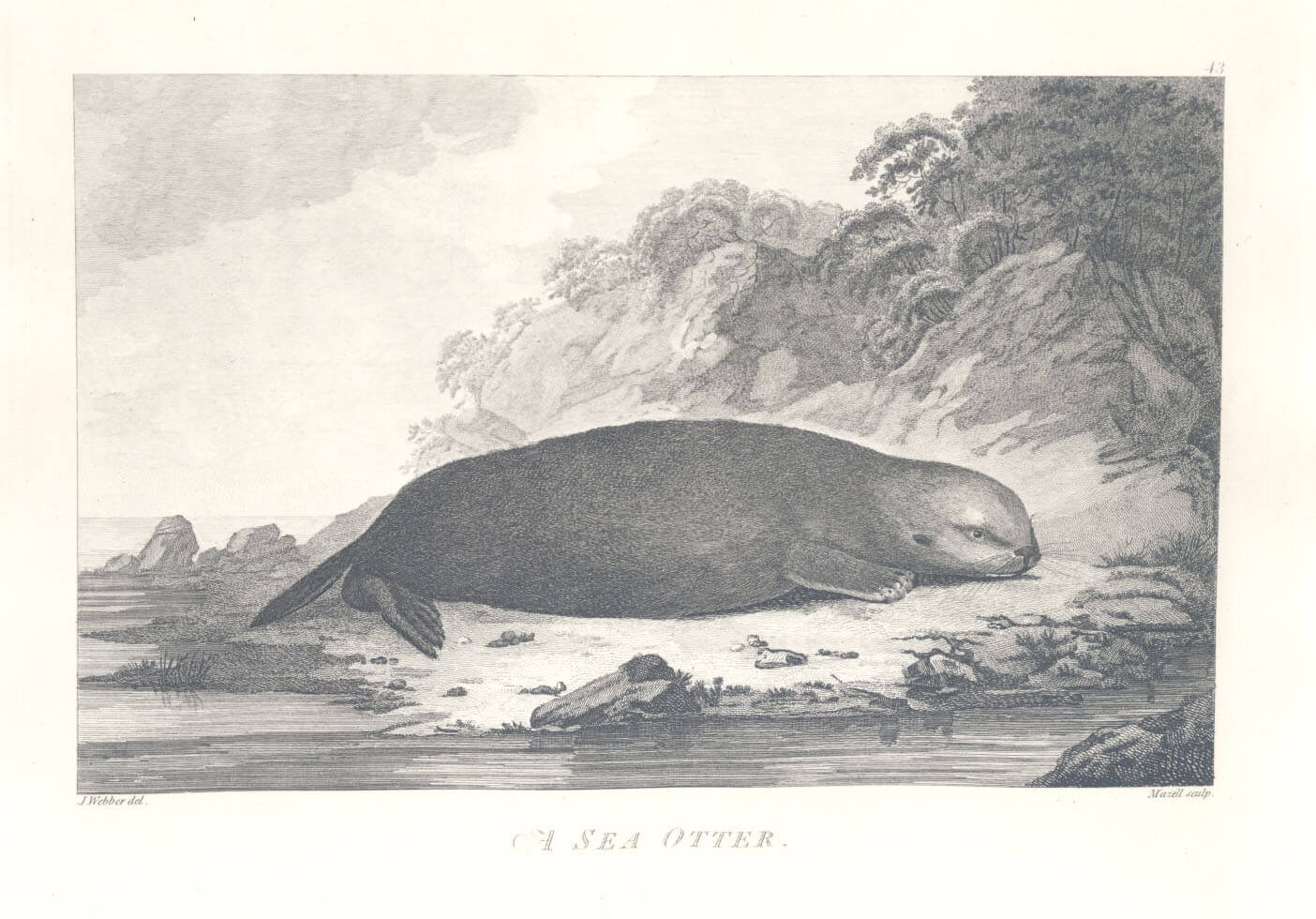
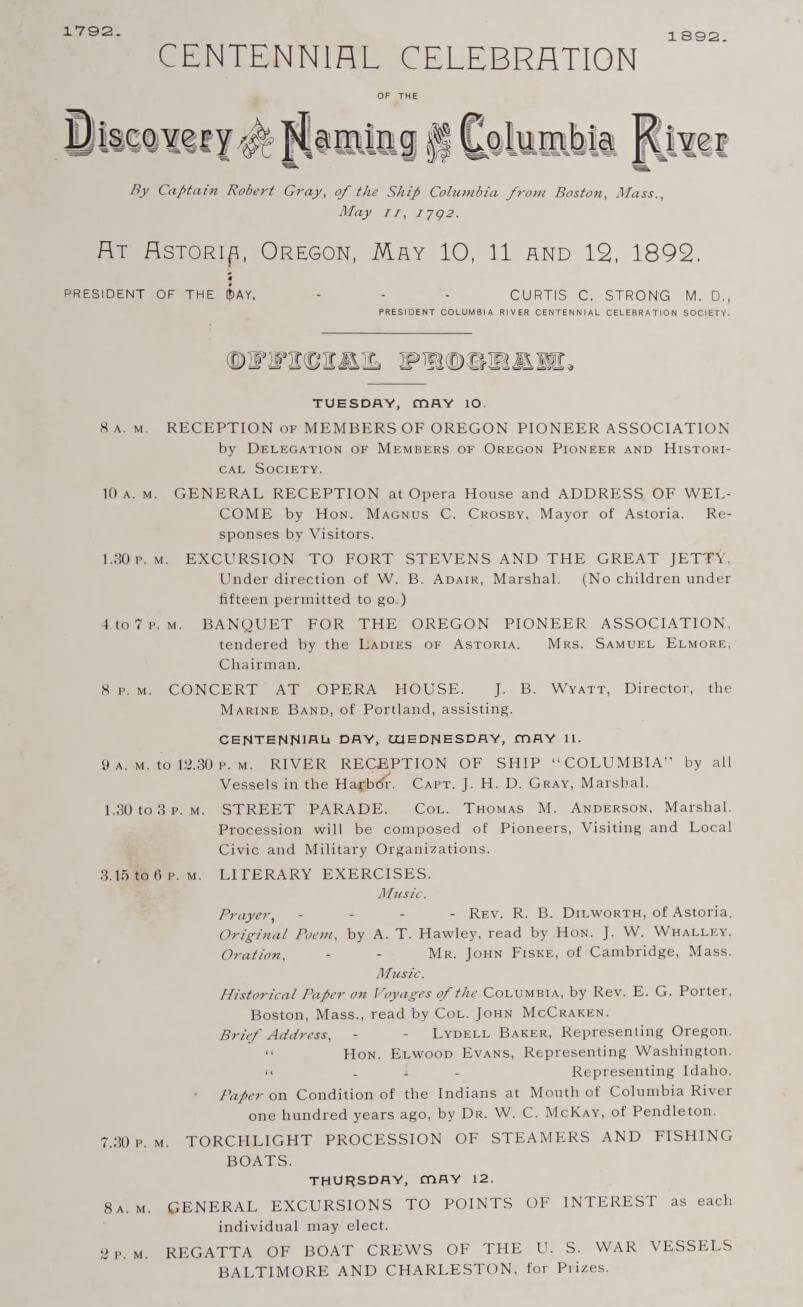
The Columbia was decommissioned in 1806. The final entry in the Columbia Redivina’s register reads that the ship was “ript to pieces.” Yet its legacy lived on. It was Captain Robert Gray aboard the Columbia who became the first person of European descent to document and navigate the Columbia River. He named the river after the ship. The ship is also the origin of the name of the Canadian province of British Columbia. This expedition gave the United States a greater claim to the Columbia River Basin and the Northwest. The Lady Washington went on to become the first American vessel to attempt to trade with Japan, almost 70 years before Commodore Perry’s expedition that forced open the isolated nation.
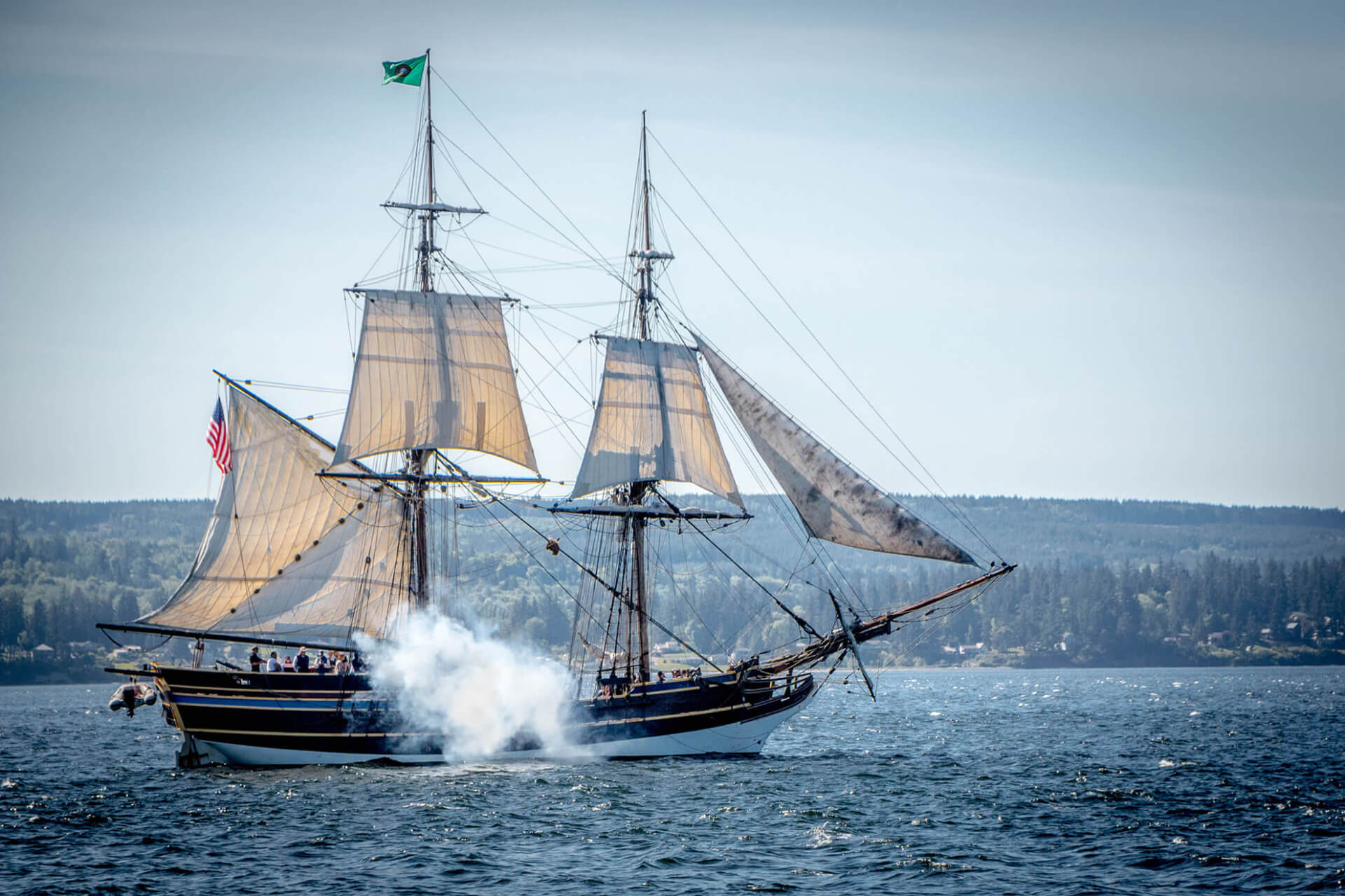
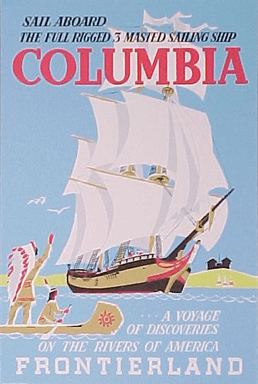
While the original Columbia no longer exists, a full-scale replica of the ship still sails today. In 1958, the Walt Disney Company built Sailing Ship Columbia for use in shows and performances in Disneyland’s artificial rivers. The Lady Washington has also been replicated by Grays Harbor Historical Seaport and acts as an educational and leisure vessel. The replica has also appeared in several films, including “Pirates of the Caribbean: The Curse of the Black Pearl” as the Interceptor.
Though little known today, the Columbia is a reminder of the ambition and optimism of Americans after the Revolutionary War. Just four years after the Treaty of Paris ended the War, an American vessel embarked on an expedition to circumnavigate the globe. During its travels, the Columbia advanced the United States’, and especially Boston’s, position as a major player in international trade. Additionally, under Captain Robert Gray, the Columbia accomplished many milestones in its voyage around the globe and up the Columbia River. The ship marked many firsts in the Age of European exploration on behalf of its young nation. While the Columbia never truly discovered anything, it was instrumental in connecting Boston to the rest of humanity and the world.
Article by Will Dorsey, edited by Jaydie Halperin
Sources: Barton Barbour, “Fur Trade in Oregon Country” , (Oregon Encyclopedia, Aug. 26, 2024); Columbia River Centennial Celebration Society, “1792-1892 Centennial Celebration of the Discovery and Naming of the Columbia River by Capt. Robert Gray, of the Ship Columbia from Boston, Mass. May 11, 1792”, (Internet Archive, originally published 1892); Grays Harbor Historical Seaport, “Lady Washington History”, Lucinda Joy Herrick, “Revisiting the Rediviva : first mate Robert Haswell’s account of the Columbia Rediviva’s activities in China and on the return journey during the second voyage”, Dissertation, Portland State University, 1990; Bernice Judd, ed. Helen Yonge Lind, Voyages to Hawaii before 1860: A Record, Based on Historical Narratives in the Libraries of the Hawaiian Mission Children’s Society and The Hawaiian Historical Society, Extended to March 1860, (Honolulu: The University Press of Hawaii, 1974); Fred Lockley, Oregon Trail Blazers, (New York: The Knickerbocker Press, 1929); Massachusetts Historical Society, “A Voyage Round the World Onboard the Ship Columbia Rediviva and Sloop Washington”; MIT Museum, “Columbia Rediviva”; Joseph A. Mussulman, “Columbia River Explorers: Hecata, Gray, and Vancouver” (Discover Lewis & Clark); A.E. Platt, “Attackted at Juan de Fuca Straits, ” (Oregon History Project, Oregon Historical Society, 2021).