
The Church of the Advent on Brimmer Street
The Church of the Advent, now located on Brimmer Street on the flats of Beacon Hill, traveled across the West End during its almost 200 year history. A leader in the Anglo-Catholic church tradition in the United States, the congregation began with the idea that regardless of income all would be able to worship at their church. The Church of the Advent has a rich artistic and musical history that extends to the present.
In the decades following the American Revolution, the options for Christian worship in the city of Boston began to grow. Originally, founded as a Puritan colony, Massachusetts established Congregationalism as the official state religion until 1834. It was even illegal to practice Catholicism and Quakerism until 1780.
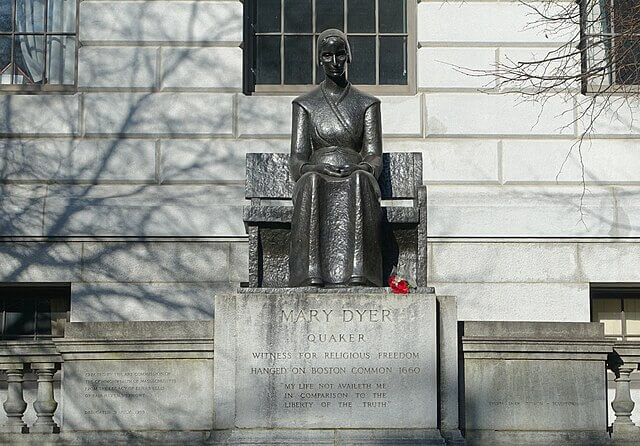
The first public Catholic Mass in Boston was not held until 1788. There were only a few Anglican (later Episcopalian) churches in Boston in the eighteenth and early-nineteenth centuries. However, most churches in Boston in the 1830s and 1840s were still Congregationalist or the brand new sect of Unitarian. In 1844, a group of dissatisfied Congregationalists turned to the Oxford movement as inspiration to found an Anglo-Catholic Church in West Boston known as the Church of the Advent.
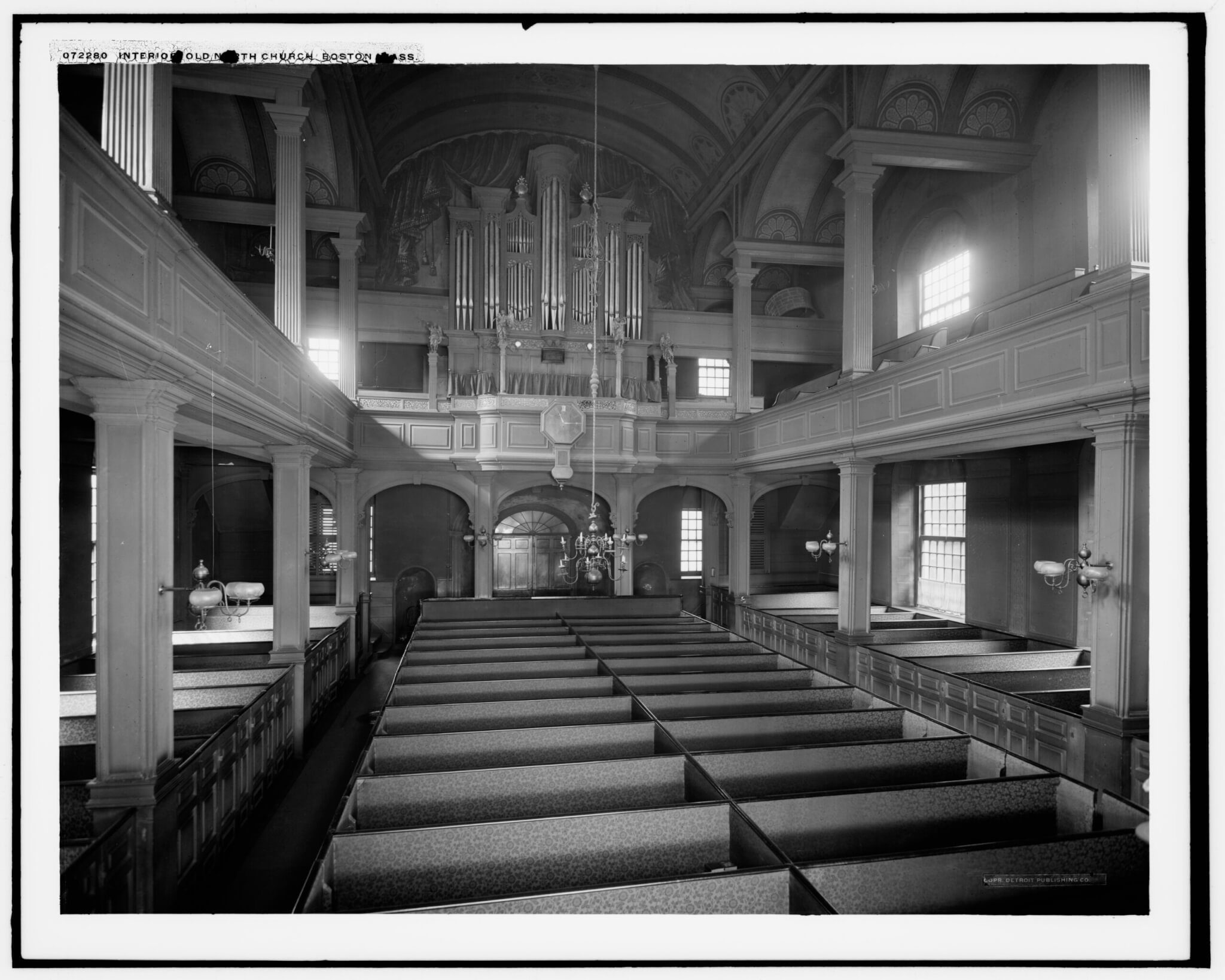
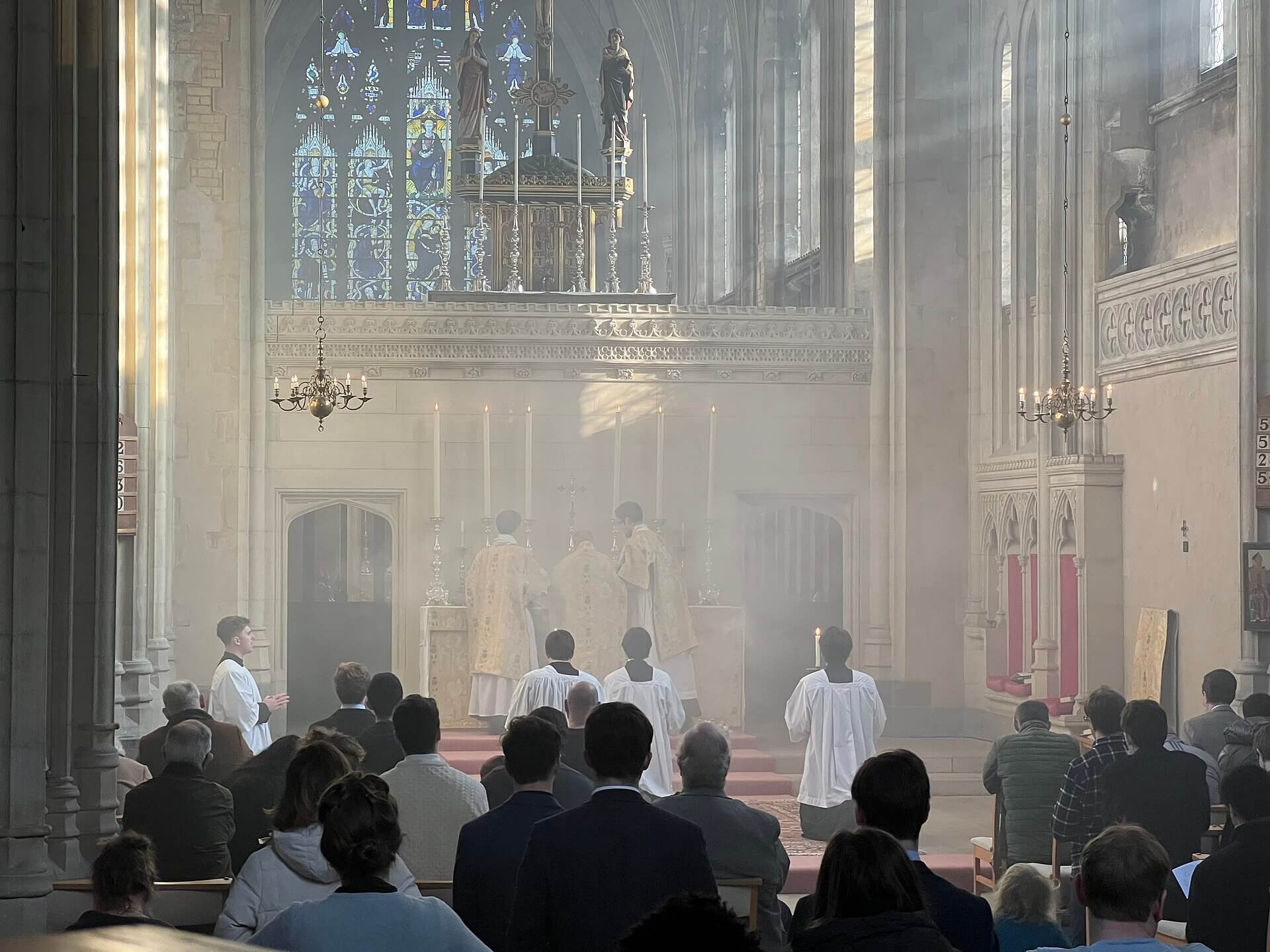
At the time, the Anglican Church (and its American cousin the Episcopal Church) was very similar to the stark Congregationalist Church. The ritual, liturgy, and decoration common in Catholic churches had fallen by the wayside in favor of a stripped down religion. The Oxford Movement started in England in 1833. It looked to return the Anglican Church to its heritage. They emphasized including more elaborate vestments, music, and external forms of worship. The founders of the movement believed that the church needed to become undivided in doctrine, devotion, and liturgy.
Oxford Movement adherents believed they must return the church to its ancient roots, and recover classical liturgical celebrations. Writers and followers of the movement became a major force in the Church of England. The followers of the Oxford Movement adopted many of the trappings of the pre-Reformation church. They came to be known as Anglo-Catholics as they pulled from both traditions. Their teachings led to a renewed appreciation for tradition, ministry, spiritual life, monastic life, ancient doctrine, and the study of Church Fathers’ writing. The movement quickly spread to America where similar theological principles were growing.
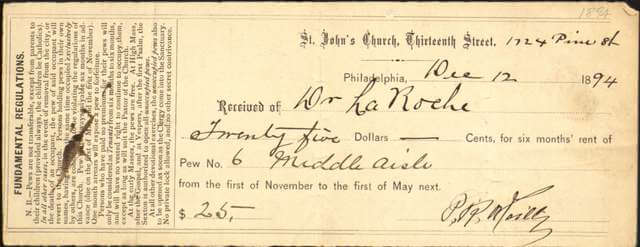
Back in Boston, a group of Congregationalists disapproved of the practice of leasing pews. This was one of the ways the parishes raised money, but it enforced a social hierarchy as the rich rented the best seats. Servants and poorer parishioners were restricted to the back of the church or excluded because they could not afford a pew. An unidentified resident of Bowdoin street approached the Episcopalian Dr. William Edward Coale and asked “what should you think of forming a new Episcopal church?” The church would align not only with The Book of Common Prayer and the Oxford Movement, but also would ban leasing of pews. The parish charter stated that the church would always have free seats “where rich and poor might meet alike, without distinction, for worship.”
On September 14, 1844, Dr. George Shattuck held a meeting at his house on Cambridge Street where 12 members prepared committees, a charter, and a location for the church. Ten days later on September 24, the new congregation adopted the charter. The first article states the mission of the parish:
“to secure to a portion of the City of Boston the ministrations of the Holy Catholic Church, and more especially to secure the same to the poor and needy, in a manner free from unnecessary expense and all ungracious circumstances.”
They secured a location for the church at a new building on the corner of Lowell and Causeway Streets. Since the building was not yet completed by early December, worship was first held in a building at 13 Merrimac Street.
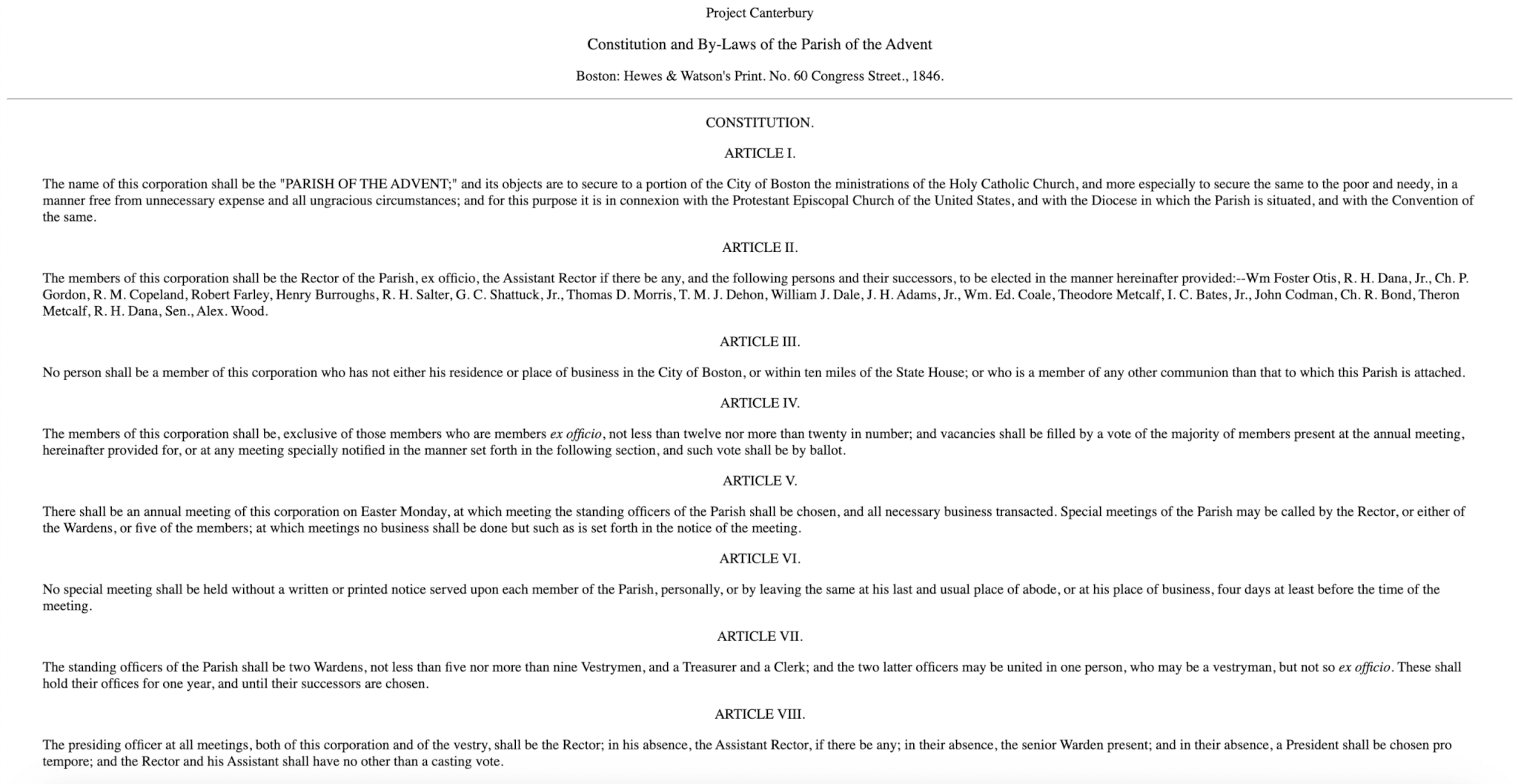
The congregation unanimously elected Reverend William Croswell to be the rector of The Church of the Blessed Advent. Described as genial, courteous, and devoted, Rev. Croswell had previously served as the rector at Christ Church in Boston. He had many friends across the city. On the first Sunday of Advent on December 1, 1844, Rev. Croswell described the loft to be overflowing with “some of the best and most influential minds in the city.”
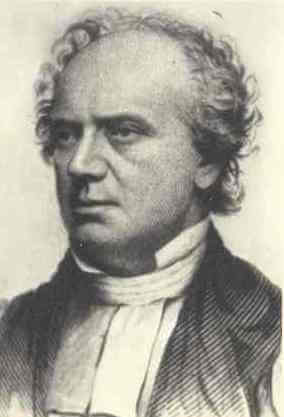
In June of 1845, the parish held its first service in the hall of the building on the corner of Lowell and Causeway Streets. The room held approximately 300 people. The altar on the east end was ornamented with a large gilded cross and four gilded candlesticks. Sermons were read from a simple wooden lectern.
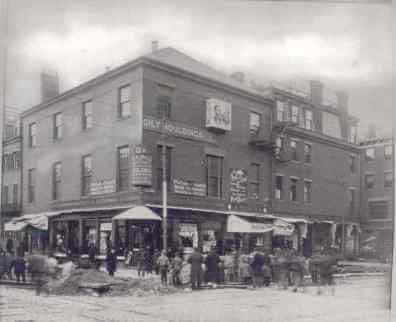
The church became most known for its music and voluntary choir. A writer from an English publication stated that at the Church of the Advent “the singing is better than any I have ever heard on this side of the Atlantic.” Following its debut in the 1840s, the West Boston Church of the Advent became a pioneer in the American Anglo-Catholic movement.
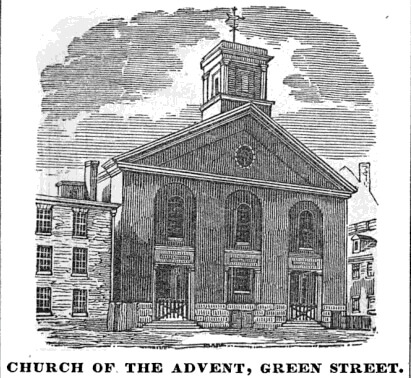
In 1847, the church was faced with a growing congregation. Hoping for a purpose-built place of worship, the congregation moved to a disused meeting house on Green Street. Described as “a substantial structure of brick,” the new location could hold around 600 people. In the area around the altar, the original wooden pulpit was incorporated into the altar with a cross affixed above. The original cross and altar from the building on Green Street are still in the the Brimmer Street church today. The first service on Green Street occurred on November 28, 1847.
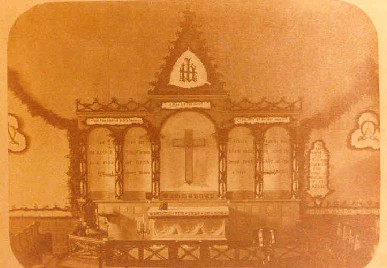

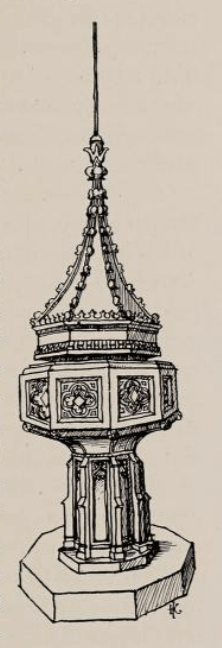
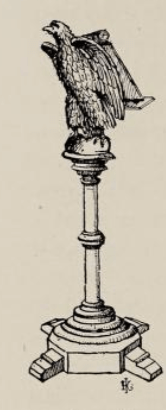
The Easter season proved to be very fruitful for The Church of the Advent. In 1848, Dr. Coale gifted a brass eagle lectern to the Church. In 1849, they received a gift of silver-gilded holy vessels made in England. The vessels were made and donated by the English Ecclesiological Society. The set consisted of seven pieces: an offertory basin, a cruet, two chalices, two patens, and one spoon. The Church accepted Communion vessels, a font, and a Caen stone altar within the next year.
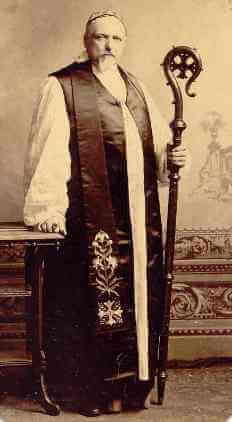
In November 1850, Reverend Croswell passed away. His father, Henry Croswell, wrote his biography. He wrote about the rector’s last service before his death: “His sermon…was written in a style of beautiful simplicity, perfectly plain, and well adapted to the capacity of his juvenile hearers, and yet full of the most sublime and elevated thoughts.” Reverend Thomas R. Lambert took over daily services. Later Right Reverend Horatio Southgate, former bishop of Constantinople, was elected to be the new rector. He accepted the position and began preaching during the Easter season of 1852.
Through 1860, the ever-expanding church needed a new spot to practice and received a few offers for spaces around the city. For $30,000, an estate on Bowdoin street became the new site of The Church of the Advent. Dr. Shattuck donated $20,000 and contributions made up the rest of the purchase. The church on Bowdoin Street had thick granite walls and no steeple. The crenellated tower contrasted the typical pattern of Boston churches in the mid 1800s. Today the facade is still present at 35 Bowdoin Street.
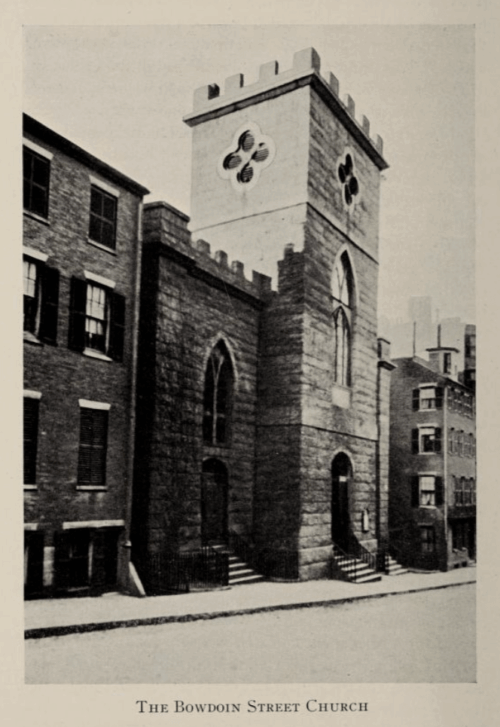
One young parishioner, Charles Chapman Grafton, traveled to England where he helped to establish the Society of St. John the Evangelist. This was the first male monastic order in England since the Protestant Reformation more than 300 years earlier. The Bowdoin Street church later became a missionary outpost for the Society of St. John which kept close ties to the Church of the Advent. Grafton later became the rector of the church and would lead the congregation for 16 years.
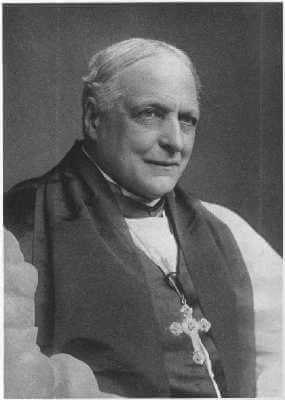
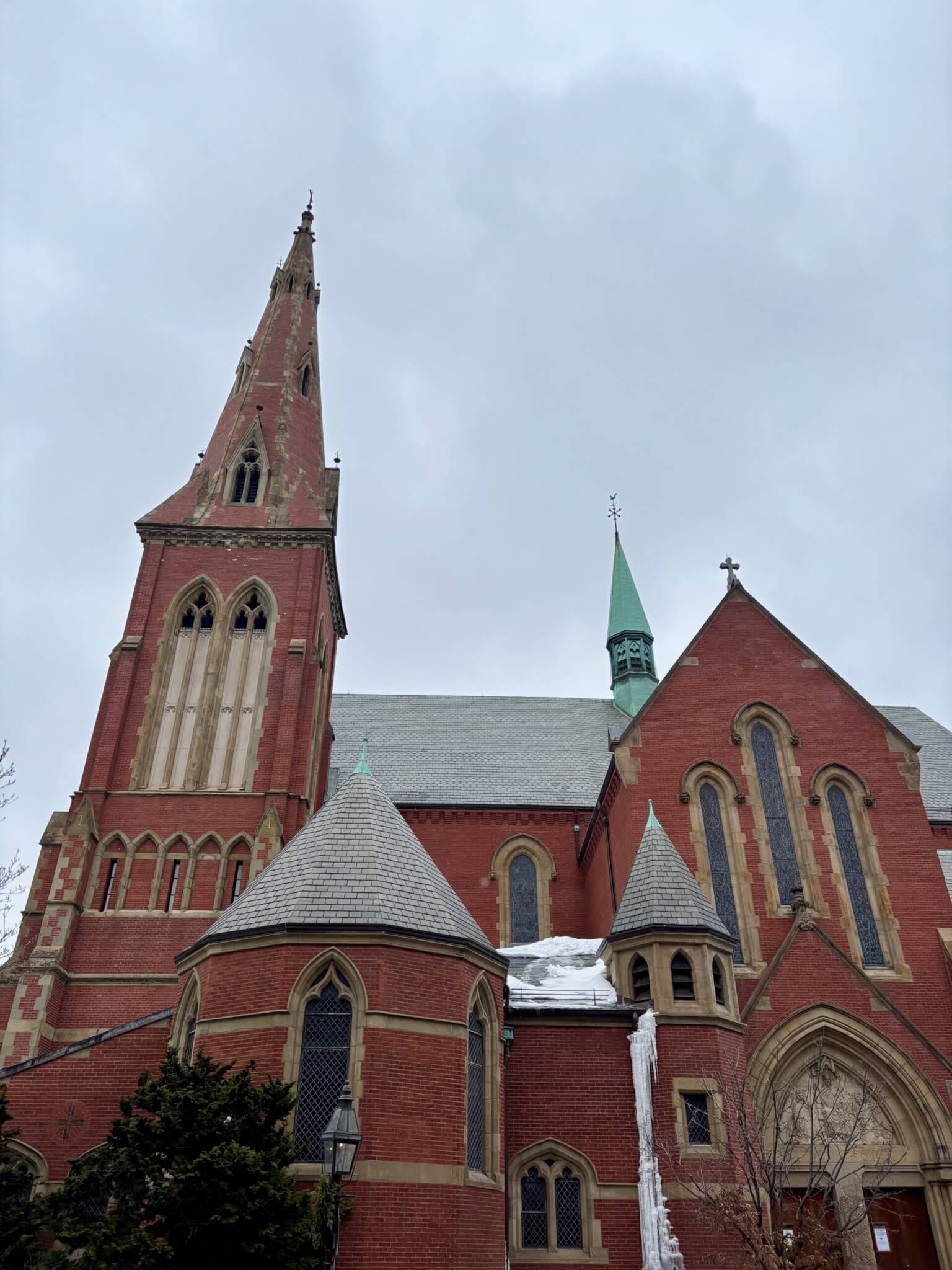
Under the leadership of Reverend Grafton in 1872, construction began for what would become the permanent home for the church. The new church would be on the corner of Mount Vernon and Brimmer Street on the flats of Beacon Hill. This was new filled land which had not existed around the church’s founding. Architect and parishioner John Sturgis designed the church in a Gothic Revival style in 1875. The building was completed in 1888. The Church of the Advent was consecrated on December 1, 1894— exactly fifty years after the first sermon on Merrimac Street.
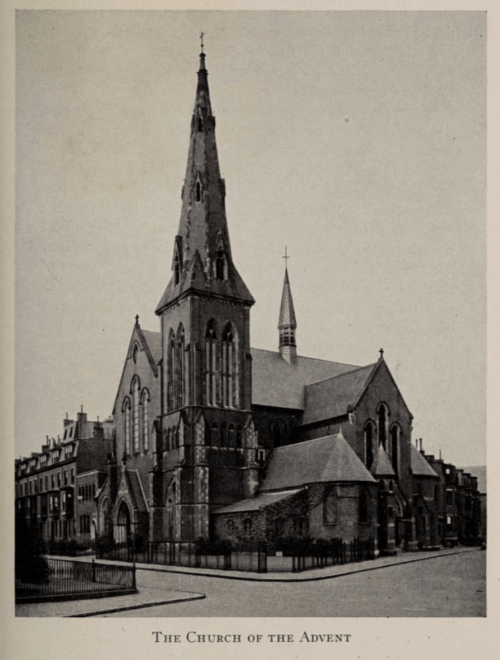
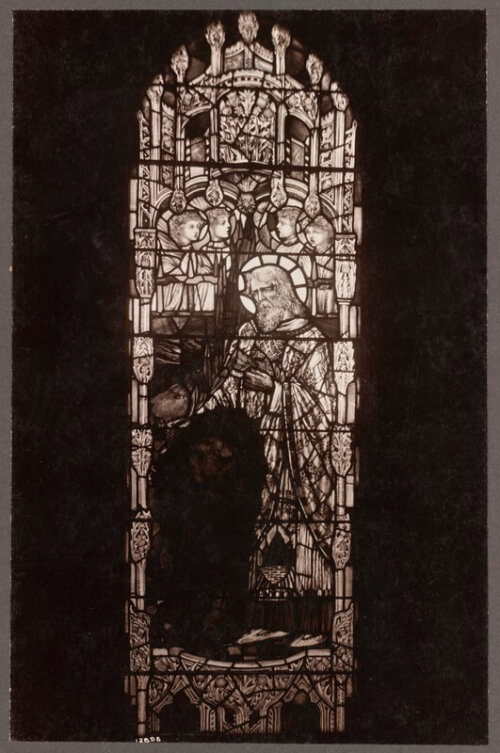
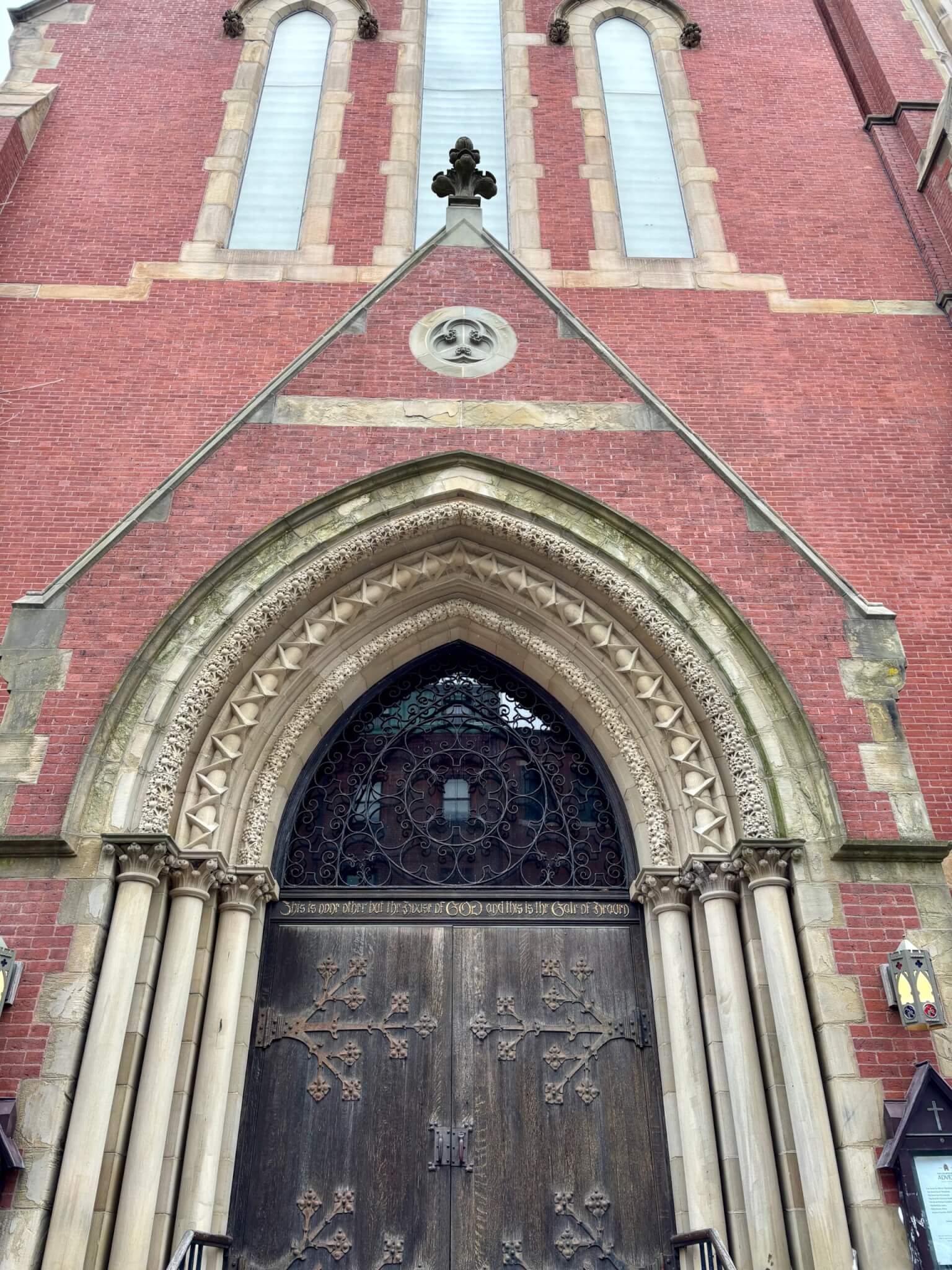
The 172 foot spire, lancet windows, delicate stained glass, and vaulting characterize the elaborate style of the church. Inside, the high altar draws focus with its silver sanctuary lamp and Caen stone reredos or screen covering. The nave is long and tall due to the narrowed space at the crossing. The seven lamps above the altar reference the seven lamps burning around the Throne of God as described in the Book of Revelation. The stone pulpit shaped like a chalice was designed by Henry Vaughan in 1889. The notable Caen stone lectern, porch, and spire were designed and finished by the original architect’s nephew in 1902. The stained glass windows portray saints in early church history, great women of the church, the Apostles, the Nativity, and Christ’s genealogy.
The stone reredos were a gift from Isabella Stuart Gardner, a local art patron and founder of the museum that bears her name. Gardner was a devout Anglo-Catholic, member of the Church of the Advent, and a patron of the Society of St. John the Evangelist. The brothers of St. John and the Advent’s clergy still pray a mass in her honor every year in her memory.
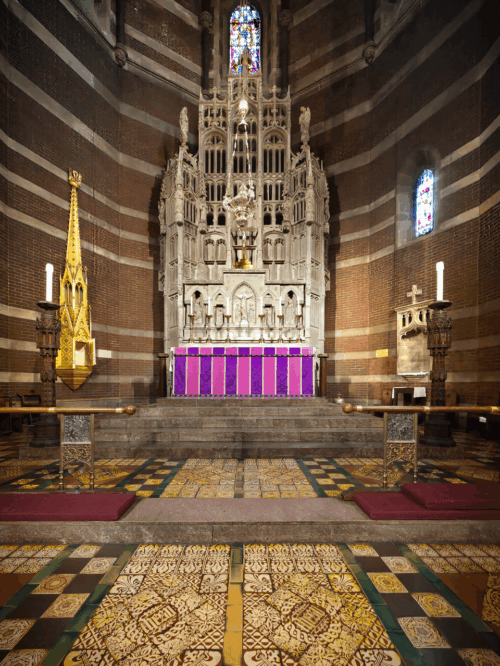
In 1900, eight English Change Ringing bells were installed as gifts from Robert Codman in remembrance of his wife. Ranging in weights from 660 to 2,100 pounds, these bells are mounted above the ringers. They can swing in a circle and are controlled by a long rope hanging down. Ringers follow mathematical patterns that vary the order of the bells, creating rhythmic soundscapes that are as much about timing and coordination as music. Visionist leader Ralph Adams Cram designed the Great Rood (or cross) that hangs above the choir. Later in 1936, Donald Harrison designed and installed the legendary pipe organ. The organ remains in use today during every service and the bells are rung on Sundays.
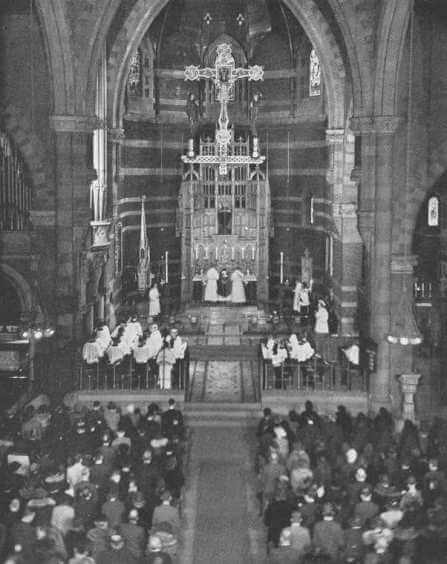
Today, The Church of the Advent remains active in the community. It is among the leaders of the Anglo-Catholic movement in the United States and several of its rectors have gone on to become bishops. Since 2017, it has hosted a yearly Anglo-Catholic Conference to continue to emphasize the priorities of the Oxford Movement. The congregation is also very involved in charity work in the city. The original parish charter stands truer than ever. The church “seeks to be faithful stewards…, to use our time, talents, and resources to support our parish and where there is need.”
Article by Catherine Stowe, edited by Jaydie Halperin
Sources:
The Church of the Advent, “Called to Love and Serve,” “Our History in Brief ” (archival website), “Our History: Rooted in Tradition: The Historic Legacy of the Church of the Advent”, “2019 Parish Profile”; Don S. Armentrout and Robert Boak Slocum, editors, “Oxford Movement, The” and “Anglo-Catholic Movement, The” in An Episcopal Dictionary of the Church (NY: Church Publishing, Inc., 2000); The Cathedral Church of St. Paul, “History”; King’s Chapel, “A Brief History”; Richard Mammana, “Anglo-Catholic Queen of Puritan Babylon” (Medium, April 14, 2024); Old North Church, “About the Episcopal Church”; Edward Fitch Oliver and George Oliver George Coale, A Sketch of the History of the Parish of the Advent in the City of Boston, 1844-1894 (Boston: The Church of the Advent, 1894); The Parish of the Advent, The parish of the Advent in the city of Boston, a history of one hundred years, 1844-1944, (Boston: The Church of the Advent, 1944); Bob Potenza, “The West End Hosts the First Catholic Service in Boston,” (The West End Museum, January 6, 2023); Richard H. Taylor, The Churches of Christ of the Congregational Way in New England, (Benton Harbor, Michigan: R.H. Taylor, 1989).