
Annie Adams Fields and Sarah Orne Jewett: A Boston Marriage on Charles Street
Annie Adams Fields (1834 –1915) and Sarah Orne Jewett (1849 – 1909) shared a long and intimate relationship across several decades. Living together on Charles Street in the West End and traveling together to Manchester-By-The-Sea and around the world, the women formed what is known as a Boston Marriage. Both were writers and Fields ensured the literary longevity of Jewett’s work after her death.
Annie Adams Fields (1834-1915) was born in Boston on June 6, 1834, a member of the prominent Adams family. Her father, Dr. Zabdiel Boylston Adams Sr., was named after a pioneer of smallpox inoculation. Annie was the sixth of seven children and the fifth daughter. Unlike her two elder sisters, who never married and became a scholar and an artist, Annie initially dedicated herself to the duties of domesticity. In this period women were expected to be mothers and wives above all else. However, in her later life she pushed beyond the bounds of the domestic sphere and found a way to leave her literary mark and preserve the legacy of her partner.
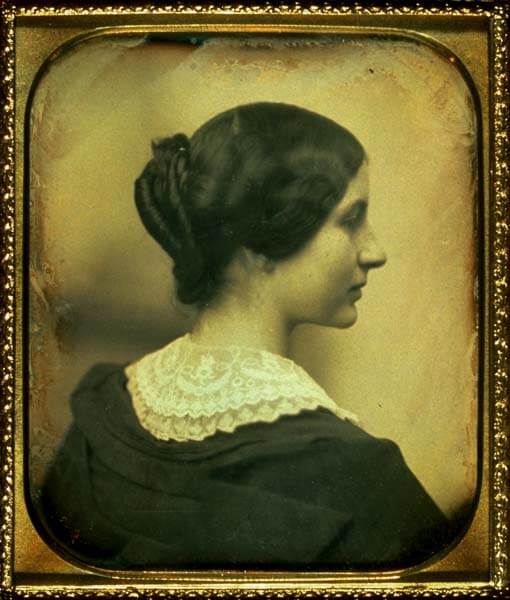
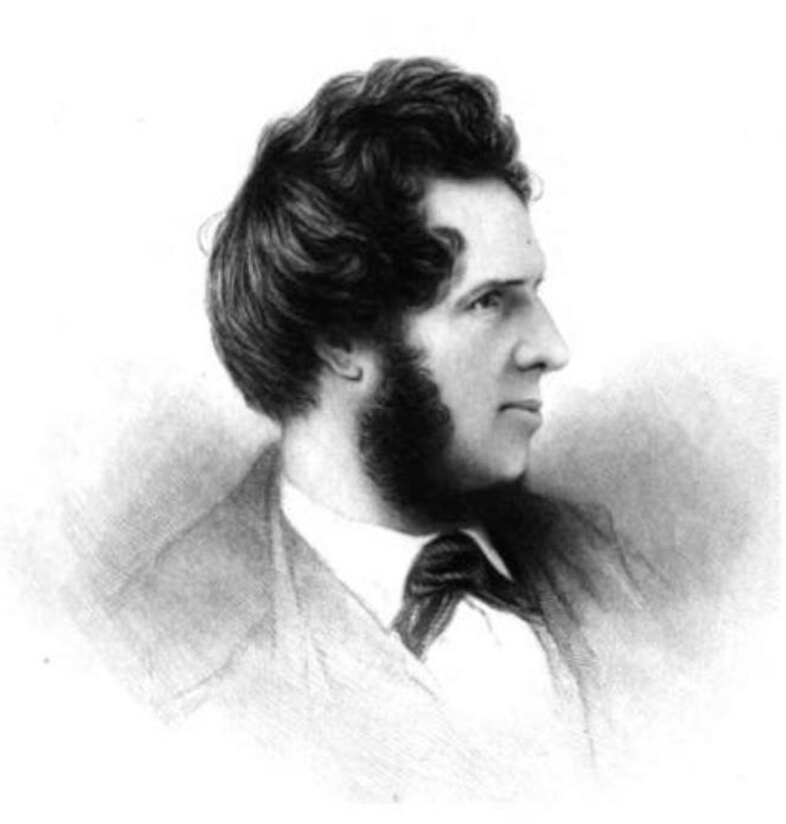
In October 1854, Fields became engaged to a rising publisher named James T. Fields (1816/7-1881). James Fields described his fiancee as someone who has “never written books altho’ she is capable of doing that some; never held an argument on Woman’s Rights or Wrongs in her whole life”. Annie and James married at King’s Chapel on November 15, 1854. In 1856, they moved from her parents’ home at 37 Boylston Street to 148 Charles Street in the West End.
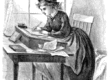
After her marriage, Fields realized how unrealistic the social standards of womanhood were. Throughout her marital life, Fields felt her literary ambitions restricted by her domestic duties. In her diary, she expressed frustration that she spent time “Putting down carpets and housekeeping generally. Writing nothing, but trying to read in the snatches of time and to make others comfortable and happy (24 Oct 1866)”. She reflected: “Hard as it is for anybody to do anything well, the difficulty is heightened for women. They are hampered somehow by their very petticoats—by the very preciousness of their womanhood. (24 Aug. 1867)”
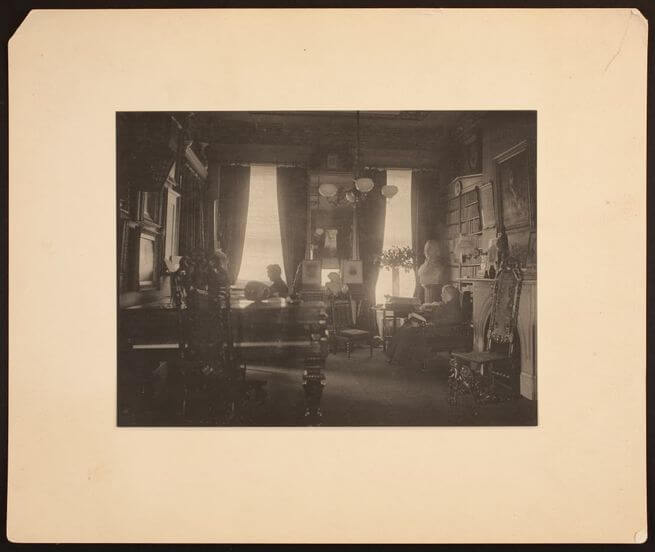
In the 1870s, social work in the North End became a way for Fields to contribute in the public sphere without deviating from acceptable gender roles. At the same time, James was spending more time as a lecturer in Philadelphia and urged her to join him there. She struggled to find a balance between her personal literary ambitions, domestic duty, and a desire to make a social impact.
Her husband James’s death in April 1881 marked a loss of “twenty million loves” for Fields. She was devastated. In the months after James died, Fields composed a biography about her husband’s life. Her friends offered what comfort they could. Laura Winthrop Johnson lamented that unlike her “you [Fields], dear, are indeed alone [without children], and after such an ideal married life, how hard that is!” (May 10, 1881). Fields would be a widow longer than she was a wife.
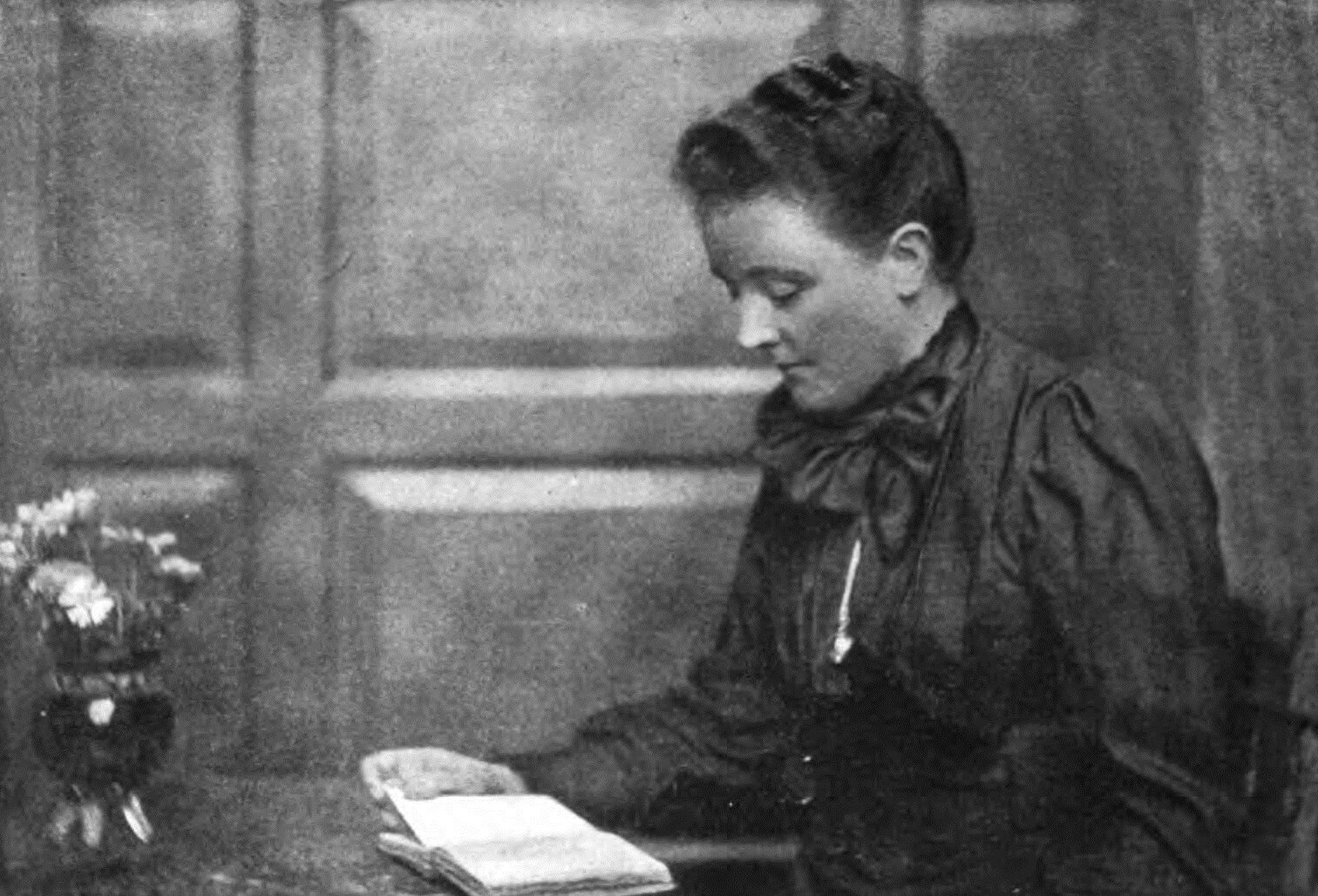
Sarah Orne Jewett (1849-1909) became the cure to Field’s loneliness. Eventually the two became companions for the next several decades. While Jewett and Fields initially corresponded in formal terms, they grew closer in the early 1880s. Jewett’s diaries revealed a close relationship to several women in her life. It was possible that Jewett’s feelings for Fields were romantic after a visit to the Fields’s summer cottage before James’s death. But by February 1882, their correspondence suggested they had become more intimate when Jewett wrote:
“Dear darling … I have not been getting on very well without you … And I am sure you know just as well this minute, as if I could really put my head in your lap and tease you as you sit at your desk… I believe every thing of me but my boots and my clothes, and the five little stones and the rest of the things in my pocket, and the hairpin—all goes back to Charles St. [Field’s house] and stays with you half a day at a time.”
As Jewett spent time with Fields and they grew closer, she became concerned that her friend was leaning too much on spiritualism to deal with her grief. So, the two embarked on a trip to Europe together in 1882. After returning, Jewett briefly visited home to collect her things, before moving in with Fields for the winter. They began a seasonal companionship for the next two decades. They would live together at Fields’s Charles St home in Boston during the winter and in Thunderbolt Hill, Manchester-by-the-Sea during the summer. This was known in the day as a Boston Marriage. It is often difficult for scholars to put a definitive label on female-female relationships in this period. This is due to changing ideas about intimacy since their time, self-censorship, and the censorship of literary executors. However, most scholars agree that Fields and Jewett identified as a couple. They argue that the focus should be on their emotional and sensual closeness without a definitive answer about the nature of their sexualities.
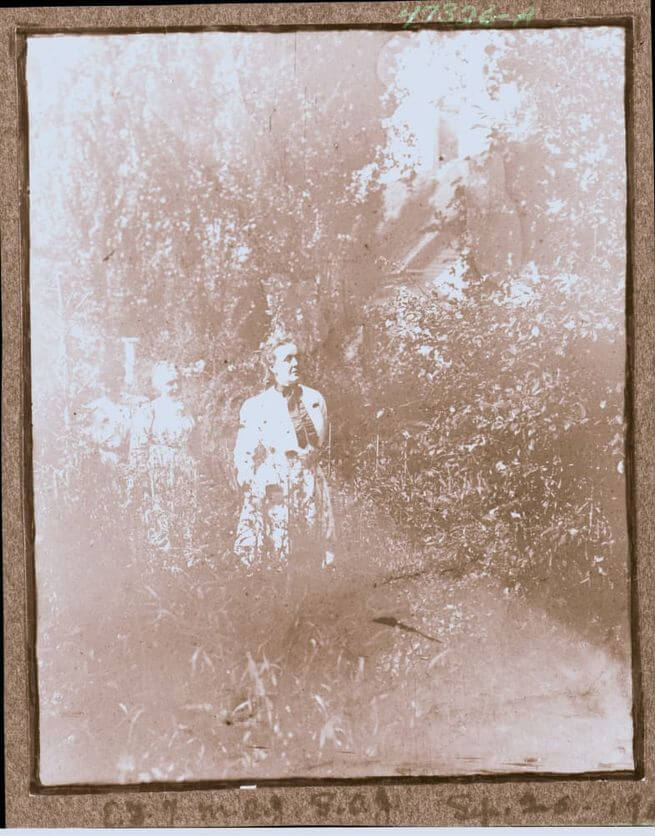
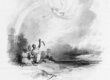
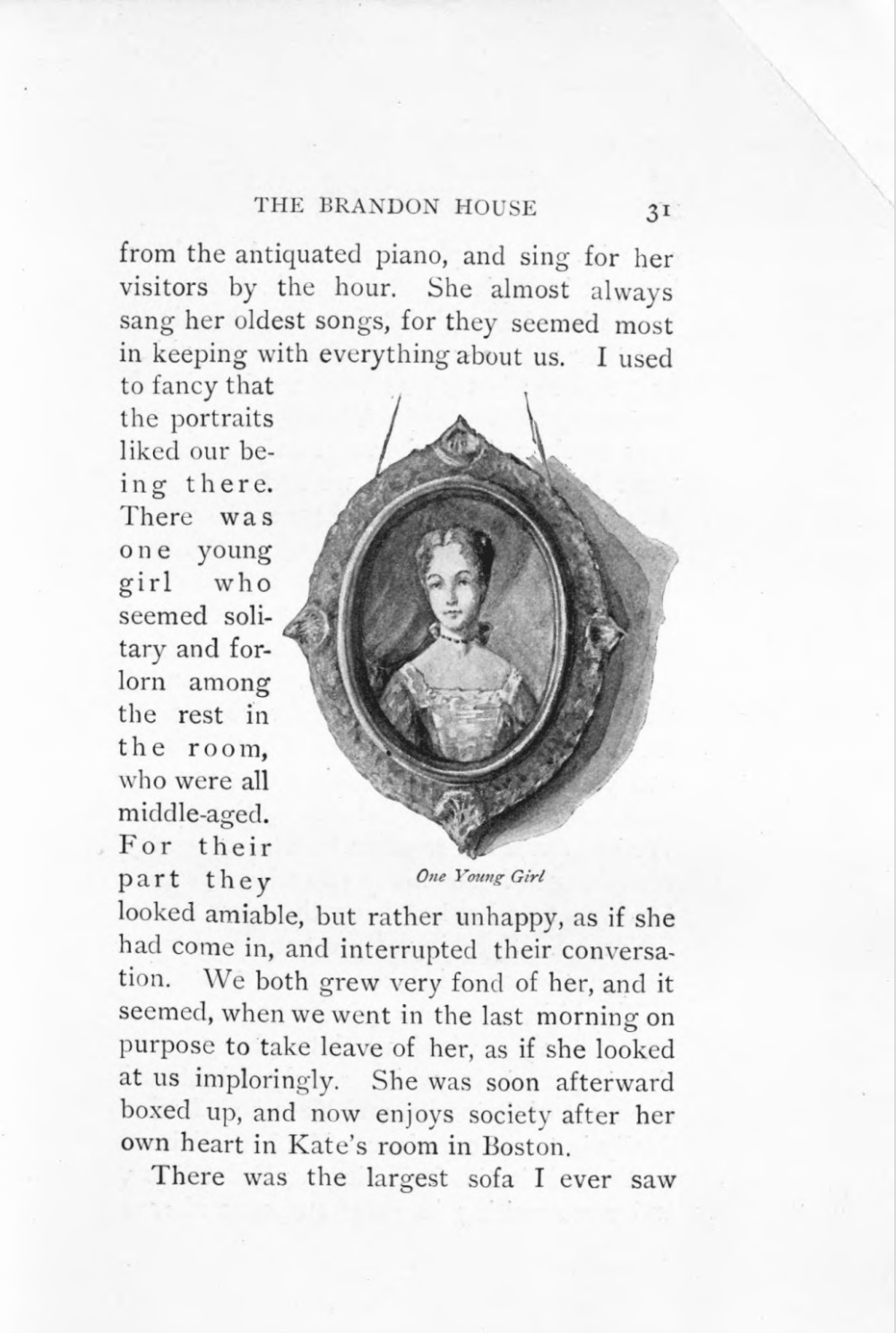
The Fields-Jewett seasonal vacation away from the city was central in their relationship. Its significance was reflected in Sarah’s novel Deephaven. In the rural realm of Deephaven “two little girls who were fond of each other and could play in the boats, and dig and build houses in the sea, and gather shells, and carry their dolls whenever they want.” Being away from the city allowed Fields, and especially Jewett, to remain in a state akin to childhood outside the expectations imposed on women.
Jewett’s correspondence to Fields was full of childlike diminutive nicknames and third person narration which Fields called Jewett’s “little language”. She called herself Pin or Pinny while addressing Fields with pet names like Fuff and Mouse. Jewett’s writing style also created opportunities for them to shift between dependent and protective roles within the relationship. With other nicknames, they shared a fictional last name. This allowed them to create a private united identity like a married couple. Moreover, Jewett’s nephew Theadore Jewett Eastman, also addressed both women as his aunts.
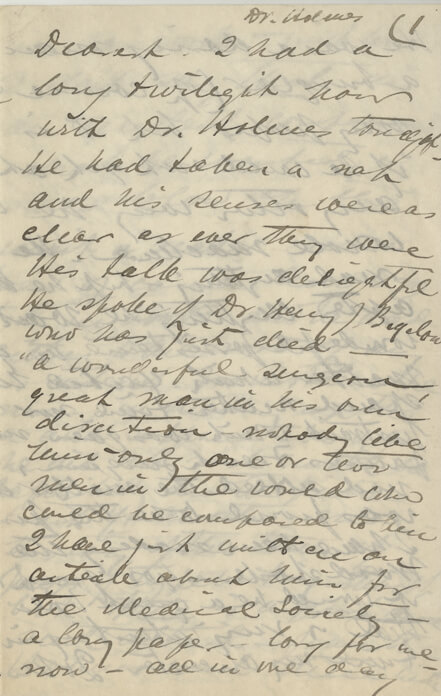
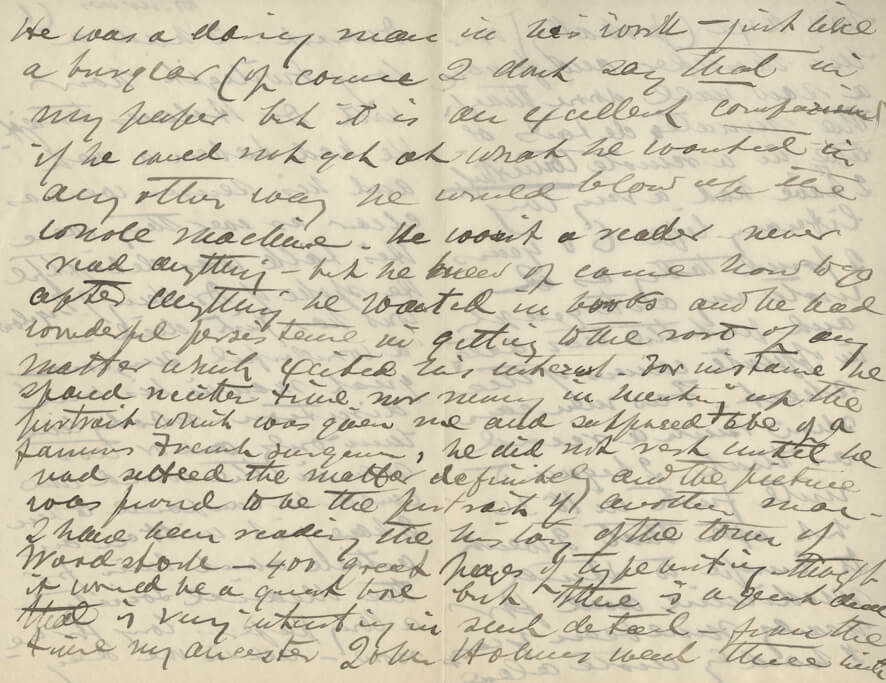
Two pages of a letter from Fields to Jewett on Oliver Wendell Holmes, c. 1891 (Harvard Contway Library).
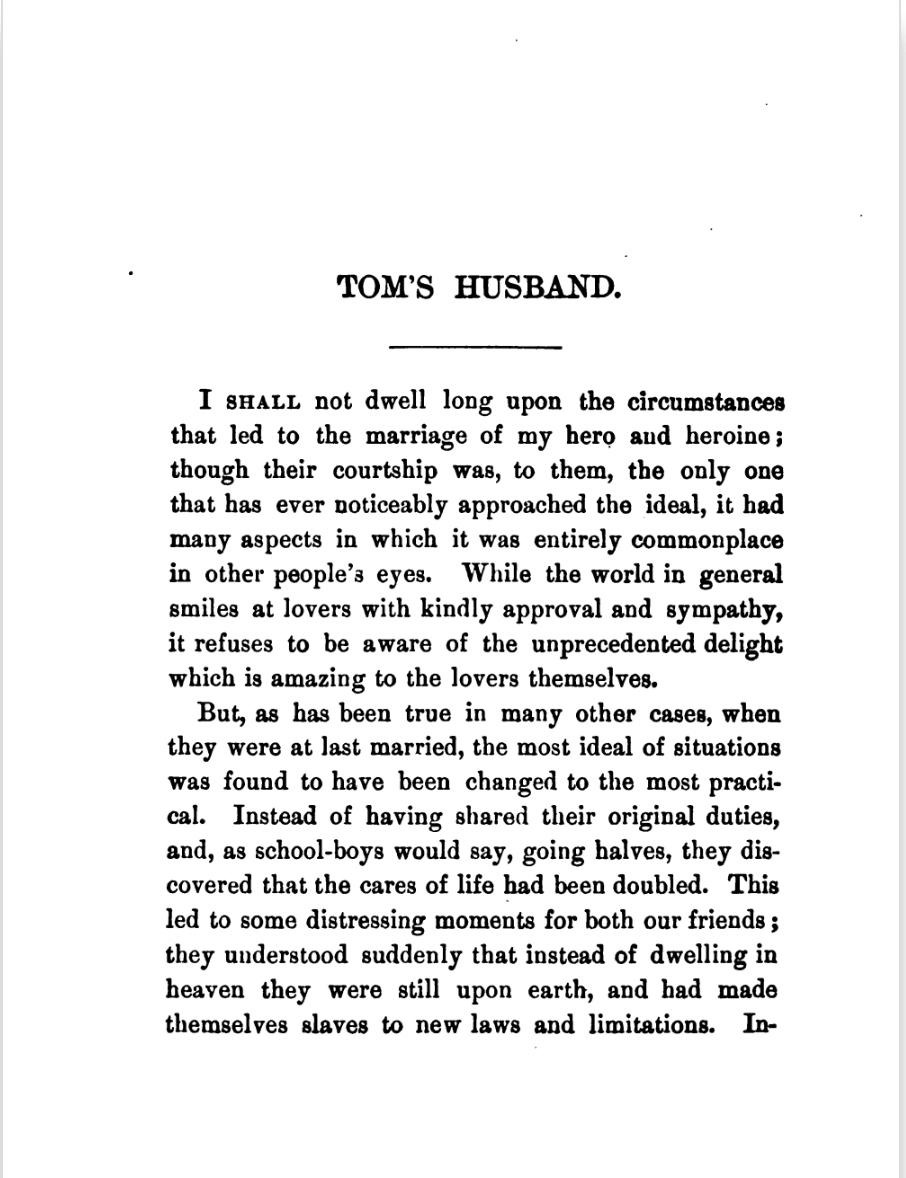
Jewett was certainly interested in fluidity and departures from cultural gender standards. A short story in Jewett’s book, The Mate of the Daylight and Friends Ashore (1883), dedicated to “A. F.” – likely Fields– is about a married couple Tom and Mary Wilson. Though appearing to be in a heterosexual marriage, neither fill their prescribed roles. Mary “was too independent and self-reliant for a wife; it would seem at first thought that she needed a wife herself more than she did a husband.” Meanwhile Tom had a more delicate constitution and after years of bad health had become “very old-womanish.” Rather than deciding to switch places in their marriage, the fictional couple settled on a reciprocal and flexible relationship. This story has been read by scholars through a queer lens.
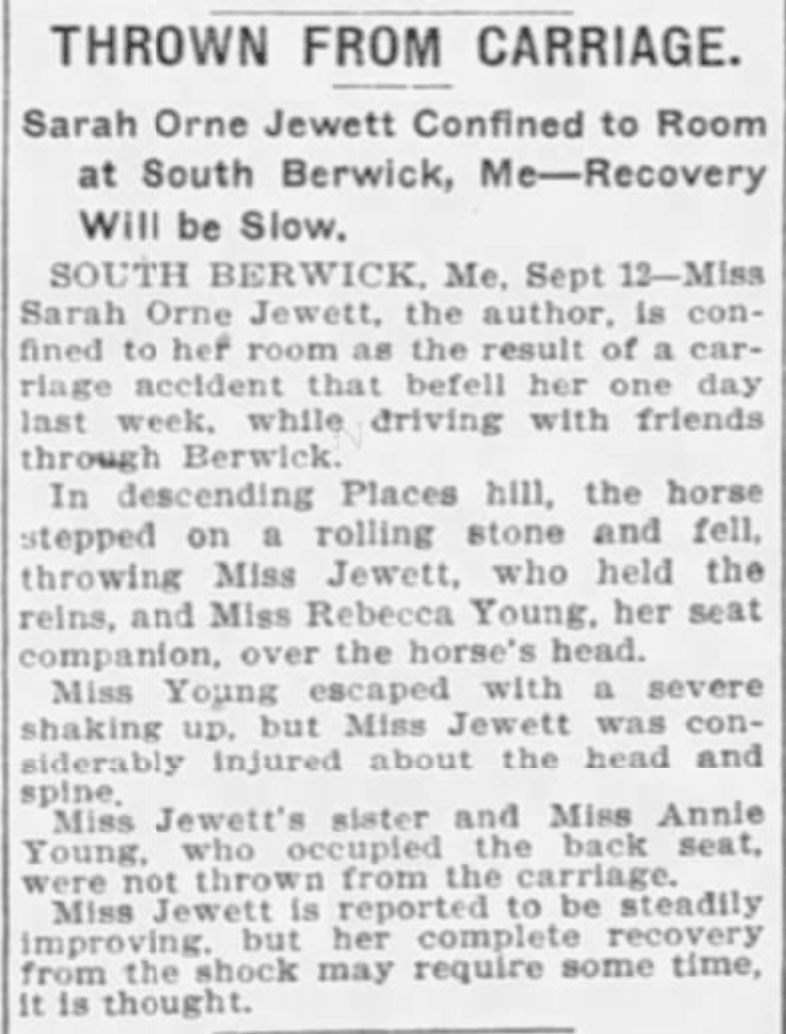
In the 1890s, Fields and Jewett faced several tragedies with the deaths of Jewett’s mother and sister. Jewett had to take care of her surviving unmarried sister Mary and nephew Theodore. Thus the women’s trip to Europe in 1900 was their last vacation abroad by themselves. In September 1902, Jewett was in a carriage accident. She suffered permanent injuries and had to recuperate in her hometown of South Berwick. She was not well enough to go to Fields’s birthday, but friends told her that Fields had looked lovely. In a letter Jewett wrote she “wanted to hug a white dressed Fuffy [one of her nicknames for Fields] right away then—and I daresay rumple her all up.” Fields took breaks from her Associated Charities social work to visit Jewett. In a letter to Fields, Jewett remarked that “it would be a great deal harder to be together, if we didn’t care about each other any more! If there were any real separation I mean, but we are closer than ever in love and friendship and belongingness, aren’t we? (December 1902)”
Although they saw each other less frequently, they continued to exchange letters and gifts even as their respective healths declined. In February 1909, Jewett suffered a stroke and Fields realized the end was near. She did not record her partners’s June 24th 1909 death until July 1st. She wrote that Jewett departed “in calm so great they scarcely knew when her spirit finally took its flight she went away from us.”
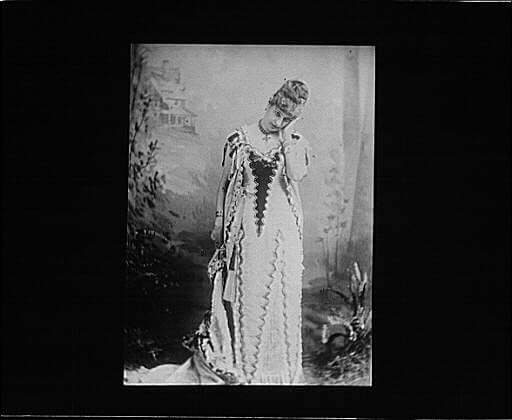
Fields dedicated much of the rest of her life and writings to honoring Jewett’s memory. Her diaries served as a scrapbook with poems, manuscripts, memorials, letters and pages of diary entries about or by Jewett glued on its pages. Fields oversaw the editing and publication of Jewett’s letters in 1911. She marked each holiday and anniversary of Jewett’s passing in her diary writing, “The season spins on apace—without her! And yet her sweet presence[,] her loving care are not really absent. Every morning and every day and reaching out to me from every side I feel her—and there again the empty place. (March 8th, 1910)”.
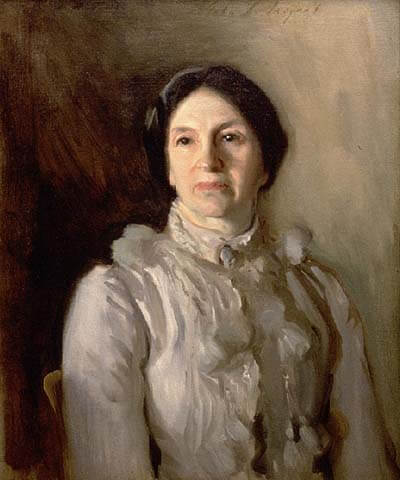
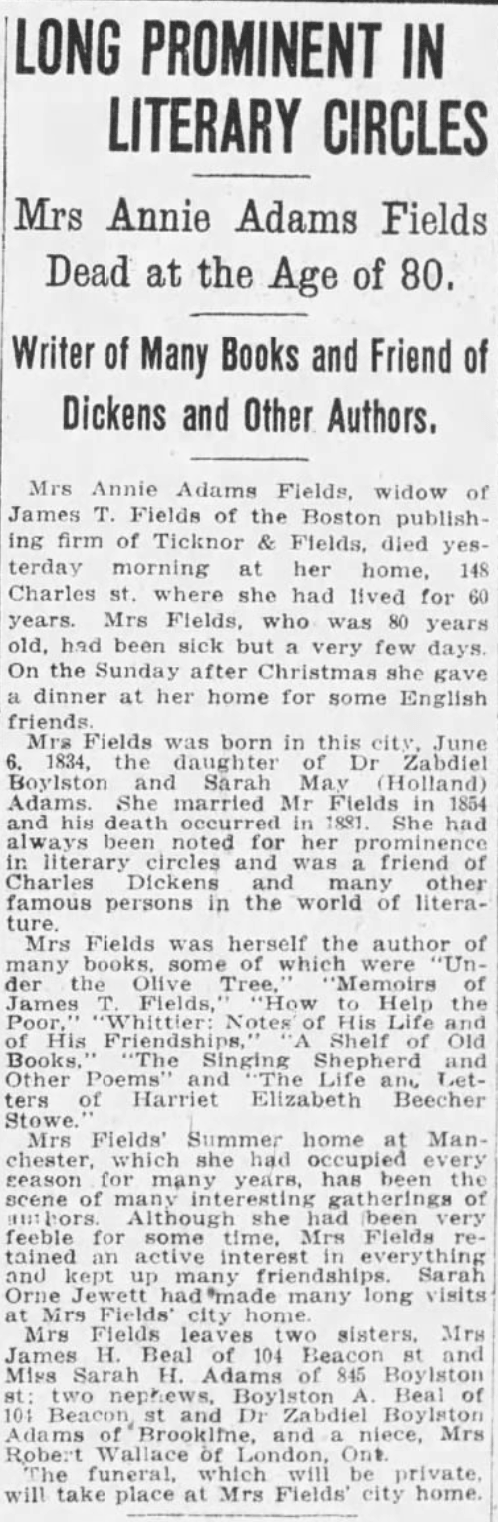
Fields’s diary ended in 1912 with quotes from Dante’s Inferno. She died after a brief illness on January 5, 1915. Newspapers noted her passing as the end of what they called a golden age of literature.
Article by Paris Wu, edited by Jaydie Halperin
Sources:
Browning’s Correspondence, “Diary of Annie Adams Fields” 3 March 1867, 27 September 1866, 24 October 1866, 26 October 1866, 30 October 1866, 7 November 1866, 18 November 1866, 29 November 1866, 28 January 1867, 25 February 1867, 6 March 1867, 3 June 1867, 5 June 1867, 15 January 1874, (Wedgestone Press: 2026); George Washington Burnap, The Sphere and Duties of Woman: A Course of Lectures (Baltimore, Maryland: John Murphy & Co., 1848); Josephine Donovan, “The Unpublished Love Poems of Sarah Orne Jewett,” Frontiers: A Journal of Women Studies, 4: no. 3, Lesbian History (Autumn, 1979); Theodore Jewett Eastman, Letter to “Aunt Annie” Fields, Jewett Family Papers, June 6, archived by Historic New England MS014.01.02.01; Annie Fields, Diary and Commonplace Book (1907-1912), original manuscript held by the Massachusetts Historical Society; Annie Fields, Diary of a West Indian Tour (1896), ed. by Terry Heller; Melissa J. Homestead, “Willa Cather, Sarah Orne Jewett, and the Historiography of Lesbian Sexuality,” Cather Studies, 10 (2015); Mark Antony DeWolfe Howe, “Sarah Orne Jewett,” in Memories of a Hostess: A Chronicle of Eminent Friendships, Drawn Chiefly from the Diaries of Mrs. James T. Fields (Project Gutenberg EBook: 2020); Sarah Orne Jewett, ed. Annie Adams Fields, “Letters of Sarah Orne Jewett,” (Boston: Houghton Mifflin, 1911); Sarah Orne Jewett to Sarah Norton, 3 September c.1897, ed. Terry Heller; Sarah Orne Jewett, “Tom’s Husband,” in The Mate of the Daylight and Friends Ashore (Boston: Houghton, Mifflin, 1884, c1883); Sarah Orne Jewett to Annie Adams Fields, ed. Terry Heller, 8 September 1880, ed. Terry Heller; Sarah Orne Jewett, ed. Terry Heller, Linda Heller, and Kelly Sanders, Diaries: 24 May 1871, MS Am 1743.1 Houghton Library, Harvard University; Sarah Orne Jewett, ed Terry Heller, Linda Heller, and Kelly Sanders, A.MS. diary; [n.p.] 1 May-28 Dec 1879. Houghton Library: Sarah Orne Jewett Papers: bMS Am 1743.1 Jewett , Sarah Orne, 1849-1909. Additional correspondence: Series: VI. Compositions and other papers ( 341) Jewett, Sarah Orne, 1849-1909. A.MS. diary; [n.p.] 1 May-28 Dec 1879. 1v; Sarah Orne Jewett to Annie Adams Fields, ed. Terry Heller, 19 February 1882, MS Am 1743 (255), Houghton Library of Harvard University; Sarah Orne Jewett to John Greenleaf Whittier, ed. Terry Heller, 4 April 1882, manuscript at Phillips Library at Peabody Essex Museum; Sarah Orne Jewett to Annie Adams Fields, ed. Terry Heller and Linda Heller, April 1882 (fragment), April 1882, manuscript at the University of New England, Maine Women Writers Collection, Jewett Collection correspondence corr052-soj-af.01; Sarah Orne Jewett, “And when I think it was my dear little Fuffy who wrote it…” June 1883, (Historic New England); Sarah Orne to Annie Adams Fields, 8 September 1880, June 1882, December 1902, 1902, MS Am 1743, (255), Box 5; Box 6. Houghton Library, Harvard; Laura Winthrop Johnson Papers, Letters, 1862-May 1864; Derrick King, “Narrative, Temporality, and Neutralization in Sarah Orne Jewett’s Queer Utopias,” South Atlantic Review 81, no. 4 (2016); Judith A. Roman, Annie Adams Fields: The Spirit of Charles Street (Bloomingdale, Indianapolis: Indiana University Press, 1900); Adam Sonstegard, “‘Bedtime’ for a Boston Marriage: Sarah Orne Jewett’s Illustrated Deephaven,” The New England Quarterly 92, no. 1 (2019); Celia Thaxter autograph letter signed to Annie Fields, 101 Pembroke St., [Boston], 18 September [18]82, manuscript, archived in Boston Public Library.