
The Salem Downtown Renewal Plan: Part 1, A Close Call with Destruction
In the 1960s, historic downtown Salem faced the wrecking ball. With changing economic conditions and a belief in demolition before renovation, 82% of downtown was under scrutiny. However, thanks to grassroots activism and a few well placed allies in the public eye, Salem fought back against urban renewal to preserve the city’s past.
Four Commonwealth cities – Boston, Cambridge, Salem, and Springfield – approved urban renewal plans in the 1960s. These projects varied greatly. This is the second in a series of articles on urban renewal across Massachusetts.
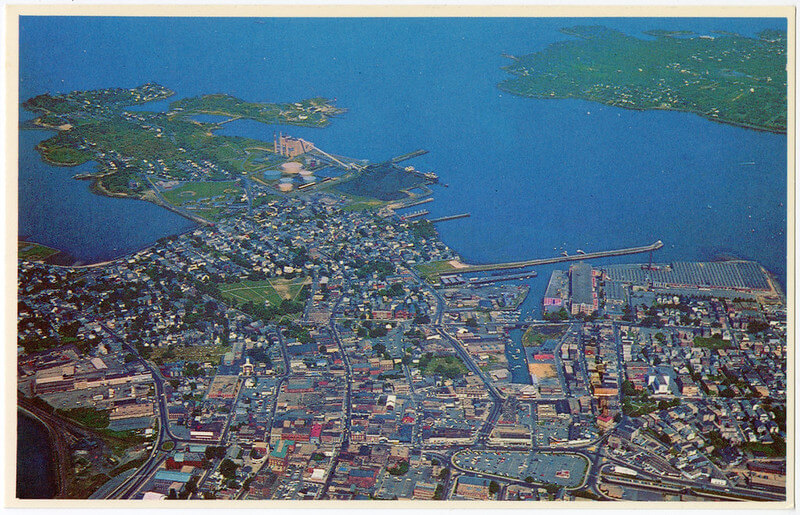
Salem, Massachusetts, is one of America’s most historic cities. It’s famous for seventeenth-century witch trials, a rich maritime past, and colonial architecture. Yet the architecture seen today was threatened with destruction in the middle of the 20th century. It was nearly destroyed by the same forces that demolished Boston’s West End neighborhood. Both Boston and Salem created urban renewal plans in the 1960s. However, the story of the Salem Downtown Renewal Plan shows how a city navigated those forces. It balanced a need for “modernization” and preservation, with the added help of a high-profile advocate.
Origins: Economic Decline and the Creation of the SRA
Salem’s downtown renewal efforts, like most urban renewal efforts, came as a result of the economic changes of the early 1960s. In the postwar decades, suburban expansion reshaped American residential and retail geography. The opening of Route 128 in the early 1950s drew traffic away from the coastal corridor. The new Northshore Shopping Center in neighboring Peabody accelerated the loss of customers. Local merchants faced declining sales as shoppers migrated to car-friendly suburban malls.
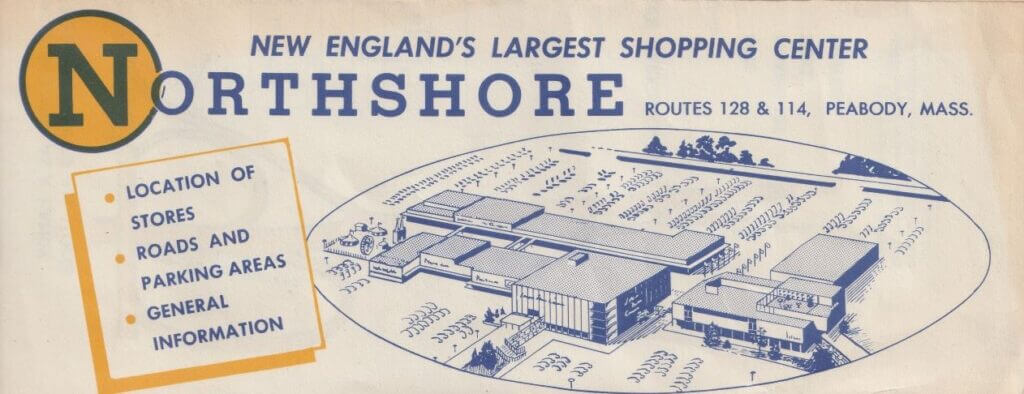
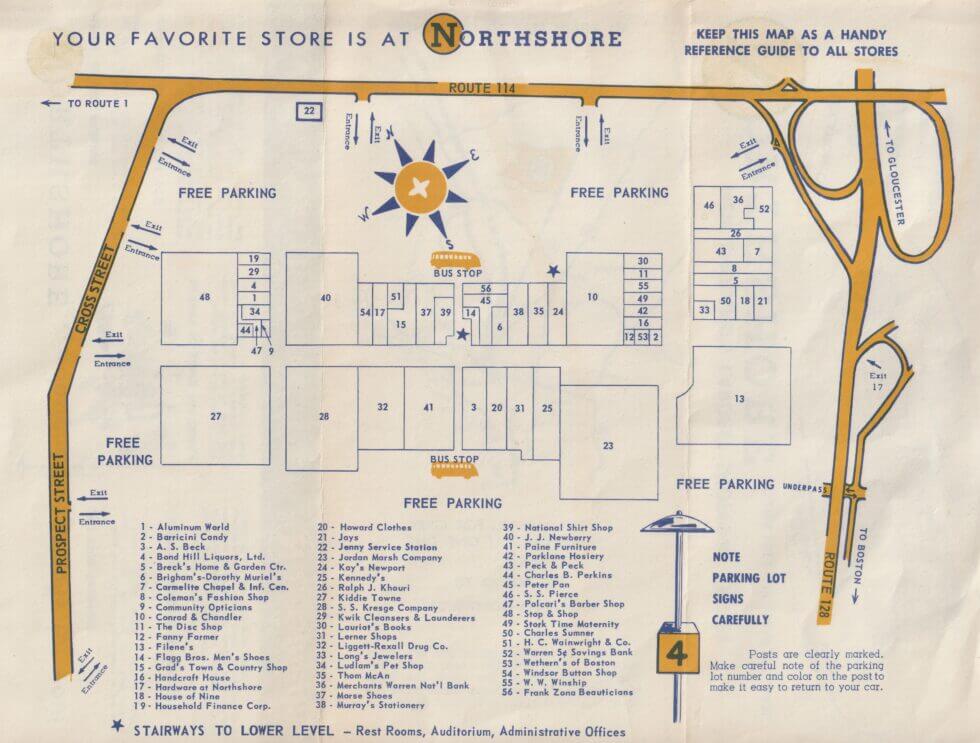
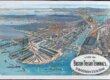
Map of the Northshore Shopping Center, cover (left) and interior, circa 1958, Courtesy of the Ray Wallman Collection, (Peabody Historical Society and Museum).
In 1962, Mayor Francis X. Collins responded by creating an agency to oversee the city’s revitalization. This was the Salem Redevelopment Authority (SRA). It was charged with securing federal grants from the Department of Housing and Urban Development (HUD). The SRA commissioned a comprehensive plan for downtown from the planning firm Blair and Stein Associates. The report assessed Salem’s central business district. The recommendation was for a mixture of clearance and rehabilitation. It emphasized improving automobile access and drawing back North Shore shoppers to downtown.
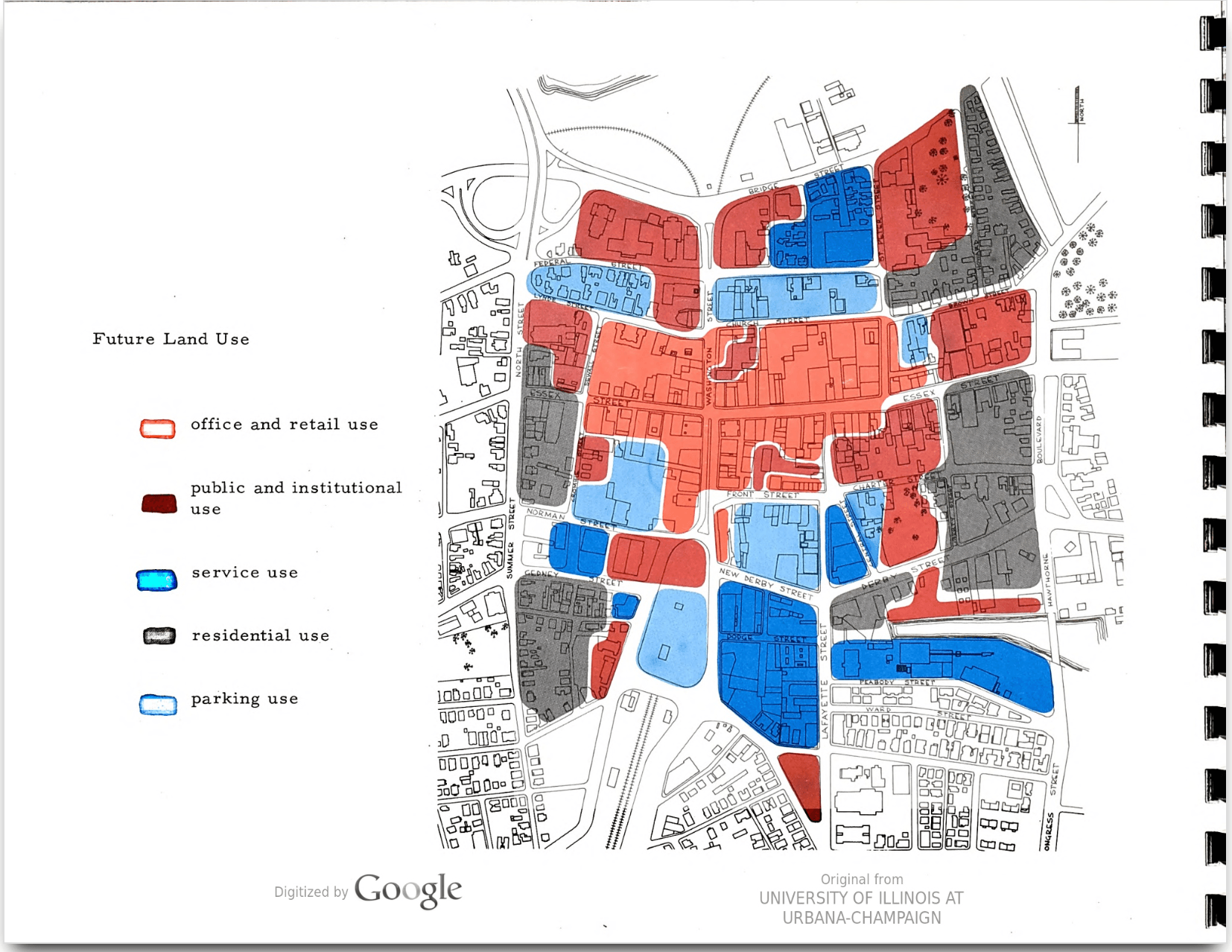
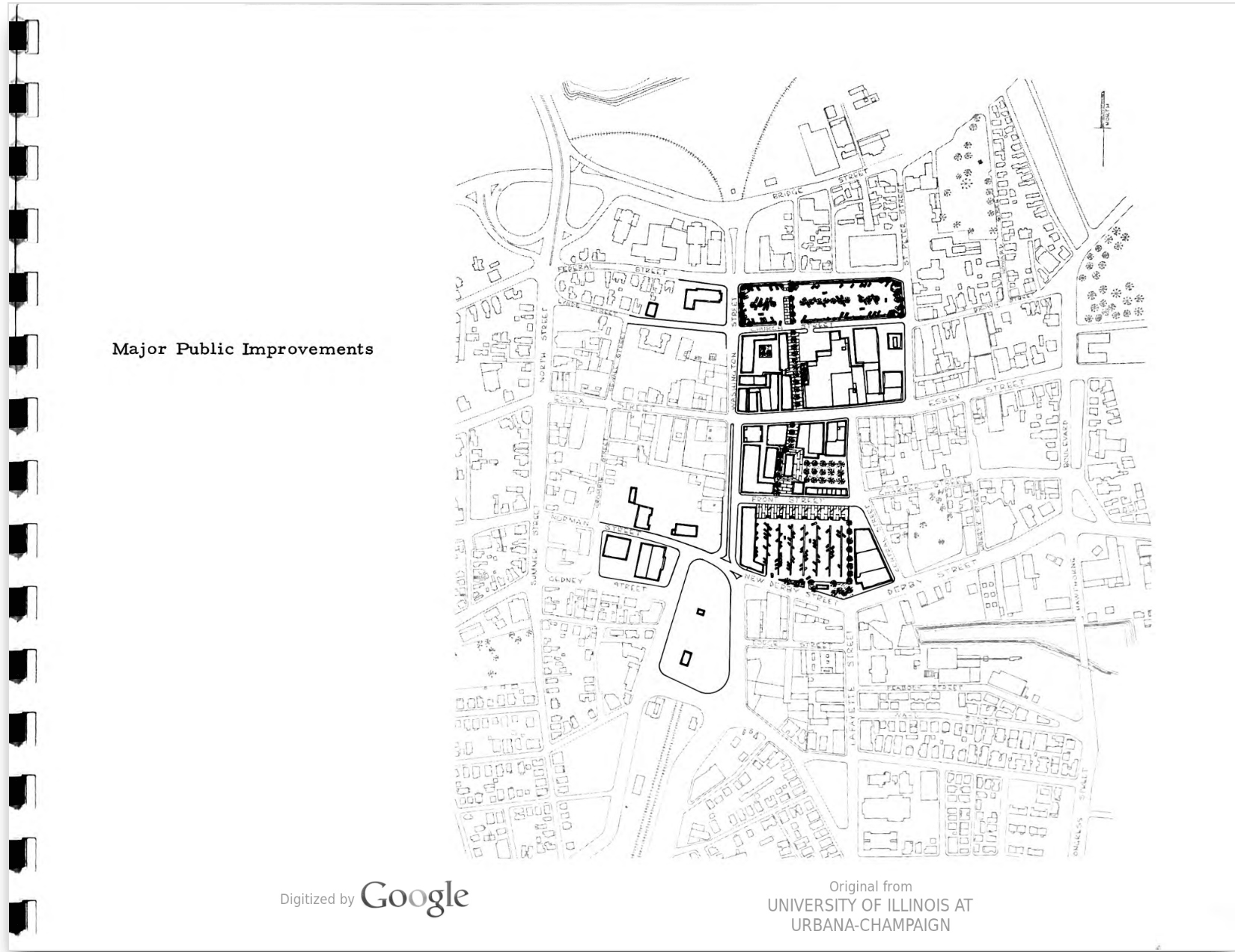
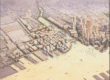
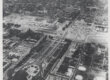
Maps created for Blair and Stein Associates and the Salem Planning Board for their 1962 Central Business District Plan. Left: illustration of future land use over the 1962 map of downtown Salem, page 43. Right: aerial view of redesigned sections of the downtown area including added parking and a shopping district, page 63.
Heritage Plaza East: The Demolition Era
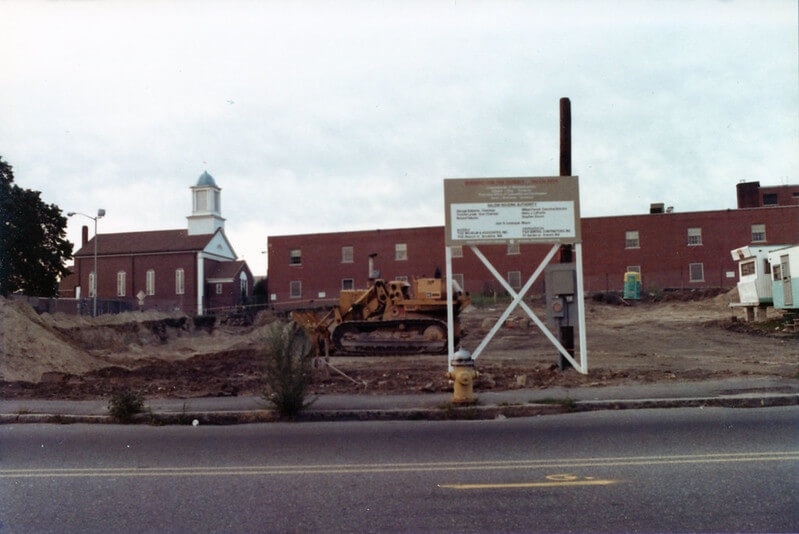
What began as a planning study quickly evolved into something far more aggressive. By the mid-1960s, the SRA had developed a full-scale urban renewal proposal. Few developers expressed interest. Yet, Salem aimed to demolish a shocking 82 percent (39 acres) of the buildings in its historic core, designated Heritage Plaza East. The plan subscribed to ideas of urban renewal which equated older buildings with blight. It called for the demolition of between 120 and 140 structures in the heart of the city. In their place, the city would build new shopping plazas and parking garages. Redesigned streets were intended to funnel visitors into a modernized downtown core. Rehabilitation was designated for only a handful of buildings.
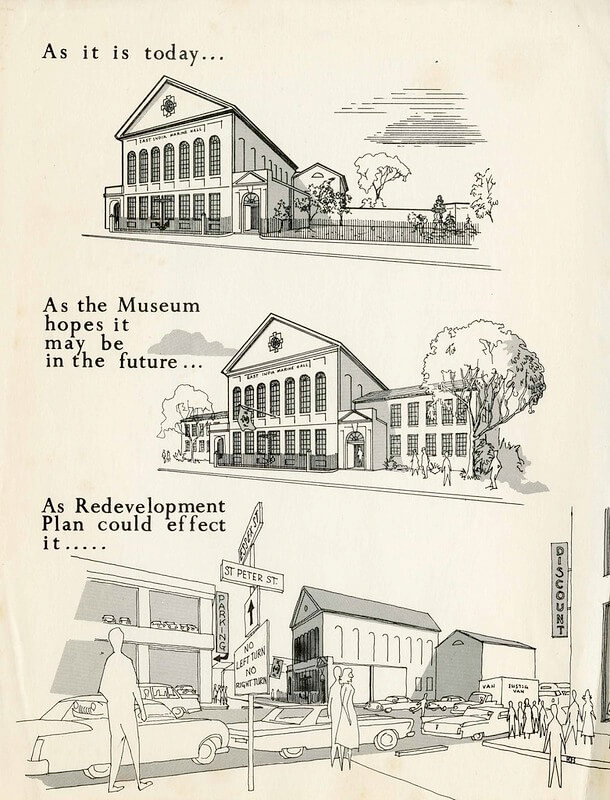
The plan included a new four-lane loop that would channel traffic around downtown. The loop called for a widening of St. Peter Street. It would also remove the Japanese Garden and outbuildings belonging to the Peabody Museum on Essex Street. The museum argued that the project would make future expansions impossible. It hired a consultant to draft alternate plans. The Peabody Museum waged a public campaign against the project and halted the SRA’s plans for a time. The museum sought Historic Landmark designation, which the Department of the Interior granted in 1966.
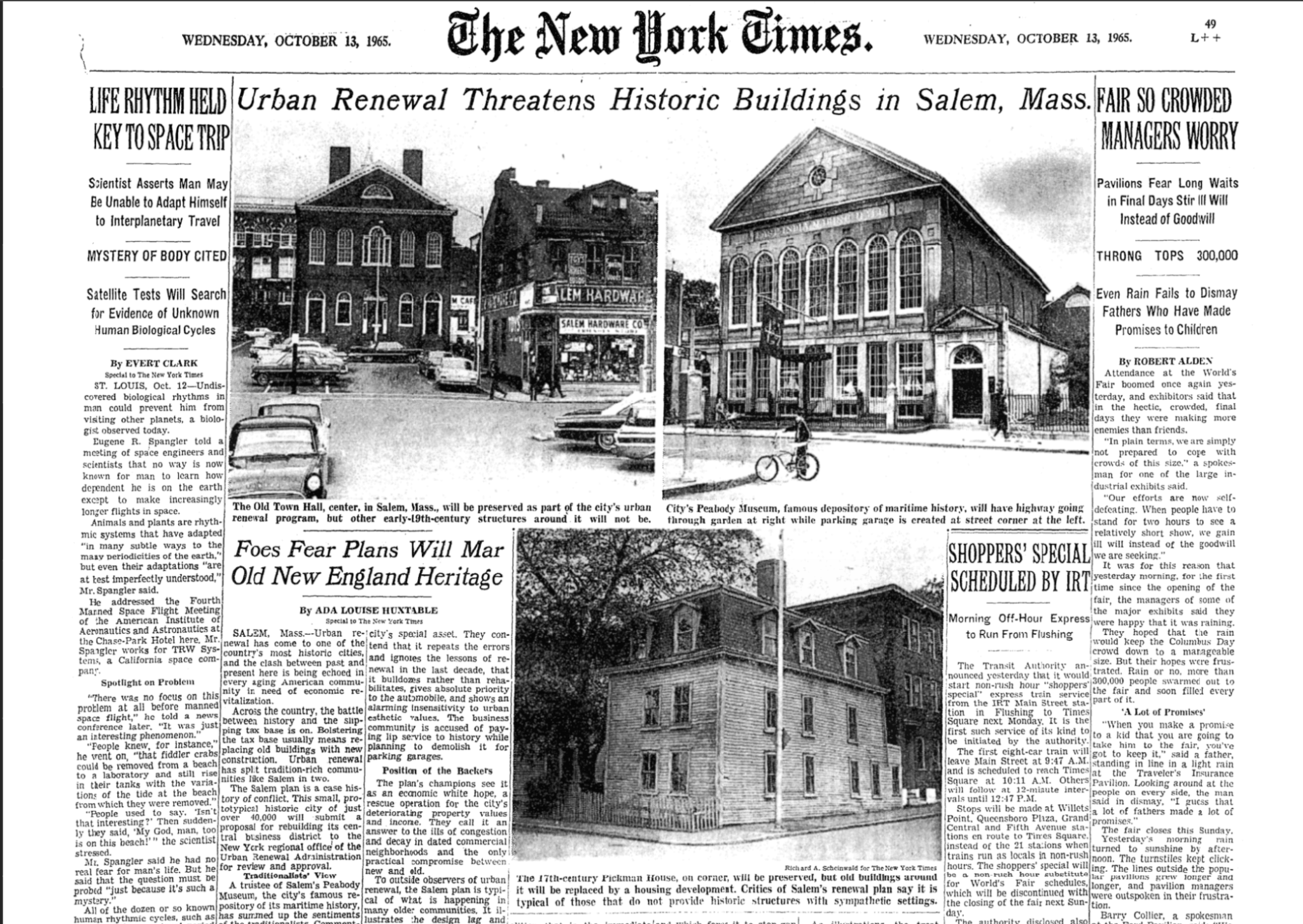
The plan attracted fierce opposition. Some 250 business owners signed protests. Historic Salem, Inc., a historic preservation advocacy organization, sponsored open forums to raise public awareness and propose alternatives. One of the most consequential voices against demolition came from outside Salem entirely. In October 1965, architectural critic Ada Louise Huxtable published a blistering assessment in the New York Times. She documented the ongoing destruction of historic buildings in the name of progress. Salem, she noted, was well on its way to building a four-lane highway through its center. Her article helped catalyze broader public opposition. This prompted local officials to reconsider their approach. A 2015 symposium, organized by Historic Salem, Inc., the Peabody Essex Museum, and Historic New England, honored Huxtable’s role under the memorable title “Mightier than a Wrecking Ball.”
In a follow up article in 1974, Huxtable noted that “consultant planners compounded the damage. Like many smaller communities, Salem was the victim of city‐hopping firms who dropped Plan A or Plan B on town after town without an environmental concern that seemed like outright hostility. Not only were the wrong new buildings to be put in the wrong places, but their relationship to what was grudgingly left of the old was marked by an insensitivity that amounted to sabotage.”

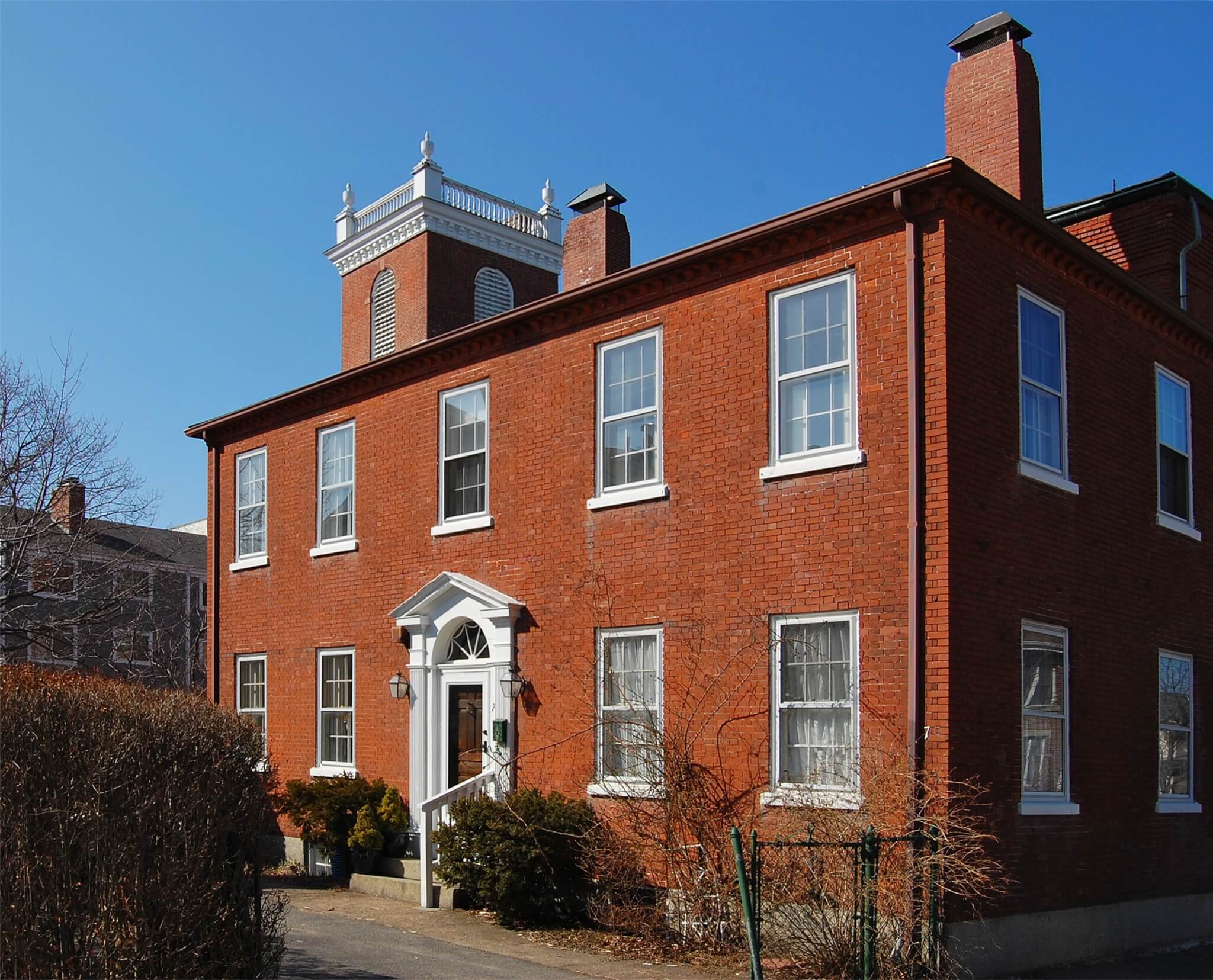
Even so, the project secured HUD approval in April 1968. Demolition began in 1969, when twenty-five buildings were razed. Work was interrupted by Bessie Munroe, an elderly resident of a circa-1811 home at 7 Ash Street, who refused to vacate her property. Her quiet defiance became a symbol of grassroots resistance to the demolition campaign.
The fight to save downtown Salem’s historic charm and prevent the city from making a mistake they could not take back would continue. Activists, local business owners, the Peabody Museum, and people like Mrs. Monroe stalled just long enough that the sentiments surrounding urban renewal started to change. In the next article, learn how Salem turned a corner and moved from demolition to reuse and preservation.
Article by Daniel Spiess, edited by Jaydie Halperin
Sources: American Planning Association. “Downtown Salem, Massachusetts.” APA Great Neighborhoods, 2008; Blair and Stein Associates, “Salem, Massachusetts • Central Business District” (November 1962), courtesy of University of Illinois at Urbana-Champaign via Hathi Trust; The Cecil Group, “Salem Downtown Renewal Plan”, (2011); Christine Cipriani, “How Ada Louise Huxtable Saved Salem: Symposium marks the 50th anniversary of urban-renewal critique” (The Architect’s Newspaper, October, 7, 2015); Donna Segar, “Envisioning Salem, 1962,” (Streets of Salem April 27, 2021) “Seven Women of Salem: the Preservationists” (Streets of Salem May 23, 2020); Historic Salem, Inc. “Citizen’s Guide to the Downtown Renewal Plan” (2021); Ada Louise Huxtable, “Urban Renewal Threatens Historic Buildings in Salem, Mass” (New York Times, October 13, 1965, p. 49, 51); Ada Louise Huxtable, “How Salem Saved Itself from Urban Renewal”, (New York Times, September 29, 1974, p. 139.); Peabody Historical Society and Museum, “The North Shore Shopping Center”; City of Salem, “Salem Redevelopment Authority.” , “Historic Districts Map”; Salem Public Library, “Salem Redevelopment Authority.” Salem Links and Lore; Salem Redevelopment Authority, “Annual Report of the Salem Redevelopment Authority” (2011); Salem State University Archives and Special Collections, “Libguides – Urban Renewal in Salem.”