
The Salem Downtown Renewal Plan: Part 2, Changing Times, Embracing Preservation
By the 1970s, opponents of the Salem Redevelopment Authority had made their voices heard. As the national attitude towards urban renewal changed, Salem was an early adopter of a new strategy. Rehabilitation, preservation, and creating a city identity became important pieces of a new, and arguably improved, renewal plan.
Four Commonwealth cities – Boston, Cambridge, Salem, and Springfield – approved urban renewal plans in the 1960s. These projects varied greatly. This is the third in a series of articles on urban renewal across Massachusetts.
The era of urban renewal would officially come to an end in the United States when President Nixon announced in 1974 that federal funding for new urban renewal projects would cease and current projects would have to wind down. Even before this, critics such as Martin Anderson and Jane Jacobs had started to push back against the bulldozer-driven development. Also in the 1960s and 1970s highway revolts, like the one that stopped Boston’s Inner Belt, had become louder and had some success. Changes in the national conversation would affect the urban renewal plans in Salem, Massachusetts.
Incorporating Preservation: Heritage East and West
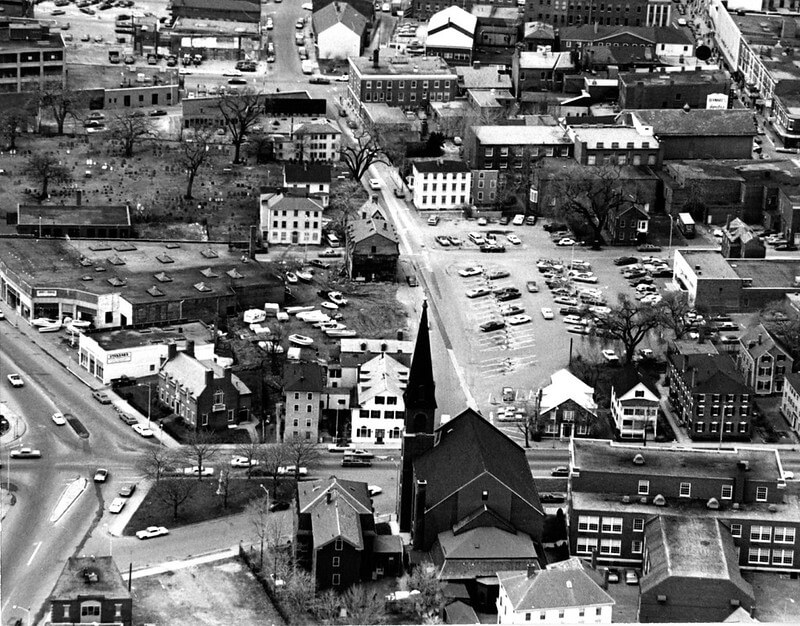
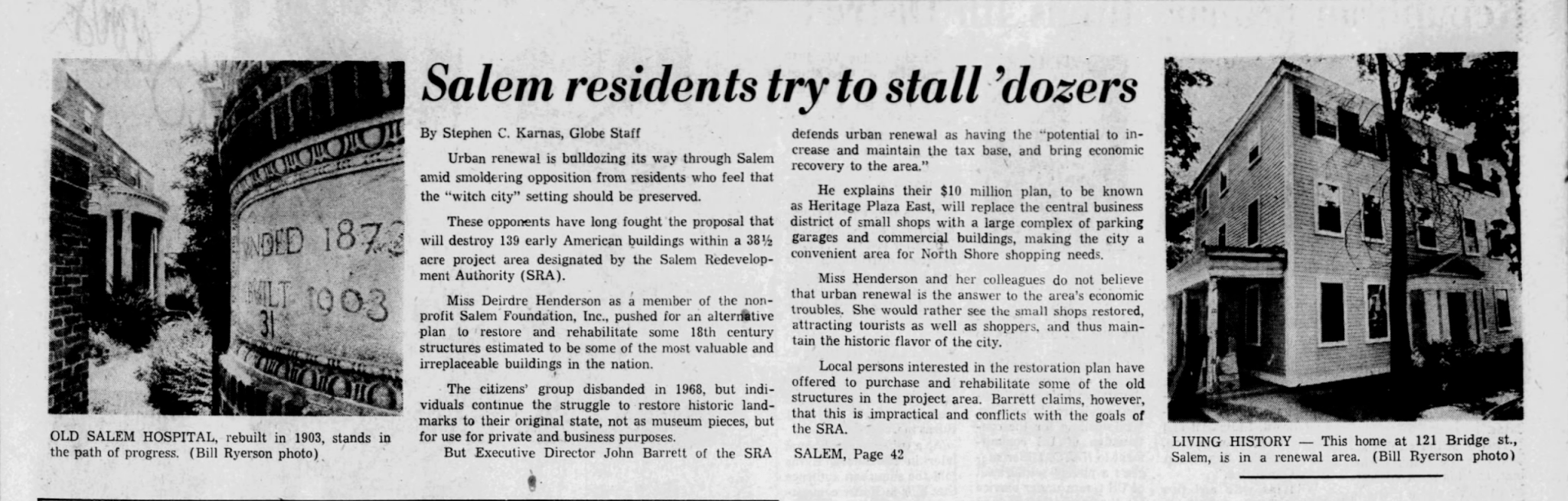
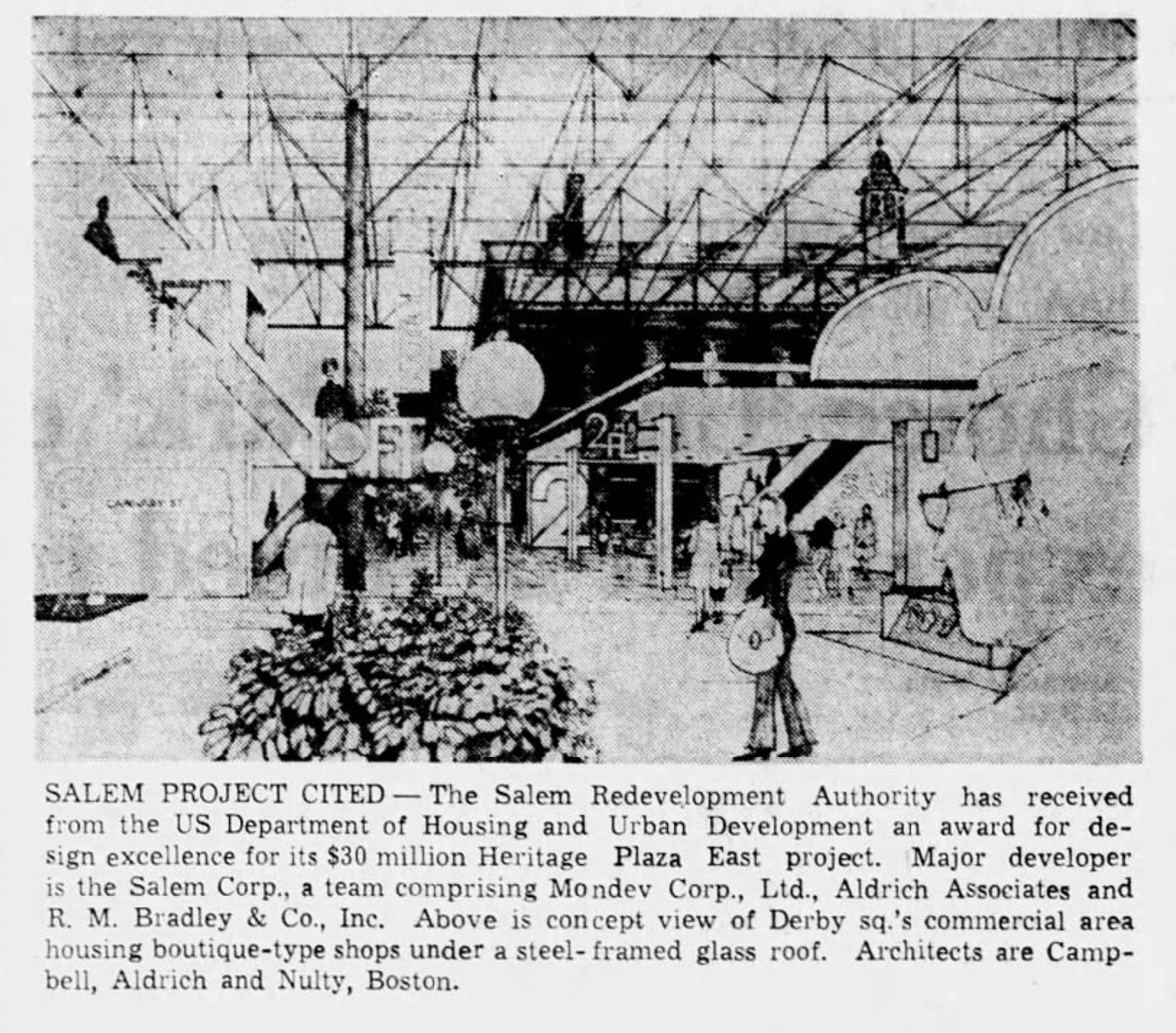
The political winds in Salem began to shift with the 1970 mayoral election of Samuel E. Zoll. He had campaigned on addressing public discontent with Heritage Plaza East and restructuring the SRA. Under his administration, the approach to urban renewal underwent a fundamental transformation. For example, Salem became the first city in the country to use urban renewal funds for historic renovation rather than demolition. The SRA reflected a national change in attitude toward urban renewal tactics. It moved away from demolition and population removal and towards renovation and preservation.
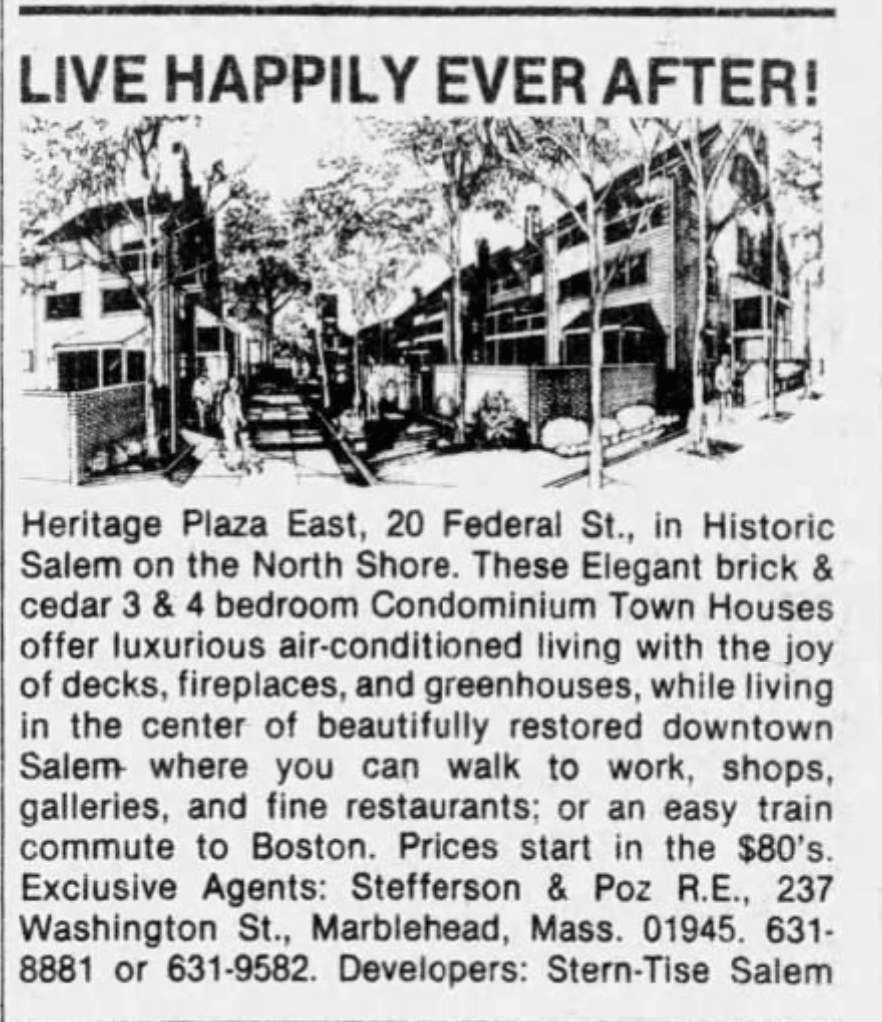
The new direction culminated in the adoption of the Heritage East (1972) and West (1979) Urban Renewal Plans. They replaced the earlier demolition-centered proposal and would prove transformative for the city. These plans embraced the preservation of Salem’s historic buildings as an economic asset rather than an obstacle to progress. They established design guidelines, introduced review procedures for exterior changes, and steered development toward restoration and adaptive use of existing buildings. The cobbled Essex Street pedestrian mall, the carefully tended streetscapes, and the protected architecture of downtown Salem all owe their survival to these plans.
The 2011 Downtown Renewal Plan Update
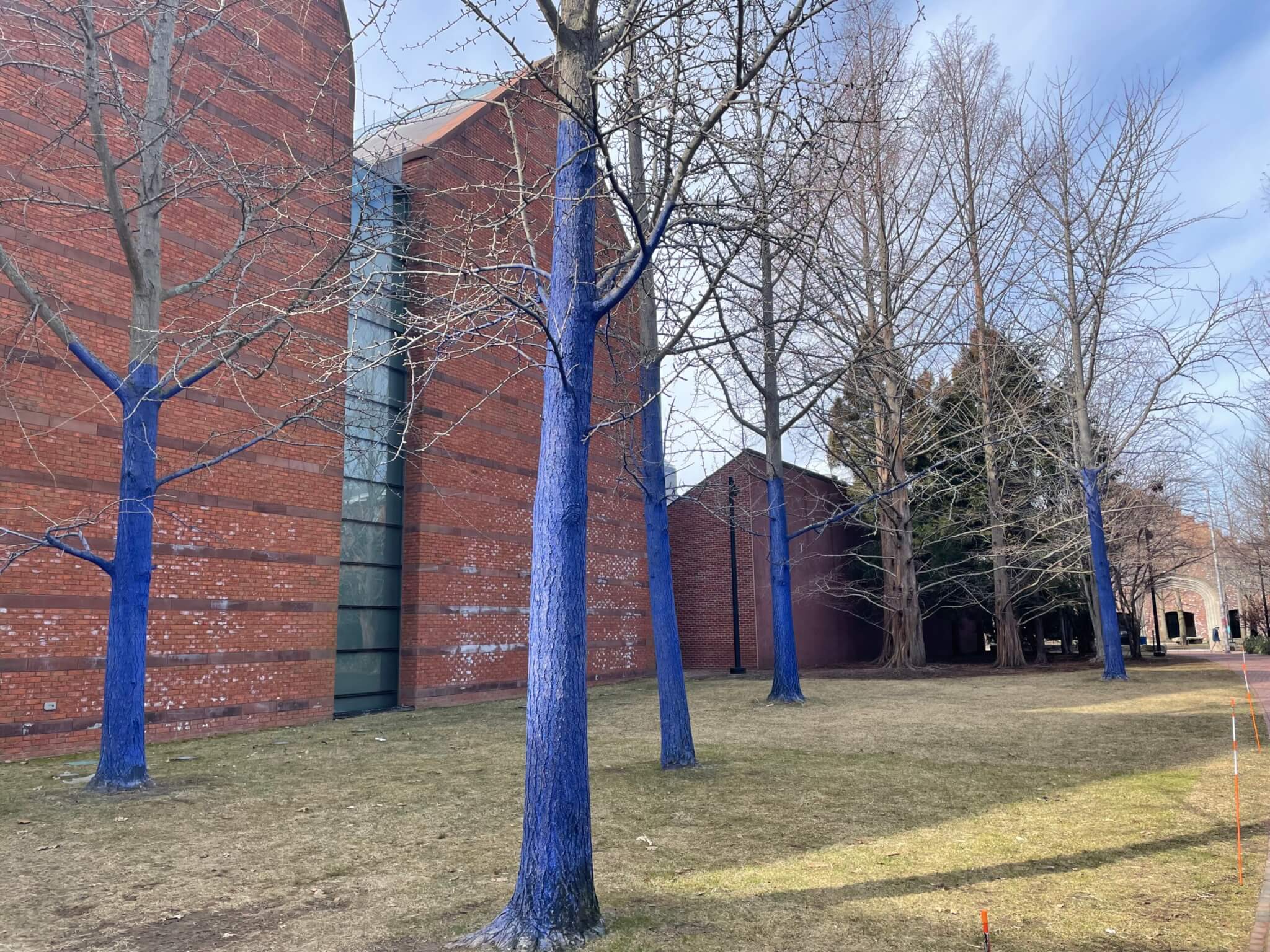
Over the following decades, the Urban Renewal Area created by the 1977 plans became a successful and thriving urban landscape. Heritage tourism emerged as a central pillar of the local economy. The Peabody Essex Museum, as it has been called since a merger with the Essex Institute in 1992, underwent a major expansion. New residences were constructed. The downtown attracted a diverse mix of restaurants, retailers, and cultural institutions. By 2008, the American Planning Association recognized downtown Salem as one of its ten Great Neighborhoods in America. It cited the district’s success in retaining historic character while incorporating modern-day changes. This made the area economically vibrant, compact, and sustainable.
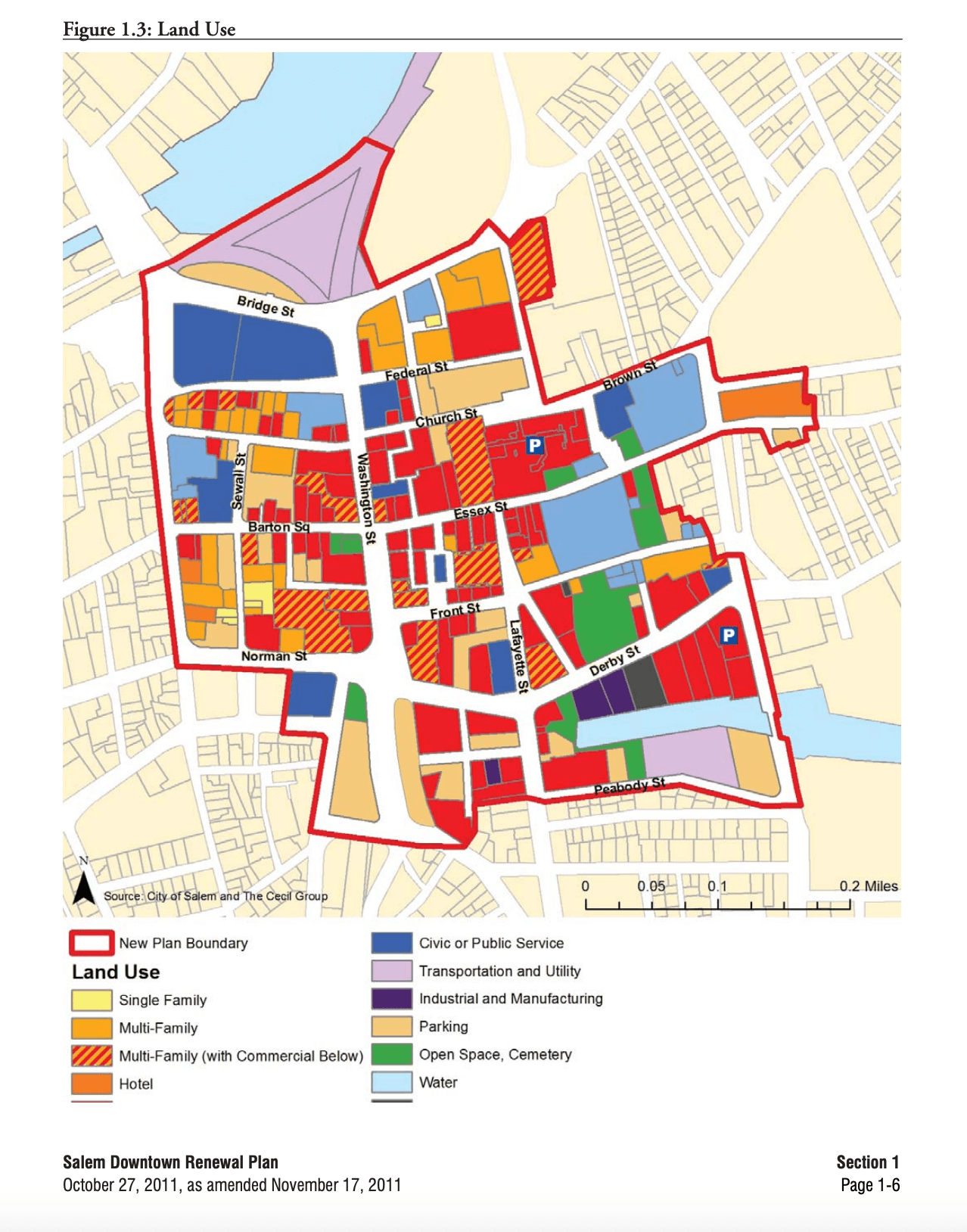
In 2011, the Planning and Community Development Department, recognized the continued importance of the Urban Renewal Area framework. They undertook a thorough redrafting of the plan. The department worked with planning consultants The Cecil Group, and had active input from Historic Salem, Inc. and other stakeholders. This collaboration resulted in the 2011 Salem Downtown Renewal Plan. It updated design guidelines, clarified the scope of SRA authority, and strengthened historic preservation regulations. Rather than departing from the spirit of the 1977 plans, the 2011 update refined and reinforced them.
The SRA's Ongoing Role
Today, the Salem Redevelopment Authority continues to operate under the 2011 plan. The SRA and its Design Review Board require a design review for all exterior improvements and signage changes in the Urban Renewal Area. The SRA’s goals reflect the hard-won lessons of its own history. They work to eliminate blight and prevent it. At the same time, they preserve and enhance historic architecture. They promote coordinated development that serves the health, safety, and general welfare of the city and its residents.
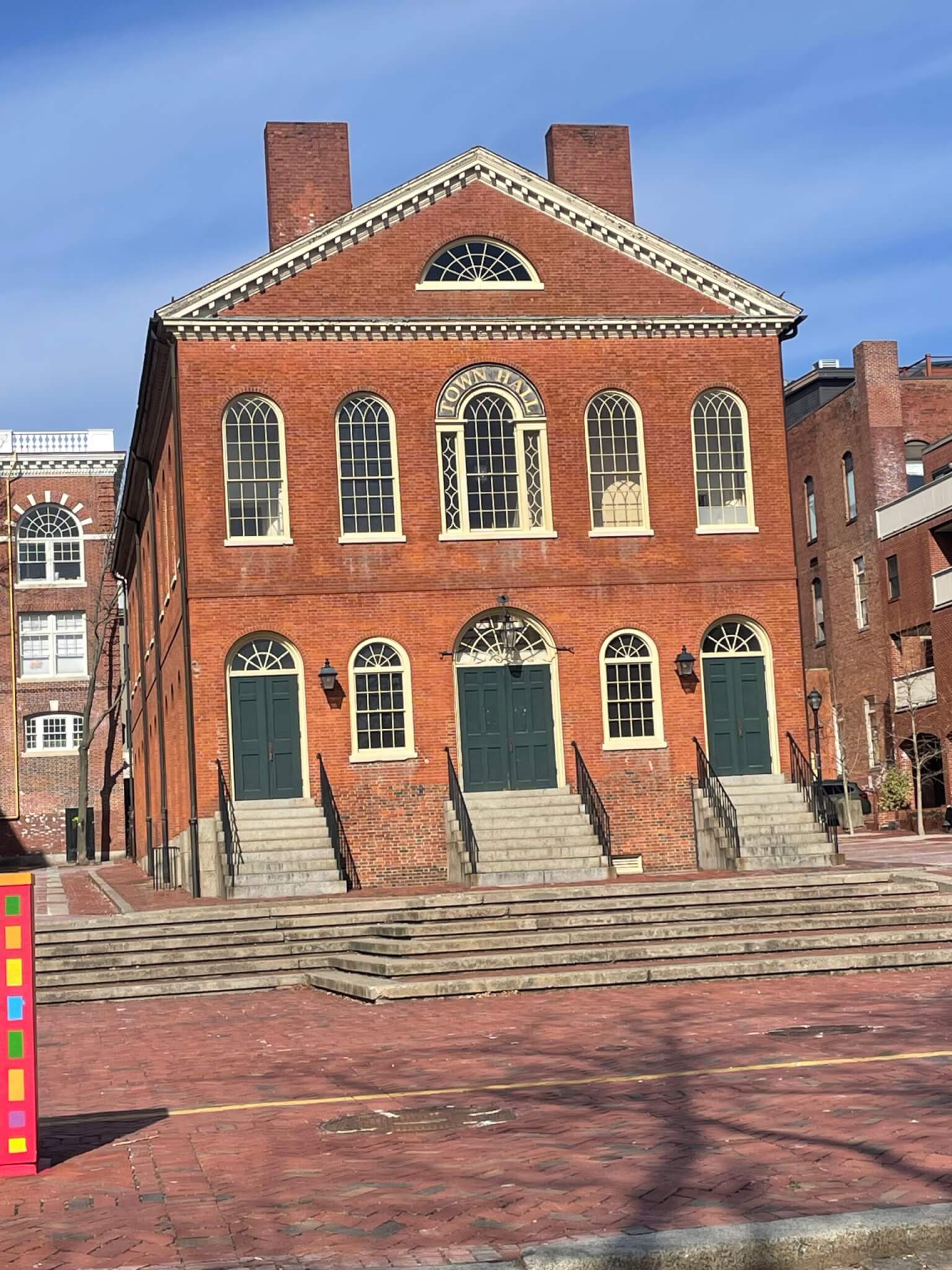
The history of the Salem Downtown Renewal Plan is the history of American urban planning in the second half of the twentieth century. It is a story of modernization, overreach, and resistance. This conflict led to a better understanding of what gives cities like Salem their unique flavor. Salem’s downtown today is a testament to outside activists, preservationists, and residents speaking up. Civic leaders, after an early and damaging flirtation with demolition, ultimately chose a different path. The city’s success has made it a model studied by planners and preservationists across the country. It is a living demonstration that renewal and preservation need not be enemies.
Article by Daniel Spiess, edited by Jaydie Halperin
Sources: American Planning Association. “Downtown Salem, Massachusetts.” APA Great Neighborhoods, 2008; Martin Anderson, “Memorandum for the President– Subject: Urban Renewal” December 4, 1969 (Nixon Library); Blair and Stein Associates, “Salem, Massachusetts • Central Business District” (November 1962), courtesy of University of Illinois at Urbana-Champaign via Hathi Trust; The Cecil Group, “Salem Downtown Renewal Plan”, (2011); Christine Cipriani, “How Ada Louise Huxtable Saved Salem: Symposium marks the 50th anniversary of urban-renewal critique” (The Architect’s Newspaper, October, 7, 2015); John Herbers,“Panel Bids Nixon to Continue Efforts in Urban Renewal” (The New York Times, February 1, 1970) | “U.S. Commitment to Renew Cities Is in Doubt Under New Program” (The New York Times January 30, 1973); Ada Louise Huxtable, “Urban Renewal Threatens Historic Buildings in Salem, Mass” (New York Times, October 13, 1965, p. 49, 51); Ada Louise Huxtable, “How Salem Saved Itself from Urban Renewal”, (New York Times, September 29, 1974, p. 139.); Peabody Historical Society and Museum, “The North Shore Shopping Center”; Donna Segar, “Envisioning Salem, 1962,” (Streets of Salem April 27, 2021) “Seven Women of Salem: the Preservationists” (Streets of Salem May 23, 2020); Historic Salem, Inc. “Citizen’s Guide to the Downtown Renewal Plan” (2021); City of Salem, “Salem Redevelopment Authority.” , “Historic Districts Map”; Salem Public Library, “Salem Redevelopment Authority.” Salem Links and Lore; Salem Redevelopment Authority, “Annual Report of the Salem Redevelopment Authority” (2011); Salem State University Archives and Special Collections, “Libguides – Urban Renewal in Salem”; Adam Tomasi, “Jane Jacobs” (The West End Museum, November 21, 2021).