
Roosevelt Island: An Urban Planning Experiment in NYC's East River
Roosevelt Island has had many names and purposes since Europeans first began to settle New York City. After centuries as an isolated island for inmates, hospital patients, and impoverished New Yorkers, Roosevelt Island underwent a makeover in the late 20th century. It became a mixed income, multi-racial community that went against the grain of traditional urban planning. A new neighborhood was born, but not all good things can last.
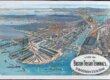
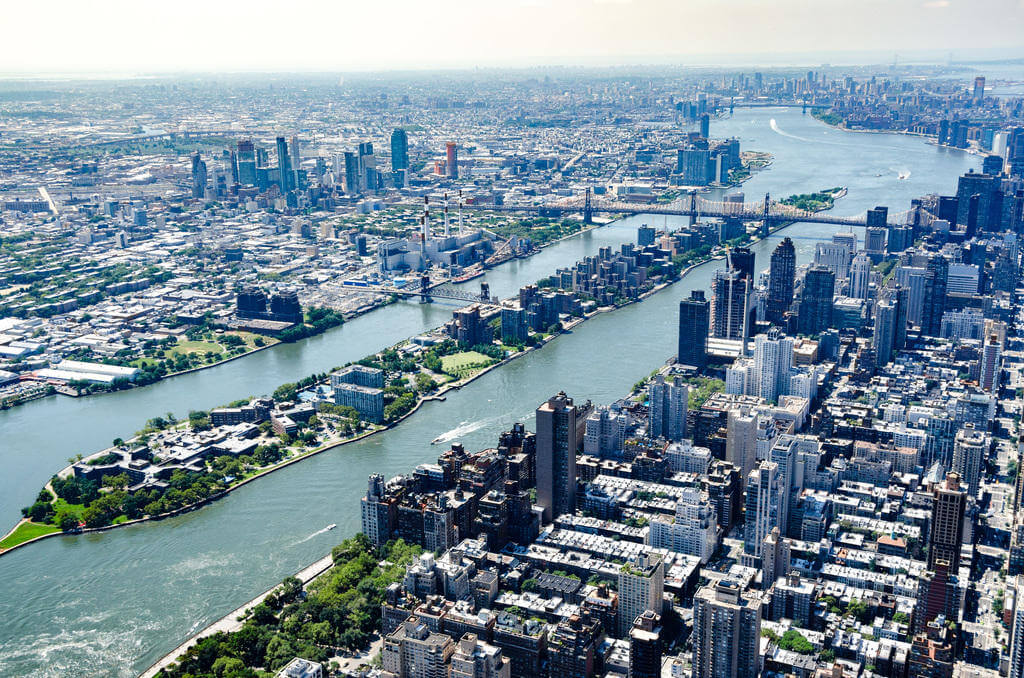
Between the boroughs of Manhattan and Queens in New York City, there is a long and narrow stretch of land in the East River. It has had many names over the years, but today it is called Roosevelt Island. It is two miles long, around 15% the length of neighboring Manhattan, and measures just 800 feet across at its widest point. For such a small parcel, it has seen a great deal of change over the past four centuries. Roosevelt Island has acted as a private estate, home of many welfare and penal institutions, and most recently a development with a unique dedication to the ideal of tight-knit, mixed income living.
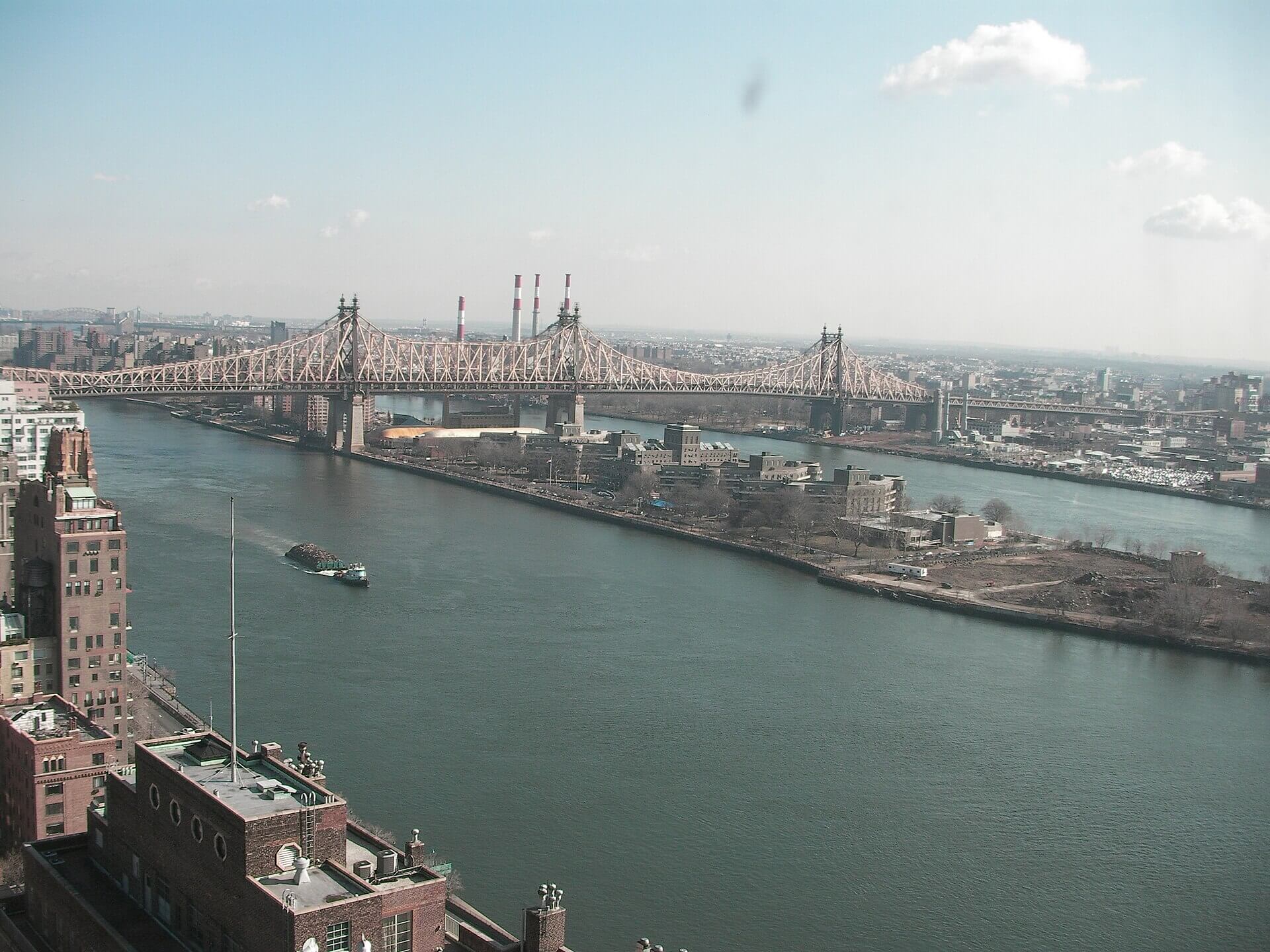
The Lenape people, the original inhabitants, called the island Minnehanonck. This either translated to “Long Island” or “it’s nice to be on the island”. After the beginning of European colonization, the Dutch briefly occupied the island starting in 1637. They used the island for hog farming and renamed it Varckens Eylandt (Hog Island in Dutch). The island changed ownership yet again after the English took control of New Amsterdam in 1664. The new Sheriff of New York, Captain John Manning, took possession of the island in 1666 (or 1668). He used it primarily as a place of residence. For about 20 years, the island was known as Manning Island. In 1686, it was renamed Blackwell Island after its new owner: Robert Blackwell and his family.
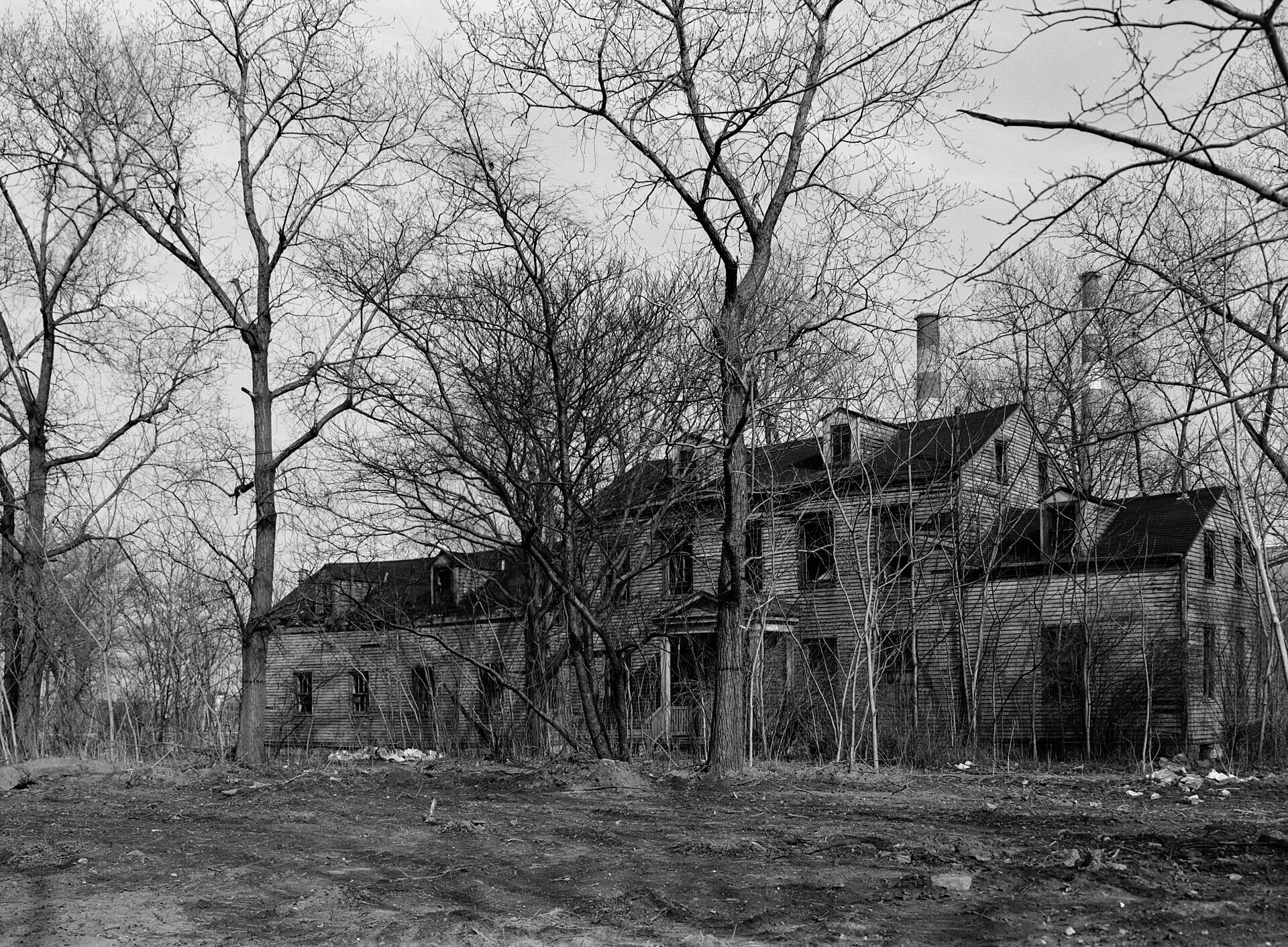
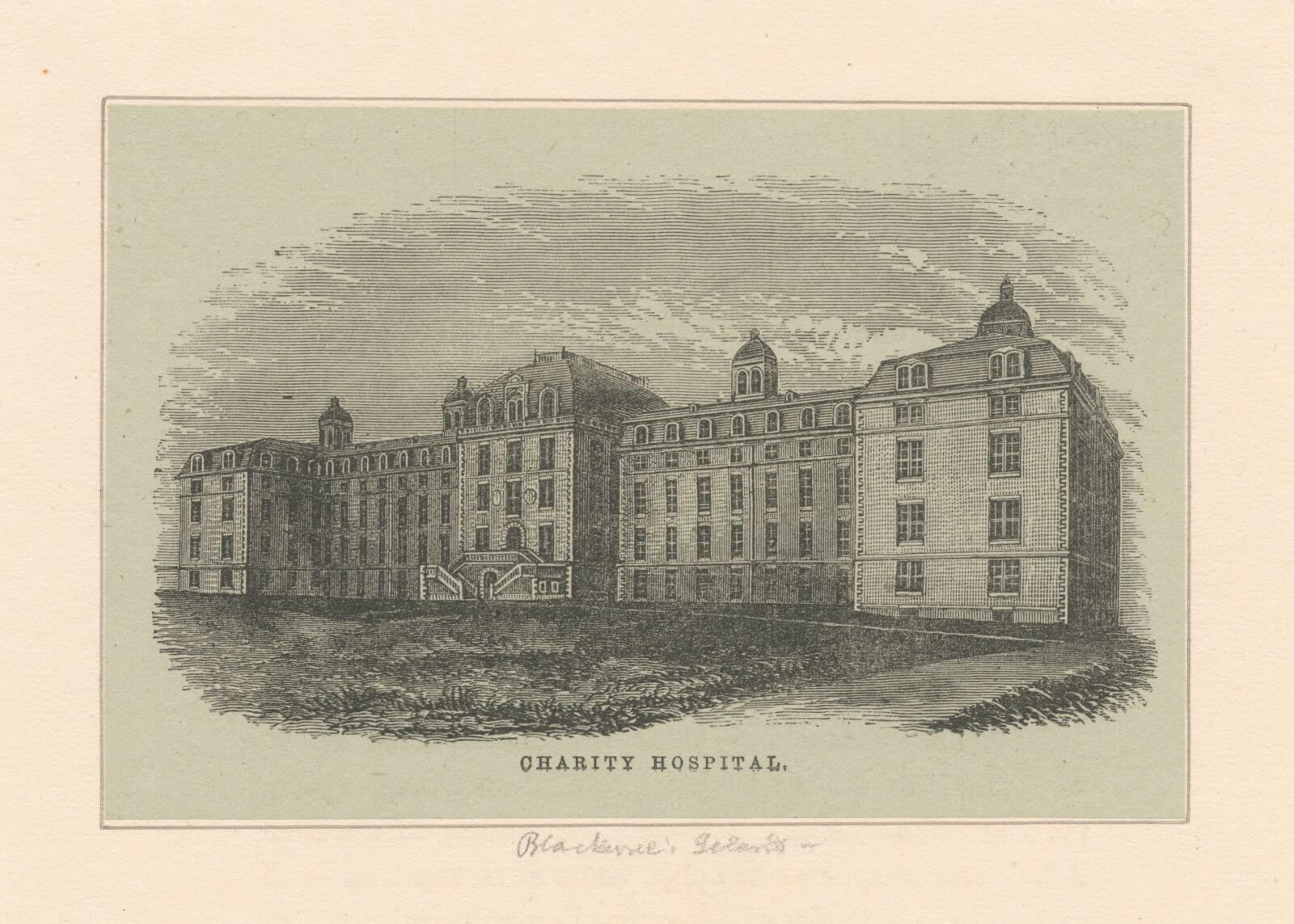
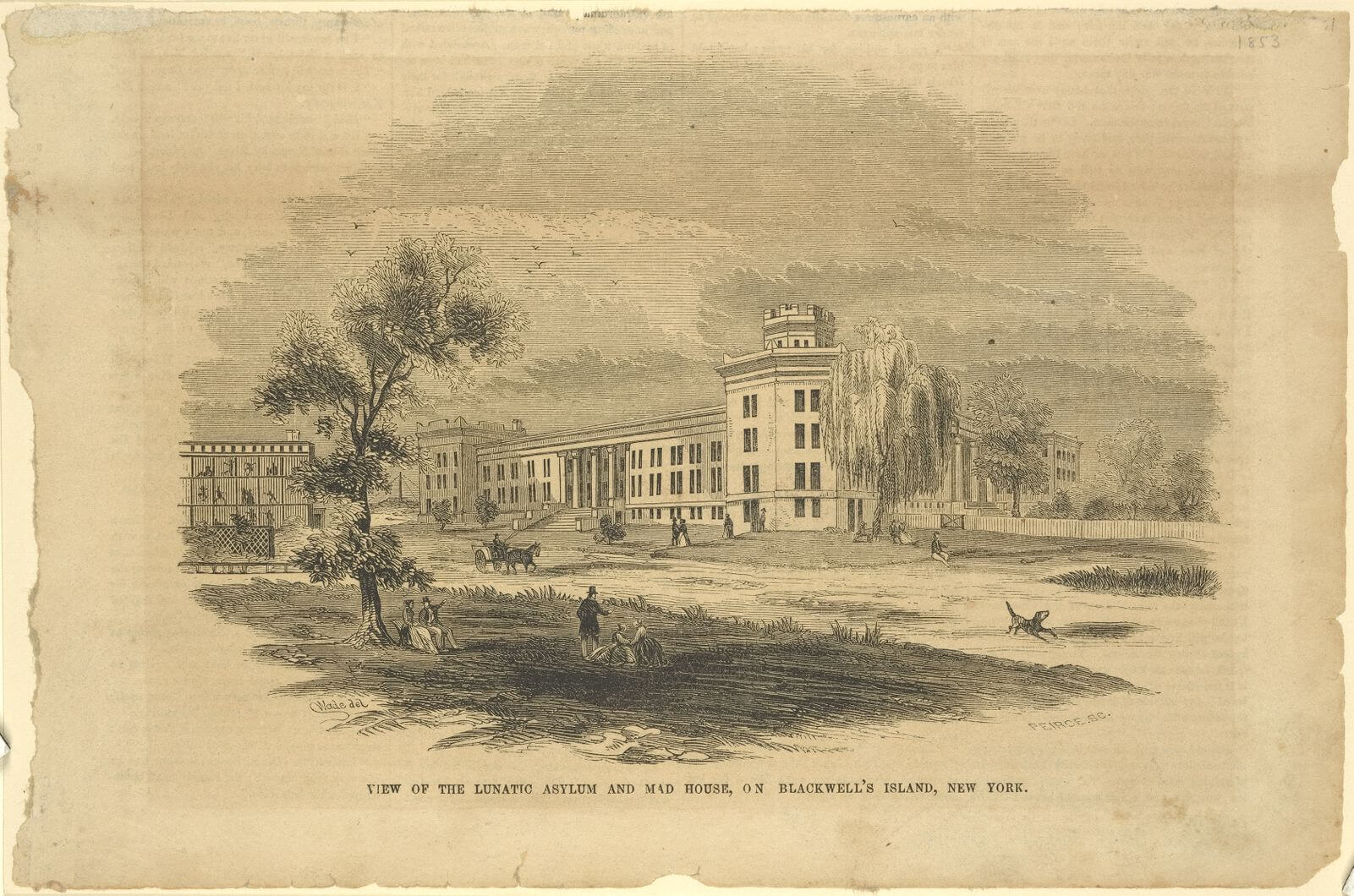
In 1828, the City of New York purchased the island from the Blackwells for $32,000 (the equivalent of $903,147 in 2026). New York City justified the expense as there was an urgent need for new hospitals, prisons, and quarantine zones for the growing city. Smallpox cases were on the rise and the hospitals of Lower Manhattan were themselves overcrowded. Blackwell Island was the perfect solution — difficult to reach and undeveloped. Throughout the 19th century, the island would hold a charity hospital, a smallpox hospital, a prison, an alms house, and an asylum. It earned the unofficial local monikers of “Ward Island” and “Welfare Island”, due to the high number of wards, medical facilities, and charitable institutions on the island. As one author wrote in his 1872 book: “The vagrant, dissipated, and disorderly classes are sent [to Welfare Island] by the city police courts.”
The conditions in many institutions on the island were lacking or even inhumane. Journalist Nellie Bly’s breakout piece of investigative journalism came after she spent ten days in an asylum on Blackwell Island. Her exposé shocked the public and led to some reforms at the asylum.
The use of the island for public welfare institutions continued into the 20th century. Eventually, due to the deteriorating conditions of the asylum and the prison, both were abandoned. The mental health patients were moved to other hospitals. The City transferred inmates to the newly completed prison complex of Riker’s Island. By 1960, most of the island was abandoned with only a few hospitals still in operation. The City government wanted to redevelop the island, but for a time it was unsuccessful. One reporter described the island midcentury as a “ghost town, vacant lot, woodland and mausoleum for unhappy memories”
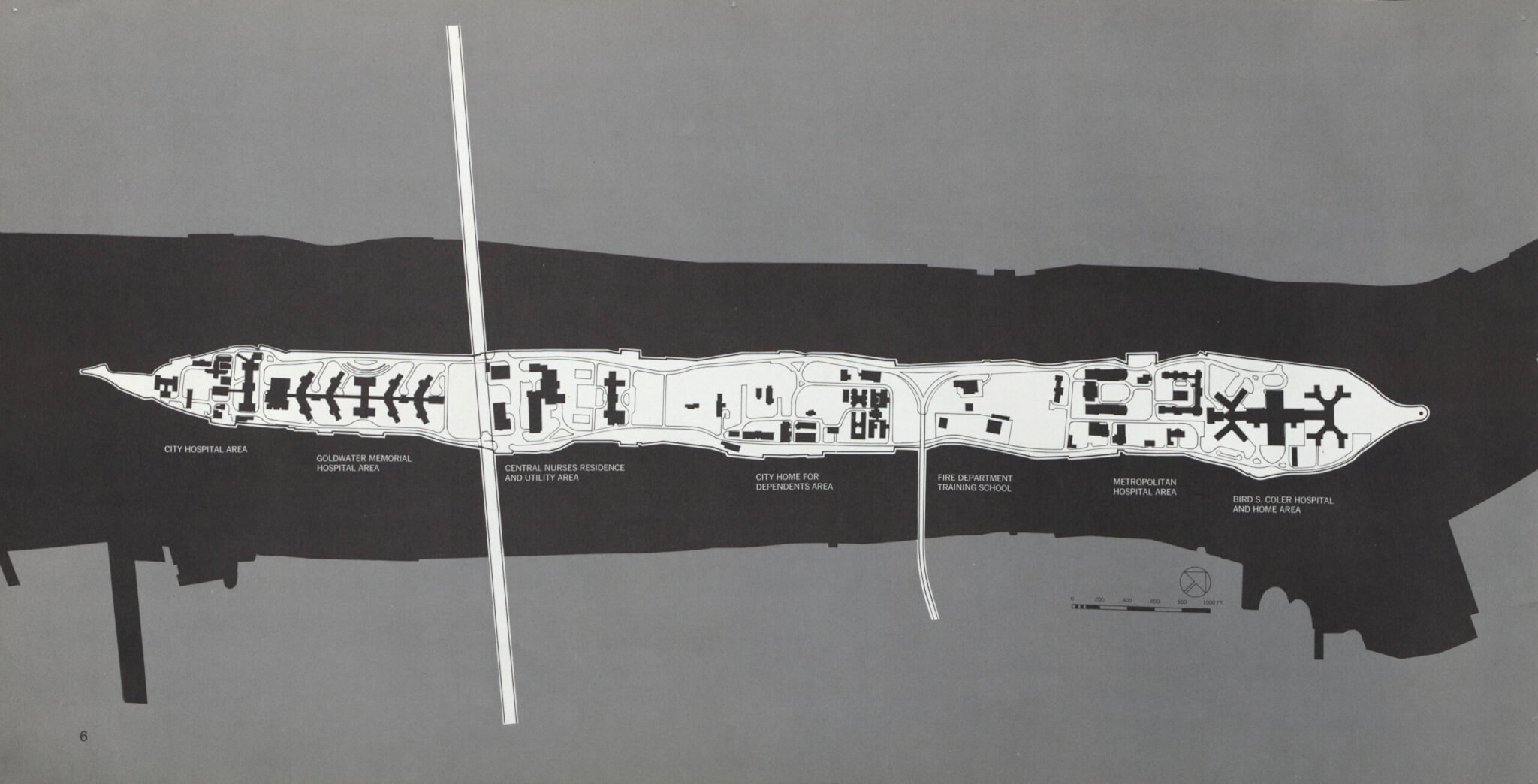
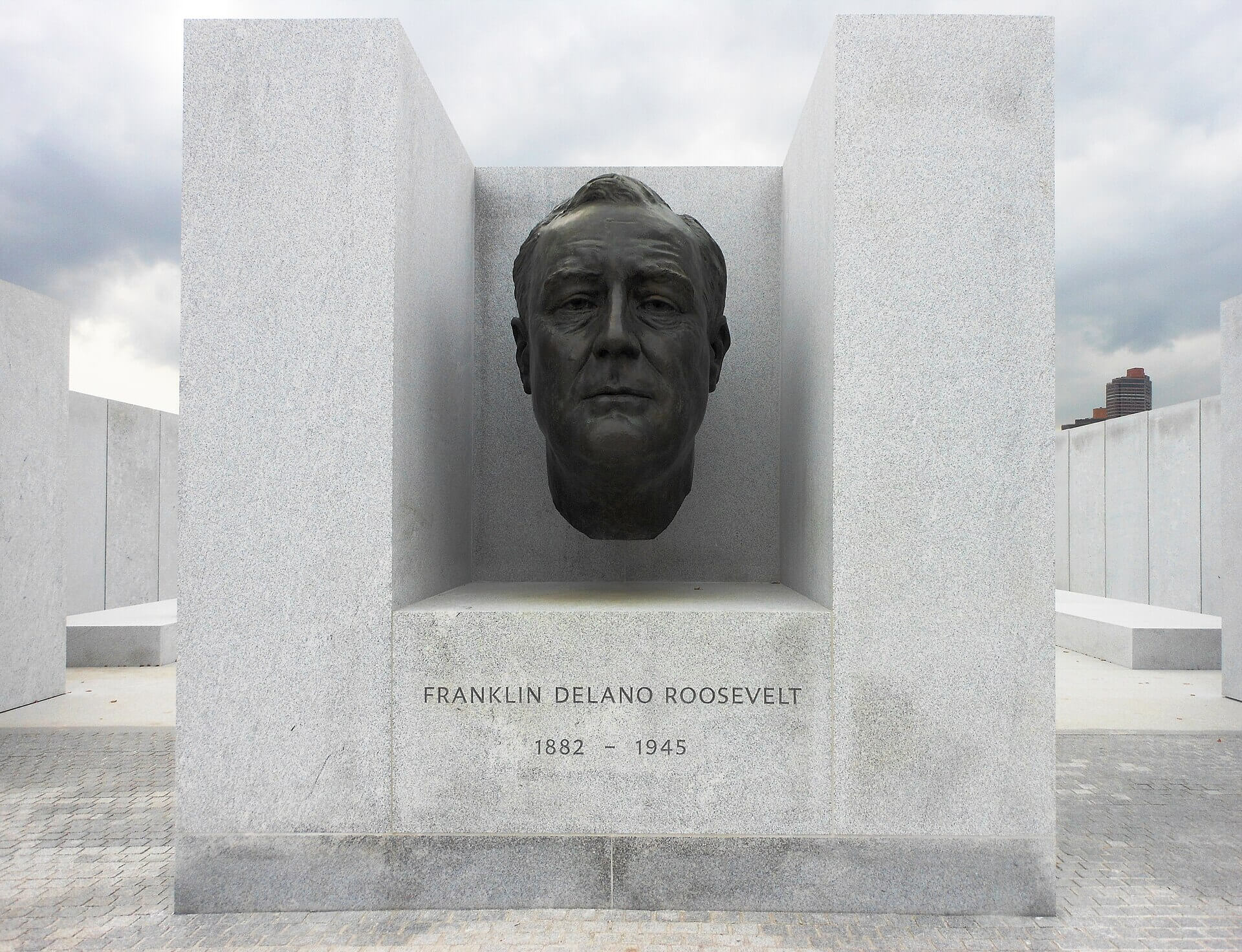
By the 1950s, with the construction of Queensboro Bridge, the island had become more accessible. In the 1970s it piqued the interest of investors and realtors. They were looking to meet the rising demands of the city for residential communities. In 1973, the island received its present day name: Roosevelt Island. It was named after President Franklin D. Roosevelt. The new name aimed to honor the disability history on the island while separating from its dark past.
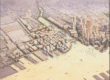
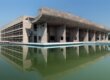
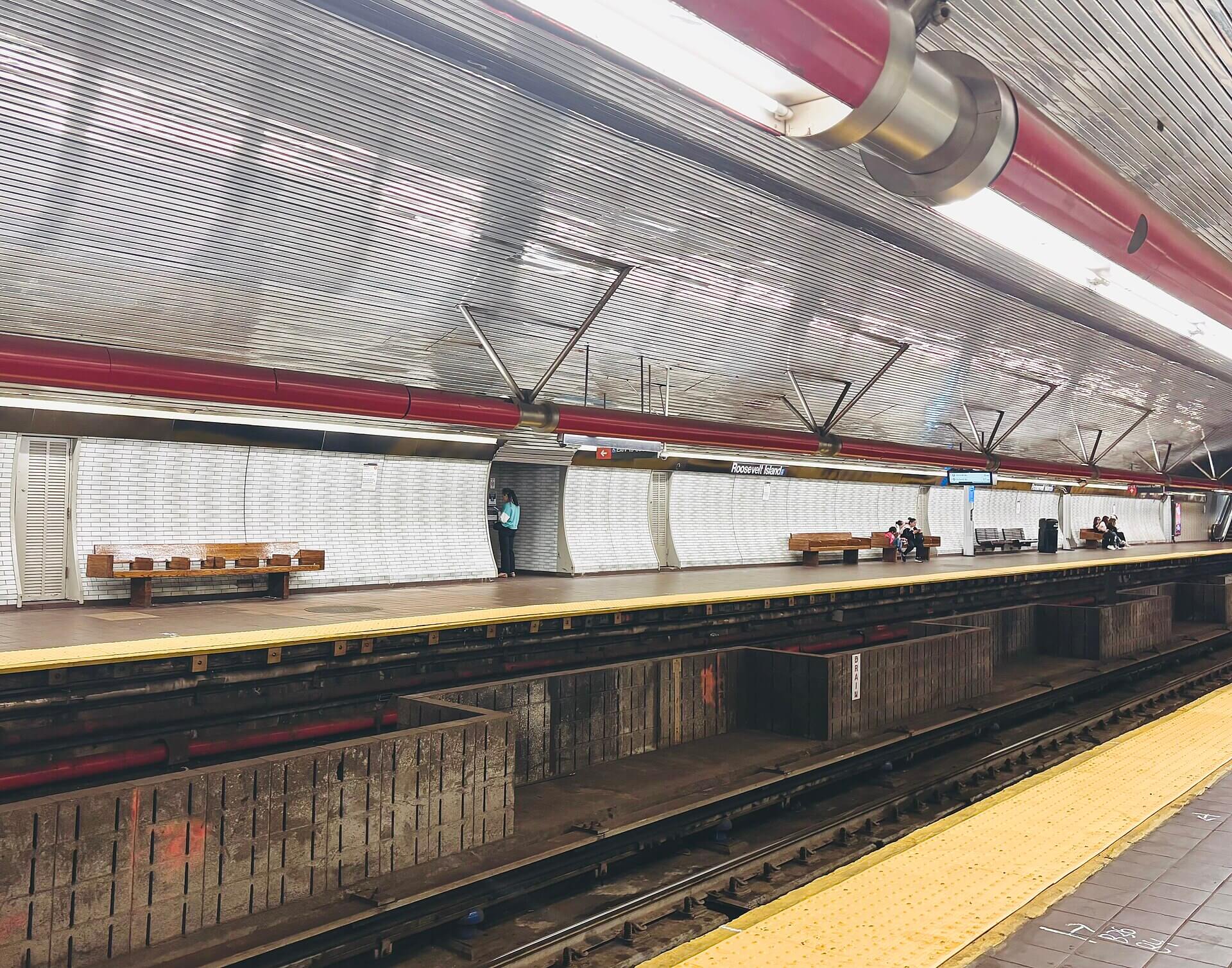
Throughout the 1970s, innovative and exciting activity took over the island. The newly established New York State Urban Development Corporation (UDC) spearheaded the redevelopment. At the time, Ed Logue was the head of the UDC and oversaw the early years of the project. Logue, the first head of the fully-formed Boston Redevelopment Authority, had left Boston for New York after losing the 1967 mayoral race to Kevin White. According to styles in vogue at the time, Logue and his planners designed a utopian residential community with brutalist architecture. While Logue later described all but one as failures, his human-centric designs were typically at the cutting edge of urban planning for their time. The Roosevelt Island Project was designed to be an automobile-free, green space forward, mixed income, and racially mixed neighborhood. It even included a high speed pneumatic trash system that sped garbage from apartment buildings to a central processing facility.
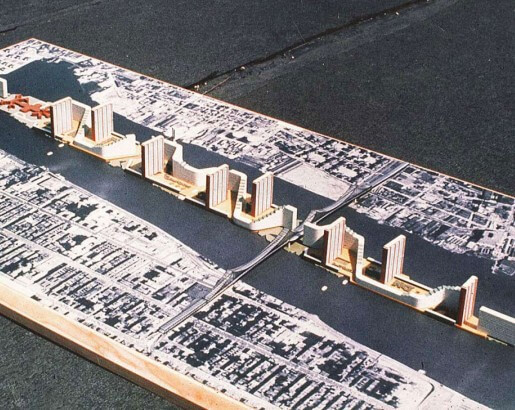
The only modes of transportation available on the island were bikes and an electric bus, which were free. The island could be reached via bridge from Queens, the ferry, a tramway, and eventually a subway station. The original plan included housing for 20,000 new residents. However, as the project moved into the construction stage, the numbers changed slightly.
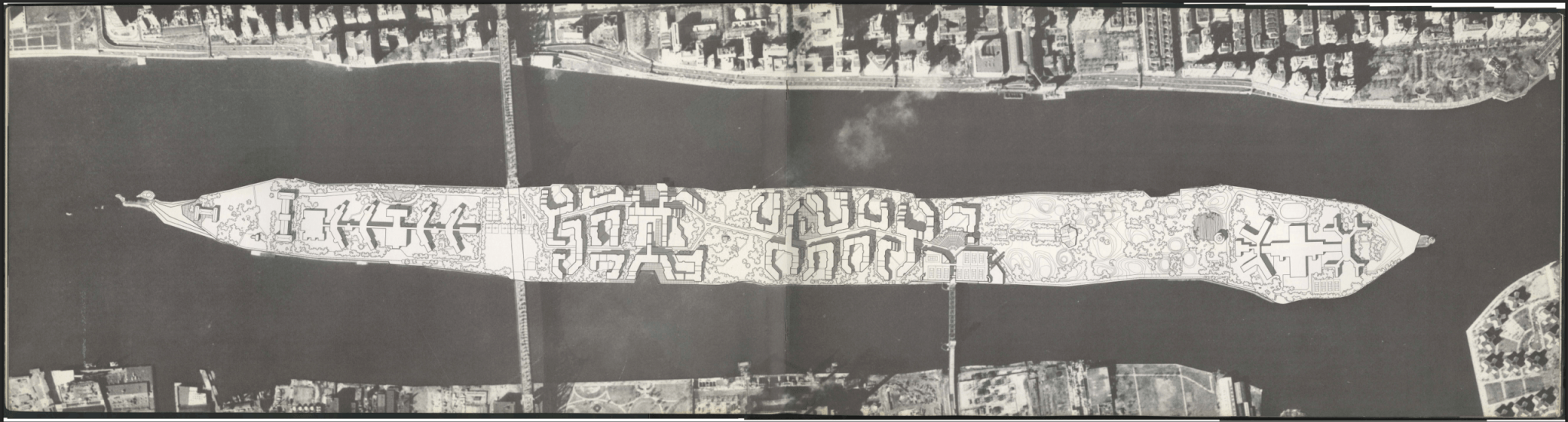
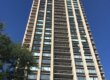
The four initial apartment buildings were Westview, Island House, Rivercross and Eastwood; WIRE for short. The first two – Westview and Island House, were middle-income buildings, and contained about 760 units. Rivercross was aimed at the middle-upper class and had 377 units. The last, Eastwood, was designed for low-income residents, with special emphasis on the elderly and disabled. The apartment count for Eastwood was around 1,000. With a total of 2,137 units, the WIRE housed between 5,000 and 7,000 residents in the 1980s.
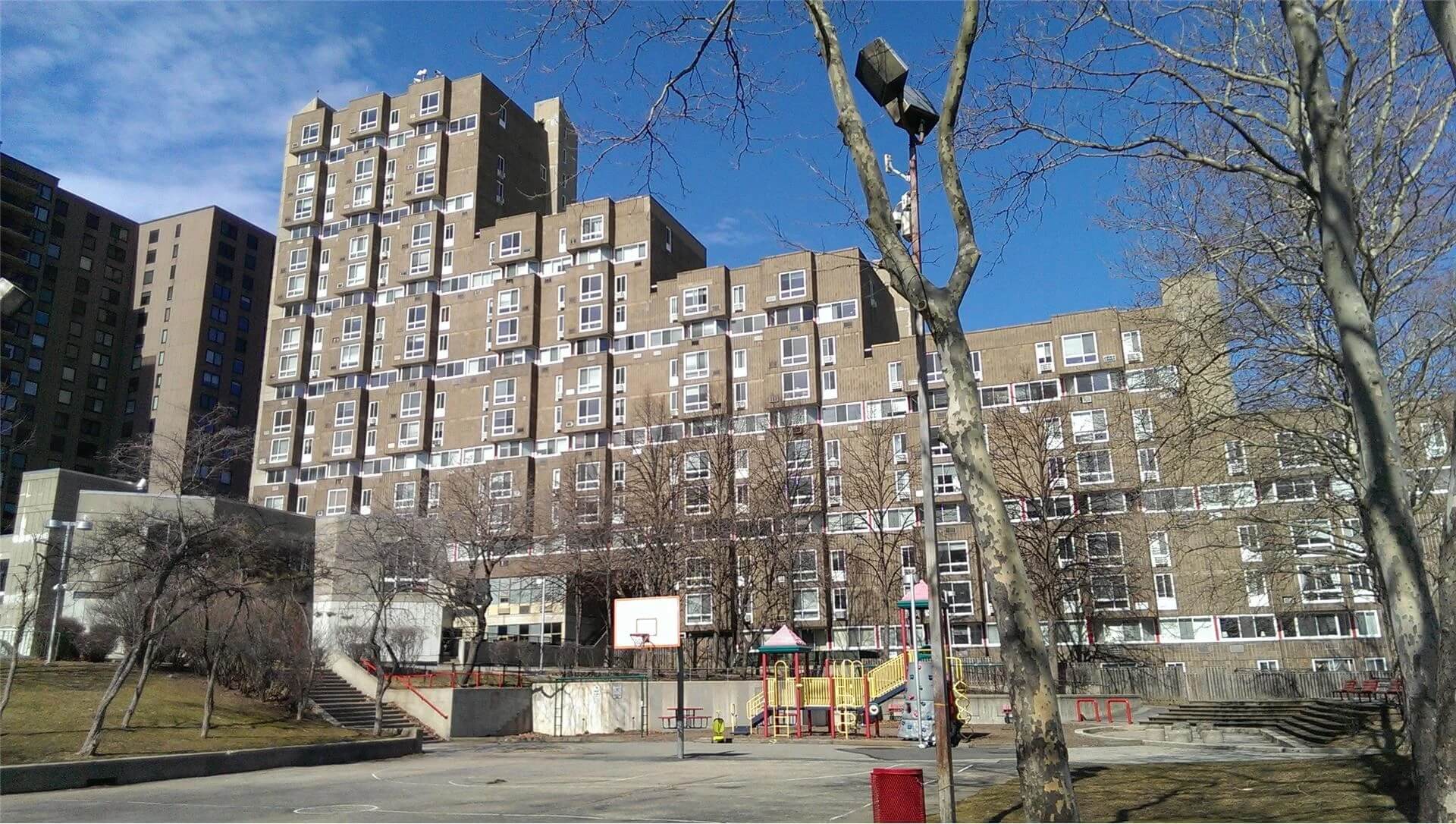
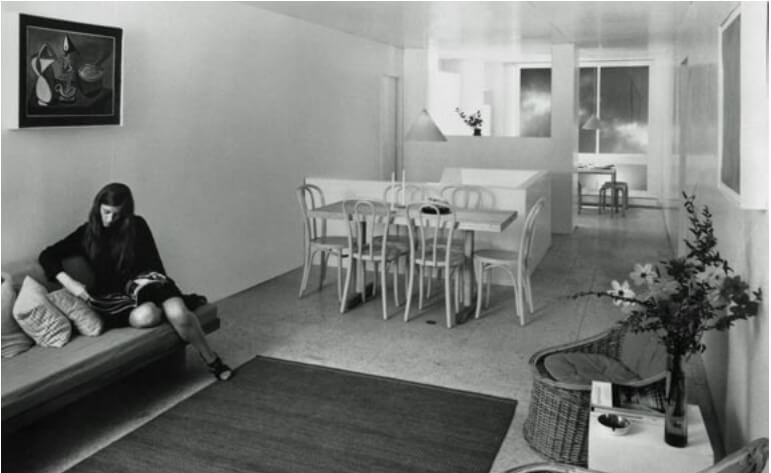
The neighborhood was integrated early on. Many of the white residents who moved in were looking to live in a diverse, multi-racial community. The neighborhood appealed to Black residents who saw the neighborhood as a place to avoid housing discrimination. The public elementary school on the island was a plus to one resident who said she wanted her kids “to be with youngsters from a wide variety of backgrounds.” A New York Times article in 1990 remarked on the restraint shown in the neighborhood. Developers had continued to build low-income and market rate apartments instead of just luxury units.

Melissa Fundira, a Toronto-based journalist who grew up on Roosevelt Island in the 80s and 90s, called it “(a) dreamy place to grow up.” She described the atmosphere as being unlike anywhere else in New York at the time — diverse, safe, and very free. Yet, as she got older, she questioned her childhood memories. She realized that all the things she loved about the Island served as. “[…] a grand social experiment. An experiment that wanted to prove that the government was capable of building quality housing for New Yorkers of all racial and economic backgrounds.”
Unfortunately, like most good things, the dreamy community was short-lived. By the late 1990s, trouble came knocking and it has been an uphill battle for the residents since then. In 2000, the largest subsidized housing development on the island, Eastwood, was privatized. The building’s state-funded affordable housing subsidy (Mitchell-Lama) was never renewed. While affordable housing often becomes market rate eventually, on Roosevelt Island this coincided with the construction of many more market rate and later luxury buildings. The neighborhood association began to worry about gentrification. Rather than being weighted toward affordable housing, Roosevelt Island was beginning to become more like everywhere else.

In the decade following the change, the percentage of tenants paying subsidized rents fell from 87% to 58%. The new millennium has also brought more independent middle-upper class buyers to the island. Their arrival changed the social flavor of the community to be less open and more individualist. The apartments young Melissa Fundira had roamed through freely in the 80s, were now surrounded by black gates. The keys became exclusive to tenants. Additionally, some of the island’s infrastructure has begun to age out, and much of it is buried under buildings and challenging to access for repairs. The pneumatic trash system often breaks down now – though accusations that discarded mattresses are the cause of constant clogging are likely unfounded.
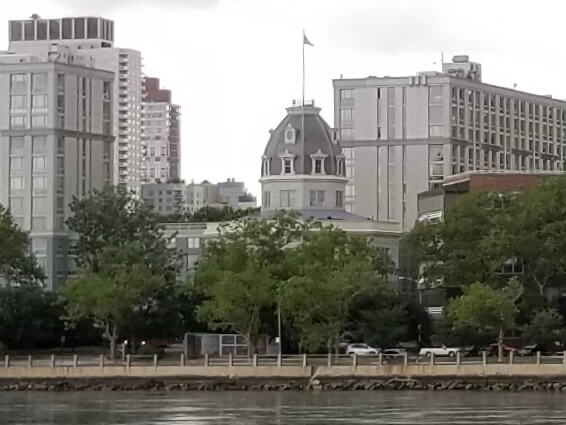
Despite the problems of the 2000s, Roosevelt Island still hoped for a bright future. In 2025, planners at the Roosevelt Island Stakeholder meeting emphasized affordability, transportation options, and helping those who love the island stay in their homes. Officials and developers have seemingly heard voices of the Island’s housing association and changed their attitudes. The briefing indicated that the city would explore ways of addressing residents’ desire to protect the “mixed-income character of housing ” and their need for “more affordable options”.
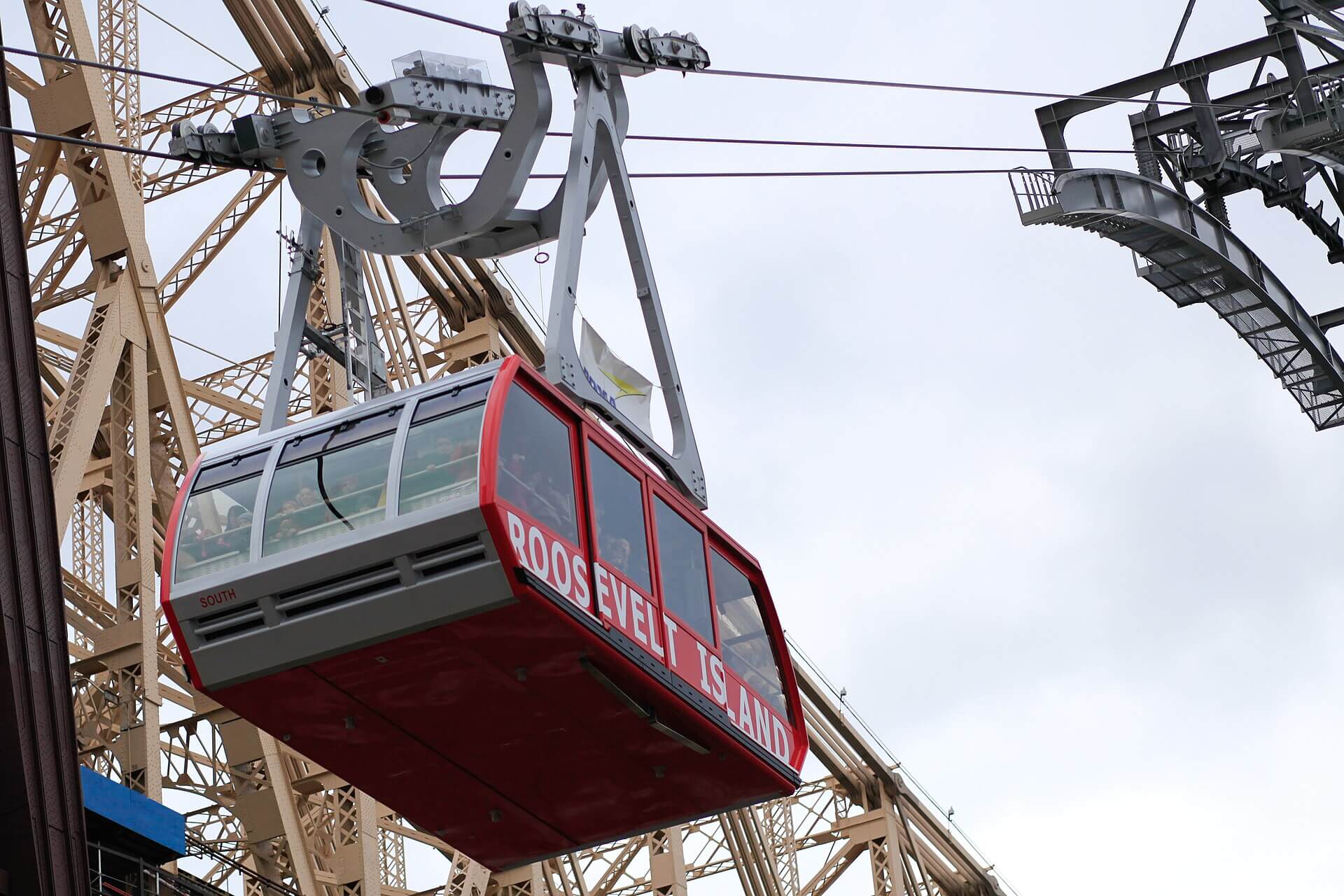
Over the past several centuries, Roosevelt Island has been adapted by the people of New York to serve a diverse set of needs. As demands and values changed, so too did this small strip of land. On its annual Roosevelt Island Day on June 6th, 2026, the ideals that motivated the development of a community-oriented, diverse, and family friendly neighborhood were on full display. There were free events, children’s activities, and community organizations all under the shadow of the Queensborough bridge. The practicalities have not always aligned with the utopian design of the redeveloped Roosevelt Island. However, most residents and developers still believe in those ideals and hold on to a promise of a better Roosevelt Island.
Article by Polina Luna, edited by Jaydie Halperin and Sebastian Belfanti
Sources: Abby Brenker, The Lunatics Radio Hour – Episode 139 – the Dark History of New York City.( The Lunatics Project 3 July 2024); Correction History, “Before Rikers, Blackwell’s Was DOC’s Island Home,” Part 1 (From the 1995 special issue of Correction News marking DOC’s centennial), Part 2 (time-line series of Roosevelt Island history pages on Website NYC10044 a service of Main Street WIRE, the island’s community newspaper, and Unisource2000, Inc., Part 3 (excerpts from Lights and Shadows of New York Life published in 1872.) | “DOC’s Other Bridge Began on Blackwell’s Island 100 years ago.”; Alan Finder, “Roosevelt Island: A ‘Wonderful’ Experiment Still Building,” (The New York Times, Timesmachine, April 26, 1990); Theo Gobblevelt, “Down the Tubes: Roosevelt Island’s AVAC System and the Failure That No One Will Own,” (The Roosevelt Island LightHouse, March 28, 2025); Jameela Hammond, “Plot of Land – Ep. 6: Tucked Between Those Two Boroughs” (Monument Lab, April 20, 2023) | “Plot of Land – Ep. 7: The Sad Part Is That It Was Successful” (Monument Lab, April 20, 2023); Kitty Hanson,“Welfare Island: Stepchild with Sordid Past” , (Daily News, October 23, 1967); Philip Johnson and John Burgee, “The Island Nobody Knows.”, (New York : New York State Urban Development Corporation, Published in conjunction with an exhibition held at the Metropolitan Museum of Art, Oct. 9-23, 1969), The Met: Thomas J. Watson Library; National Parks Service, “Blackwell’s Island (Roosevelt Island), New York City” (National Parks Service, April 5, 2021); New York City Economic Development Corporation, “Planning for Roosevelt Island’s Next Chapter Stakeholder Briefings – November & December 2025”; NYC Urbanism, “Roosevelt Island” (NYC Urbanism, LLC, February 15, 2017); NYC Housing Preservation and Development, “Affordable Housing: Mitchell-Lama”; Michael Pollak, “Name That Island”, (The New York Times, December 14, 2012); Roosevelt Island Operating Corp, “Roosevelt Island Day Saturday June 6, Join Us In Celebrating Summer Fun On Roosevelt Island,” (Roosevelt Islander, June 2, 2026); Juliette Spertus, curator “Fast Trash: How Roosevelt Island Got a Pneumatic Garbage Collection System,” (Project Projects, 2010); Rob Stephenson, “Roosevelt Island – Manhattan: The Island Nobody Knows,” (The Neighborhoods, April 19, 2024); Urban Development Corporation, “Policy and Design for Housing: Lessons of the Urban Development Corporation, 1968-1975 – Two developments, then and now” ( UDC Housing, 2005).