
The Thriving Jewish Marketplace of the Old West End Part Four: Leaving Spring Street
This article is the fifth part of a series exploring Jewish life in the Old West End. This conclusion to the story of Jewish businesses in the West End explains how small business interacted with the diverse immigrant neighborhood. It discusses the reasons behind Jewish migrations away from the neighborhood and the long term impact their West End businesses left behind.
The Jewish business community in the West End operated clothing shops, doctor’s offices, groceries, bakeries, and delis of all kinds. Spring Street was a central node of the economic network. There West Enders exchanged goods and services as well as languages, gossip, and culture. Many factors contributed to the eventual decline of the West End Jewish marketplace, yet the small businesses made lasting impacts on the memory of the neighborhood.
The Network Effect
The Jewish businesses of the West End operated as an interconnected network. Kravitz Bakery supplied warm rye bread to Klayman’s Delicatessen. Shoppers could get meat at Mezikofsky’s Kosher Butcher Shop, produce from Schnipper’s Fruit Store, and dry staples from the National D Store. This interdependence ensured that the community could be largely self-sufficient while still having a diverse clientele.
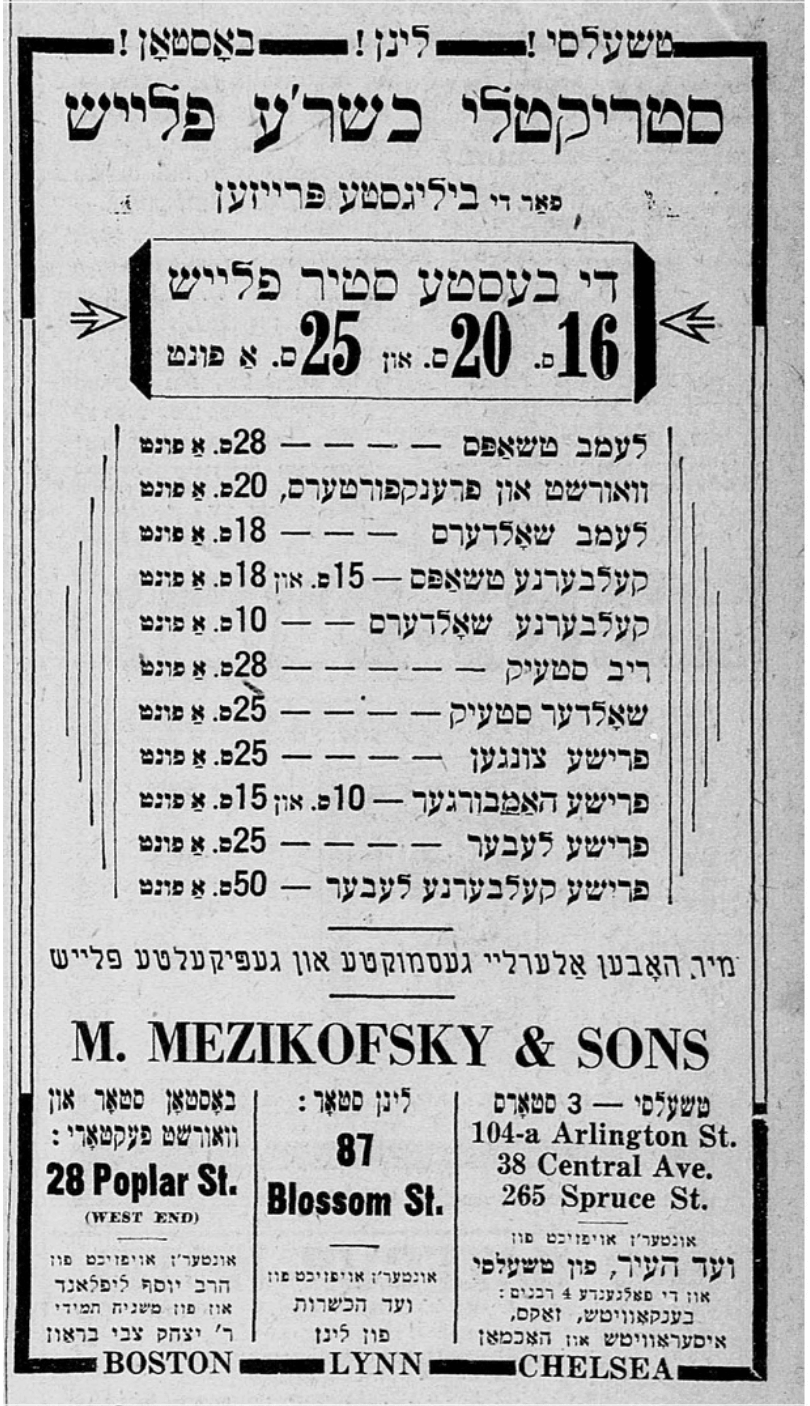
The affordability of goods and services at local shops made life possible for working-class families. With the average wage in 1930 being around 43¢ an hour, a family could buy a dozen eggs, a pound of chuck steak, and 4 bread rolls. An hour’s wage could thus feed a small family a hearty meal.
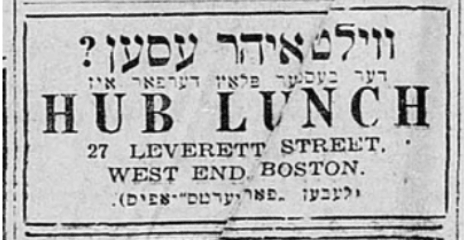
Even during the Depression, West End families could put food on the table and children could afford small treats. Though, of course, life was challenging. Mary Jackman, who was born in the West End in 1902, reflected on the economic realities of West End life:
Nobody had any money then. You have to remember that. If you were just working you had enough to get along. The only charging was at my mother’s grocery store. She had books and you could charge the groceries all week. By the time you paid there was little left for anything else. My mother never expected to get paid on the first of the month because you had to pay the rent. The rest of the month they could pay their grocery bills.
Class and Cultural Divisions Within the Jewish Community
While the West End’s Jewish community presented a united front to the outside world, internal divisions persisted. There was tension between “German” Jews and “Russian” Jews of Eastern Europe and the Pale of Settlement. Although they met in business and communal life, they maintained cultural and economic division.
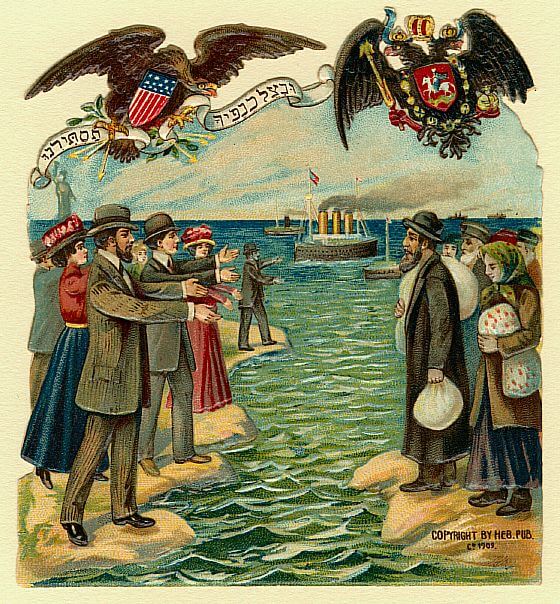
These class distinctions manifested in subtle ways. They might remain separate in synagogue seating, in social clubs, and in business partnerships. The German Jews had arrived earlier and achieved greater financial success. They sometimes looked down on the newer arrivals from Russia and Poland. Yet in the tight quarters of the West End, such divisions often softened. A German Jewish baker might supply bread to a Russian Jewish delicatessen owner. Their children might attend the same schools and play on the same streets.
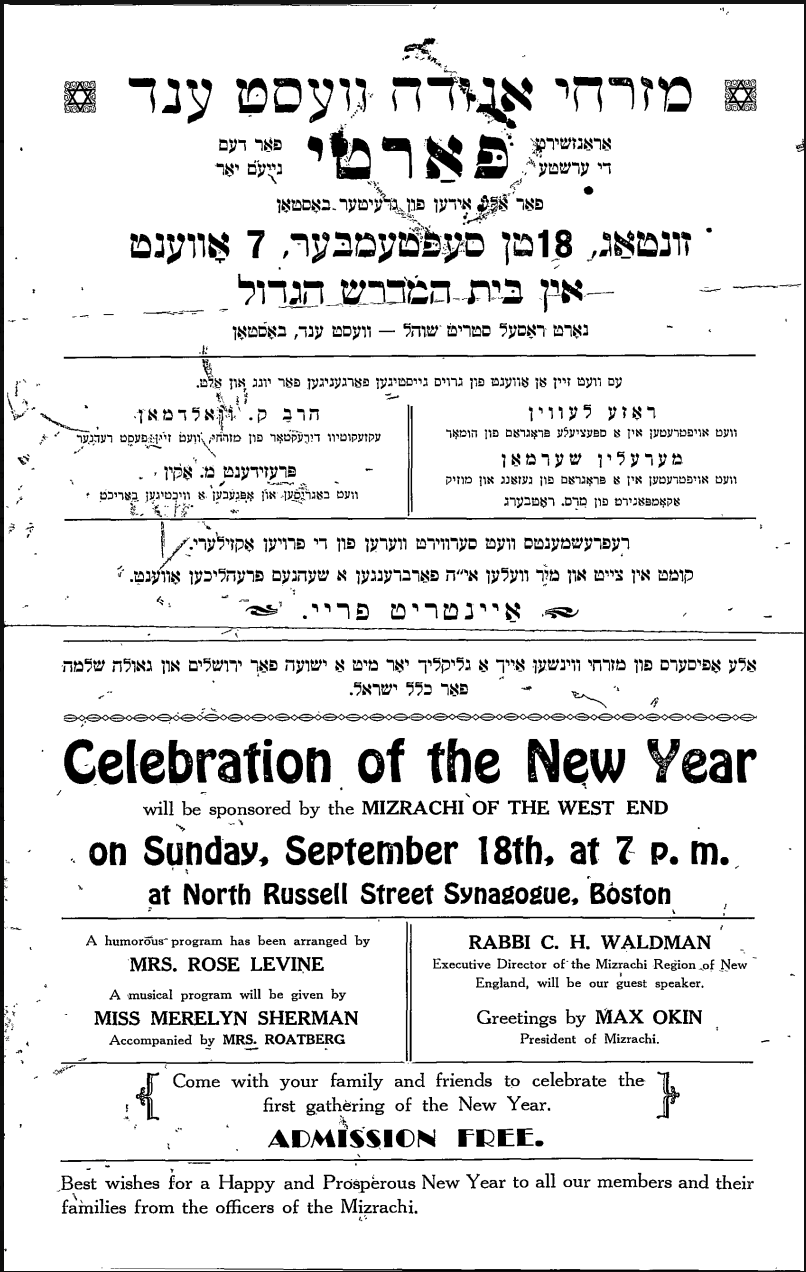
This mixing across class and culture mirrored the broader ethnic diversity of the neighborhood. In the West End, Jews, Italians, Irish, Poles, and more learned to coexist and cooperate in daily commerce.
Cross-Cultural Commerce
The commercial hub of the West End shows how diversity could foster economic ties across ethnic lines and create cultural exchange rather than division. Jewish businesses became vital nodes in a broader network of cross-cultural interaction. Language barriers dissolved through daily transactions and shared neighborhood life.
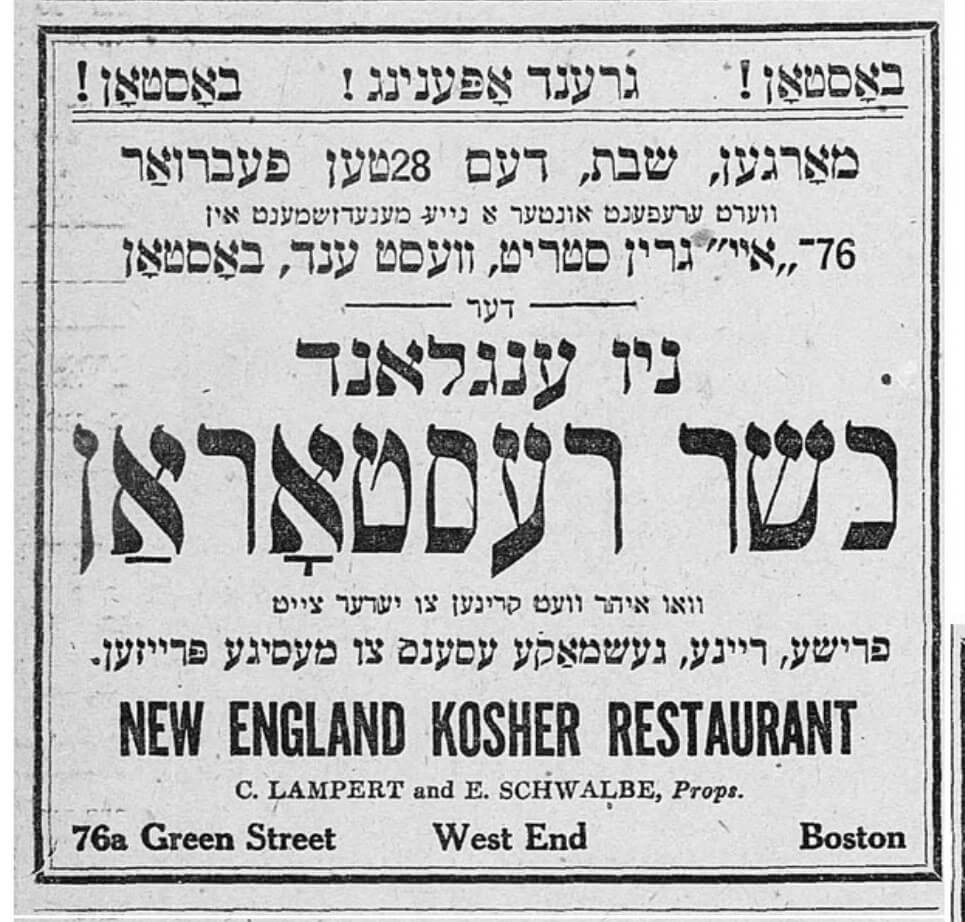
West End merchants learned to communicate in many tongues and include everyone in the diverse neighborhood. West Ender Frank Lavine recalled that at Klayman’s Delicatessen, “Rich, poor, smart, dumb, young, old, wise guy or working stiff, no matter your religion or nationality, this was the place.” The Bass Beauty Shop was owned and operated by a Jewish family. Yet they welcomed “working-class Jewish and Italian women alike” who could “have their hair done and exchange news.”
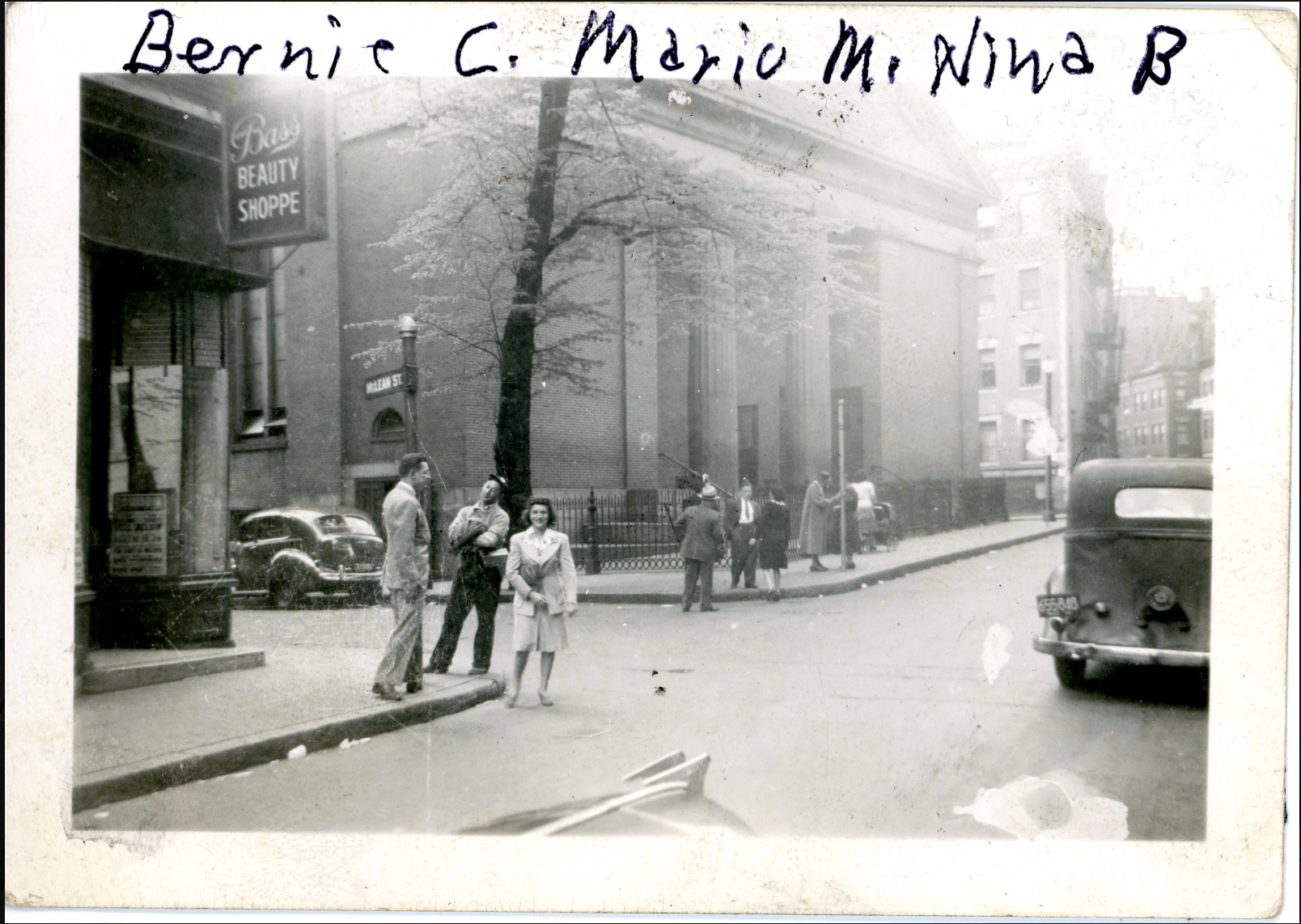
Even the street vendors participated in this cultural exchange. The “crab man” calling out “Gab, gab!” sold his goods to customers of all backgrounds. Patty Lombardi-Sacco of 52 Spring Street, remembered: “We would buy the crabs off the push cart, hot & then sit on the stoop & enjoy.” On Saturdays her Italian family would look at the varied wares of traveling Jewish salesmen.
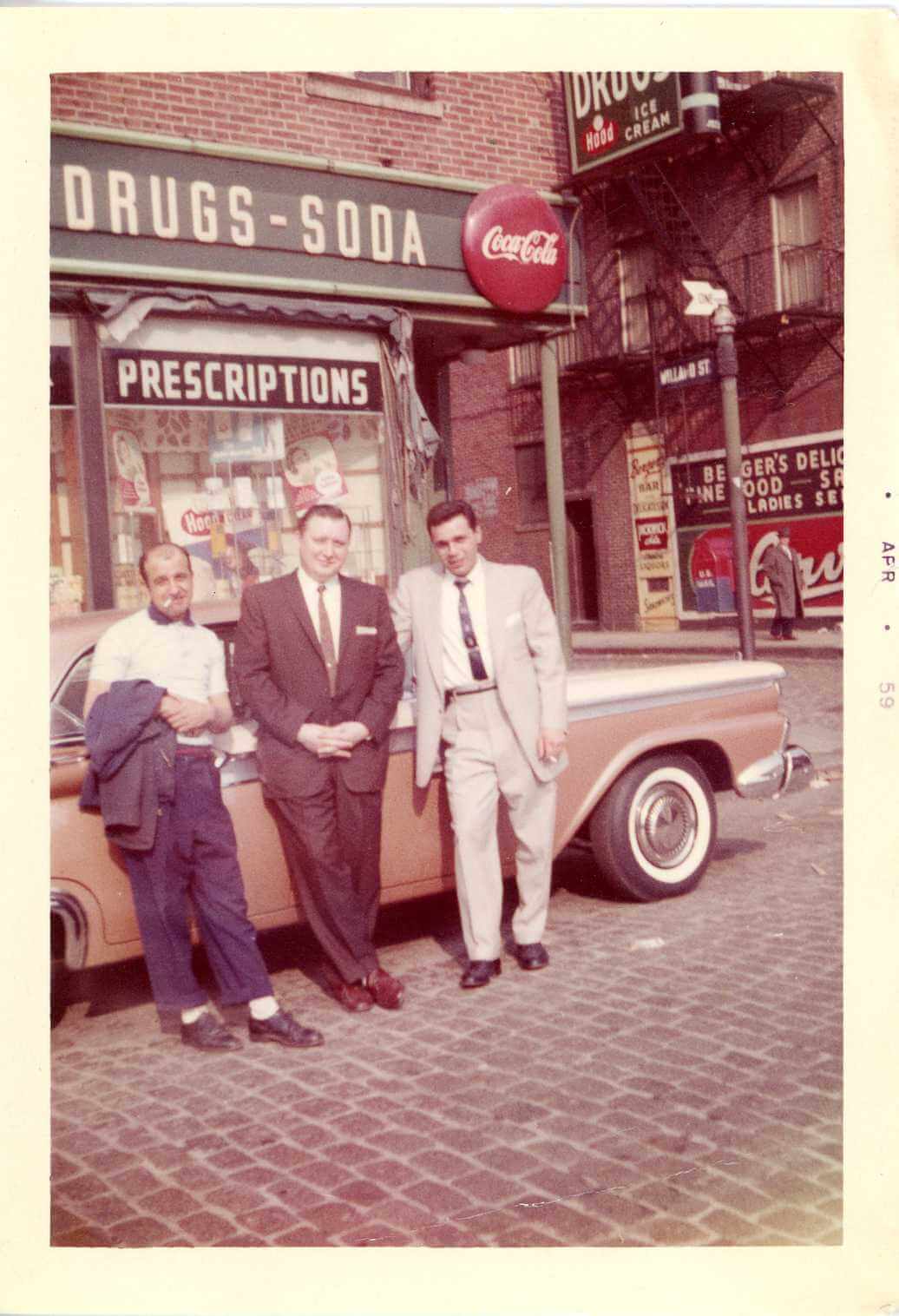
To The West End Museum founder Jim Campano, the neighborhood was a place where people “cared for one another. If you had a problem with something, someone would help you out. People would look in on one another, especially the elderly. They would bring you food if you needed it; they would bring you to the hospital in an emergency.”
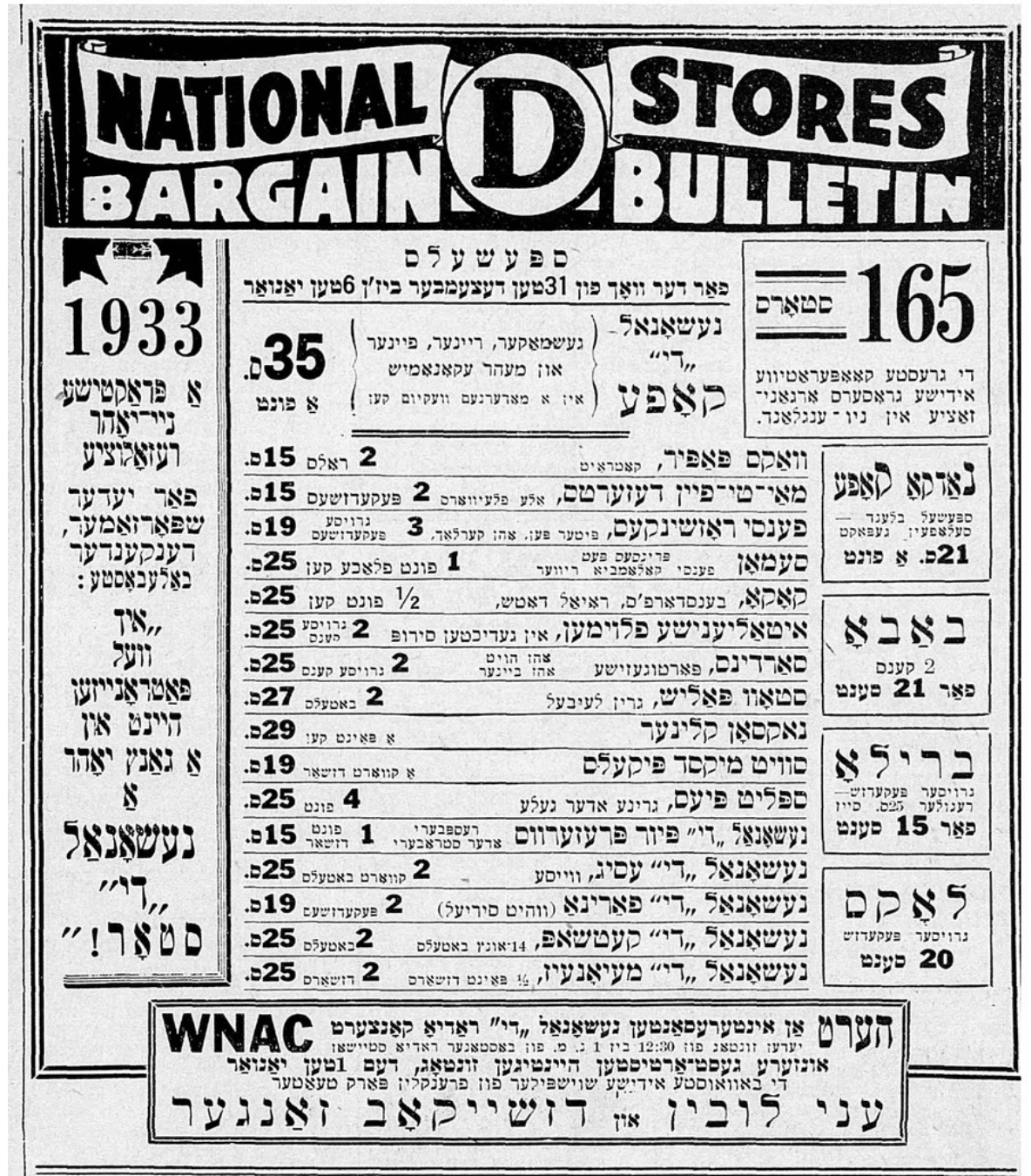
Yet Jewish businesses could serve the entire neighborhood without sacrificing cultural traditions. The National D Store advertised their ice cream as being “for your Sabbath pleasure.” Still, the store welcomed all customers and even had its own Friday radio program on station WNAC that drew a diverse listenership.
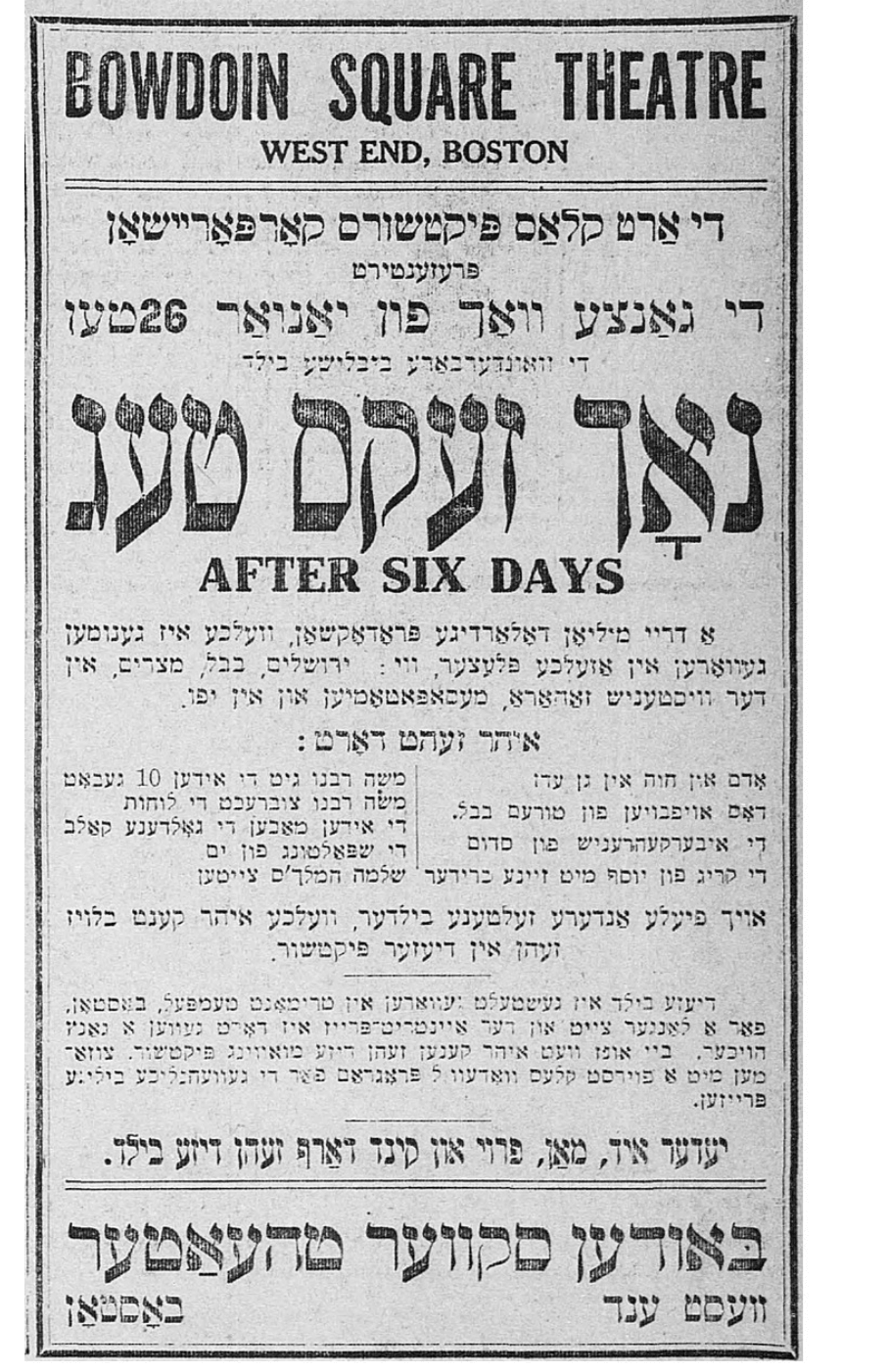
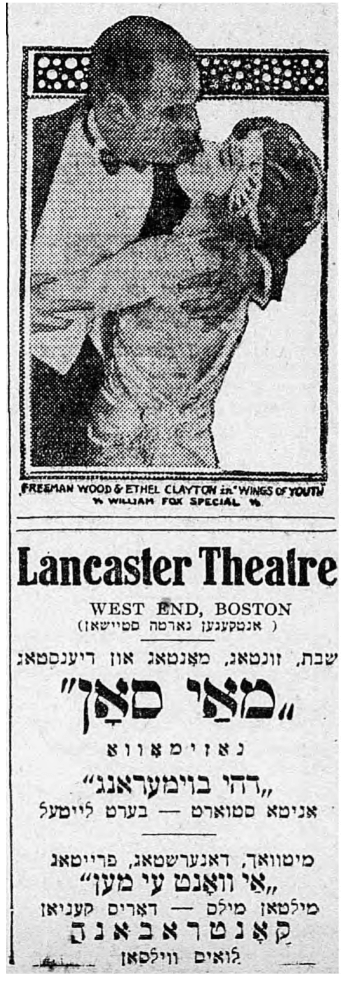
Even theaters in the neighborhood advertised to Jewish audiences. The Bowdoin Square Theatre and the Lancaster Theatre featured Yiddish-language programming. They often showed several films and shorts during the week, advertised entirely in Yiddish. One ad described Biblical dramas and historical epics as “not to be missed by Jews, men or women, young or old!”
Decline and Destruction
The economic success of West End Jewish businesses contributed to the neighborhood’s transformation. As workers who started out sewing in factories became shop owners, they began to migrate out of the West End. When Jews became more economically successful, they moved on to less crowded areas of the city.
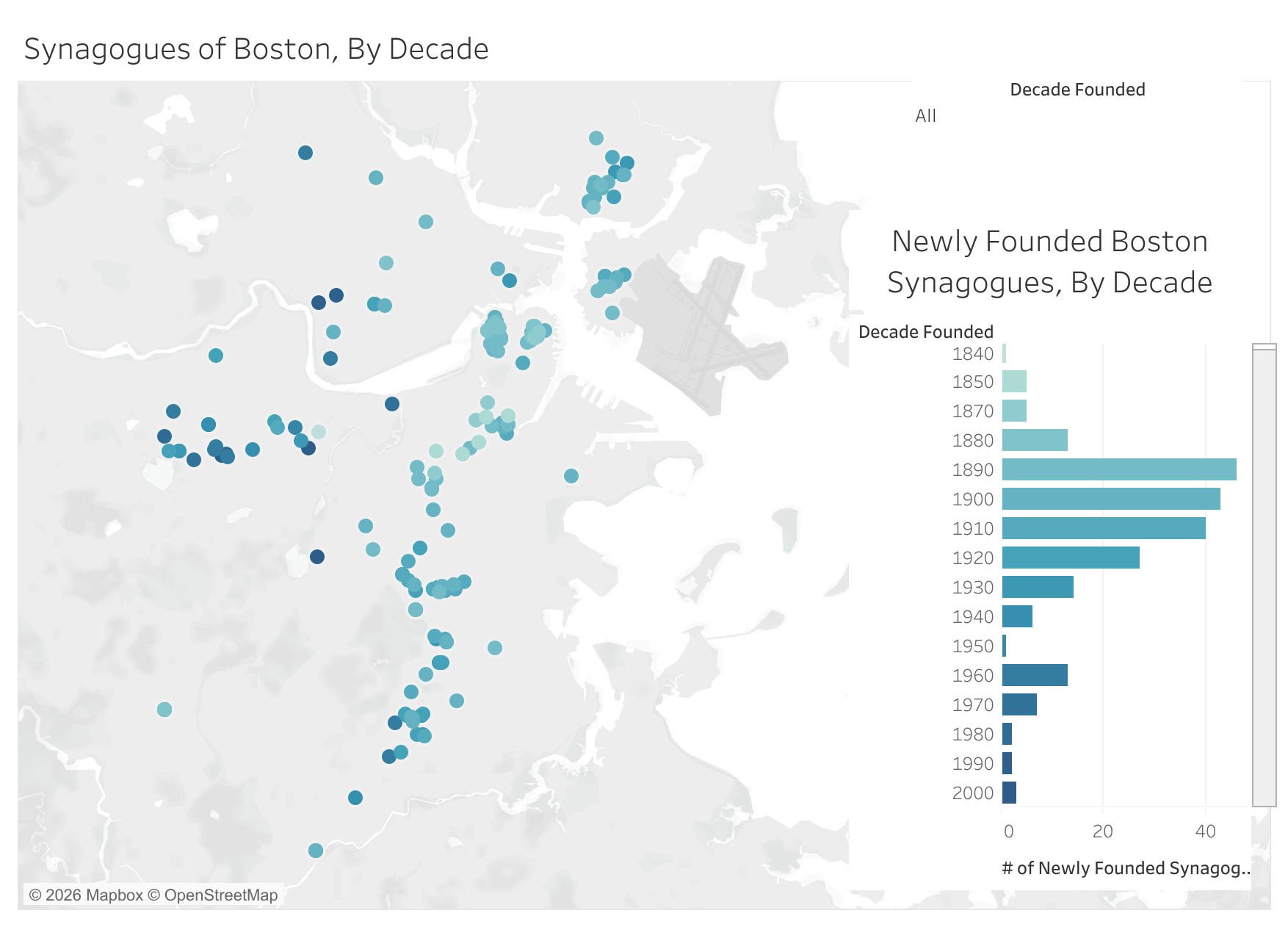
After World War I the Jewish population began to shift. Jewish West Enders who had achieved financial stability started dispersing. They moved to the more suburban districts of Roxbury, Dorchester, and Mattapan. This migration accelerated through the 1920s and 1930s. By the 1950s, the neighborhood had become mostly Italian-American. The movement was reflected in synagogue closures and mergers. Congregations relocated to follow their members away from the waterfront immigrant neighborhoods.
The final blow to the Jewish commerce in the West End came with the city’s urban renewal project in the 1950s. The demolition of the West End between 1958 and 1960 destroyed the entire commercial ecosystem in a matter of months. Over 2,700 families were displaced. Virtually every Jewish business had to close or move. Campano mourned the transformation: “Spring Street today is a shadow of its former self. The people are gone forever, the houses leveled. In their place are high rise apartments, hospitals, and sterile office buildings. The BRA and its friends took care of that. All in the name of progress. But they didn’t take away the memories.” This quote expresses what was lost when small businesses serving their community were torn apart by urban renewal. Yet the value of what local businesses contribute to their neighborhoods continues.
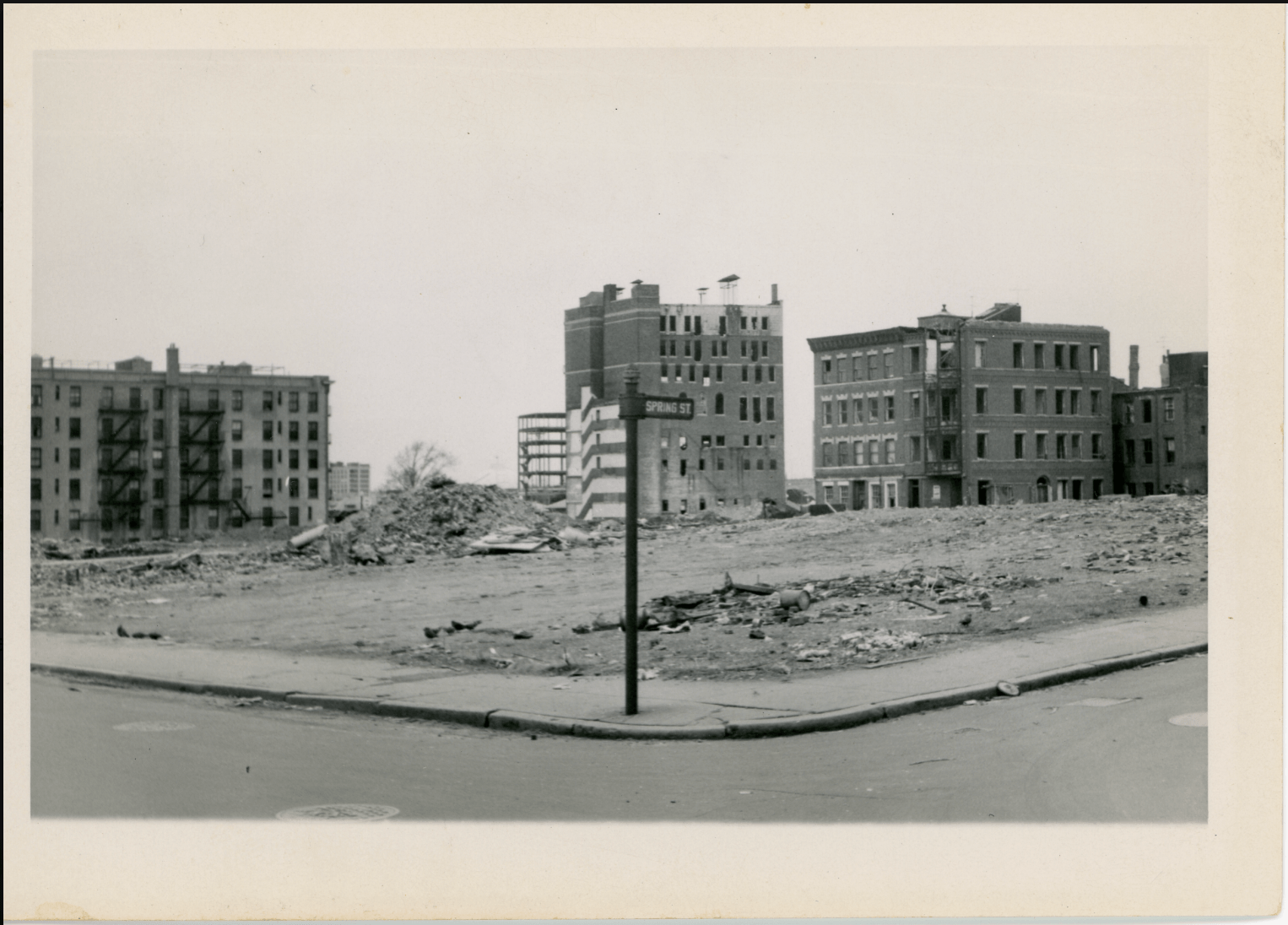
The West End Jewish economic community began when immigrants started their careers as peddlers and traveling salesmen. Over time they found work in factories and shops. Eventually many entrepreneurial immigrant families founded their own businesses. Those shops could be culturally significant, like kosher butchers, or serve comfort food to anyone. They built business like Stop and Shop that would go on to be recognizable nationwide. Many second generation Jewish West Enders used their education to serve their community like lawyer and activist Gladys Shapiro. The Jewish businesses on Spring Street vanished with the very street itself. The loss of this commercial hub has lingered long into the present. At a time when maintaining a local business is harder than ever, due in part to urban renewal, it is the corner shop, the family-owned restaurant, or the dedicated local professional that help turn a place to live into a thriving neighborhood.
Article by Amir Tadmor, edited by Jaydie Halperin
Sources: Santo J. Aurelio “Jews and Italians in the West End of Boston, 1900-1920” May 7, 1984, The West End Museum Archives; Meaghan Dwyer-Ryan “Ethnic Patriotism: Boston’s Irish and Jewish Communities, 1880-1929,” dissertation, (Boston College, August 2010); Isaac M. Fein, Boston: Where It All Began – An Historical Perspective of the Boston Jewish Community (Boston Jewish Bicentennial Committee, 1976); Forṿerṭs (Forward) newspapers, 1900-1958, from Historical Jewish Press, The National Library of Israel and Tel Aviv University; Mary Jackman, “Bruno Interview 0018,” October 8, 1980, The West End Museum Archive; Eric Moskowitz, “Boston’s Last Tenement – an Island Awash in Modernity,” Boston Globe, August 15, 2015; Leonard Nimoy and Christa Whitney, “Leonard Nimoy Remembers Boston’s West End Neighborhood” (Yiddish Book Center, February 6, 2014); Josie Savage, “Bruno Interview 0029”, October 24, 1978, The West End Museum Archive;Jeanne Schinto, “Israel Sack and the Lost Traders of Lowell Street” Maine Antique Digest, April 2007, accessed from the West End Museum Archive; The West Ender Newsletter, 1985-2022; Yivo Institute for Jewish Research, “Runaway Husbands, Desperate Families: The Story of the National Desertion Bureau”, exhibit, on view June 17, 2024 – May 20, 2025.