
The William Blackstone School
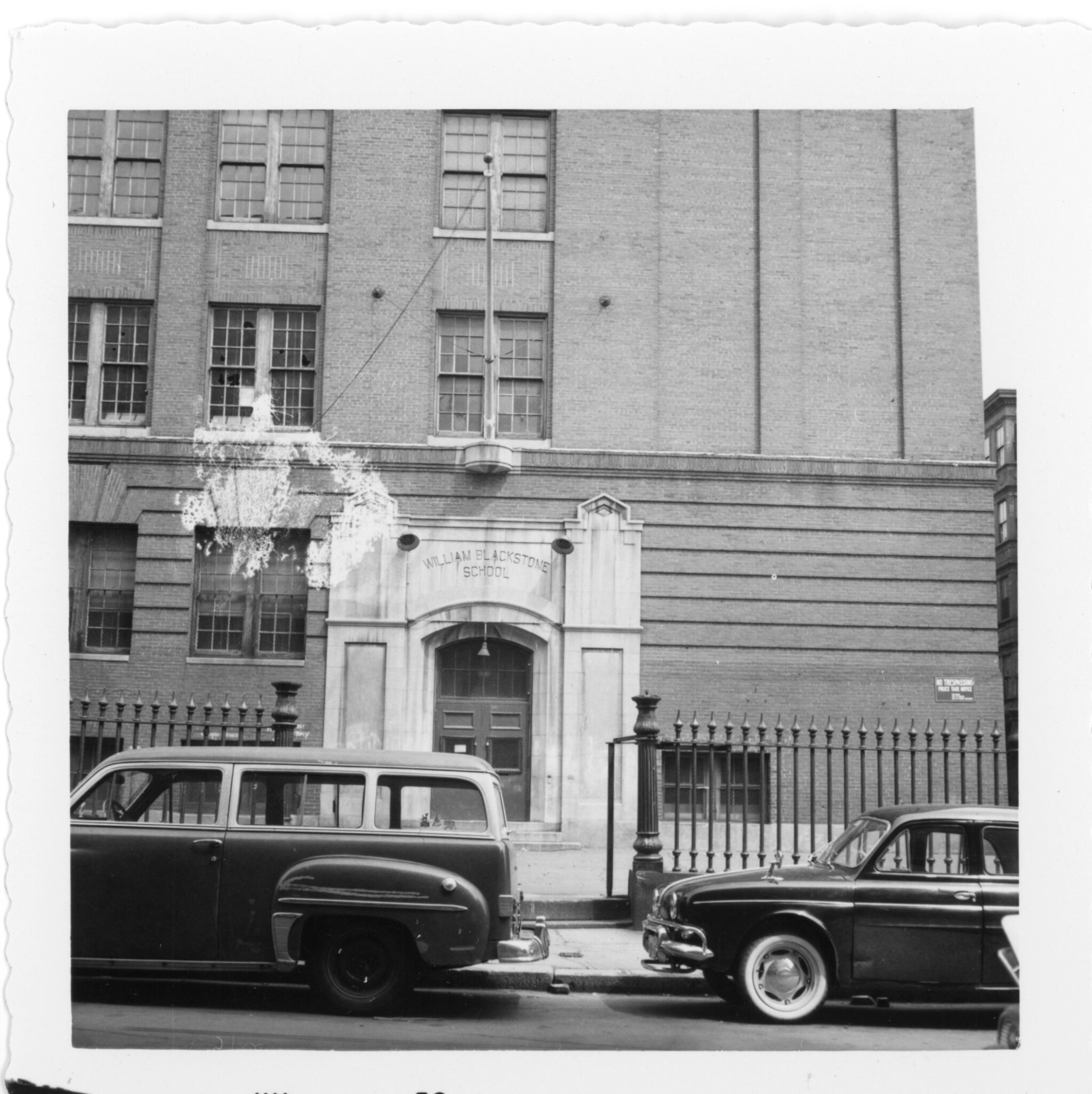
Built in 1913 to serve the West End’s growing immigrant population, the William Blackstone School served as a place of learning, a gathering place, and a sight of many memories until it closed its doors in 1959. The school was spared the initial years of urban renewal, but the children who once walked its halls were scattered.
This is the first in a series on Schools of the Old West End.
Construction of a new school that would become the William Blackstone School was first proposed in 1913 to address the overcrowded conditions in the West End’s elementary classrooms. At the time, many West End teachers had over 45 children in their classroom. Between increasing registration and a high number of English as a second language classes, the Boston School Committee set aside $100,000 to plan and purchase land for a new 24-classroom building. In 1916, the building opened to students on Blossom Street and the school was named after William Blackstone (also spelled Blaxton), the first European settler on the Shawmut Peninsula and resident of the West End.
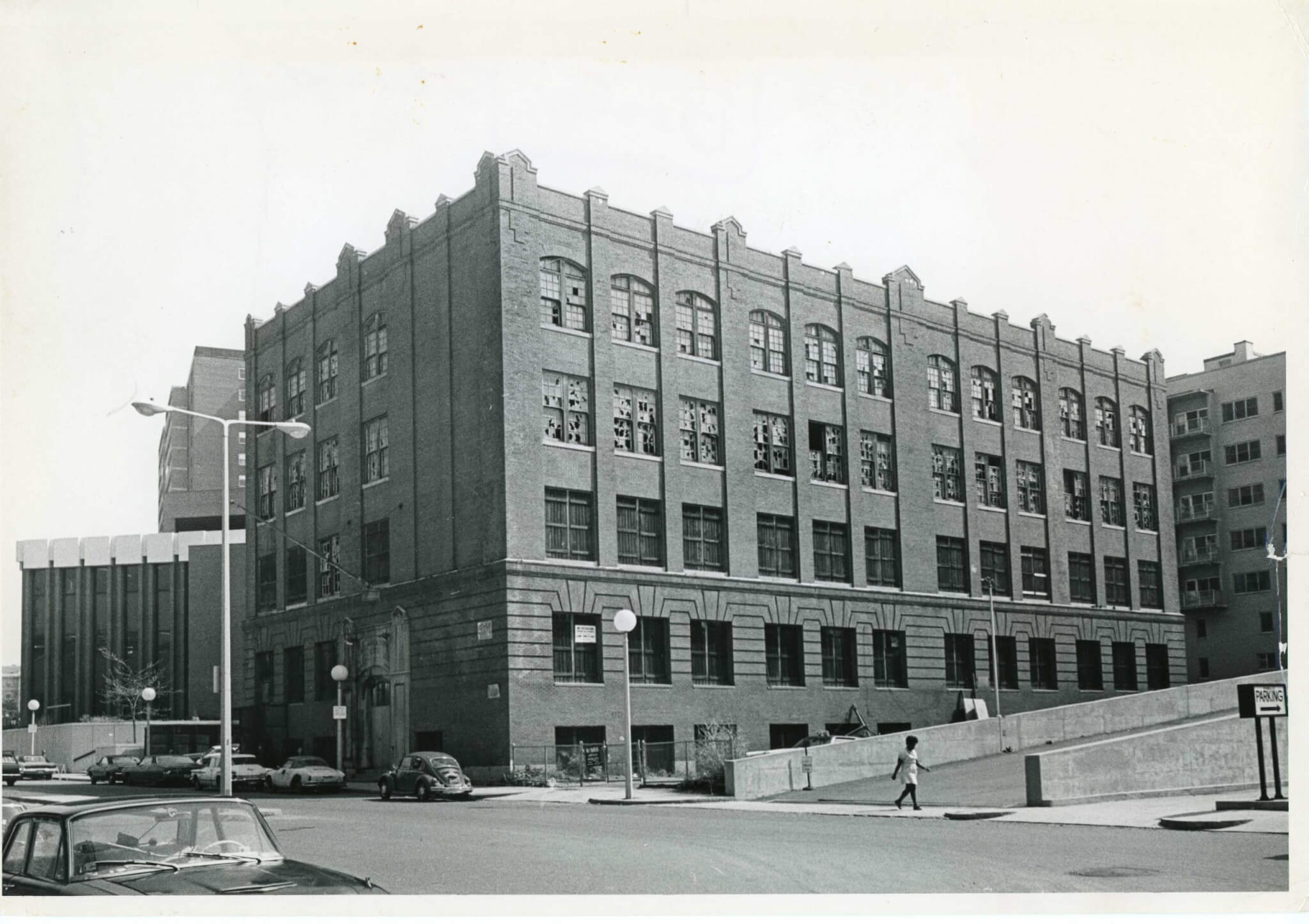
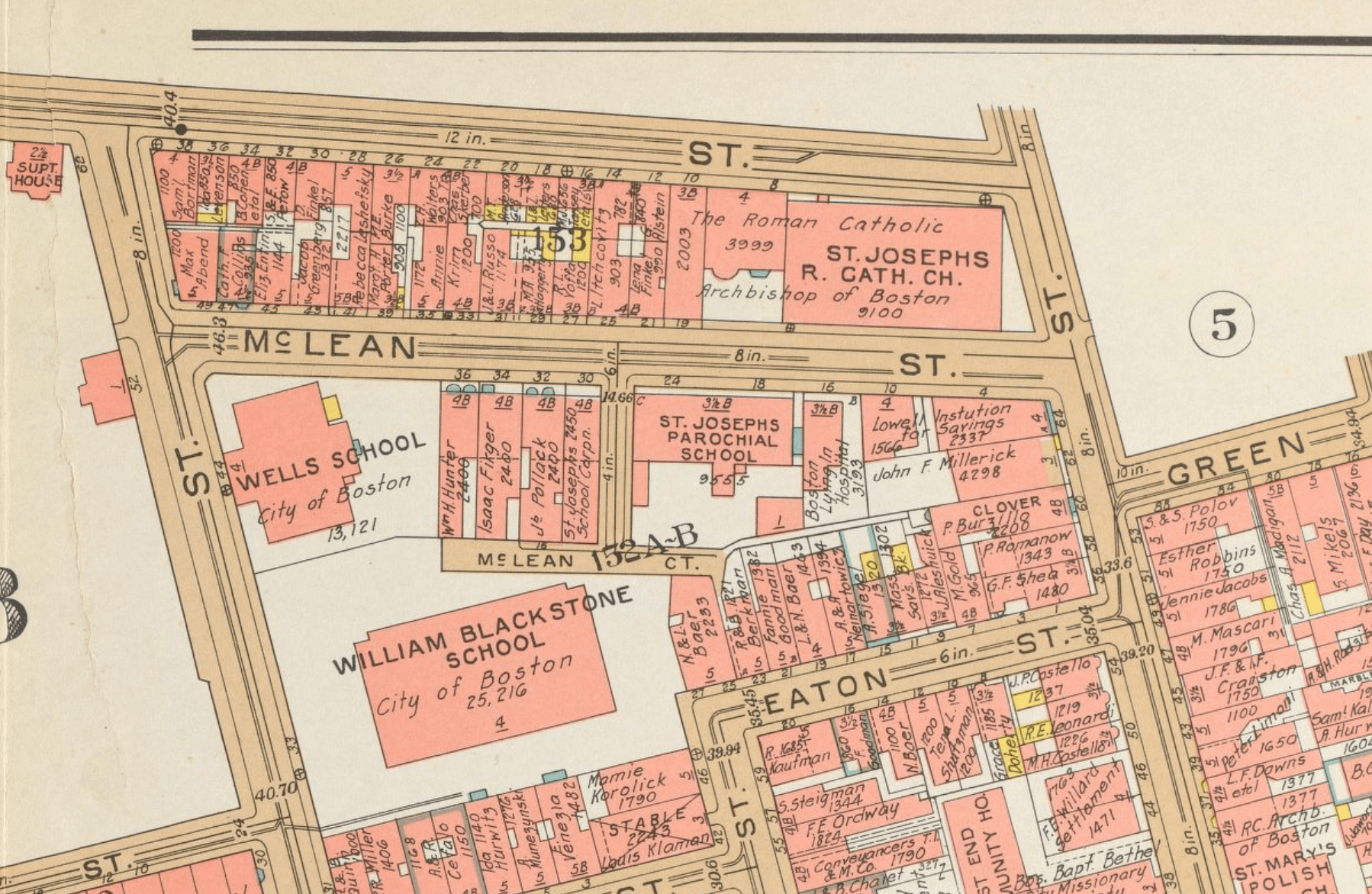
The Blackstone School had four floors and a basement for a total of 28 classrooms plus an assembly hall. The building was designed to host 1,056 students. As of 1926, there were over 1,700 students enrolled in the Wells School District in the West End. The Blackstone was located directly next door to the Wells School and adjacent to the St. Joseph’s Parochial School. The Wells and Blackstone Schools shared a play yard.
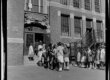
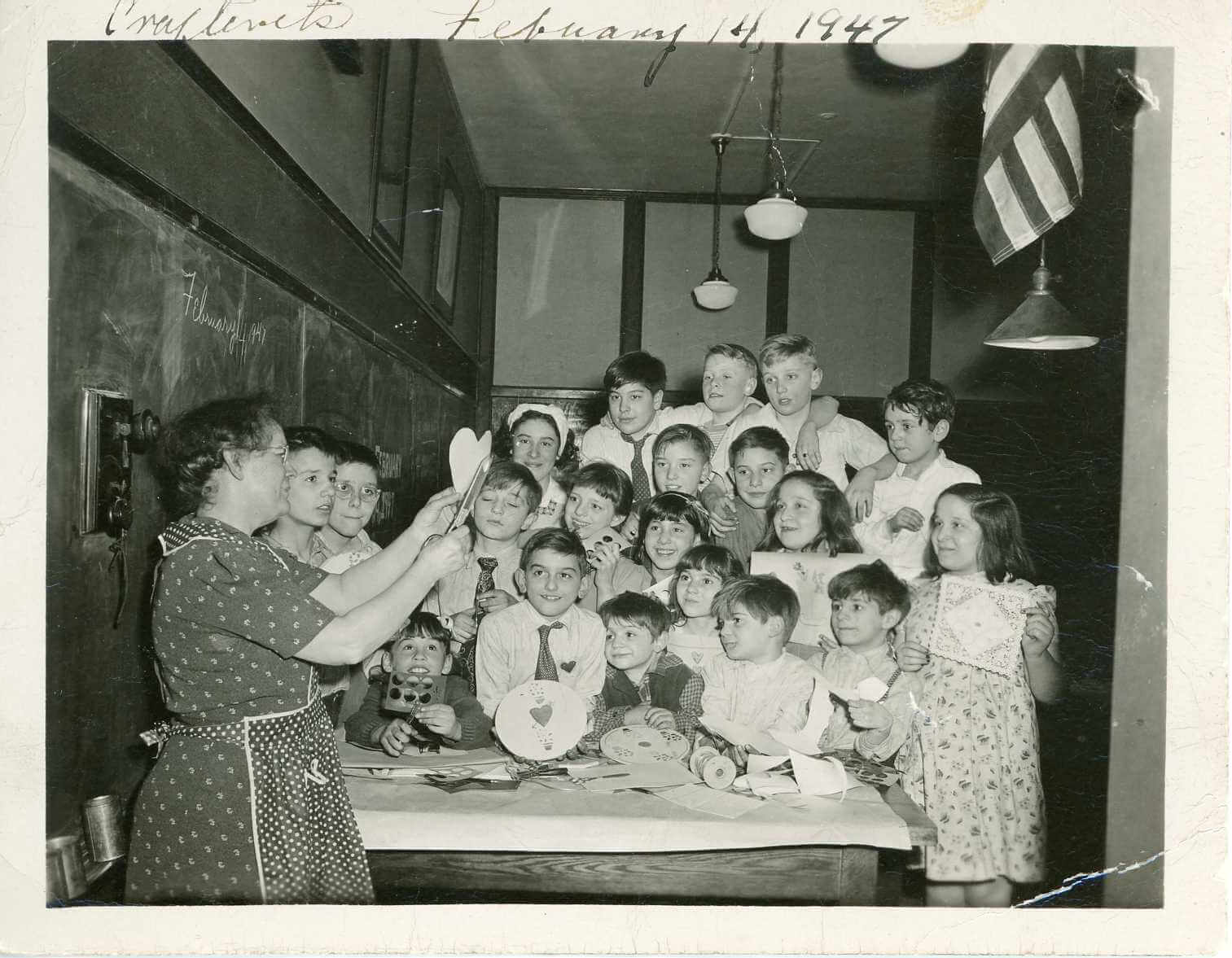
Throughout its first 20 years, the Blackstone educated young children from all over the world. Immigrant students were so abundant in the school that after school events targeting parents would often repeat instructions in Yiddish or Italian to ensure that parents understood what was being said.
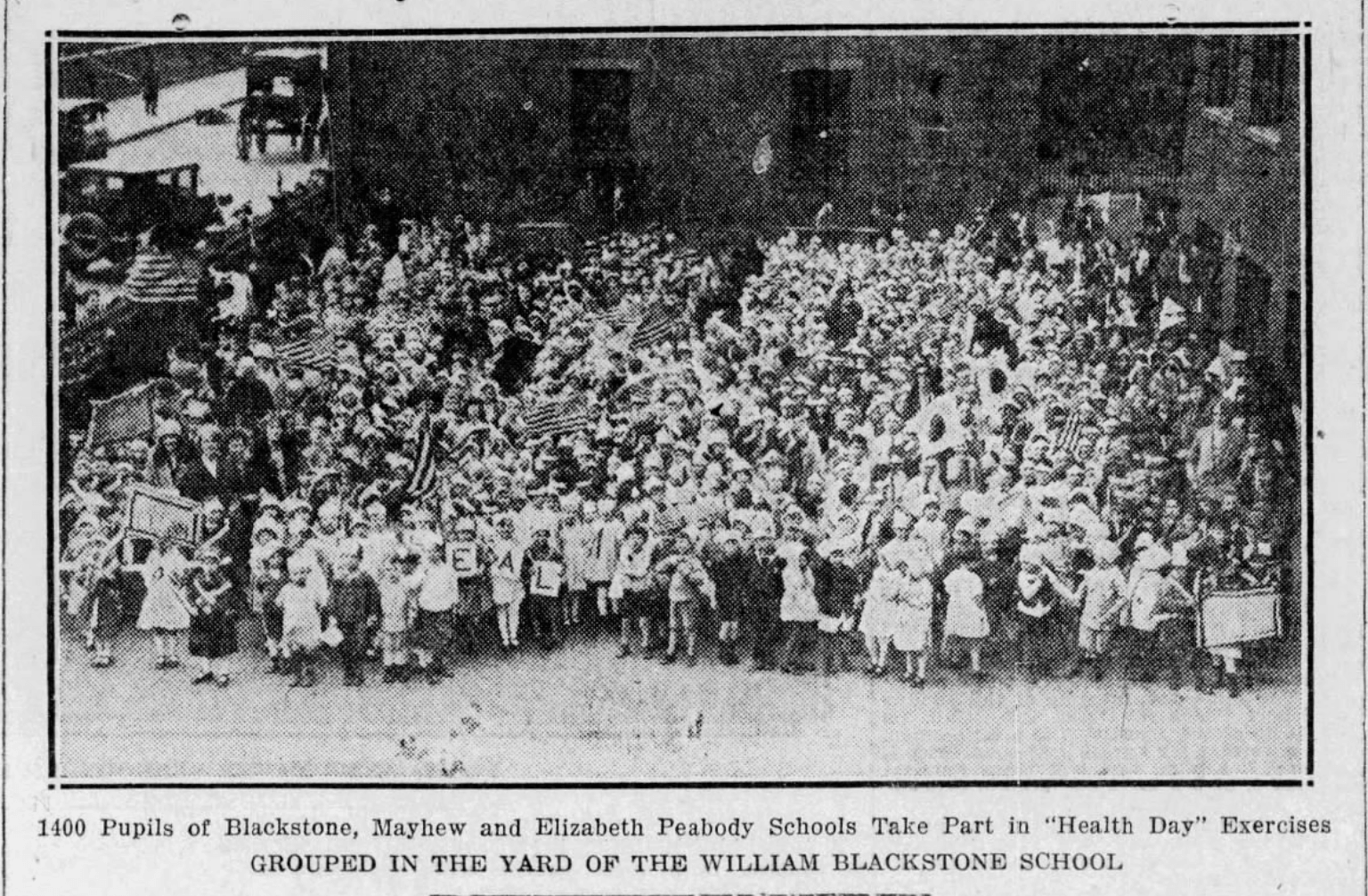
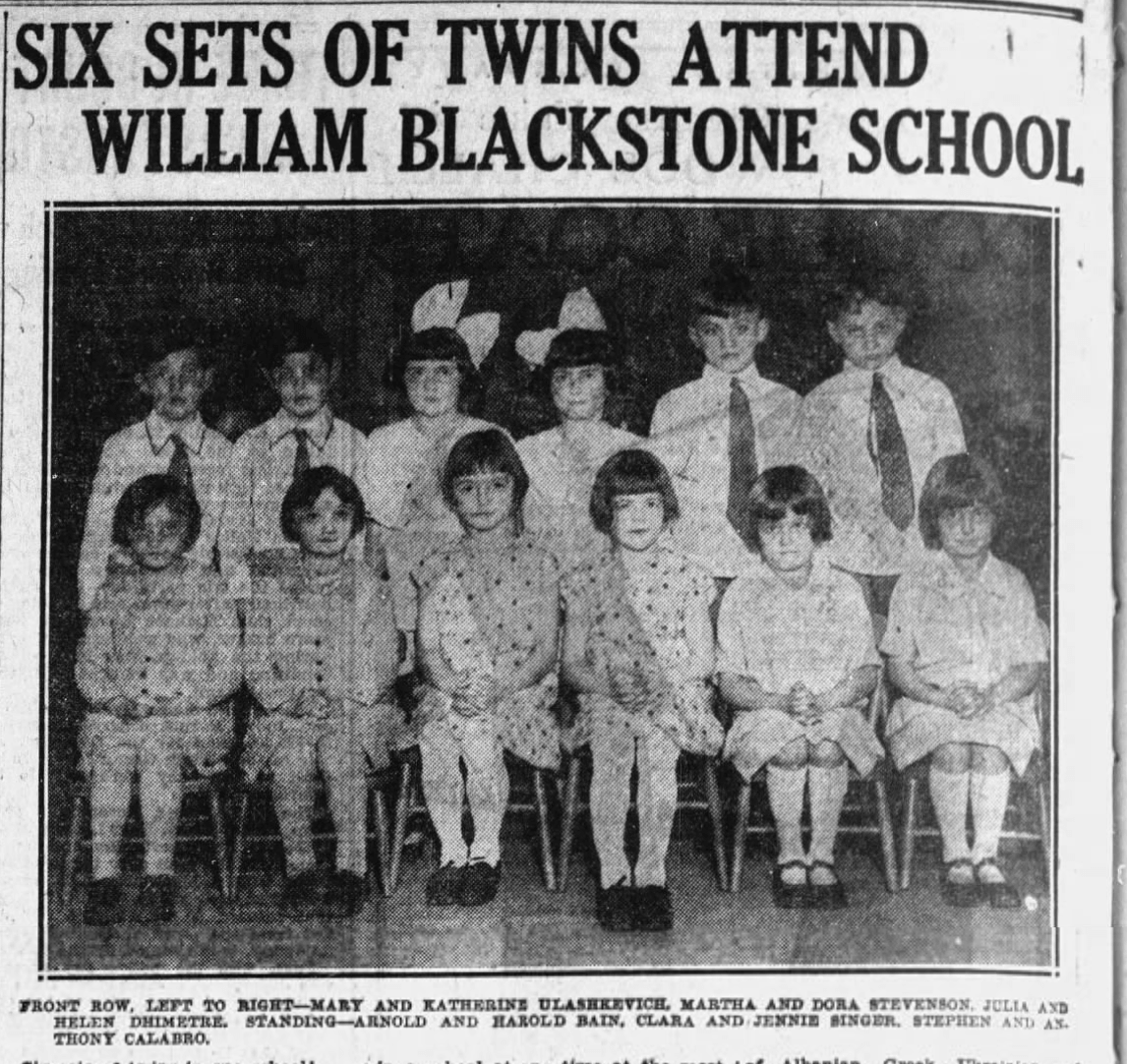
Many events, both public and part of the school curriculum, took place at the Blackstone. In 1922, West End ward boss, Martin Lomasney appeared at the school with “an assortment of verbal bombs, machine guns, and navy 45s” to “pay his respects” to then ex-Mayor James Michael Curley. Students from across the district gathered at the Blackstone school yard in 1926 for the city-wide “Child Health Day.” Parents were encouraged to take their child for yearly check ups at the doctor to catch potential health issues and schools put on talks to teach good nutrition and hygiene. In 1930, six sets of twins attended the Blackstone school and were featured in the Boston Globe.
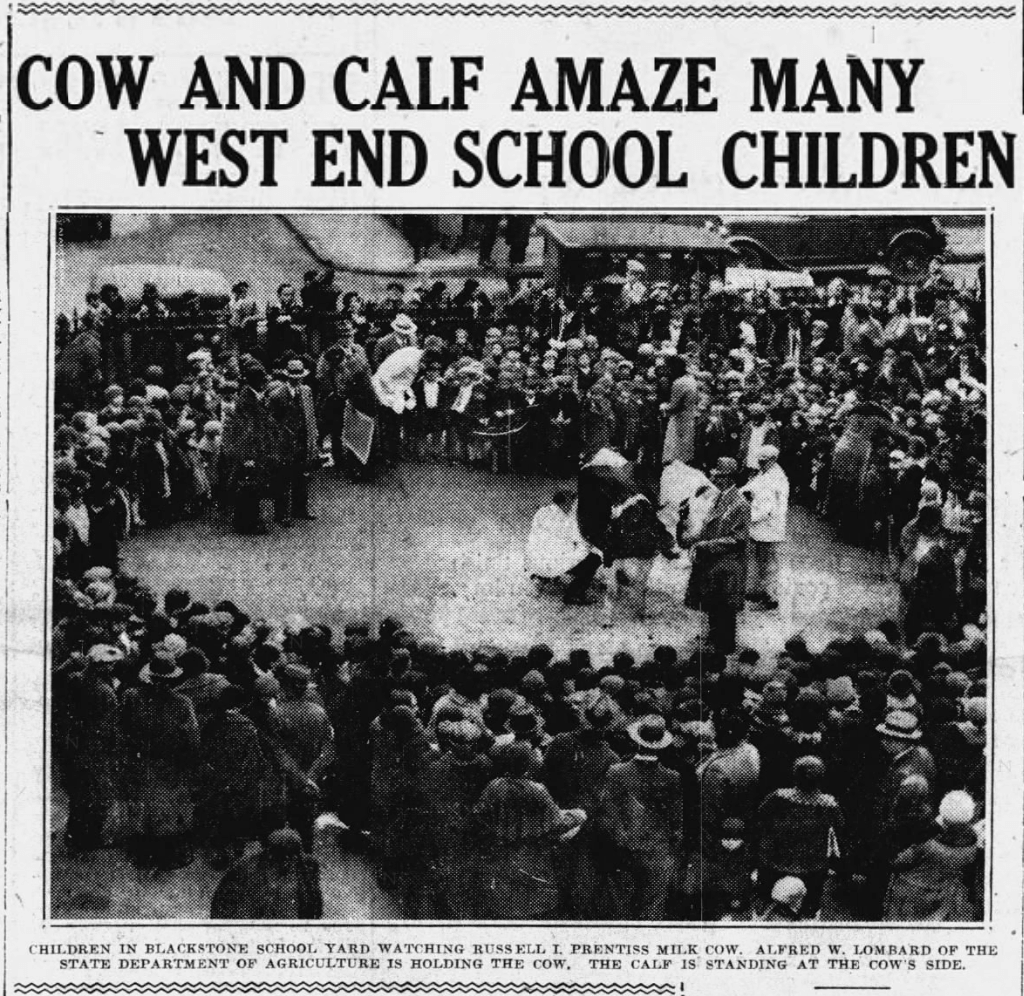
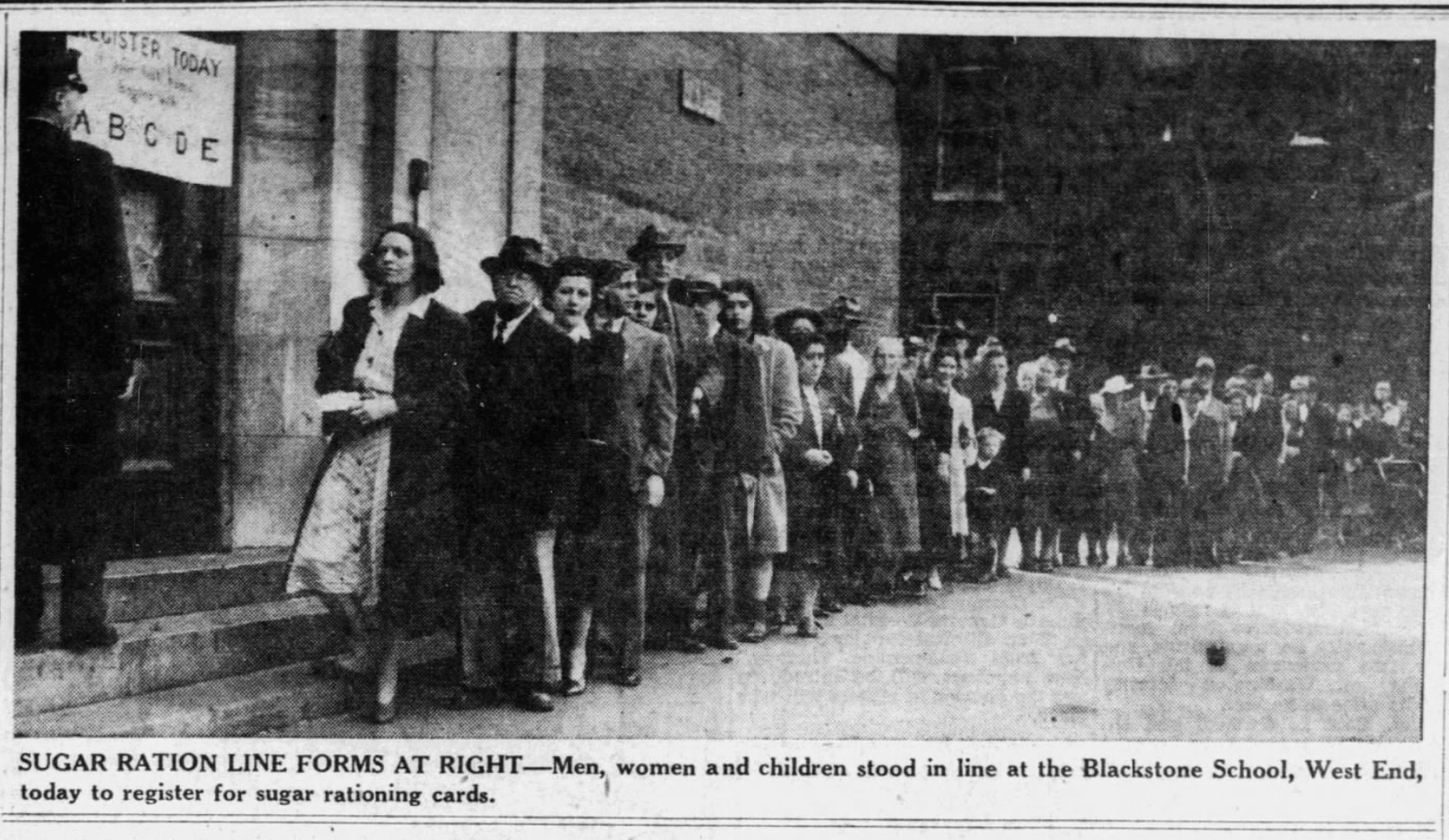
A visit from a cow and her calf made front page news in 1932 as city-reared children looked on with amazement. During World War II, the Blackstone was one of the central locations where neighborhood residents could sign up for ration books for things like sugar and gasoline.
The 1935 school year saw the Blackstone transform from an elementary school into a junior high school. For the rest of its years as an active school, it would serve older students.
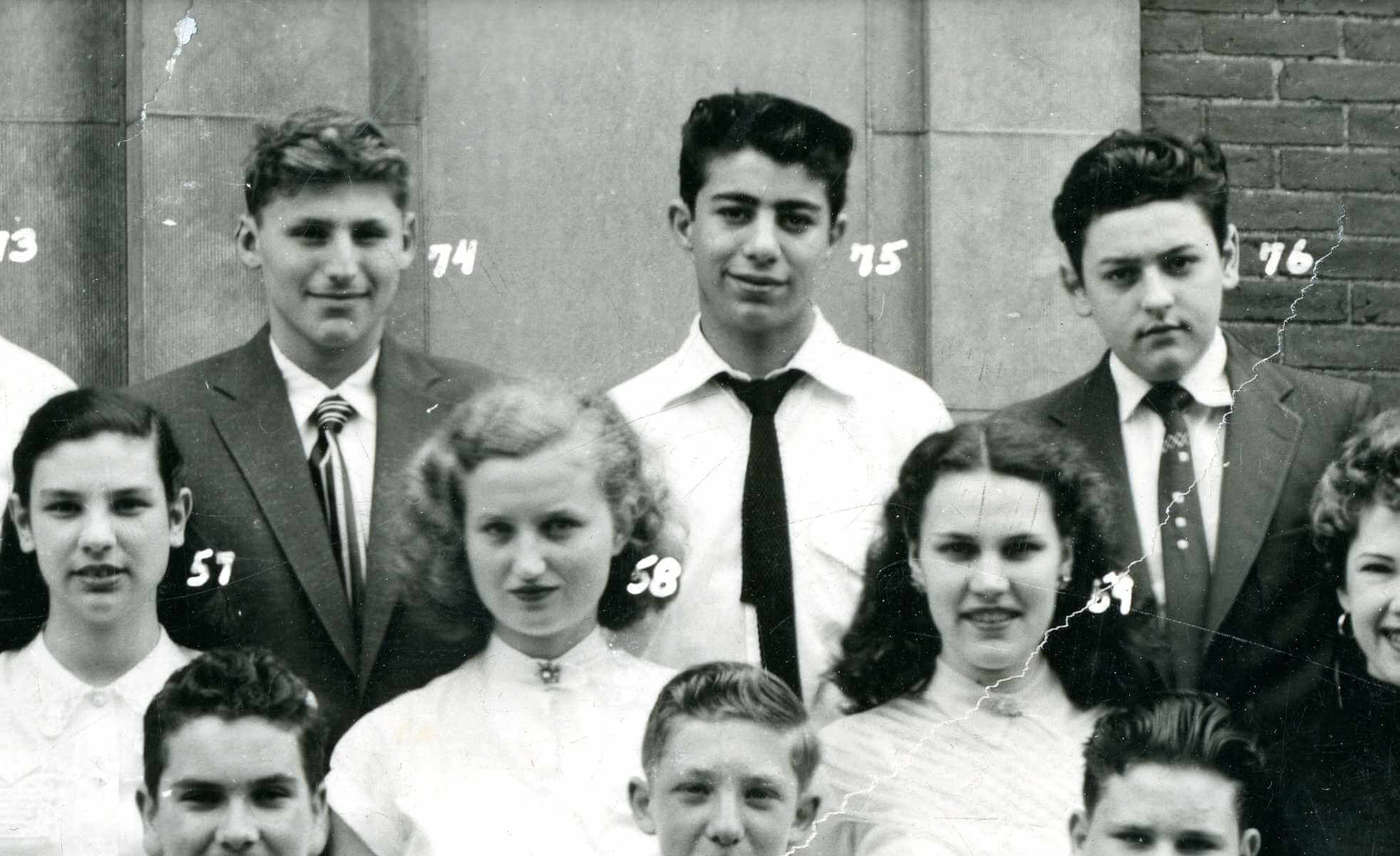
Bruce Guarino, board member and docent at The West End Museum for more than 20 years, was among the last classes to graduate from the Blackstone. Also in his graduating class was Jim Campano, housing activist and founder of The West End Museum. In a recent interview, Guarino remembered playing punchball and stickball in the playground. He did not think he made anything of note in his woodworking class in the school basement, but remembered his years at the school vividly. He listed several teachers, including their names and what year he was in their homeroom. In one tragic memory, Guarino recalled that the year after he graduated ninth grade, his homeroom teacher, Mr. Frank Clark collapsed from a fatal heart attack at the 1956 graduation ceremony.
Guarino said that he “never minded” walking to school everyday or going to school alongside his neighbors. He still walks to and from his T station in Quincy to get to the Museum after turning 87 in 2026, so the walking was probably good practice!
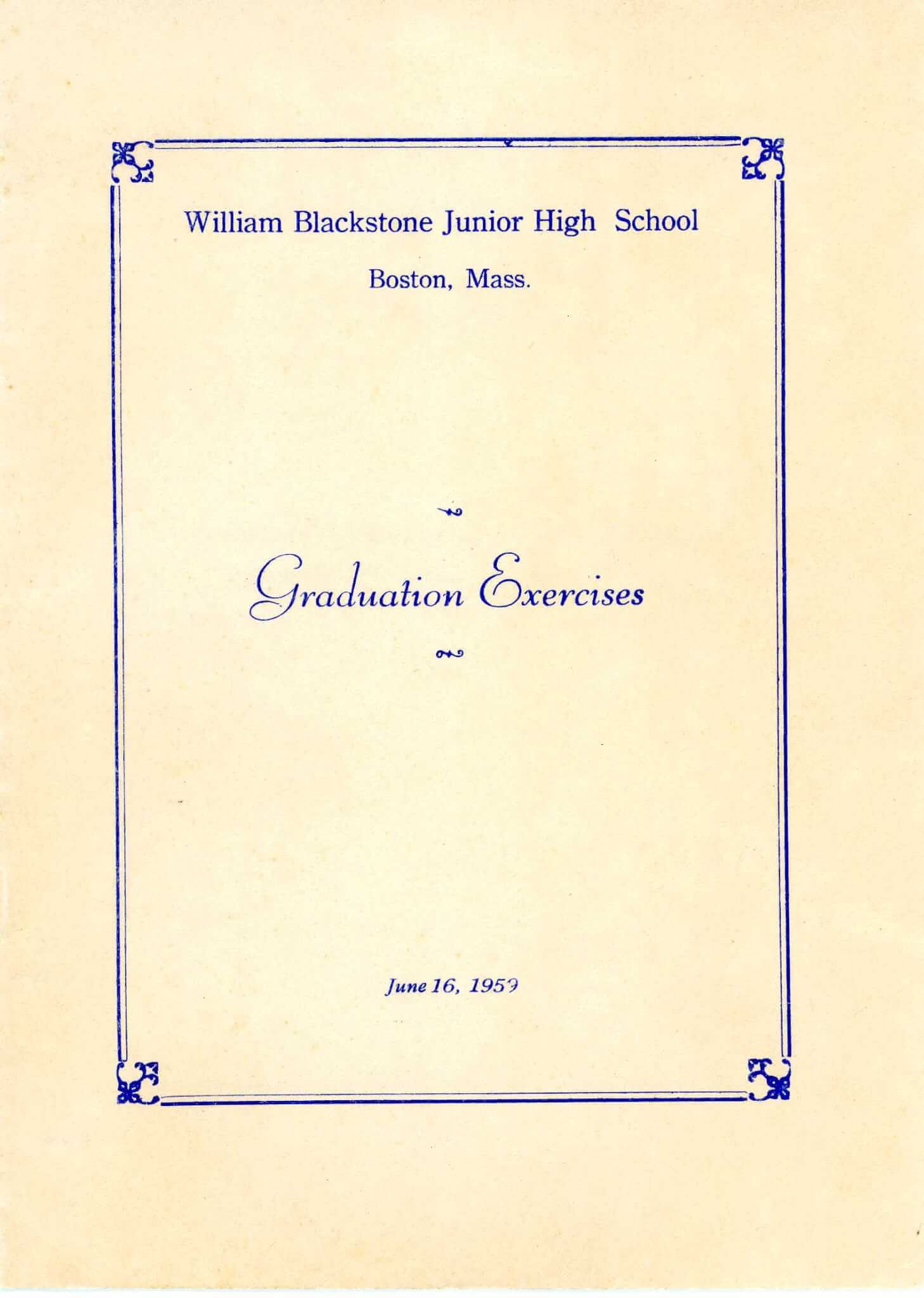
When urban renewal came to the West End, attendance at the Blackstone school dropped rapidly. In July 1958, the Boston School Committee ordered the consolidation of the Blackstone School District into the Wendell Phillips district and closed the building at the end of the 1959 spring semester. There were only twenty-eight ninth graders and forty-nine eighth graders who remained until the building closed its doors. At the final graduation ceremony, Salutatorian Louise Capodiluop said,
“We are leaving the district from which we have spent many happy childhood years. We have watched for the past two years our school class diminishing and our friends going away to other places and other states. Yet by reason of our experience, we should have no fears as to our ability to advance just in new environments and to change.”
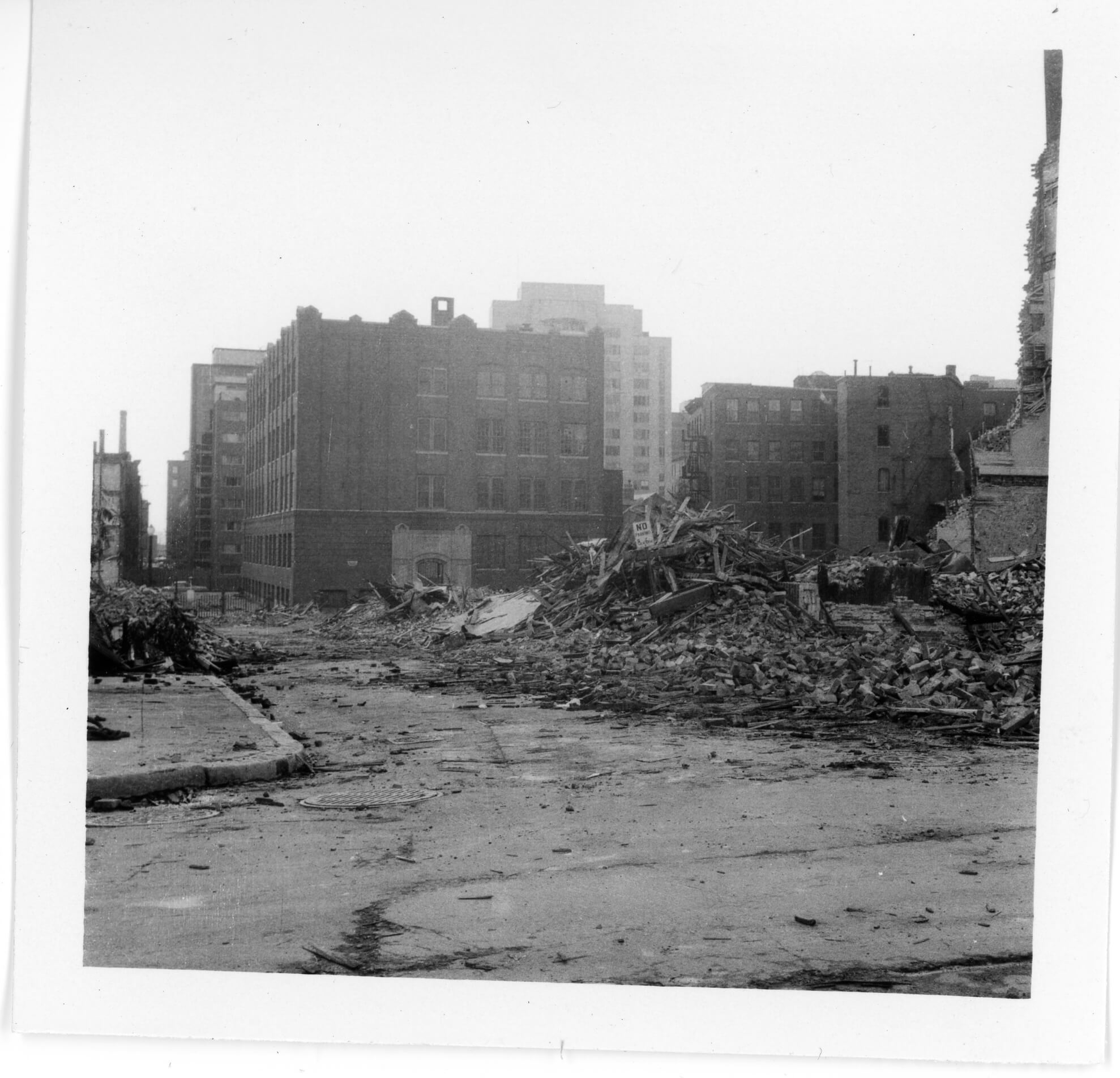
The building was valued by city appraisers at the time at around $200,000. Originally, the Blackstone was retained for school purposes and was expected to open up again as an educational institution. Variously, the Blackstone was considered as a location for a business school, a home for the ninth graders at English High School, or for Girls’ Trade School. However, by the late 1960s the fate of the Blackstone, one of the few surviving buildings in the West End, was once again up in the air.
The complex story of how the site became home to apartments for seniors will be covered in another article.
Article by Jaydie Halperin, edited by Bob Potenza
Sources: Boston Globe, August 26, 1916, December 6, 1921, April 30, 1926, May 1, 1926, April 26, 1927, November 20, 1930, November 16, 1932, August 27, 1937, May 4, 1942, October 29, 1942, June 19, 1956, June 27, 1956, June 17, 1959, January 8, 1960, October 14, 1963, March 7, 1968, October 4, 1973, September 25, 1976, March 6, 1977, June 19, 1977; Boston Public Schools, “Annual Report of the Superintendent – December 1935” , “Annual Report of the Superintendent, December 1959”, “Blackstone Elementary”, “Proceedings of the School Committee of the City of Boston – 1913”, “Proceedings of the School Committee of the City of Boston – 1958”; Boston Redevelopment Authority, “Developer’s Kit: Housing for the Elderly, Blackstone School Site – Blossom Street” (1972), “Minutes of a Regular Meeting of the Boston Redevelopment Authority Regular Meeting Held on November 21, 1962”, “Minutes of a Regular Meeting of the Boston Redevelopment Authority Regular Meeting Held on June 3, 1965”; City of Boston, “Blackstone School, Appraisal, 33 Blossom Street” (Boston Redevelopment Authority); “Commissioner of the Department of Community Affairs vs. Boston Redevelopment Authority & others” (362 Mass. 602, October 3, 1972 -November 15, 1972, Suffolk County); Barbara Mackey, “Blackstone Housing Plan in Discussion” (The Ledger, January 19, 1973); John E. O’Loughlin, What’s in a name?: names of Boston’s Schools, Their Origins (Boston: School Volunteers for Boston Public Schools, 1980); Sheila Tempelmann, “How Quickly We Forget” (The West Ender, 1992).