
Louisa May Alcott in the West End
The author of Little Women, Louisa May Alcott, spent time in her youth writing from her third story bedroom in a rented house on Pinckney Street. Her literary career began with rejection, persistence, and eventual success in the West End. Her legacy remains tied to the neighborhood into the present.
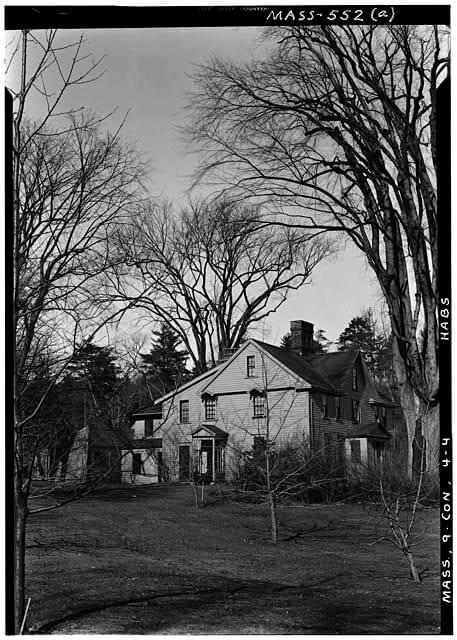
Readers of Louisa May Alcott (1832-1888) often associate her with Concord, Massachusetts since she wrote Little Women there at her family’s home, Orchard House, in 1868. However, her writing career began earlier during the Alcott family’s stay in Boston from 1848 to 1855. At the family’s rental house at 20 Pinckney Street on the North Slope of Beacon Hill, Alcott gained confidence and saw her first book published.
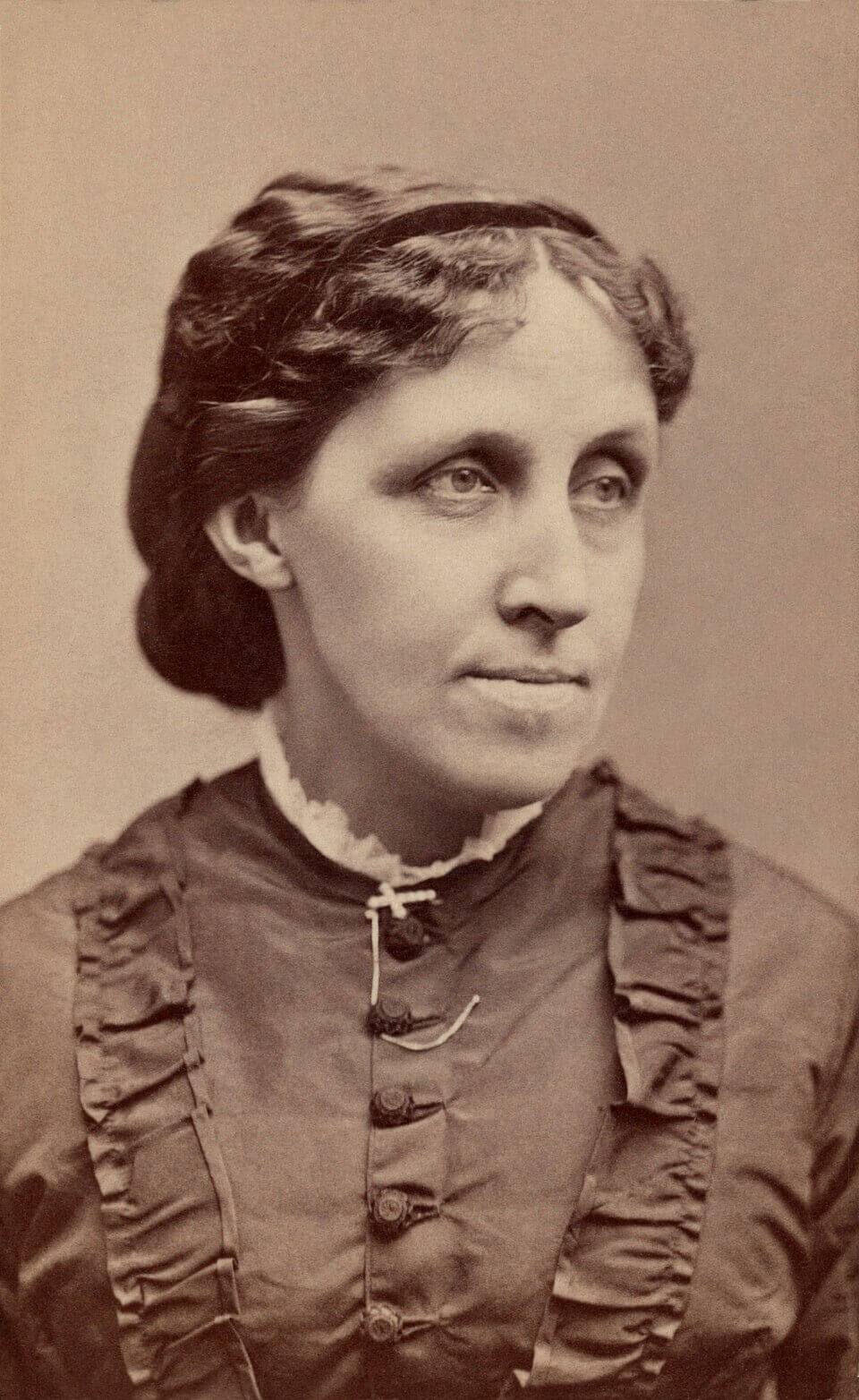
In 1848, facing daunting bills and disliking the atmosphere in Concord, Alcott’s mother Abigail “Abba” Alcott decided to move. The family rented out their Concord homestead “Hillside” and moved to Boston. Abba worked as the “City Missionary for the Poor” in the South End. Her husband, Amos Bronson Alcott hosted lectures and taught briefly at Harvard Divinity School. Alcott and her older sister Anna contributed to family finances by teaching, sewing, and caring for children. In spring 1852, Nathaniel Hawthorne purchased “Hillside.” With the proceeds, Abigail rented 20 Pinckney Street for the next three years.
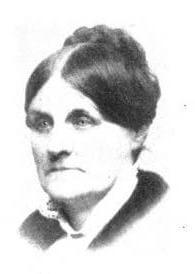
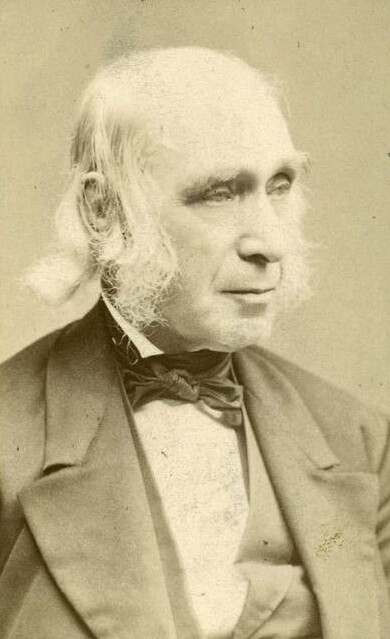
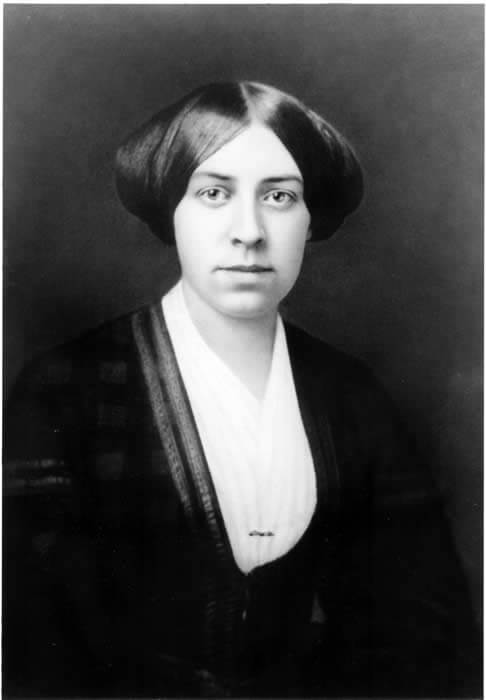
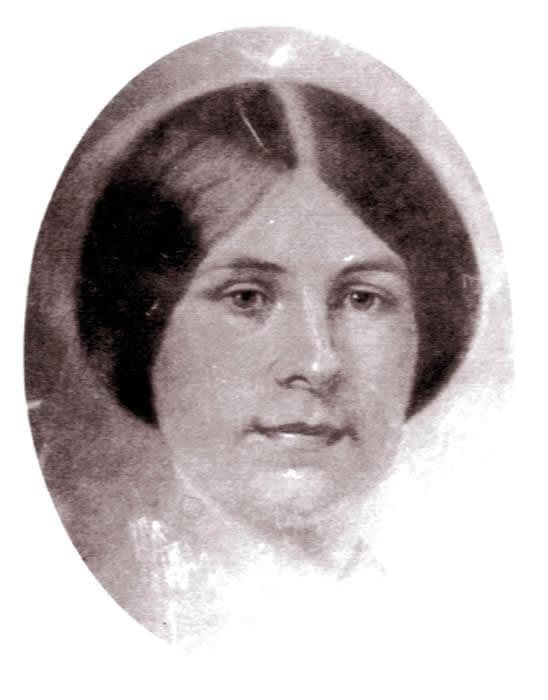
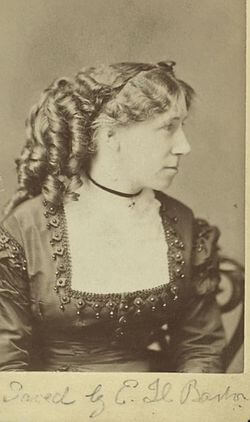
Alcott’s family and their Little Women counterparts, from left to right. Her mother, Abigail May “Abba” Alcott, the inspiration for Marmee, (Wikimedia Commons). Her father, Amos Bronson Alcott, educator and philosopher, (New York Public Library Digital Gallery). The eldest daughter Anna Bronson Alcott Pratt, the inspiration for Meg, and the third daughter Elizabeth Sewall Alcott, the inspiration for Beth (Louisa May Alcott’s Orchard House). The youngest daughter Abigail May Alcott Nieriker, the inspiration for Amy (Find a Grave).
A striking red brick federal structure, 20 Pinckney Street was much more comfortable than their South End apartment. Abba ran the “Intelligence Bureau,” an employment agency for the poor, from her home. Louisa and Anna held school in the second-floor parlor for children of Boston’s elite. Harvard students Joseph May and Llewellyn Willis boarded to help defray expenses.
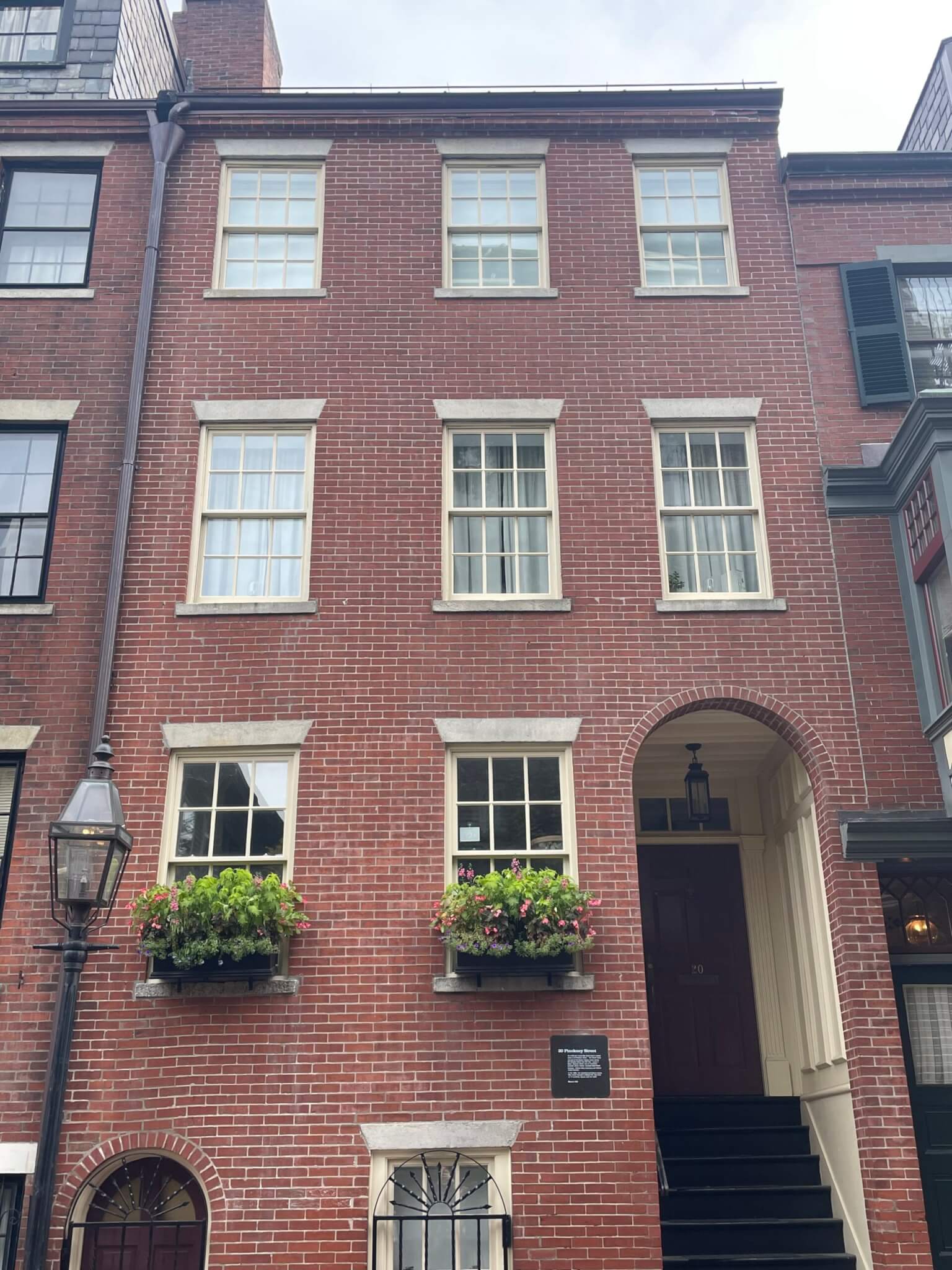
Each day, Alcott completed household chores, fulfilled governess obligations, sewed, and taught. When this was done, Alcott retreated to her quiet third-floor room at 20 Pinckney Street to write. She always had a big bucket of apples and a heavy green and red wrap close by. Her first publication had made it to print earlier during her time in Boston. The poem “Sunlight” had appeared in Peterson’s Magazine in 1851. Building upon her first success, Alcott published the short story “The Rival Painters” in 1852.
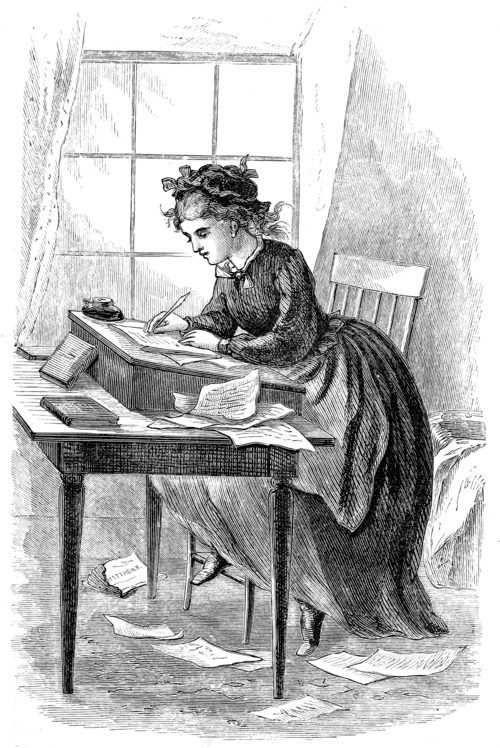
From fall 1853 to Christmas 1854 Alcott made significant strides as a writer. She did not become discouraged after the publisher Ticknor and Fields rejected one of her stories. Editor and West End resident James T. Fields– husband of writer and social worker Annie Adams Fields – turned down the story based upon Alcott’s experiences as a servant in Dedham. Fields told Alcott to stick to teaching since she could not write. Alcott was determined to prove him wrong. She later published the short story “The Rival Prima Donnas” in November 1854 in The Saturday Evening Gazette, albeit under a pseudonym. Her first book, Flower Fables, was published on December 9, 1854. Alcott placed a copy in her mother’s Christmas stocking.
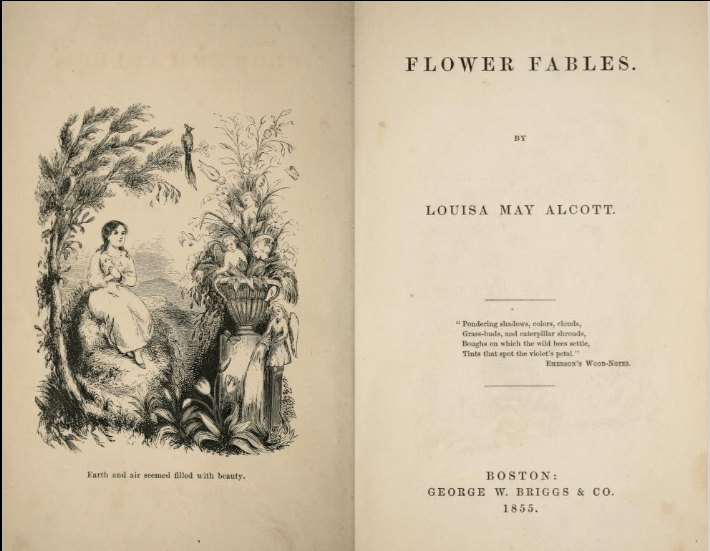
The Alcott family left 20 Pinckney Street in spring 1855, eventually moving to Orchard House in 1857. Alcott’s reputation continued to grow after the publication of Hospital Sketches (1863). The collection was based on letters she wrote during her service as a Civil War nurse.
In September 1867 Thomas Niles, editor at the publisher Roberts Brothers, asked Alcott to write a “girls’ book.” In summer 1868 Alcott finished Little Women. The novel was loosely based on Alcott’s experiences growing up as one of four sisters. The first part of the book had illustrations by Alcott’s younger sister Abby May (the inspiration for Amy March). However, in response to reviewers’ criticisms of the illustrations, Niles looked for a replacement. He engaged Hammatt Billings, an architect, sculptor, and illustrator from Boston’s West End, to create new drawings for the second part. Alcott eventually moved back to Boston and died at the age of 55 while living in Louisburg Square on Beacon Hill.
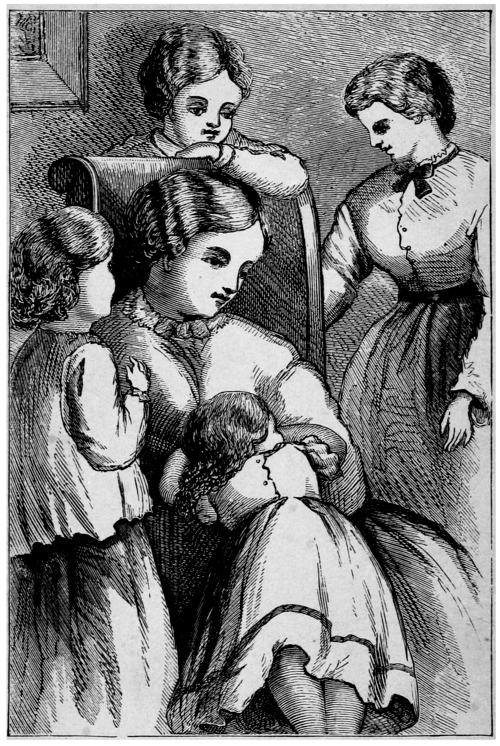
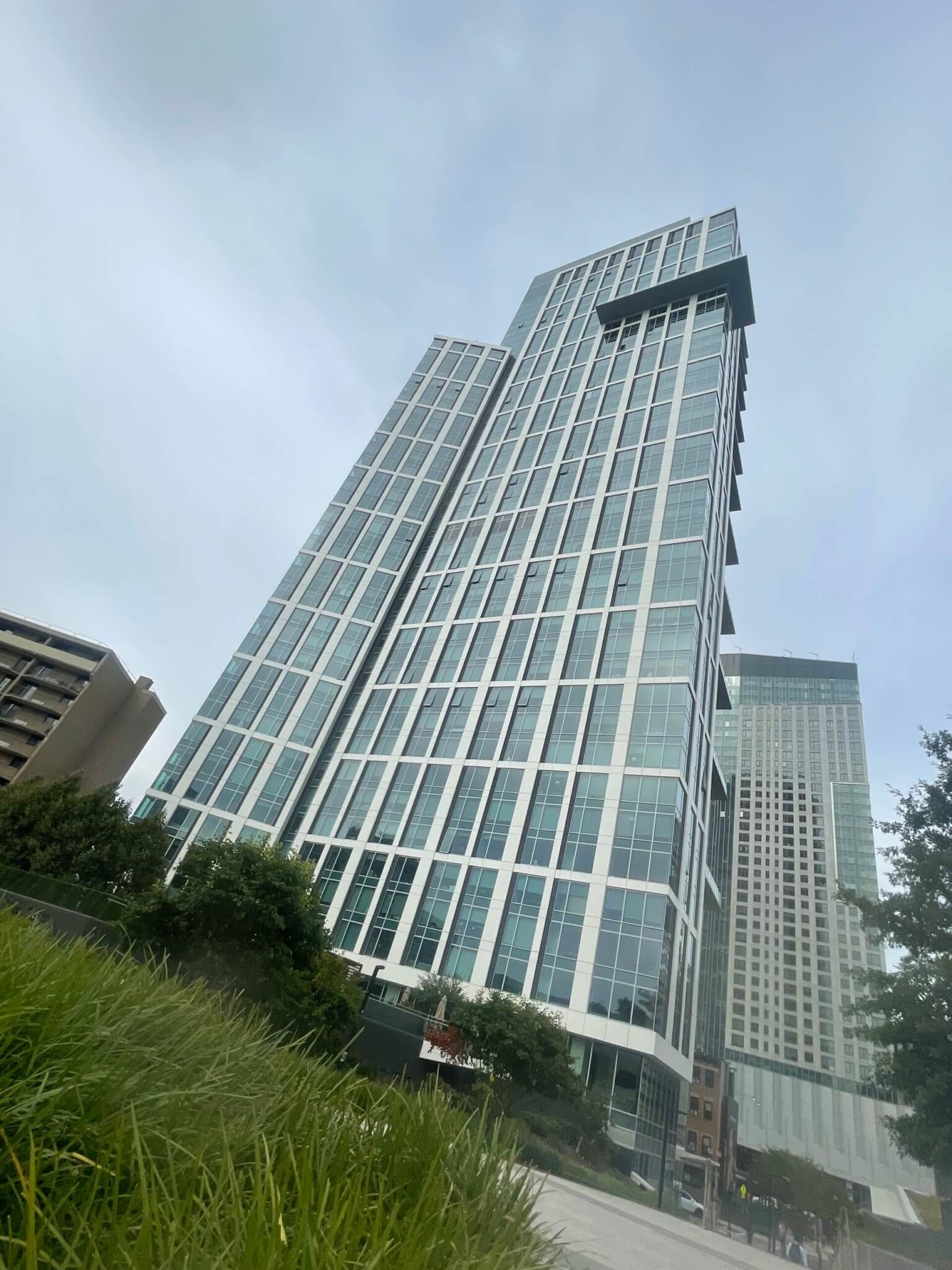
Boston’s West End left a mark on Louisa May Alcott. The third-floor garret at 20 Pinckney Street provided a private, quiet place for the young author to write and develop her voice. In 1853, Fields’s disparaging words about Alcott’s writing ability motivated her to persist and submit materials for publication. Finally, Billings’s memorable illustrations enhanced the second part of Little Women in 1869. Now however, Alcott has left her mark on the West End, as her name may be familiar to West Enders even if they haven’t read her books. The newest 44-story luxury apartment building now sitting at 35 Lomasney Way was named after Alcott. While her legacy is rooted in Concord, Alcott has, in many ways returned to the West End.
Article by Nancy Dennis, edited by Jaydie Halperin
Sources: Louisa May Alcott, Flower Fables, (Boston: George W. Briggs and Co, 1855); Louisa May Alcott’s Orchard House; Boston Women’s Heritage Trail, “Home of Louisa May Alcott”; History.com Editors “Louisa May Alcott publishes her first story,” (History. com , November 13, 2009, updated May 27, 2025); Eve LaPlante, Marmee & Louisa: The Untold Story of Louisa May Alcott and Her Mother (New York: Simon & Schuster, 2012.); John Matteson, Eden’s Outcasts: The Story of Louisa May Alcott and Her Father, (New York; Norton, 2007); James F. O’Gorman, Accomplished In All Departments of Art: Hammatt Billings of Boston, 1818-1874. (Amherst: University of Massachusetts, 1998); Martha Saxton, Louisa May Alcott: A Modern Biography. (New York: Farrar, Strauss, and Giroux, 1995); Madeleine B. Stern, Louisa May Alcott: A Biography (Boston: Northeastern University, 1996).