
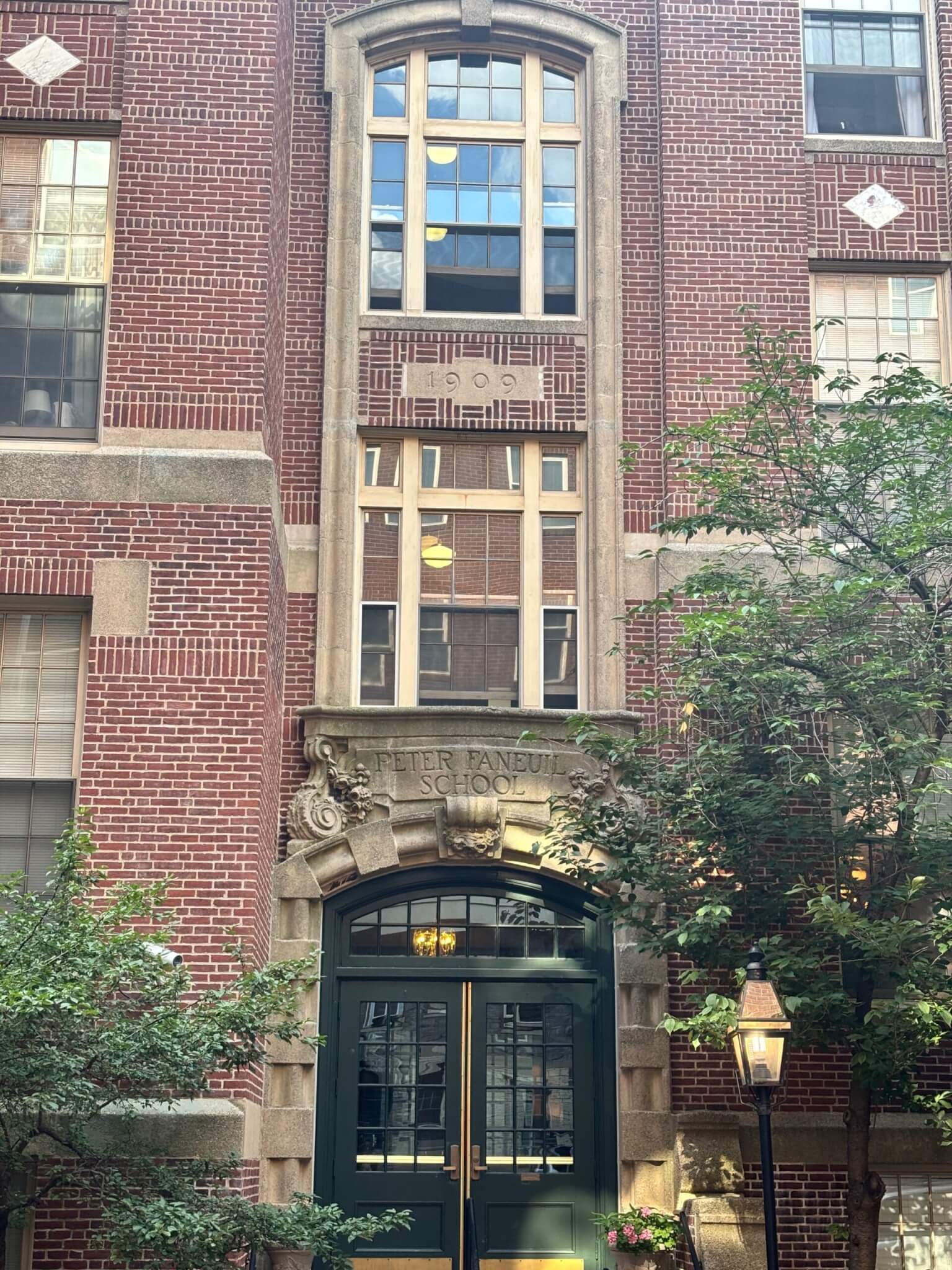
The Peter Faneuil School
Built in 1910 to relieve over-crowding in West End Schools, the Peter Faneuil School would go on to be the final West End School operating after urban renewal destroyed the rest of the neighborhood. It was the first school in Boston to attempt intra-city busing and later hosted an experimental school integration program.
This is the second in a series on Schools of the Old West End.
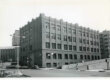
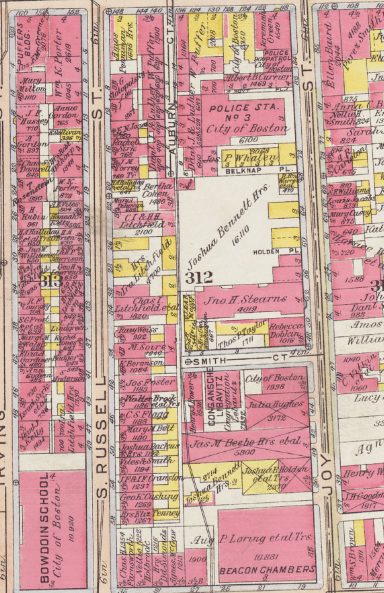
The Peter Faneuil School, located between Joy Street and South Russell Street on the North Slope of Beacon Hill opened in 1910. It was a relief to the West End’s over-populated school district, one of the most crowded in the city, and eased pressure on other nearby schools. The school was named after Peter Faneuil (1700-1743). Faneuil was one of the most prominent merchants and philanthropists of his day as well as a participant in the triangle trade.
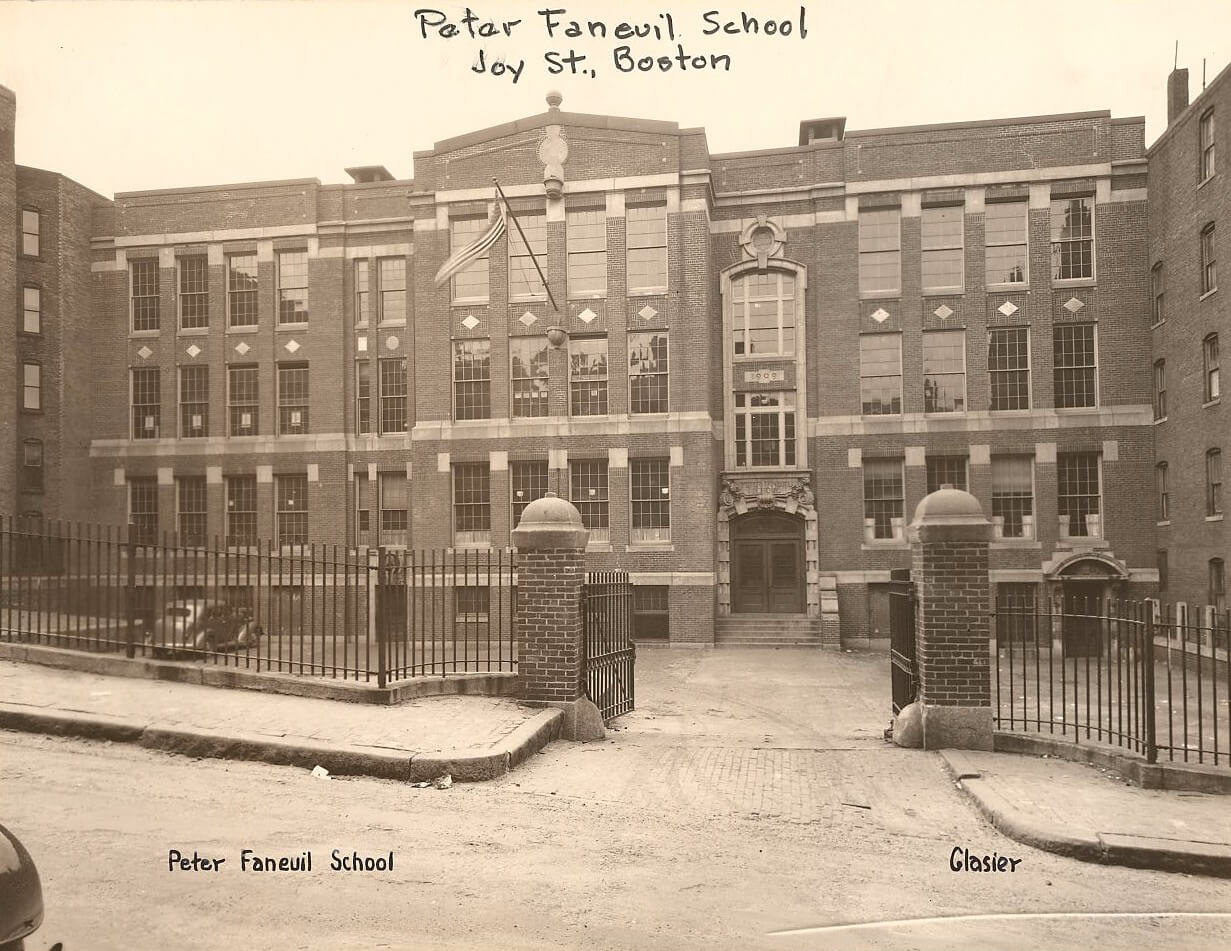
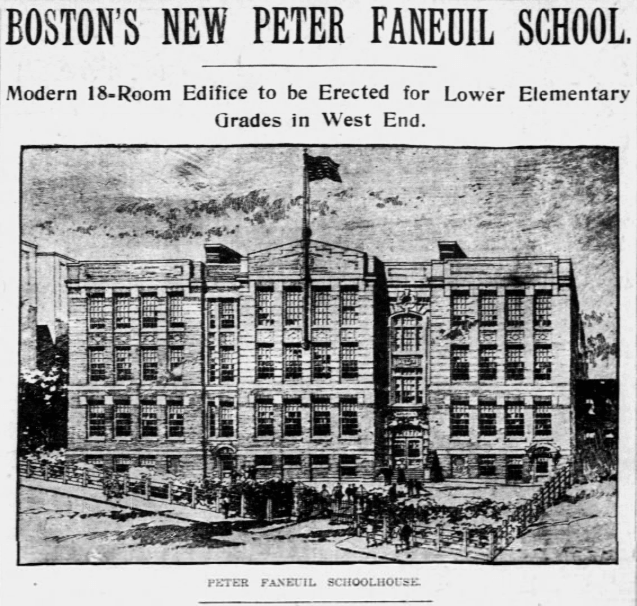
Appointed architect in 1909, James T. Kelley led the planning for an eighteen-room lower elementary school building for $118,800. By June 1909, the school committee granted contracts for a more compact and economical building with a total cost of $106,000. The location for the school was cleared of tenement housing to make room for the new building. These buildings were taken by the city through eminent domain.
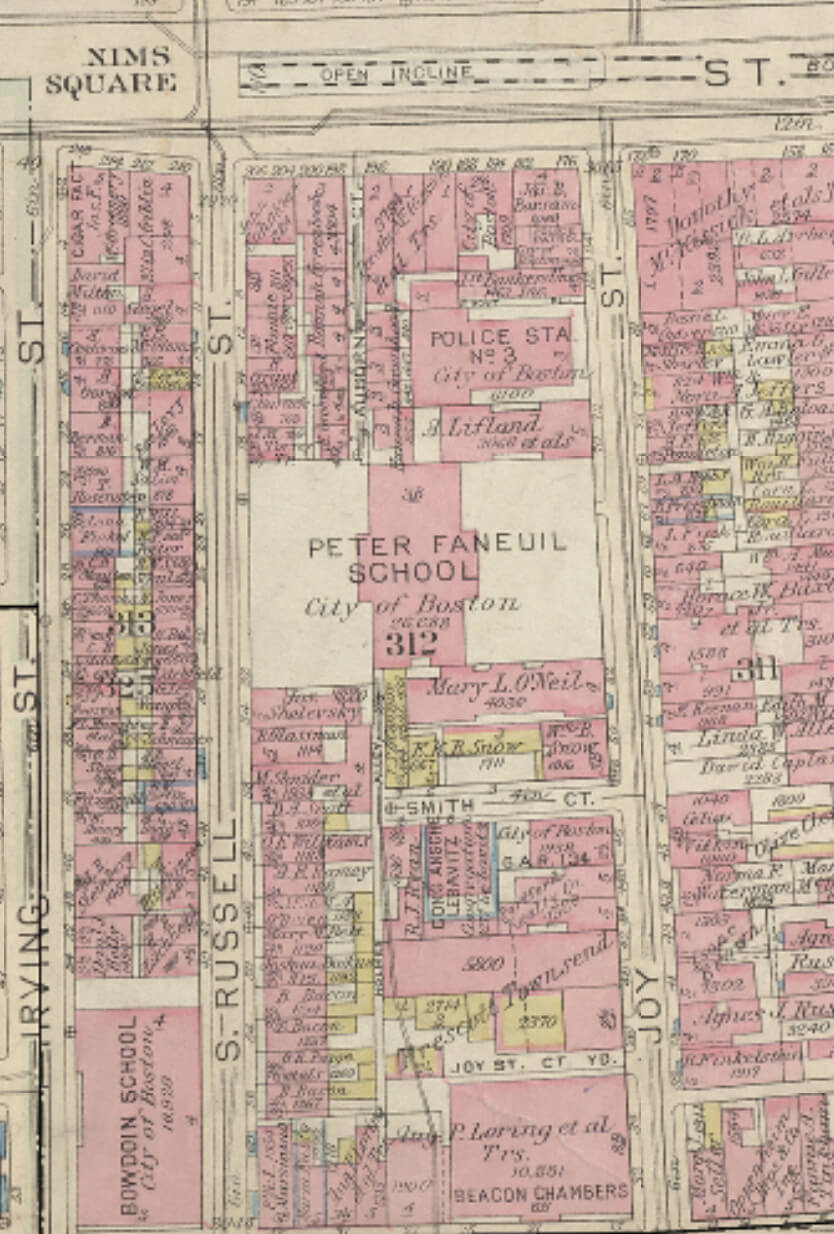
After completion, the Peter Faneuil School had two floors with seventeen total rooms. Each floor had one large room to hold 50 students should classes overflow. Since the building extended along the lot from north to south, each room received plenty of natural sunlight. A manual training room and kitchen were below these larger rooms. There were spaces for manual training classes designed for students to learn practical or technical trades. In 1911, the manual training for the Peter Faneuil School was woodworking.
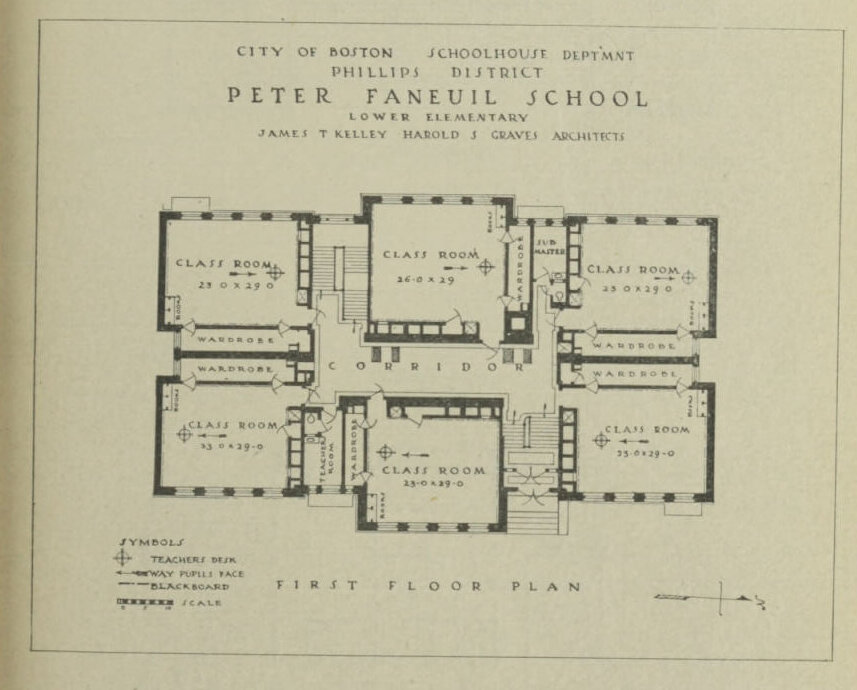
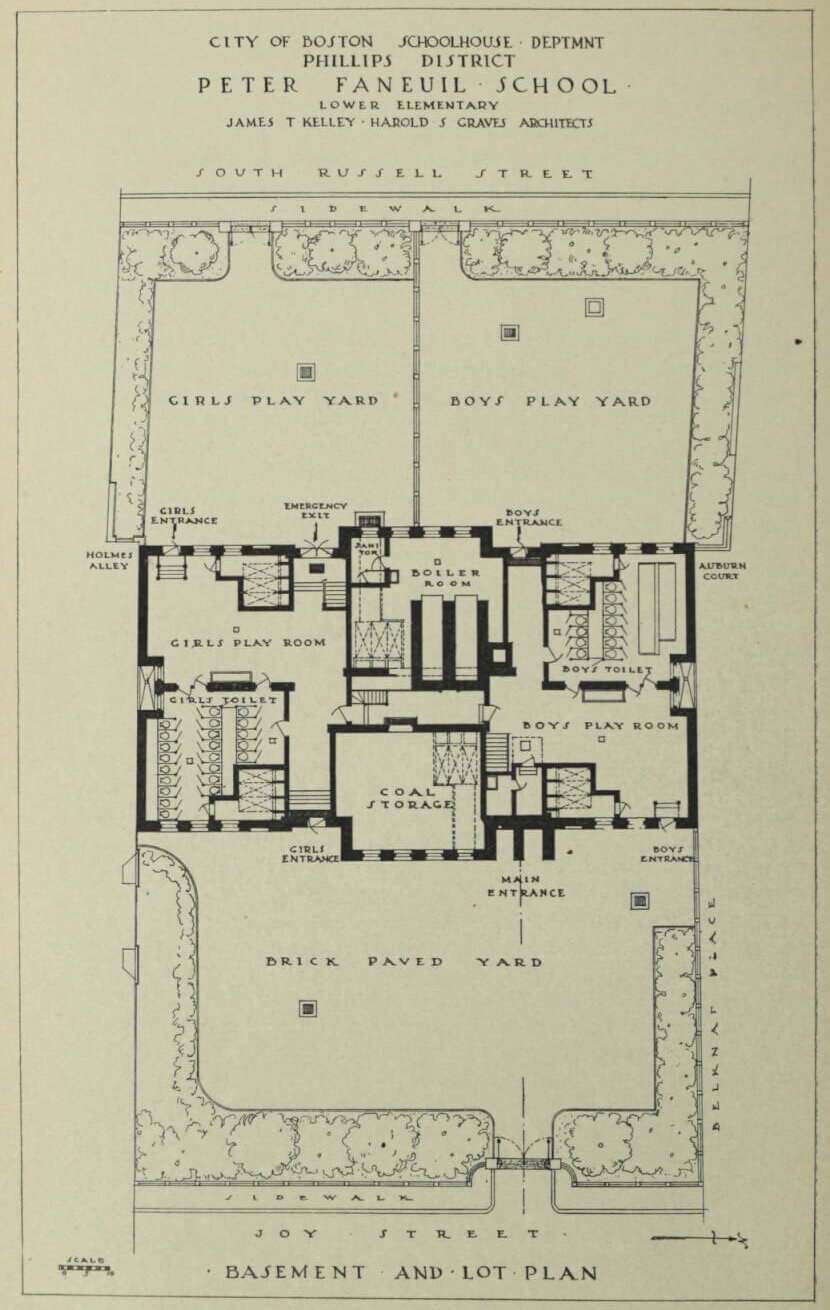
Floor plans for the basement and outdoor lot and first floor of the Peter Faneuil School. From the 1908-1909 Board of Schoolhouse Commissioners Annual Report (Boston Public Library).
In early September 1910, the Peter Faneuil School opened its doors to elementary students. Fourth and fifth graders transferred in from the Washington School. Kindergarten through fifth grades moved from the Wells School. First to fourth graders from the Wendell Phillips School transferred to the Faneuil School as well. The school would go on to educate elementary and upper grades for thirty years.
By 1925, the West End still faced overcrowding in the schools. This is despite there being eight public schools in the neighborhood, plus the St. Joseph’s Parochial School. To fix this crowding, school officials rearranged districts and established the Washington Intermediate School. This shuffled grades and teachers between schools and caused uproar from parents of the West End and North End. Parents affected by the changes protested to the school committee. They cited the difficulty of younger children crossing major streets to get to school on Joy Street.
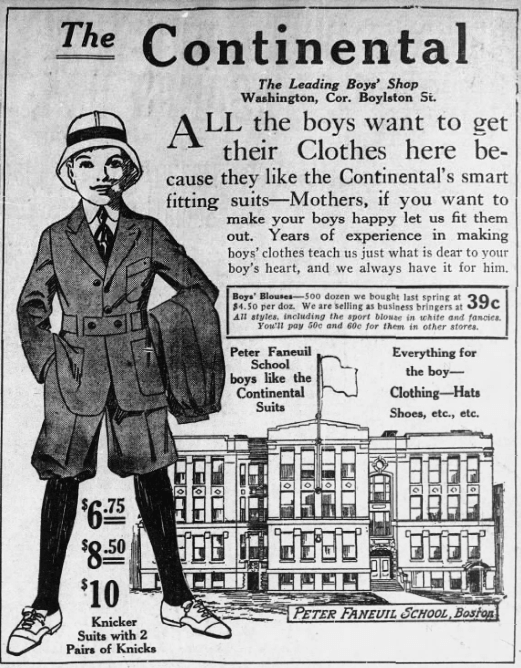
On March 5, 1929, the Peter Faneuil School was featured in a short column in The Boston Globe. Cora Bigelow, director of the Special Class Center, brought a radio into the school. Students excitedly listened to President Herbert Hoover’s inaugural ceremonies. Faneuil students had, as the Globe reported, “the unusual experience of listening to the broadcast sent out from an airplane circling the Capitol.”
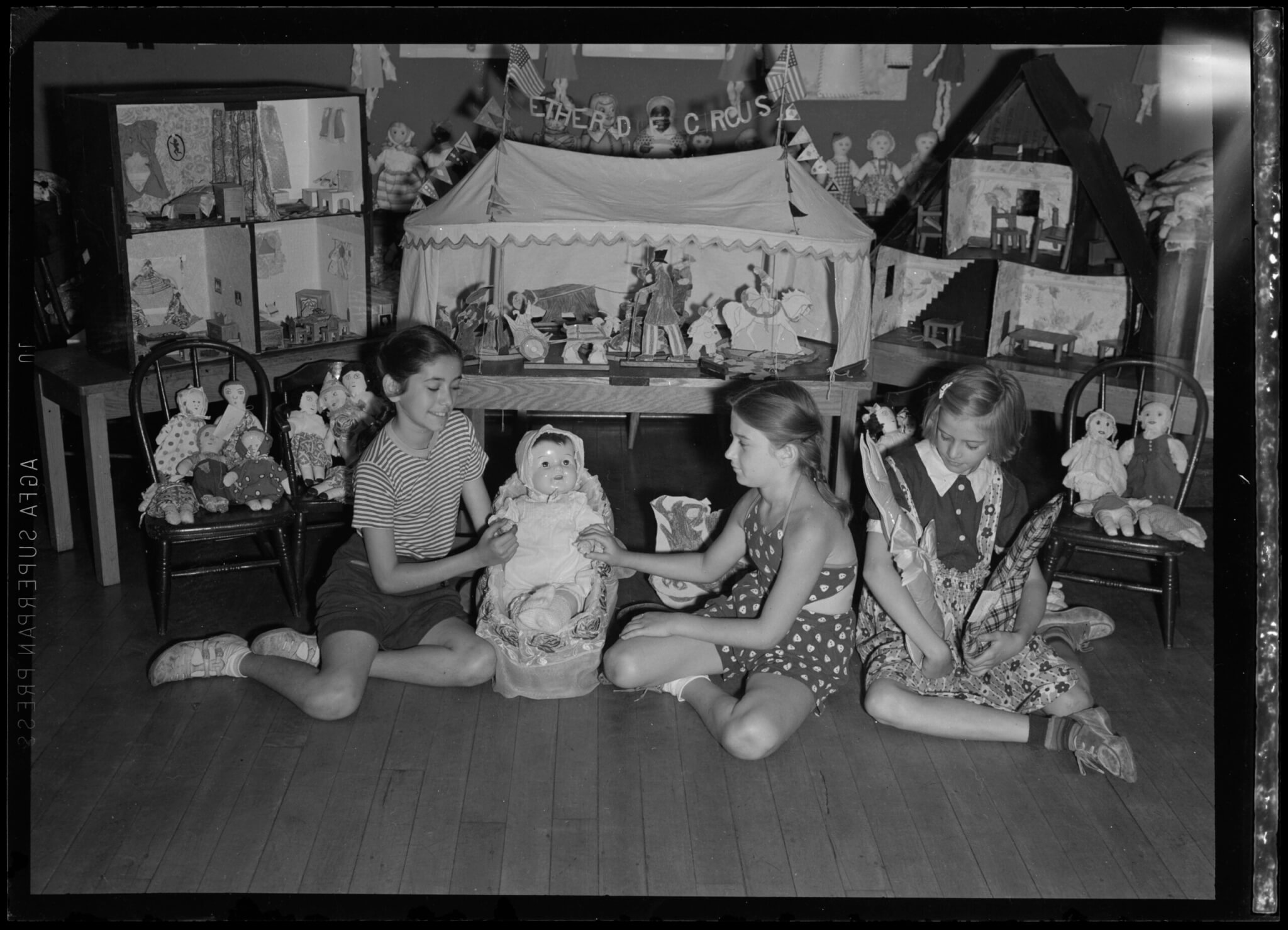
A private social work organization, the Home and School Visitors Association (HSVA), also found a home at the Faneuil School. The HSVA was a group of women with teaching or social work backgrounds who helped struggling students. They acted as a “friend” and advocate for students. The women worked with parents, social agencies, administrators, and teachers to improve students’ outcomes. Their goal was to “work out a constructive plan with the home and school and community for [students’] welfare.” In 1932, HVSA established a central office at the Faneuil School.
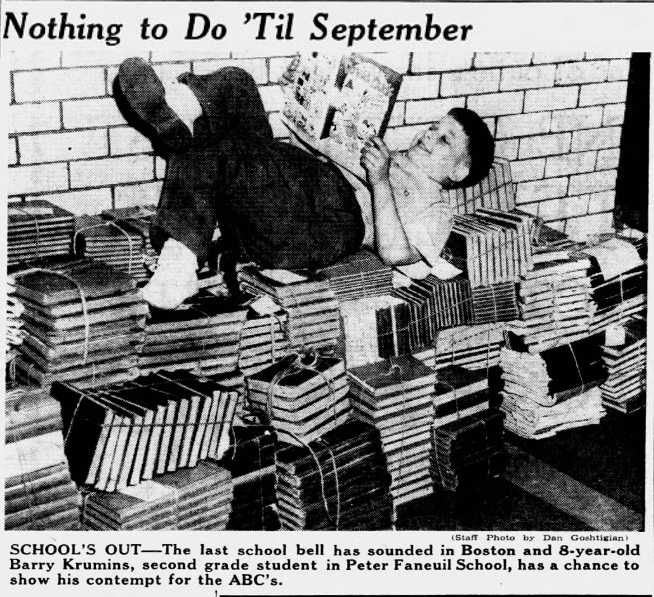
In 1940, the School was a full time elementary school. It also taught kindergarten, adult education classes, and manual training classes. During World War II, the Globe’s Victory Garden Club endorsed a program for Boston schoolchildren. Victory gardens, or war gardens, were vegetable, fruit, and herb gardens. They were planted in residential spaces, window-boxes, vacant lots, and public parks. Thousands of elementary, intermediate, and high school students became part of the Globe’s Garden Club. During school, they were taught the importance of growing and harvesting vegetables and the vital role of Victory Gardens in the war.
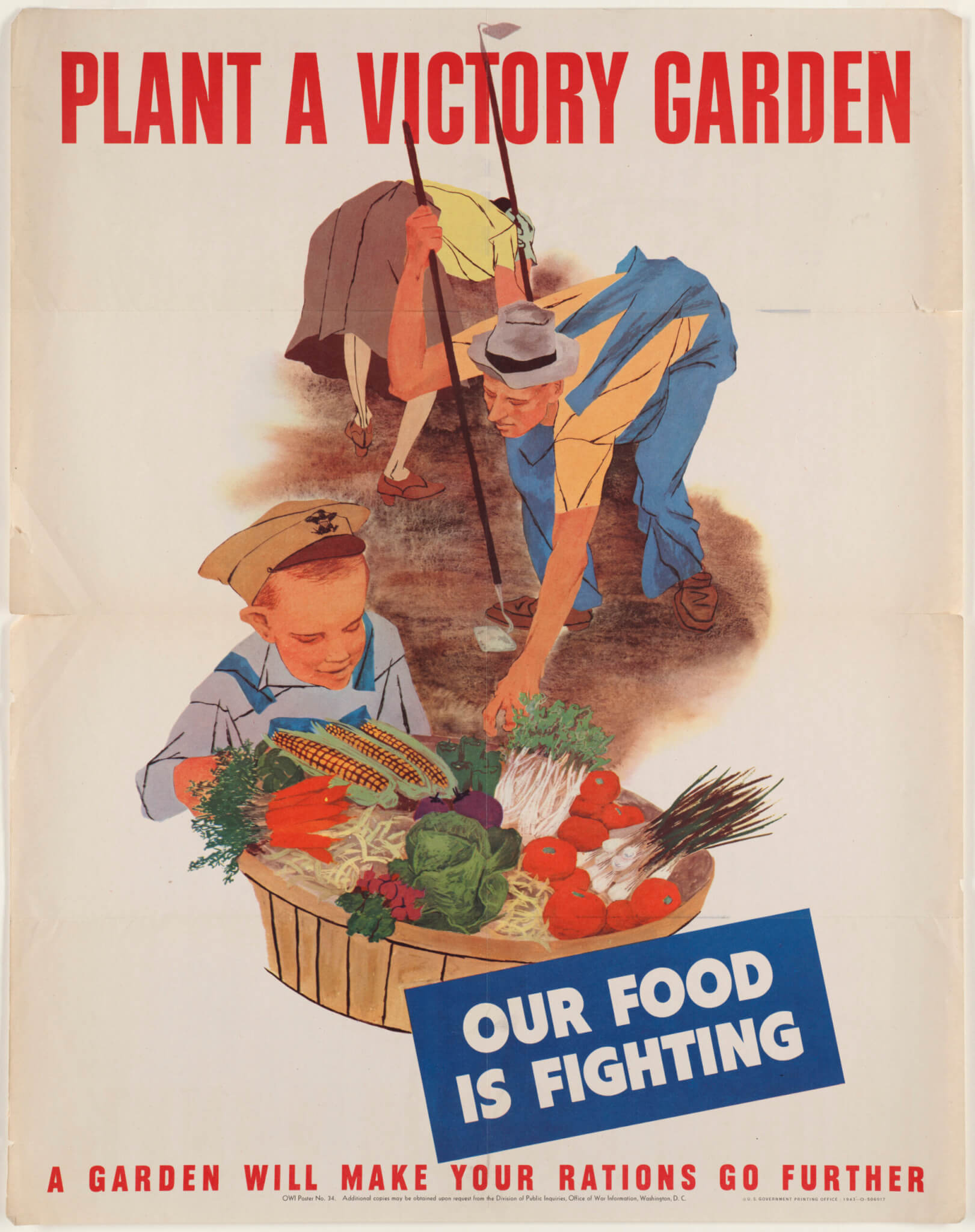
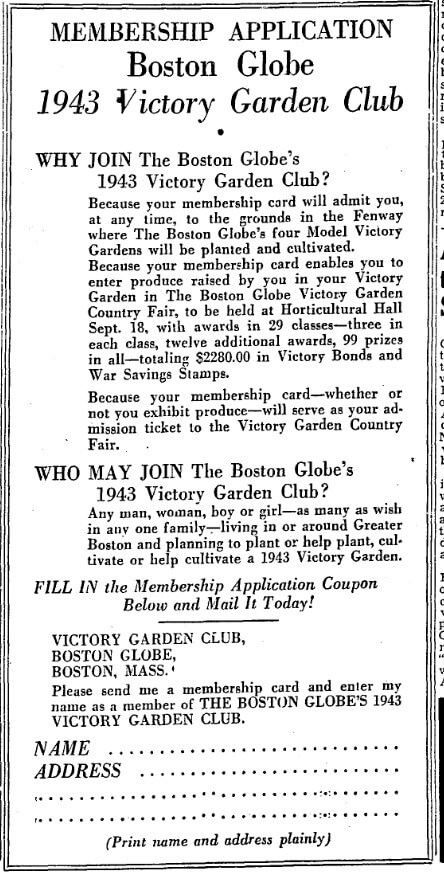
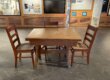
Faneuil School students were particularly eager to start their own garden. They constructed a model of what their garden would look like. Unfortunately, the built-up West End lacked available space for gardens. Students were also warned not to use fire escapes for gardens because of new regulations from the fire department. In a daily essay on the phases of gardening, fifth grader Carmine Puopolo stated:
“Do you have a Victory Garden? If you don’t have a Victory Garden, you can make a little one on the roof. If you don’t know how to plant the seeds you can look in the paper and it will tell you how to plant the seeds. You can win the war with a Victory Garden.”
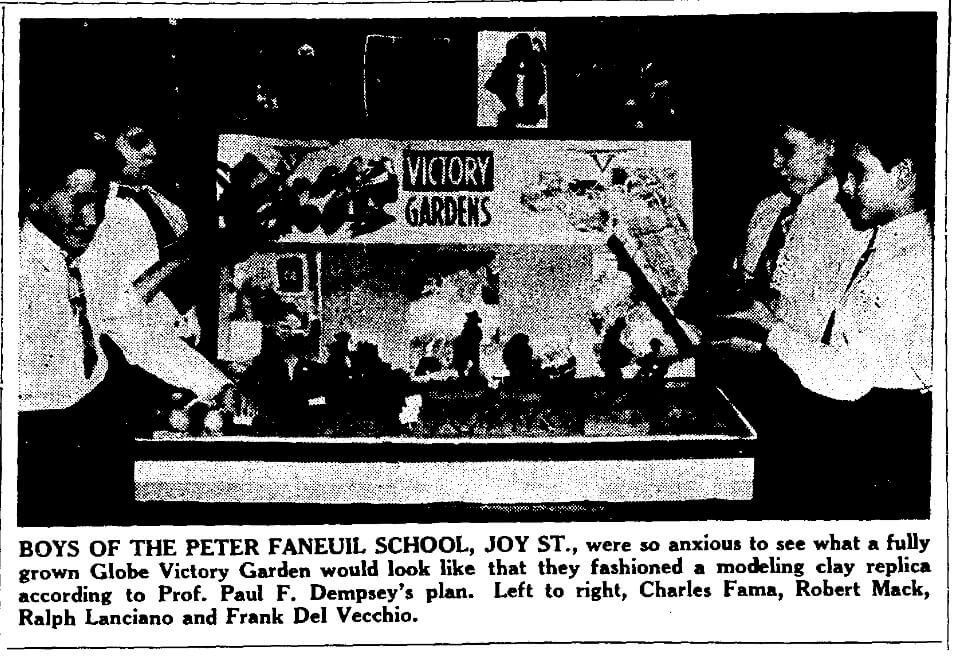
When urban renewal came to the West End, the Faneuil School survived demolition due to its location on the North Slope of Beacon Hill. However, many of the children who once attended were displaced from the neighborhood. Enrollment declined as urban renewal cleared the West End. The institution had good teachers, but lacked specialized programs and green spaces of newer schools. Families on the more affluent side of Beacon Hill often chose the Prince School or private schools instead. Through the 1960s, The Peter Faneuil School served a primarily white Beacon Hill community as well as the remaining children of the West End. A planned school in the West End project area was canceled on the assumption that the Faneuil School could handle students from Charles River Park. Older students were assigned to a different public school district.
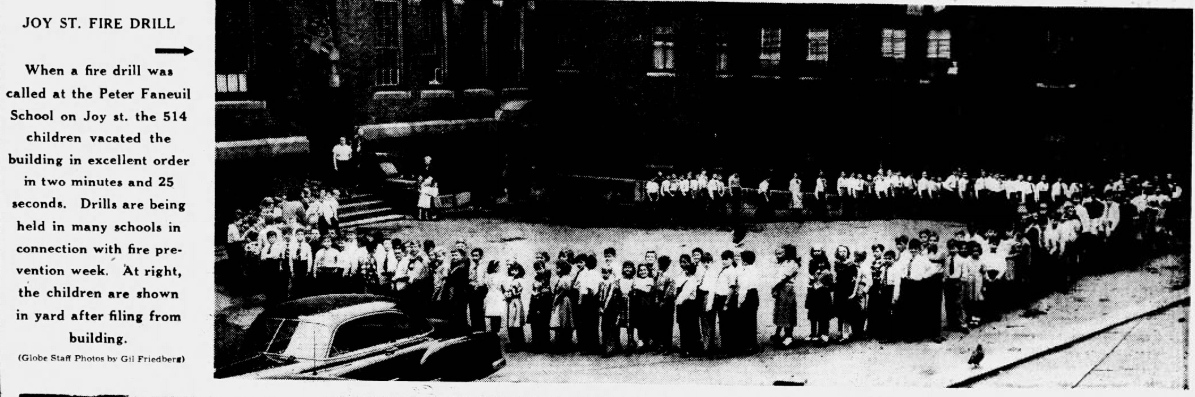
The next chapter in the Faneuil School’s history came at the very beginning of the era of busing in Boston. The Citizens for Boston Public Schools (CBPS) saw an opportunity to help a struggling district by filling an empty one. The CBPS was an advocacy group and section of the school committee created to address educational inequality. In 1964, the Boardman School in Roxbury was run down and lacked resources for 200 primarily Black students. Together, Roxbury parents and CBPS hired buses for 94 children to fill empty seats at the Peter Faneuil School. This was the first instance of an intra-city busing program in Boston.
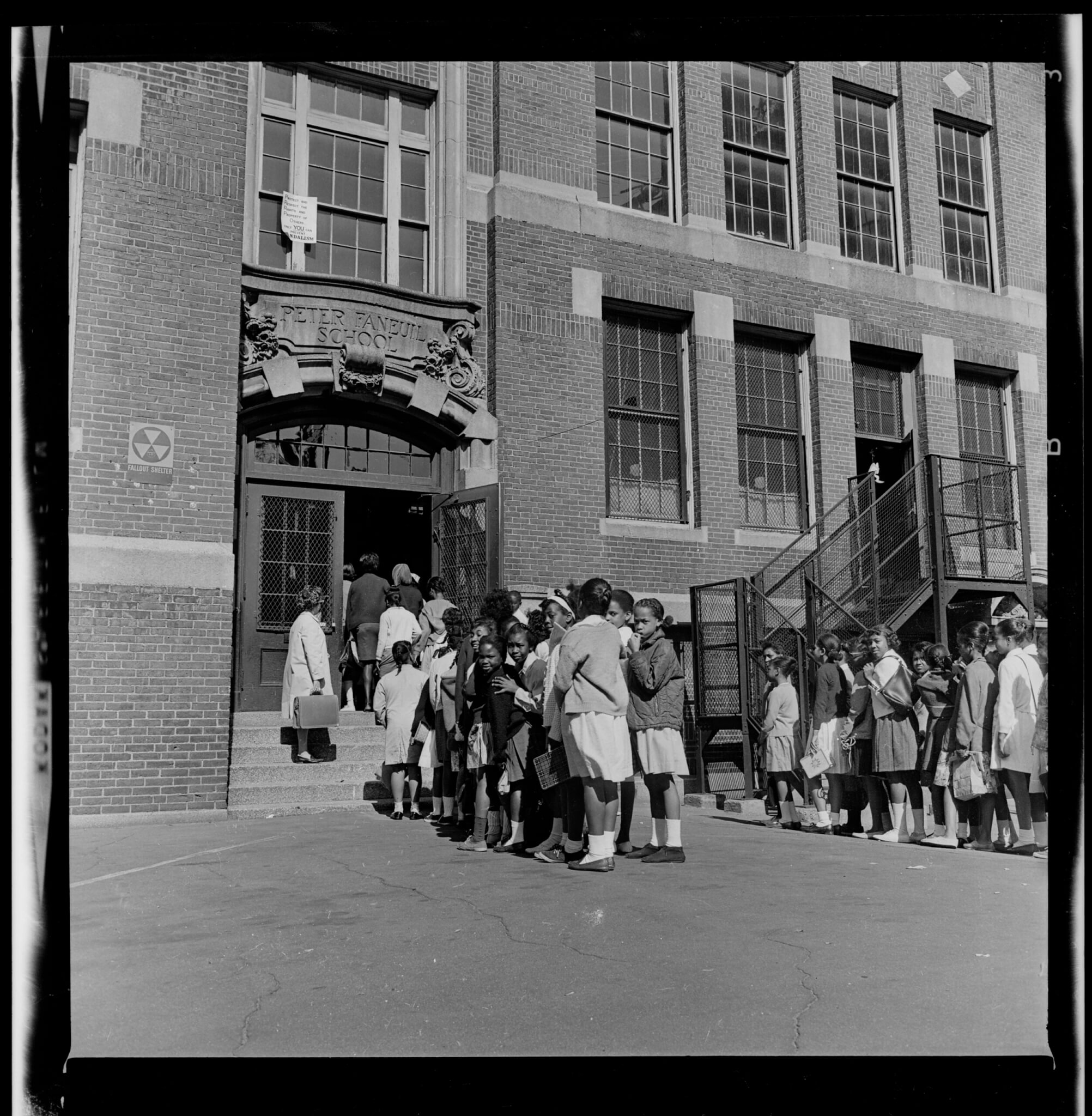
A growing number of buses coming from Roxbury to the West End skewed the racial demographics of the Faneuil School. The school’s enrollment became 65% non-white in a predominately white neighborhood. This violated state legislation on racial imbalance. At full capacity, the Faneuil School could hold 400 students. Yet, by the mid 1960s, there were 135 open seats and two empty classrooms, so nothing was done to adjust the imbalance.
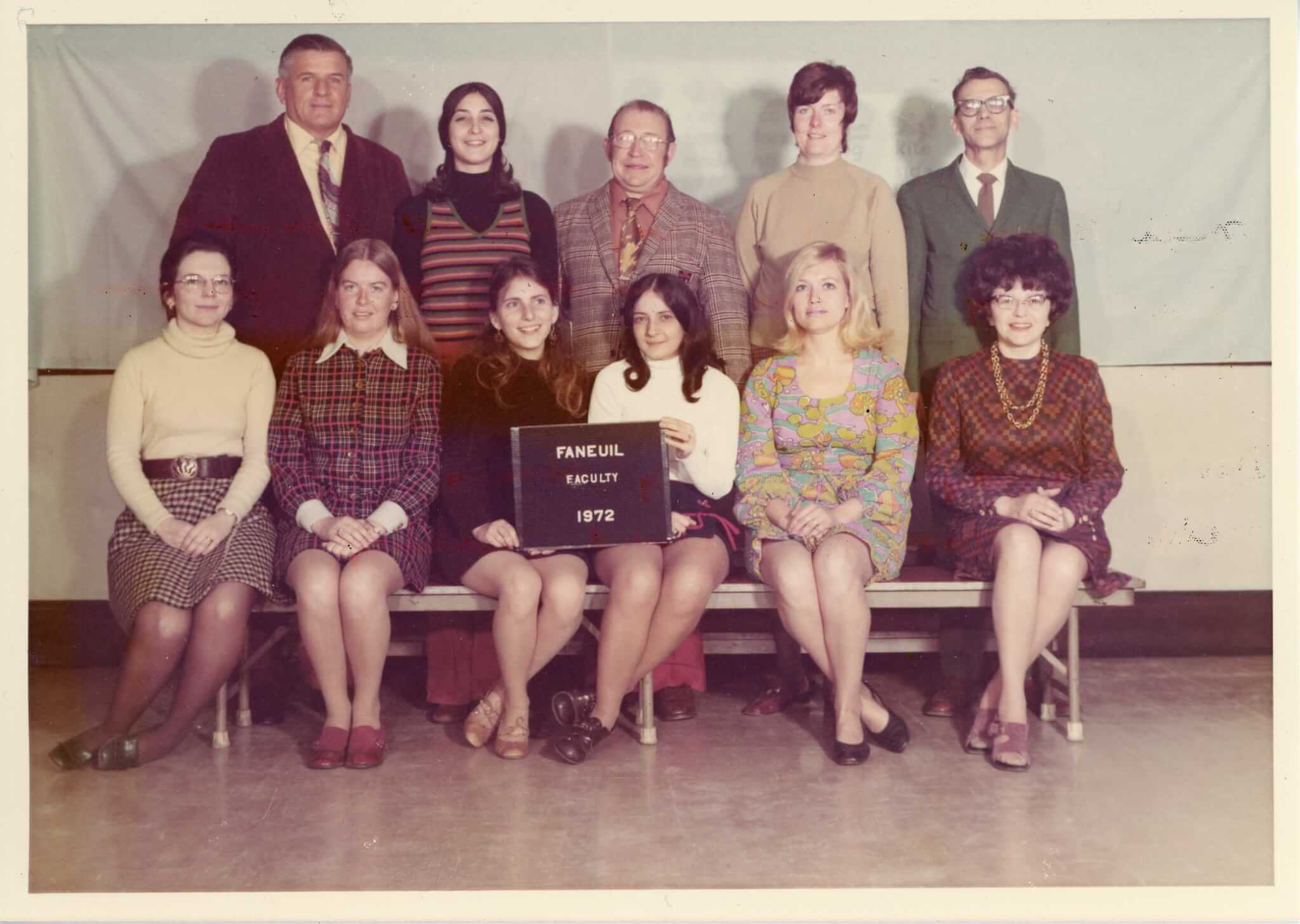
The Faneuil School was the last active West End school. Due to desegregation orders and the opening of the Josiah Quincy Elementary School, the Peter Faneuil School closed its doors at the end of the 1975 school year. This left the West End and Beacon Hill as the only neighborhoods in Boston without a public elementary school.
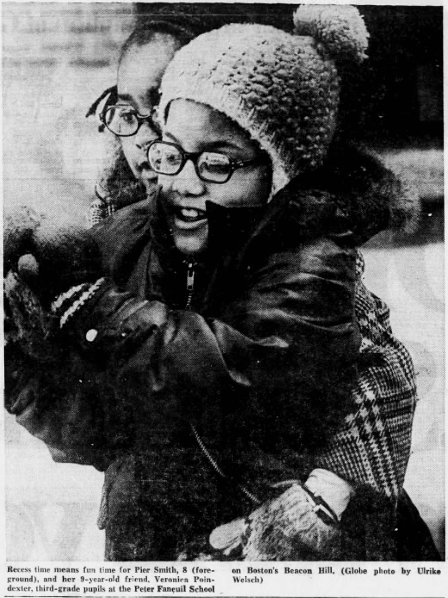
For a year and a half after its closure as an elementary school, The Educational Collaborative of Greater Boston (EDCO) reopened the school. The Faneuil School became The LAB, or the Learning About Boston School. This was a voluntary desegregation secondary school project with specialized and traditional classes. LAB School enrolled about 150 students from 22 different school districts and many racial backgrounds. Faculty and students published several volumes of an arts and writing magazine called LAByrinths.
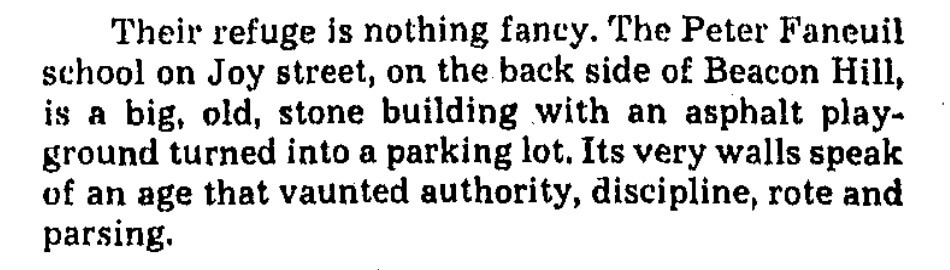
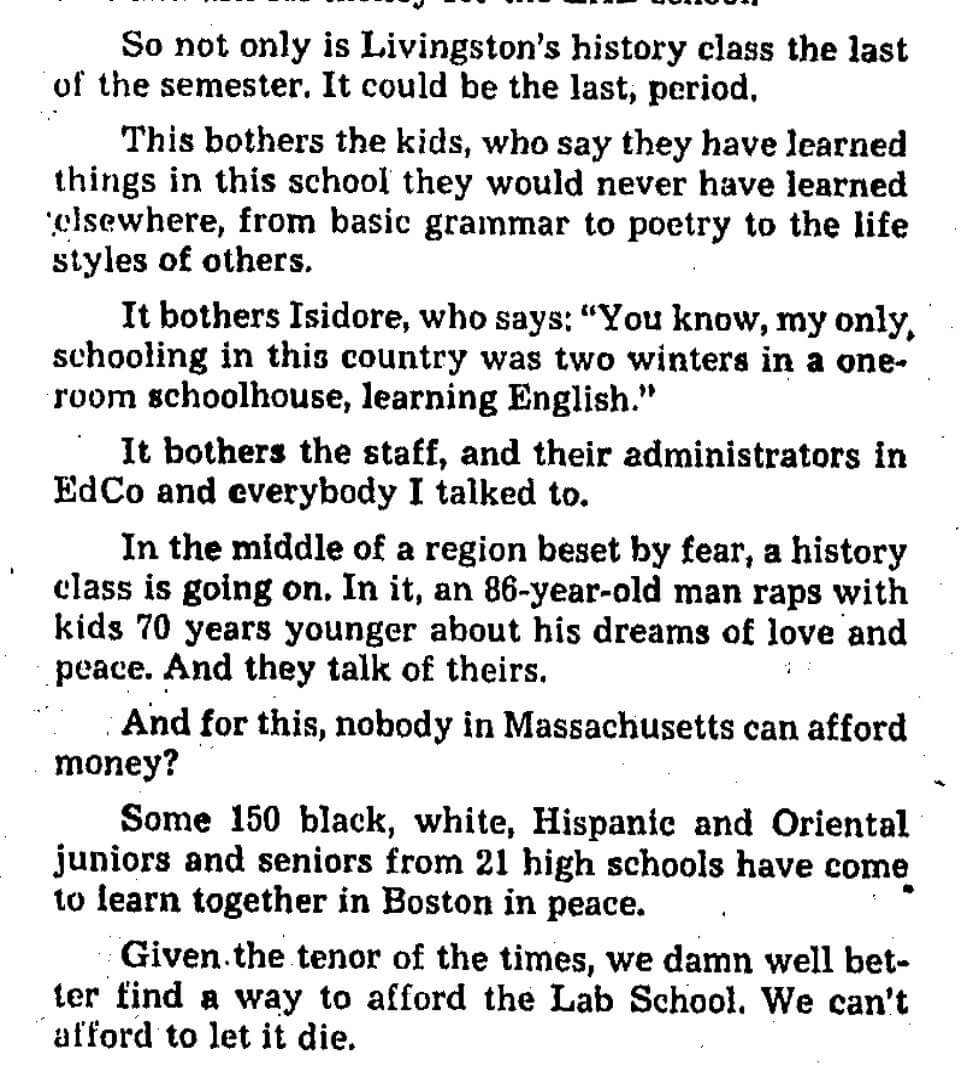
Excerpts from Alan Lupo’s “An Island that Shouldn’t Die” column on the impact of the LAB school, June 11, 1976 (The Boston Globe).
After the end of the LAB’s experiment, the Faneuil School hosted a small college prep program through the end of the 1980s. In 1994, it was turned into multi-use affordable housing. An addition in the front of the school on Joy Street included 20 supportive-housing apartments for people living with AIDS. Today, the Peter Faneuil House has 48 low-income housing units for individuals and families. The school yard has become a basketball court for residents and Beacon Hill neighbors.
Article by Catherine Stowe, edited by Jaydie Halperin
Sources: Boston Public Schools, “Annual Report by Board of Schoolhouse Commissioners” 1908-1909, 1909-1910, 1910-1911, 1911-1912, 1912-1913; Boston Globe, March 5, 1929 page 25 | March 25, 1921 page 6 | May 13, 1939 page 9 | September 22, 1925 page 23 | March 31, 1943 page 1 | April 3, 1943 pages 1 and 15 | October 1, 1965 page 3 | July 20, 1967 page 7 | July 25, 1975 page 3 | August 1, 1975 page 1 | June 11, 1976 page 9 | April 9, 1994 page 33 | November 15, 1994 page 23; Boston Redevelopment Authority, “Minutes of a regular meeting, held July 26, 1961” (City of Boston); National Parks Service, “Victory Gardens on the World War II Home Front” (February 19, 2025); Rogerson Communities, “Peter Faneuil House”, “Joy Street Residence” ; Simmons University Library, “Guide to the Home and School Visitors Association (Boston, Mass.) records,1908-1942”; The West End Museum, “School Days in the West End”, Exhibit, 2016.