
A West End Kitchen Table
Explore the central role of the kitchen table to immigrant families living in the old West End’s tenement housing through the Campano family’s enamel top-table.
This is the first in a series of articles on objects in The WEM’s collections.
Imagine the West End of Boston as it was on February 9th, 1934. That night, the city experienced record cold temperatures of eighteen degrees below zero. In a typical cold-water West End flat with no central heat or hot water, the twelve-by-fifteen foot kitchen was the only place to warm up. The coal stove served a dual purpose of cooking and keeping the apartment warm. The stove’s heat could lessen the chill from the extreme atmosphere. For families living through the harsh New England winter, the kitchen table was the place to gather on the coldest nights.
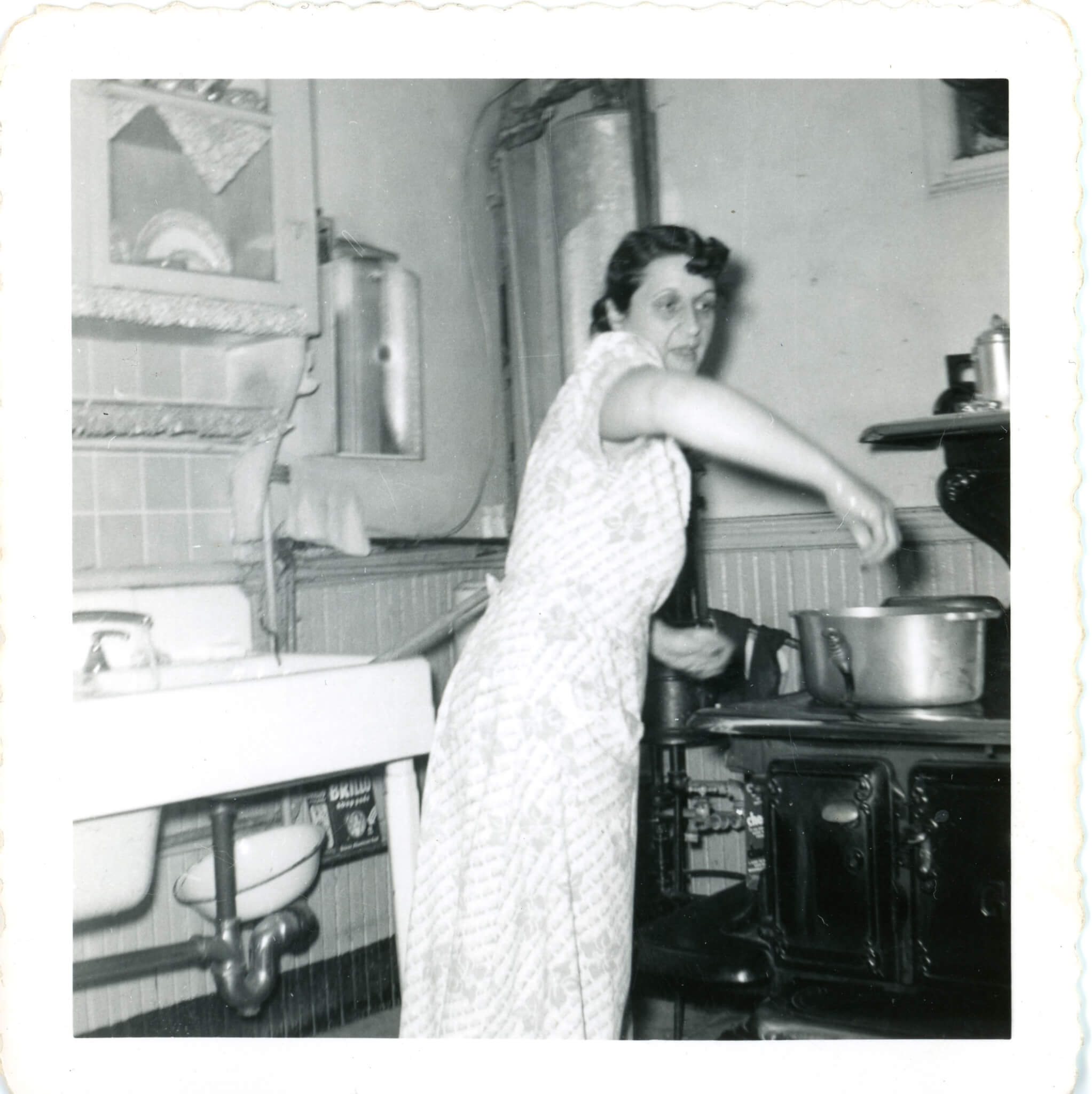
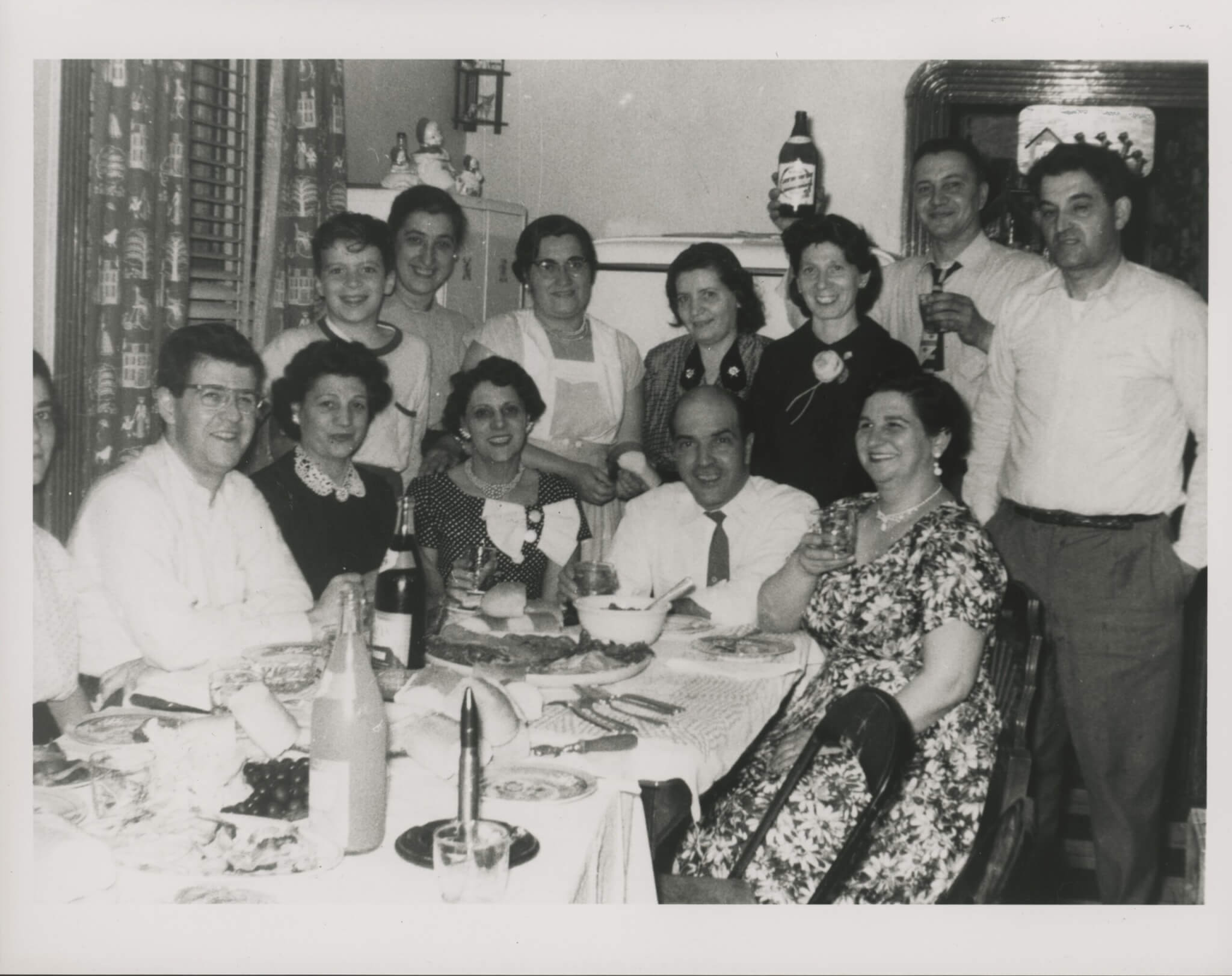
The enamel top table (also called tin top or porcelain top) was a common and versatile object in a West End apartment. On some evenings, the leaves beneath the counter could be pulled out, and the once small-sized table could now seat around a dozen people. Aunts, uncles and friends could gather around the table playing late-night poker games or swapping neighborhood gossip. Despite the chill, the kitchen would be full of conversation, arguments, and the noise of a tight-knit community.
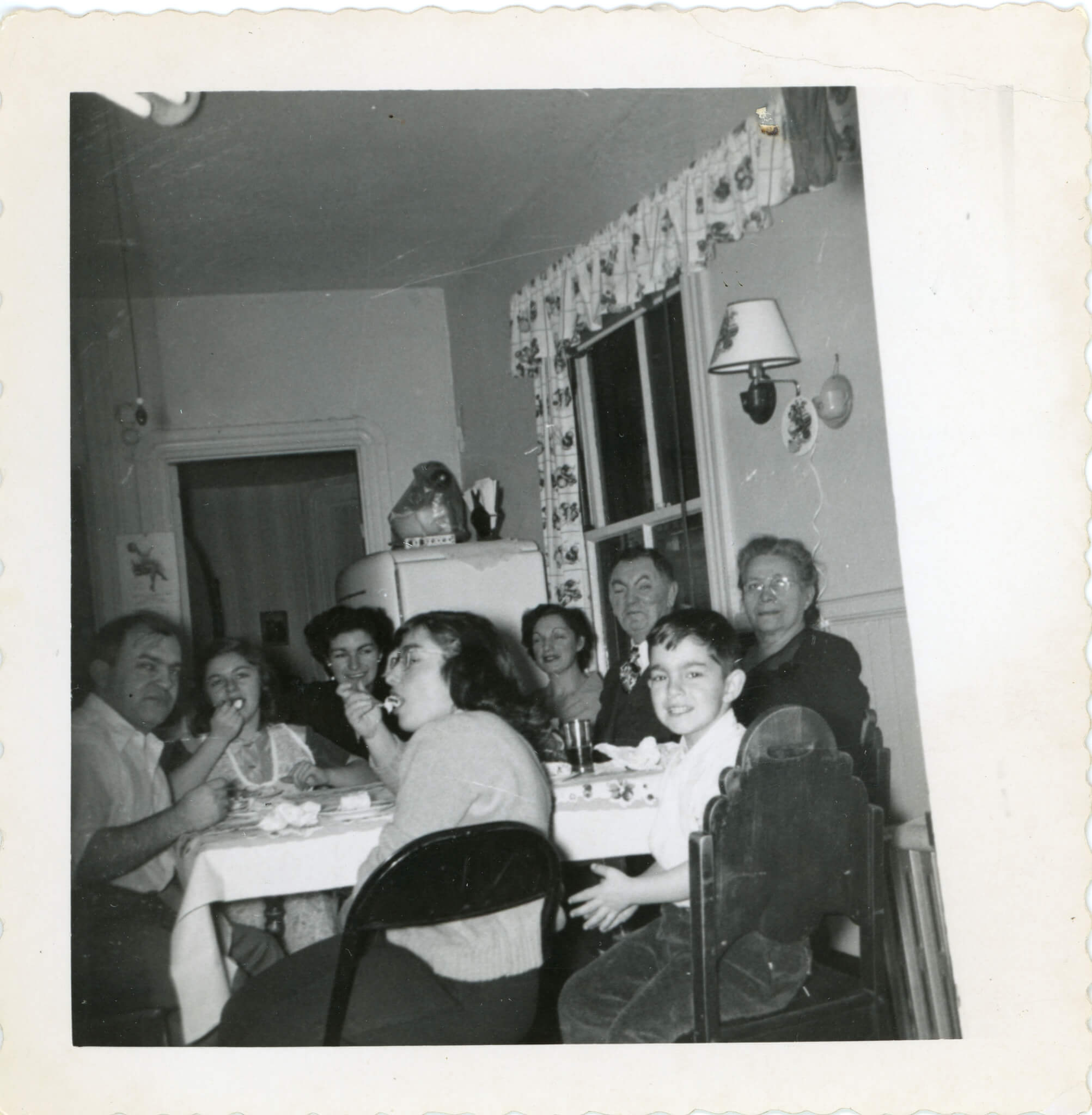
When the table unfolded to its full size, it absorbed the daily activities of a household. It held newly folded laundry and ironing. Open schoolbooks and school supplies would have rested on it after a day of classes. A quick breakfast before work or school would be eaten on it, and newspapers spread over it early in the morning. The enamel top table was always in use in a bustling first generation American household.
The enamel top table featured in the Rise Fall Rebirth: Stories of the West End exhibit was donated by The West End Museum founder James Campano. It is one of the surviving examples of the types of furniture that would have been common sights in West End homes. It was manufactured by The Enamel Products Co (TEPCO), based in Cleveland, Ohio. Based on the makers’ marks found under the table, the Campano table design was likely manufactured in July 1946.
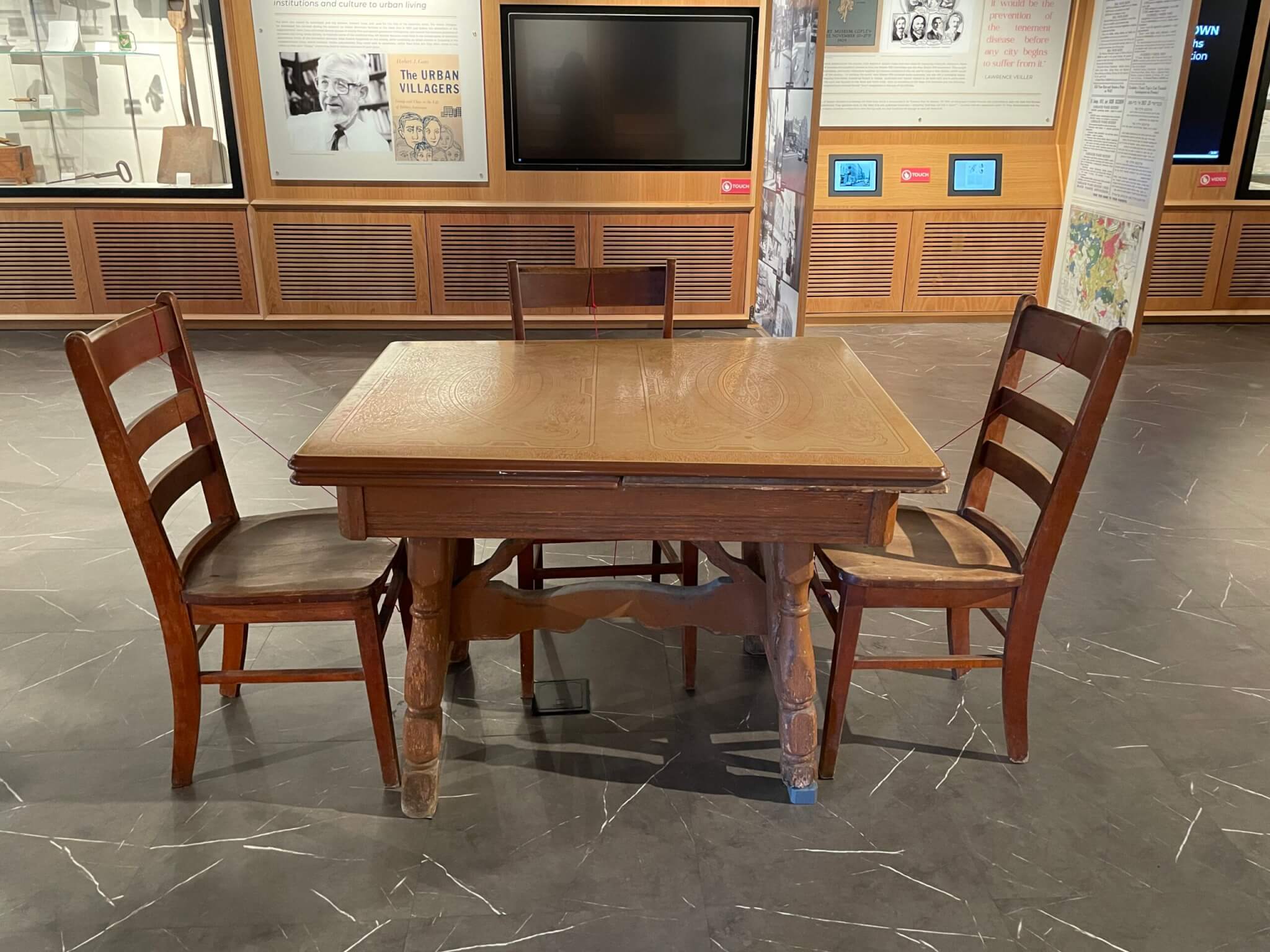
This type of table could be decorated with familiar designs from the places the owner emigrated. The Campano table incorporates what advertisers called Italian Renaissance designs. This would have been perfect for the Italian-Lithuanian Campano family. The table was also practical. It was advertised as “rustproof … odorless … fadeless … burnproof” and sure to last a lifetime. Considering the multi functionality of the table and the large number of people who would have used it, durability was a plus. This was especially true of the Campano family which had eight children.
A kitchen table would have been significant purchase for a West End family. An expandable table to serve a growing family could have been one of the first things an immigrant family owned in the United States. Many working class buyers could not afford furniture outright. Instead they purchased more expensive items using installment plans. This meant that families would pay vendors on a schedule, until the item was eventually paid off.
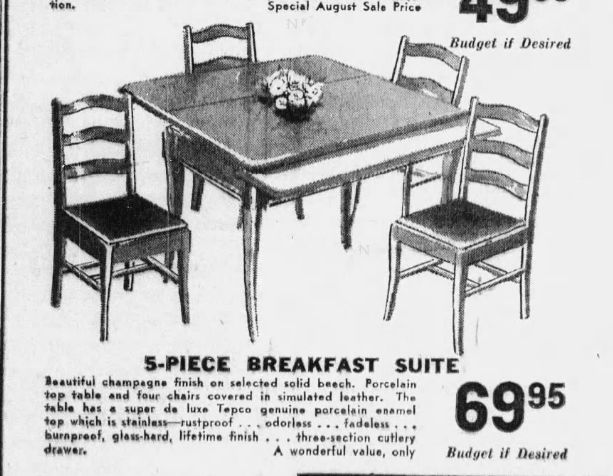
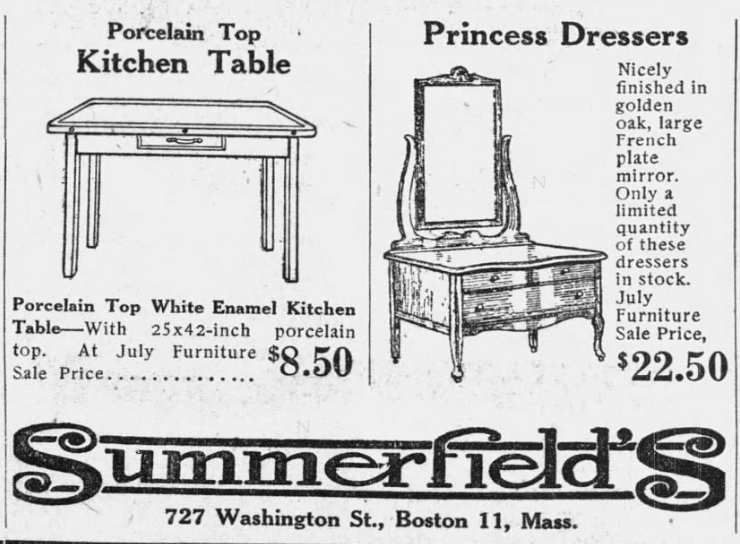
The median urban monthly income for a family of 5 or more (which the Campanos were) was a little under $300 a month in 1945. A similar five-piece dining set was on sale from Summerfields in Boston in August 1946 for $69.95 (or about 24% of a large family’s monthly income). Although that was a steep increase from a similar table sold by the same store the year the oldest Campano child was born. In 1921, Summerfields had an enamel top table on sale for just $8.50!
The enamel top table was more than a kitchen necessity. In the immigrant neighborhood of the mid-century West End, tables like the Campanos’ would have been meeting places and symbols of what the household had already accomplished. The table was more than just a place to eat dinner. It was the center of a family home and a place to build and maintain a community.
Article by Kaylee Da, edited by Jaydie Halperin
Source: The Boston Globe, Summerfields Ads June 17, 1921, August 29, 1946, Morgan’s Boston Store ad, February 8, 1948; Bureau of the Census, “Family and Individual Money Income in the United States:1945 and 1944” (Department of Commerce, May 8, 1947); Current Results,“Boston MA Lowest Temperature Each Year – Current Results,” accessed August 7, 2026; Nicholas Dello Russo, “Life on the Corner: Tenement Life Part 1—Cold Water Flats,” (NorthEndWaterfront.com, North End, March 26, 2020); The International Museum of Dinnerware Design, “Dining Memories”;Steve Rhode, “Installment Sales: What They Mean and What to Do,” (Get Out of Debt Guy, December 3, 2009); Roger E. Schubert, No Guns on Sunday: Growing up in Manchester Connecticut, 1930-1954 (n.p.: Sea Colony, Florida, 2007);Adam Tomasi, ed. Bob Potenza, “Jim Campano: Champion of the West End” (The West End Museum, May 26, 2023); WorthPoint, “Tepco ~ The Enamel Products Magazine – Jan 1949 ~ Cleveland Ohio” .
Thank you to Dr. Margaret Carney, Director of The International Museum of Dinnerware Design for research assistance.