
Developing and Redeveloping Bronzeville, Chicago
The Bronzeville area of Chicago was once the “Black Metropolis” of the city, and a significant source of Black culture. Due to racist redlining, urban renewal, and lack of city investment, Bronzeville’s economic situation declined as housing projects replaced Black homeownership. In recent years, “Afrocentric” development and community investment have opened up the possibility of a burgeoning neighborhood renaissance.
In the Chicago neighborhood of Bronzeville, the streets echo with history. There is evidence of a storied past, a complicated present, and hope for a brighter future. The story of how “The Black Metropolis” went from a thriving Black neighborhood to a neglected area of housing projects demonstrates how policy and systemic racism affect communities. For a time, the economic downward spiral of the neighborhood seemed unending. In the late twentieth century, community activism and Black-led investment began to change the area’s prospects. Housing projects came down and Black-owned businesses opened. Yet the possibility of gentrification remained.
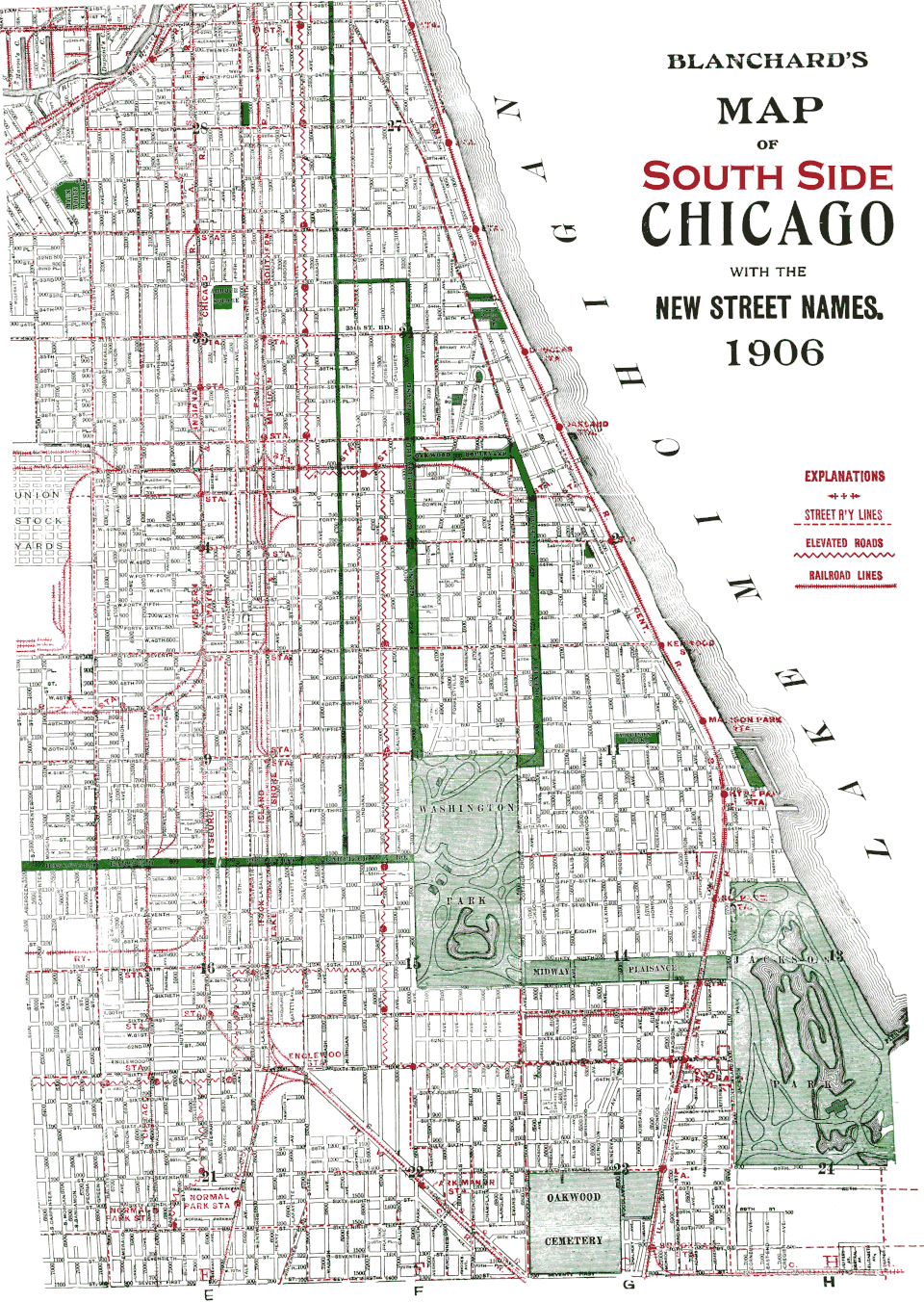
Bronzeville is located on the South Side of Chicago, in the southeastern section of central Chicago. Bronzeville stretches from 31st to 53rd street and highway 90 to Drexel Boulevard. Its primarily Black population was a product of the Great Migration. This was the movement of Black Americans from southern states to northern and midwestern ones in the early twentieth century. Between 1910 and 1920, the Black population of Chicago more than doubled. However, due to codified racial discrimination, these migrants had few options for where to live. Restrictive covenants, segregation, and anti-Black violence pushed Chicago’s growing Black population to settle within the area of the city known as “The Black Belt”.
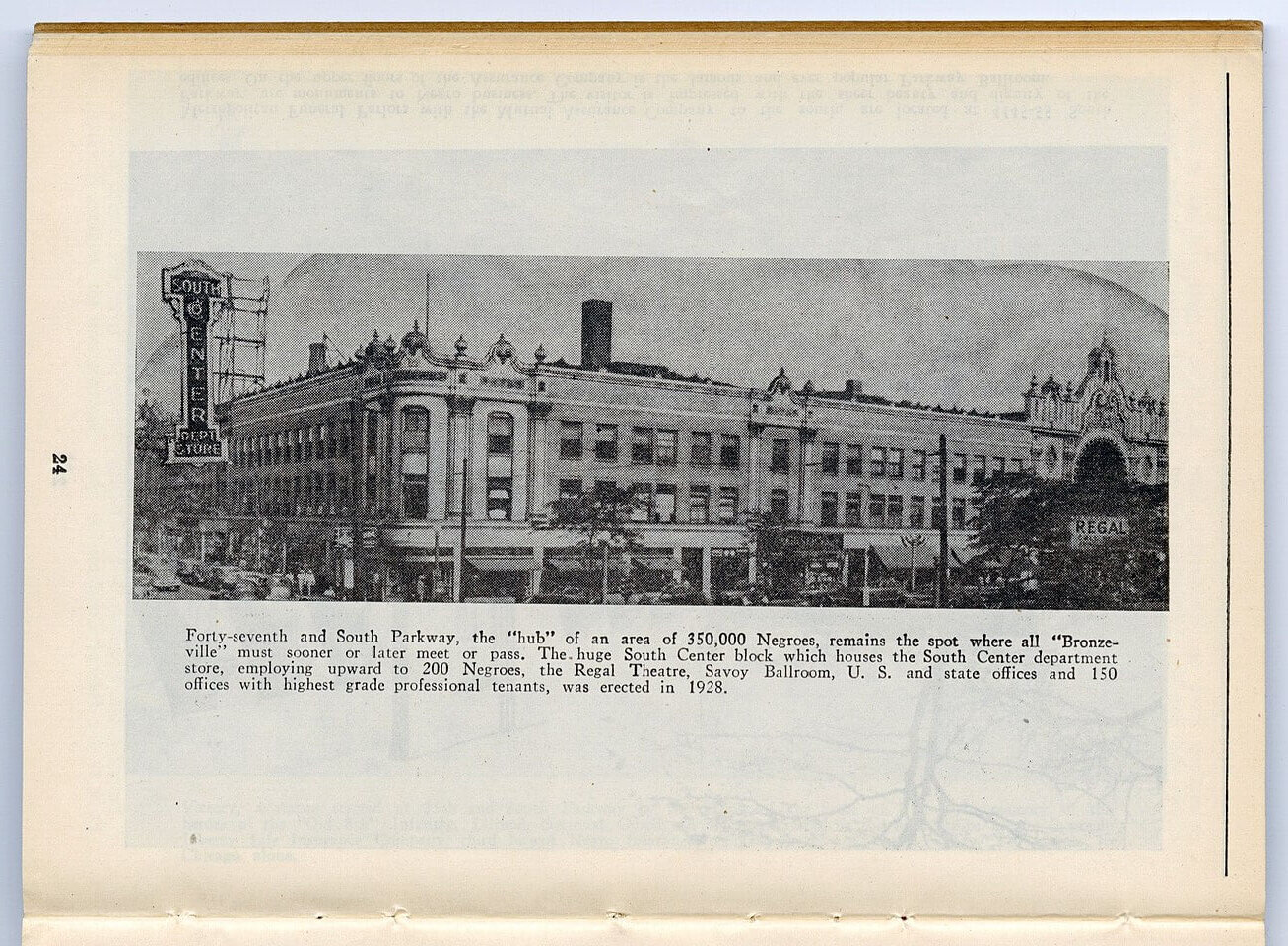
During these early years, Bronzeville became a center for the Black community. It fostered a growing Black middle class and a strong base of successful businesses. This created a Black city-within-a-city with an active culture. The Black-owned Binga Bank and the Black-founded Provident Hospital, started in Bronzeville. The neighborhood was served by Black-run daily newspapers and the local YMCA started the first Black History Month. It was home to music venues which hosted jazz legends such as Ma Rainey, Louis Armstrong, Cab Calloway, and Nat “King” Cole. Influential figures in American history called Bronzeville home. These include activist Ida B. Wells, Olympian Jesse Owens, aviator Bessie Coleman (the first black woman to fly a plane), and poet Gewndolyn Brooks.
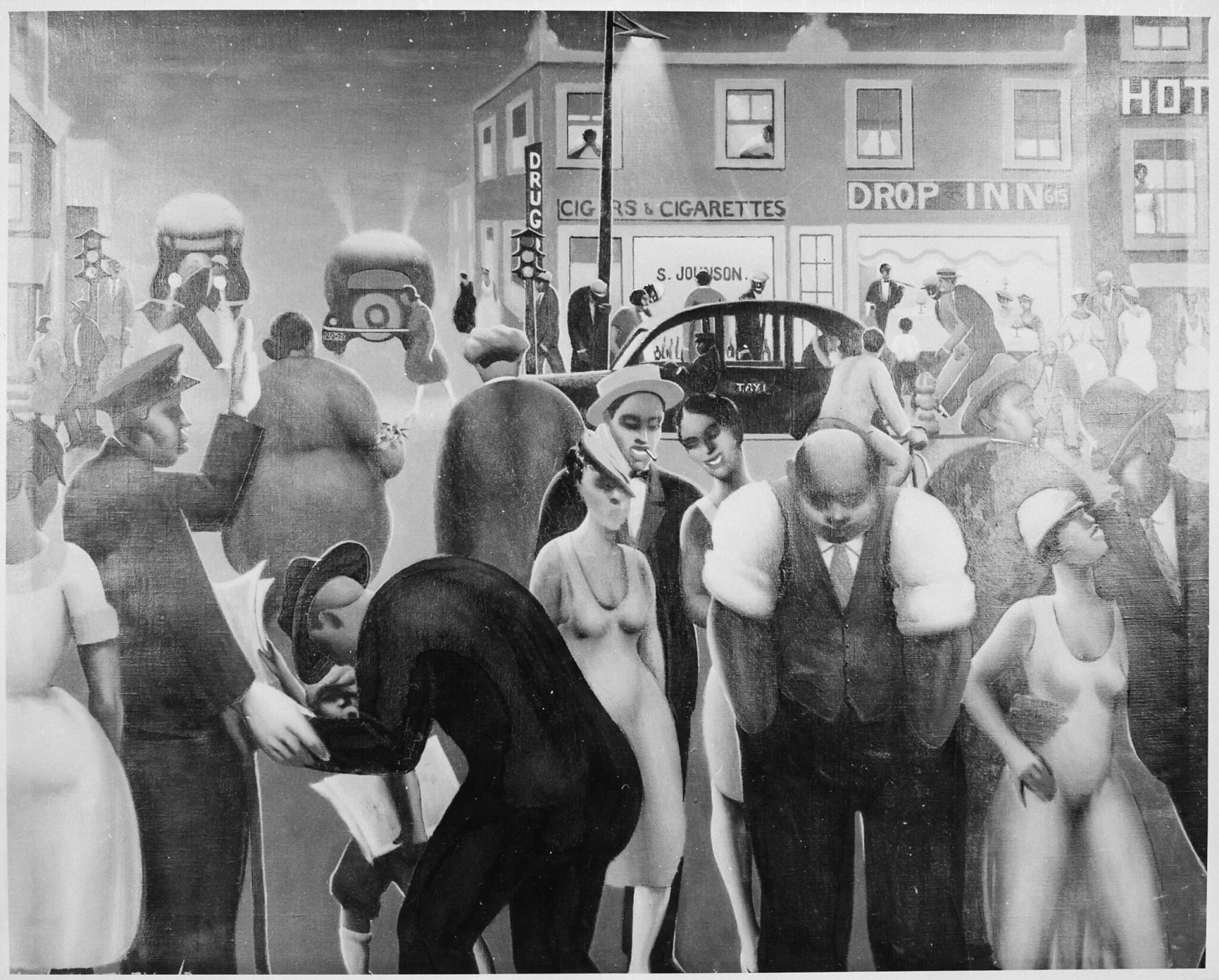
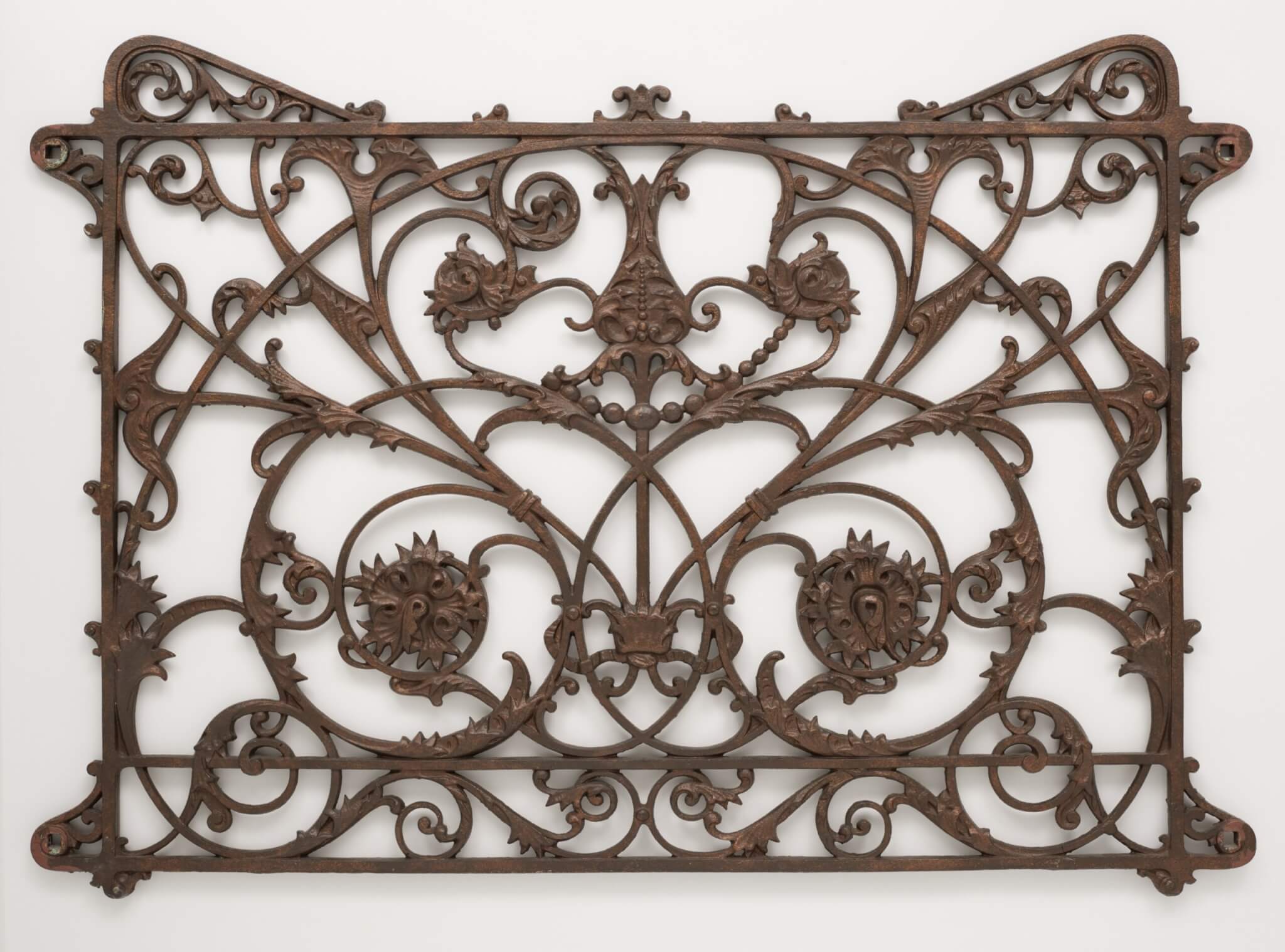
The architecture of the neighborhood also held significance. One example of this was the Mecca Flats. The Mecca Flats was a large apartment complex and cultural center of the community. It was located close to bars, ballrooms, and musical venues. The building was the focus of the 1924 song “Mecca Flat Blues” by Jimmy Blythe. At its peak, Bronzeville offered a chance for Black Chicagoans to make a good living, build businesses, and buy homes, thus building generational wealth.
However, as the 1930s began, the city’s government saw Bronzeville as a neighborhood in need of change. One of the initial causes of the neighborhood’s destruction was the Home Owners Loan Corporation (HOLC). The corporation assigned grades to neighborhoods based on perceived investment risk for mortgage lenders. This became known as redlining. Areas colored red on HOLC maps were deemed undesirable for investment. The reason was often because of the marginalized, especially Black, people who lived there.
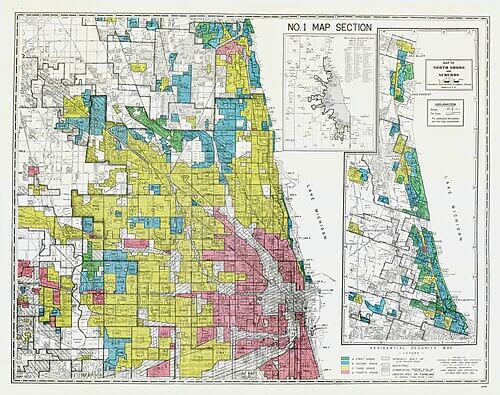
Bronzeville’s district received the lowest possible grade, primarily because of its residents. HOLC described Bonzeville as having “virtually 100% negro [sic] occupancy and includes the largest negro [sic] concentration in Chicago.” Despite the area’s high property ownership rate, the government believed it was a hazardous investment. There was also worry that Black people could “encroach” on “more desirable areas” nearby (where white people lived). This low grade began a cycle of deteriorating property values, a plummeting tax base, loss of generational wealth, and urban decline.
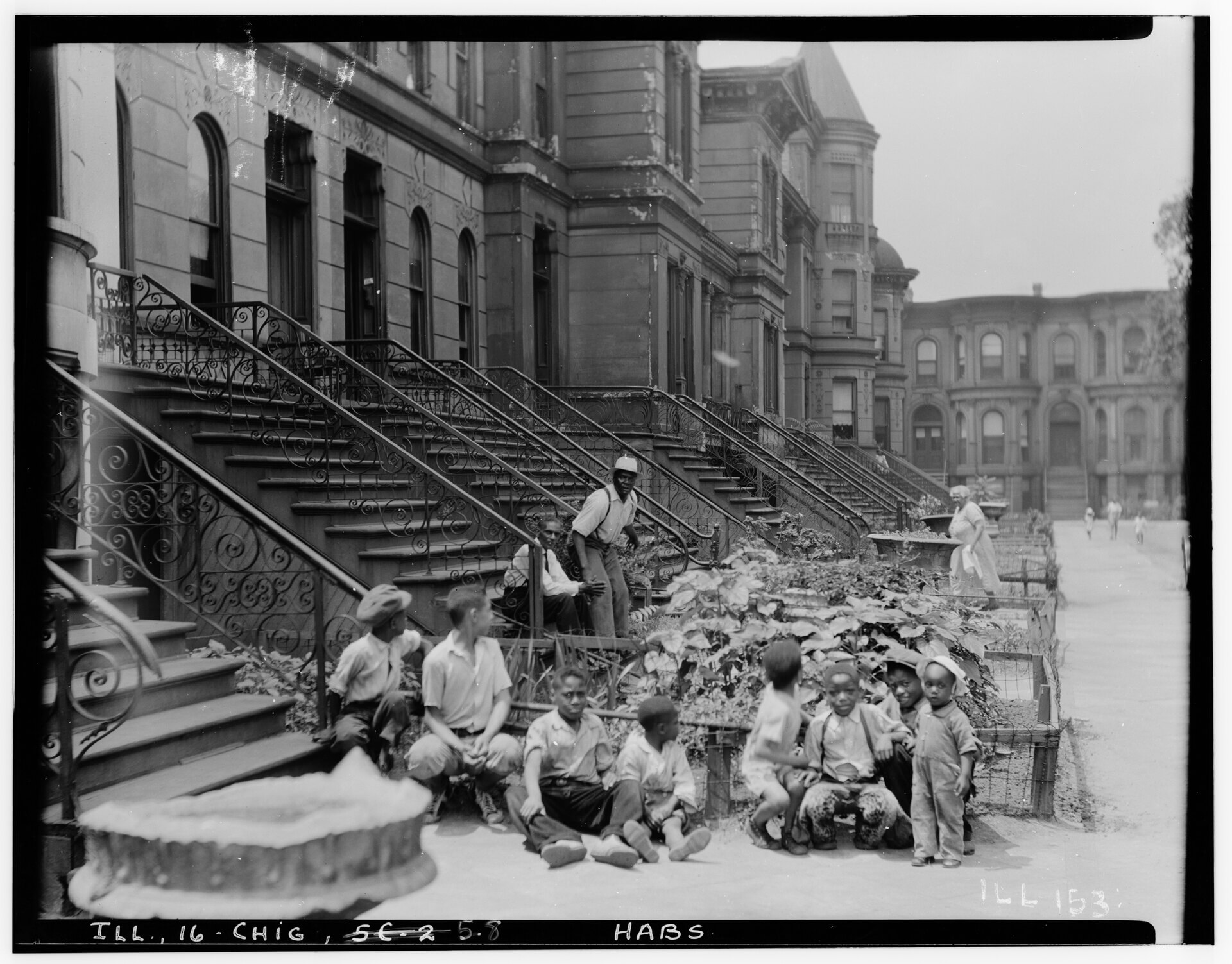
The city of Chicago began an aggressive policy of redevelopment using eminent domain in the late 1930s. The Chicago Housing Authority seized huge sections of the neighborhood. They displaced residents, including many Black homeowners, and built large public housing projects. Those displaced had few options for where to go because of segregation across the city. Many, including former home and business owners, ended up living in cheaply built projects.
Stateway Gardens Housing Project looking north onto Dearborn Street south of 39th Street in Chicago, Illinois, January 12, 1959. Note the contrast between the smaller single and multi-family homes with the large housing projects in the background, (Photo by Clarence W Hines/Chicago History Museum/Getty Images).
Over the next few decades, Bronzeville’s fortunes fell further. Chicago built a highway through Bronzeville which cut it off from the rest of the city. Deindustrialization led to fewer good jobs in the city and poverty and crime increased. Middle class Black Chicagoans moved out when federal anti-discrimination laws opened up other neighborhoods and suburbs.
Urban renewal projects across Chicago between 1950 and 1966 displaced around 23 thousand families, 64% of which were families of color. Within Bronzeville, around ten thousand families were displaced in the same period. Many buildings with cultural and historical significance were destroyed. The Mecca Flats, for instance, was demolished in 1951 to make space for Illinois Institute of Technology’s S.R. Crown Hall. Nationally, out of 1.2 million people displaced by urban renewal projects, half were Black.
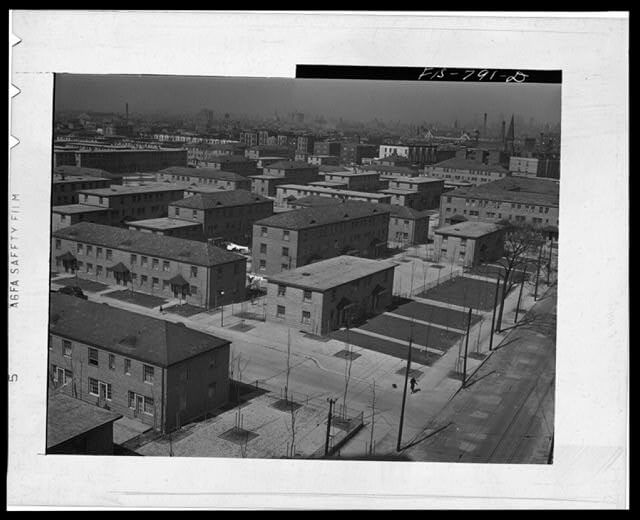
Following decades of urban renewal, the population of Bronzeville fell from its peak of over 75,000 by over 75 percent. The city neglected the public housing projects. They were physically and economically isolated, poorly managed, and hotbeds of criminal activity. The neighborhood saw high levels of unemployment, poverty, violence, and drugs. Bronzeville of the late twentieth century was a shadow of the booming Black metropolis that existed decades before.
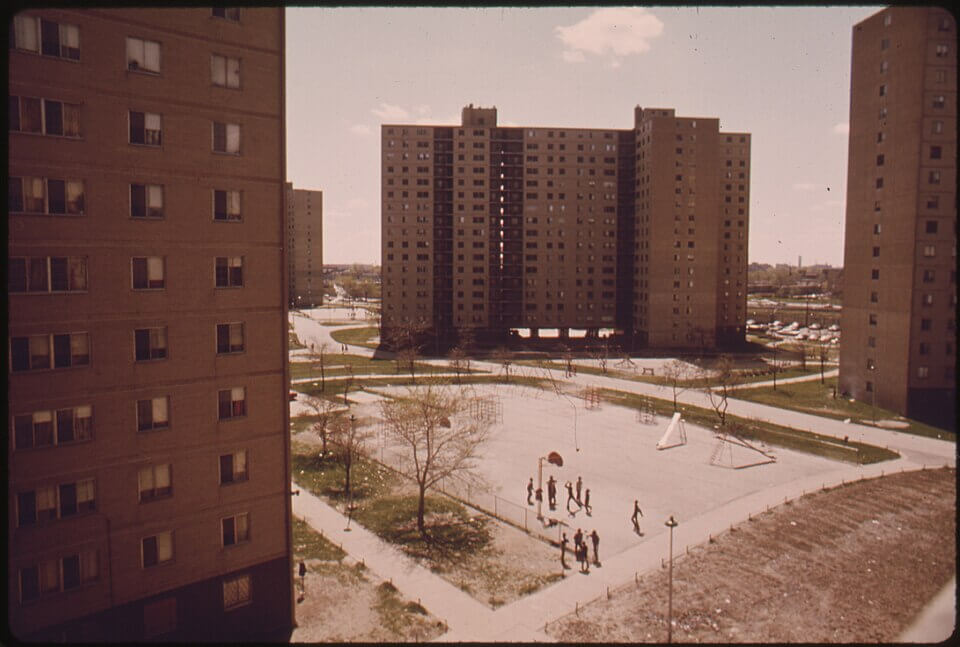
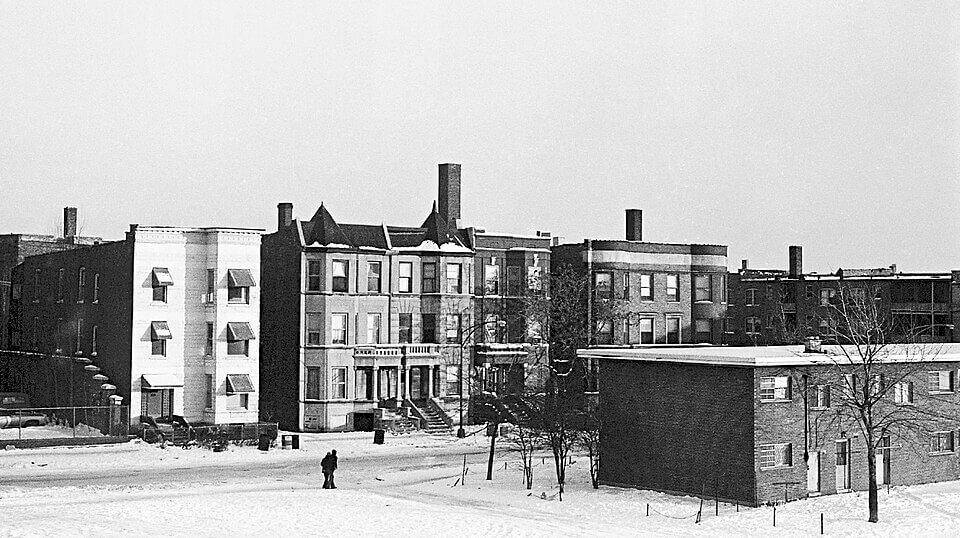
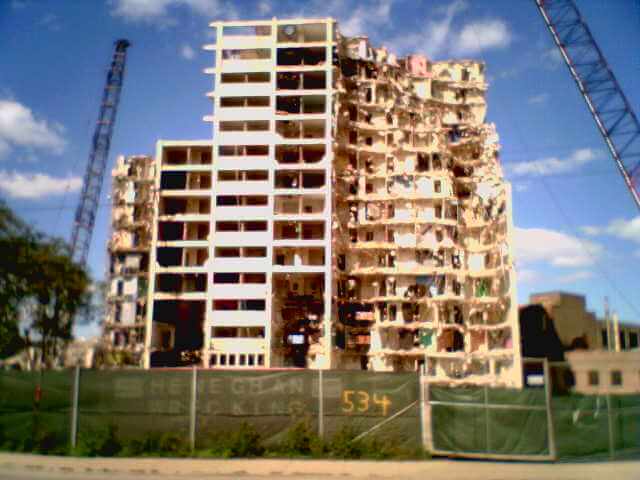
However, starting in the 1990s Bronzeville began to change again. Local activists succeeded in increasing public investment in their neighborhood. They championed “Afrocentric” development plans. Developers started working to address the needs of residents to increase housing and retail availability. The deteriorating housing projects were torn down beginning in 1998.
At the same time, upwardly mobile Black professionals began moving in, developing property, and starting businesses. The high number of vacant lots allowed development without significant displacement. Mixed use and mixed income developments, a large supermarket, and a recreation center have all opened in recent decades. Community building events and local activism point to coordinated efforts to make Bronzeville a better place to live.
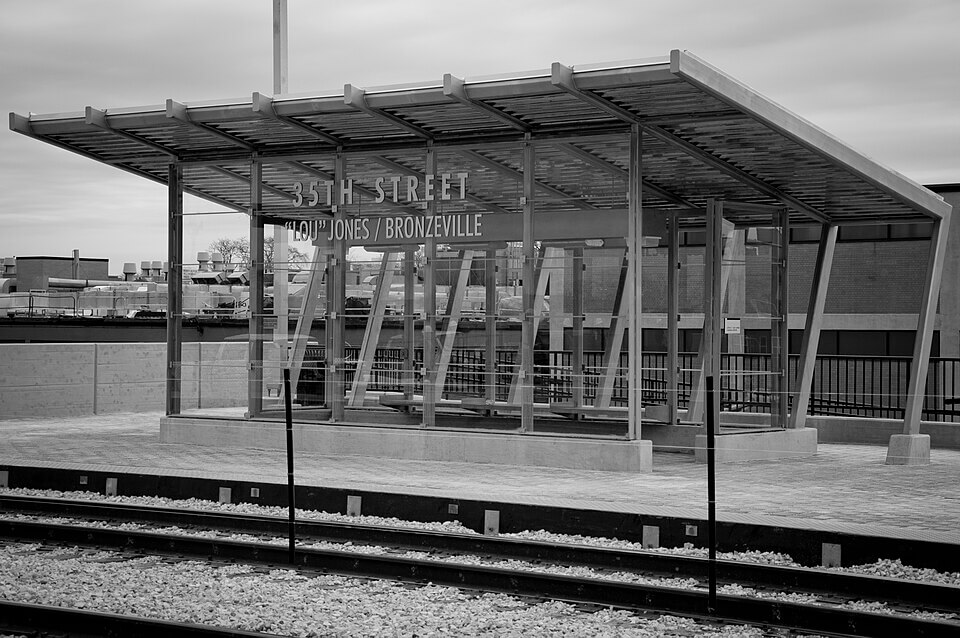
Bronzeville has been revitalized while remaining an overwhelmingly Black neighborhood. Poverty has gone down significantly since 2000 even as many existing residents have been able to remain in place – an unusual accomplishment. However, gentrification and the pricing out of long term residents is still a possibility.
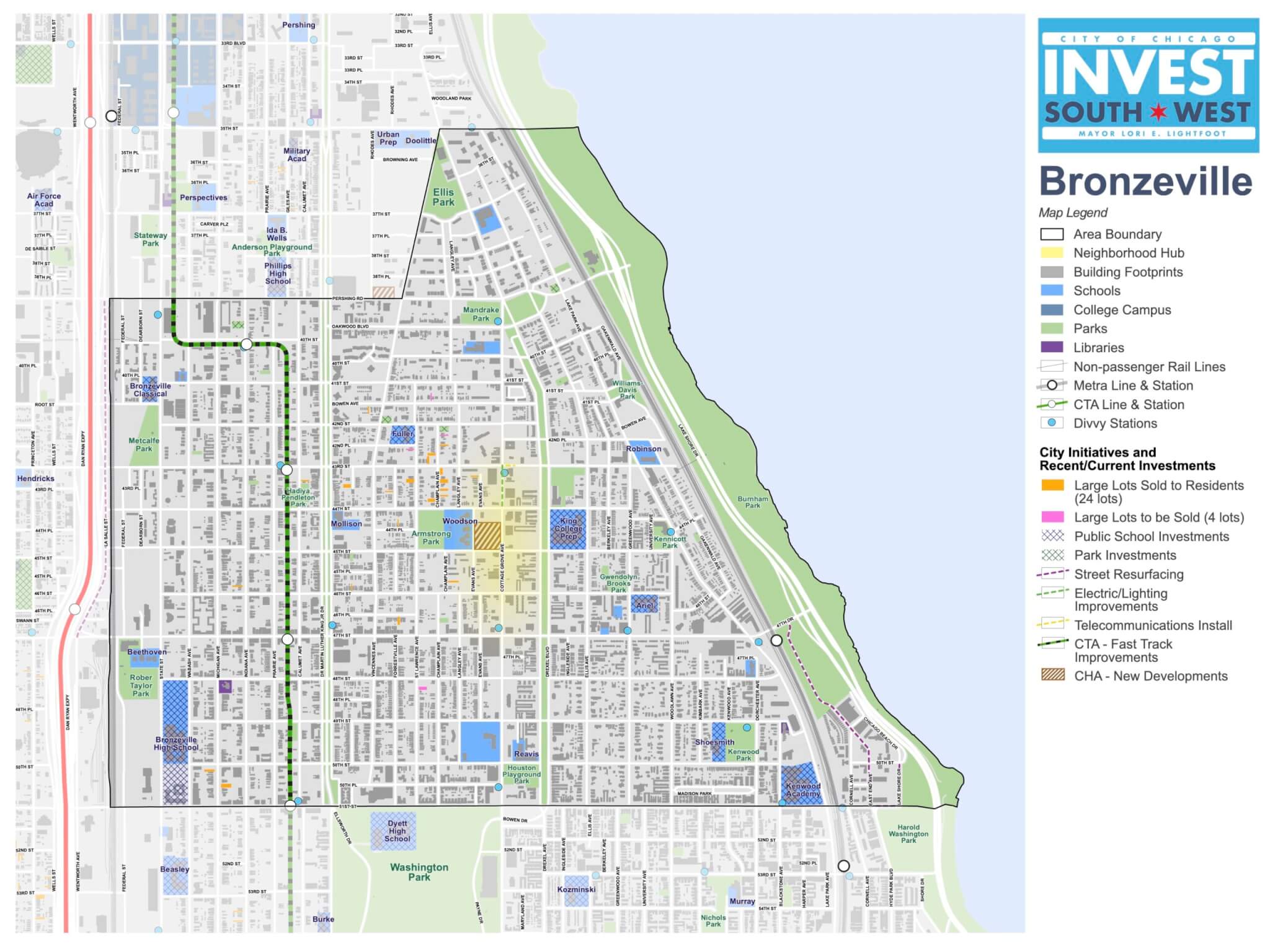
Bronzeville’s history for the last century and a quarter is a story in three parts. First, Black residents created their own vibrant community in a segregated city. Second, city interference and destructive urban renewal programs exacerbated an already existing decline. The third chapter of Bronzeville’s story is still being written as the community reinvents itself for the future, this time with their own needs in mind. Bronzeville’s second redevelopment has not been perfect. Yet after decades of policy altering the neighborhood without its residents’ input, it is a positive sign to see change coming from within.
Article by Lucas Wong, edited by Jaydie Halperin
Sources: Christian Belanger, “Digging Up the Past,” (South Side Weekly, August 26, 2018); Chelsea Birchmier & Jack Delano, “Ida B. Wells” (The Hal Baron Project, October 30, 2020); Brent Cebul, Robert K. Nelson, Justin Madron, and Nathaniel Ayers, “Renewing Inequality: Family Displacements Through Urban Renewal, 1950-1966” | “Mapping Inequality: Redlining in New Deal America”, American Panorama, (University of Richmond, Digital Scholarship Lab); Chicago Studies, “The History of Bronzeville” (University of Chicago); City of Chicago Department of Planning and Development, “Black Metropolis-Bronzeville District,” (2003) Choose Chicago, “The 77: A City of Neighborhoods – Bronzeville (Full episode)” (YouTube, April 5, 2024); Jamie Nesbitt Golden, “Bronzeville’s Boundaries Swell In New Map As Residents Reclaim Black Metropolis,” (Block Club Chicago, February 5, 2025; Nicole Jeanine Johnson and Reema Saleh, “Longtime residents and advocates look to affordable housing plans and intentional investment to keep the celebrated Black neighborhood Black,” (City Bureau, April 25, 2024); Landmarks Illinois, “Bronzeville Legends” (2023); Swapnil Mishra, “Implementation Case Study: Robert Taylor Homes, Bronzeville, Chicago, IL,” (Medium, January 24, 2023); National Museum of American History, “Bronzeville,” (Smithsonian); Office of Community Affairs and Outreach Programs, “History of Bronzeville” (Illinois Institute of Technology, 2018) | “The ‘Black Metropolis’”; Grace Perry, “The Best Attractions and Things to do in Bronzeville,” (TimeOut, November 29, 2016); Greg Rosalsky, “How the ‘Black Metropolis’ Made a Comeback,” (Planet Money, NPR, October 4, 2022); Elisa Silverman, “Restoring Chicago’s Architectural, Cultural Heritage in Bronzeville,” (Built: The Bluebeam Blog, September 14, 2023); Sandy Smith, “Chicago’s Bronzeville Keeps Fighting for Revitalization,” (Next City: The Equity Factor, March 11, 2015); Adam Paul Susaneck, “Chicago: Bronzeville”, (Segregation by Design, TU Delft Centre for the Just City, 2024); TDR Staff, “Why Bronzeville’s gentrification may become a model for other Chicago neighborhoods” (The Real Deal, January 19, 2022); Steven Vance, “A shipping container market opened in Bronzeville last night,” (Chicago Cityscape, June 22, 2017); Hannah White, “Opportunities for Transformative Placemaking: Bronzeville, Chicago”, (Bass Center for Transformative Placemaking, November 2018); WTTW, “Bronzeville: The Black Metropolis” .